
Engineering Drawings: Can You Build My Design? (en español)
Students learn how to clearly communicate to others their wind-powered car designs.
Each group needs:
- 5 Popsicle or craft sticks
- 5 plastic drinking straws
- 4 Lifesaver® mint candies, for use as wheels
- 3 sheets of paper
- pencil
- 12 inches (30 cm) of masking tape
- ruler
- scissors
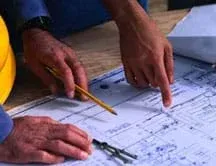
Many engineers apply what they know about mathematical and scientific knowledge to the design of new structures, products and systems. Engineers often convey their design intentions through accurate drawings, specifications and instructions. This includes creating labeled sketches to communicate design details to customers, factories and end users. Let's imagine that we are engineers and make some design drawings.
 Copyright Office of the State Treasurer of California
Overview
Using the specified materials, teams are challenged to draw designs for wind-powered cars. Then, they trade engineering drawings with other groups and attempt to construct the model cars in order to determine how successfully the original design intentions were communicated.
Procedure
- Organize the students into groups of two.
- Hand out the supplies to each group.
- Tell groups to each carefully and thoroughly draw out the design for a wind-powered car on one sheet of paper; then have the design checked by the instructor. The goal of the car is to travel as far as possible from one "puff" of air. Explain that students will not build their cars; instead, they will trade their drawings with another team and build the other team's cars based on the drawings.
- Remind students of the following:
- Be very clear with the drawings; use dimensions and indicate how parts are attached to each other.
- Do not write instructions on how to build the cars; the drawing alone must be detailed enough that the other team is able to create it from the labeled sketch.
- It helps to draw the cars from multiple angles. (For younger students, skip this requirement if it seems too challenging.)
- After giving groups time to draw their car plans, have them switch drawings with other groups. Then have them attempt to build the other group's car from the drawing information. If a group gets stuck on the design, permit them to have a brief meeting with the original design engineers.
- At the end, have students test their cars in front of the rest of the class.
- If time remains, have groups work on design improvements (iterations).
Wrap Up - Thought Questions
- Were you able to convey your design to the other team using your drawing?
- What would you improve about your drawing?
- What would you improve about your car design?
This resource was modified from The Universal Language of Engineering Drawings to create a shorter, more streamlined version suitable for informal learning settings.
This resource is also available in Spanish.
Copyright
2016 by Regents of the University of Colorado