
Trash Talkin'
Students collect, categorize, weigh, and analyze classroom solid waste. The class collects waste for a week and then student groups spend a day sorting and analyzing the garbage with respect to recyclable and non-recyclable items. They discuss ways that engineers have helped to reduce the accumulation of solid waste.
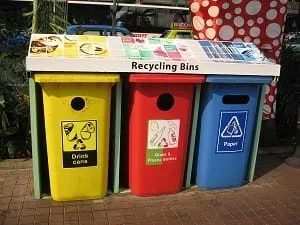 Students collect and categorize solid waste.Copyright 2006 Terence Ong, Wikimedia Commons https://commons.wikimedia.org/wiki/File:NEA_recycling_bins,_Orchard_Road.JPG
Excessive product packaging materials add to the solid waste (garbage) problem. Packaging engineers use smaller amounts of materials and find more creative and efficient ways to safely package consumer products. Engineers determine materials (paper, paperboard, plastics, glass, metal and wood) and if protective packaging is needed, using environmentally-friendly and recyclable materials when possible.
After this activity, students should be able to:
- Make predictions on the types of trash that a class generates during a week.
- Sort trash into categories (food, paper, plastic, metal, glass and misc.) and sub-categories (re-useable, recyclable and non-recyclable).
- Calculate the total mass of a group of items.
- Explain the cause-effect relationship on the environment of accumulating solid waste.
- Describe the attitudes on solid waste in developed and undeveloped countries.
- 3.1.3.d Solve problems involving the four operations, and identify and explain patterns in arithmetic.
Grade 3
Do you agree with this alignment? - 3.3.1.a Represent and interpret data.
Grade 3
Do you agree with this alignment?
- Create and evaluate models of the flow of nonliving components or resources through an ecosystem
Grade 4
Do you agree with this alignment?
- CCSS.Math.Content.3.MD.B Represent and interpret data.
Grade 3
Do you agree with this alignment? - CCSS.Math.Content.3.OA.D Solve problems involving the four operations, and identify and explain patterns in arithmetic.
Grade 3
Do you agree with this alignment? - CCSS.Math.Practice.MP4 Model with mathematics.
Grades K-12
Do you agree with this alignment?
- Waste must be appropriately recycled or disposed of to prevent unnecessary harm to the environment.
Grades 3-5
Do you agree with this alignment? - STEL-1J Develop innovative products and systems that solve problems and extend capabilities based on individual or collective needs and wants.
Grades 6-8
Do you agree with this alignment?
- 5-ESS3-1 Obtain and combine information about ways individual communities use science ideas to protect the Earth's resources and environment.
Grade 5
This resource focuses on the following Three Dimensional Learning aspects of NGSS:
Science & Engineering Practices- Obtain and combine information from books and/or other reliable media to explain phenomena or solutions to a design problem.Do you agree with this alignment?
Disciplinary Core Ideas- Human activities in agriculture, industry, and everyday life have had major effects on the land, vegetation, streams, ocean, air, and even outer space. But individuals and communities are doing things to help protect Earth's resources and environments.Do you agree with this alignment?
Crosscutting Concepts- A system can be described in terms of its components and their interactions.Do you agree with this alignment?
- Science findings are limited to questions that can be answered with empirical evidence.Do you agree with this alignment?
Do you agree with this alignment? - Obtain and combine information from books and/or other reliable media to explain phenomena or solutions to a design problem.
- 5-PS1-3 Make observations and measurements to identify materials based on their properties.
Grade 5
This resource focuses on the following Three Dimensional Learning aspects of NGSS:
Science & Engineering Practices- Make observations and measurements to produce data to serve as the basis for evidence for an explanation of a phenomenon.Do you agree with this alignment?
Disciplinary Core Ideas- Measurements of a variety of properties can be used to identify materials. (Boundary: At this grade level, mass and weight are not distinguished, and no attempt is made to define the unseen particles or explain the atomic-scale mechanism of evaporation and condensation.)Do you agree with this alignment?
Crosscutting Concepts- Standard units are used to measure and describe physical quantities such as weight, time, temperature, and volume.Do you agree with this alignment?
Do you agree with this alignment? - Make observations and measurements to produce data to serve as the basis for evidence for an explanation of a phenomenon.
Each group needs:
- classroom trash (one week's worth)
- enough trash cans/bins/boxes for sorting different types of trash: recyclable and non-recyclable paper, recyclable plastic and metals and glass, food waste, miscellaneous, etc.
- 3 plastic garbage bags or grocery sacks
- bathroom scale (groups may share)
- rubber/latex gloves, one pair per student
- Let's Talk Trash Worksheet (PDF), one per student
Per capita, the U.S. is one of the biggest trash-makers in the world. Americans use a lot of disposable products and products with abundant—and wasteful—packaging. For example, 1.6 billion writing pens go into the garbage and 7 million automobiles are junked in the U.S. each year!
Wealthy countries, in general, produce more trash than other countries because the people in those countries can "afford" to consume more products. Often, developed countries pay poorer countries to take their trash. Those poorer countries often take the waste because they need the money, even though they actually have no safe way to dispose of the waste.
Engineers continuously develop methods to decrease the amount of product packaging and create recycled packaging materials from items that are thrown away, such as plastics. Consumers—that's us!—must help engineers by sorting the items in our garbage that can be recycled and re-used. Once we have separated the recyclable items, we must make sure they get to a recycling facility, either by being picked up by a recycling service or by being dropped off at a recycling center. We can also help engineers by producing less waste and re-using items, such as wrapping paper and plastic eating utensils. By helping engineers as they develop technologies for dealing with waste, we are also helping our communities from having to find places to store garbage.
Did you know?
- More than one-third (about 40%) of our garbage is paper.
- About one-third of the items we throw into the garbage originally started out as packaging (most of which is unnecessary—it is just used to attract consumers' attention to buy the products).
- Americans throw away enough plastic bottles every year to circle the planet four times! Only one-third of the plastic bottles we use are recycled.
Before the Activity
- Gather enough trash cans/bins/boxes to be able to store your classroom trash for a week.
- Make large, easily readable labels for each trash container.
- Discuss your plans with the school custodian or a substitute to ensure that your trash stays in your classroom all week. (Do not skip this step: a well-intentioned custodian or substitute may throw away your activity materials thinking they are doing you a favor!)
- Run the trash collection period for five full class days. On the sixth day, conduct the lab portion of the project.
- Make copies of the Let's Talk Trash Worksheet (PDF).
- Make a large class data chart similar to the data collection chart on the Let's Talk Trash Worksheet (PDF).
With the Students
Before Day 1 of Trash Collection
- Describe the project to the class. Discuss the different types of trash you will collect and how you will collect it. (Note: collect only trash from the classroom. For example, do not ask students to bring trash from the lunchroom or from home.) Show students where the different labeled trash containers will be located in your classroom for the week. Demonstrate that plastic goes in the container labeled "plastic," paper in the container labeled "paper," etc.
- Collect trash for five full school days.
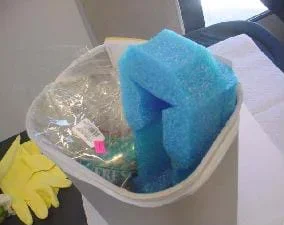 Figure 1. Examples of everyday trash.Copyright 2004 Jessica Todd, ITL Program, College of Engineering, University of Colorado at Boulder
Day 6: The Lab Day
- On the sixth day, divide the class into groups of four students each.
- Hand out a worksheet to each student.
- Ask students to predict how much trash (total mass) the class generated this week and predict the amount of trash in each of the categories (such as: food, paper, plastic, etc.).
- Assign groups each one portion of the trash as lab materials. Distribute a pair of gloves to each student.
- Distribute three tempty trash bags to each group, and ask them to sort the trash using the bags. Remind them to wear gloves! Sort the trash into three groups: recyclable, non-recyclable and re-useable. (Note: you may need to discuss the differences between these groups; see Figures 2-5). Do not sort any food waste!
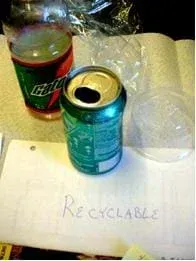 Figure 2. Examples of recyclable trash.Copyright 2004 Jessica Todd, ITL Program, College of Engineering, University of Colorado at Boulder
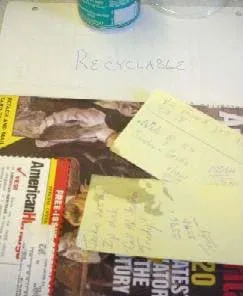 Figure 3. More examples of recyclable trash.Copyright 2004 Jessica Todd, ITL Program, College of Engineering, University of Colorado at Boulder
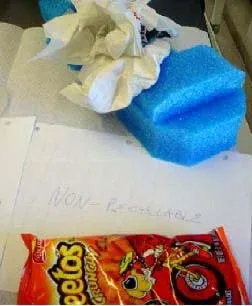 Figure 4. Examples of non-recyclable trash.Copyright 2004 Jessica Todd, ITL Program, College of Engineering, University of Colorado at Boulder
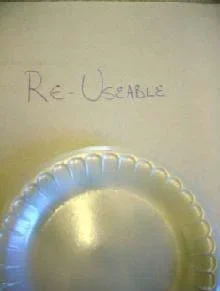 Figure 5. Example of re-usable trash.Copyright 2004 Jessica Todd, ITL Program, College of Engineering, University of Colorado at Boulder
- Ask each group to find the mass of each pile of trash. Instruct them to record the mass data on the large class data sheet. Remind them to record their units (kg or lbs) in their own data tables and round to the nearest ½ unit (depending on the scale).
- Ask groups to share their results with the class. All students should complete their data tables at this time. Student teams can write their mass in the class data sheet on the board or overhead.
- Ask students to complete the Analysis section of their worksheets. If time is short, assign them to finish the graphs as homework.
- Have students pair up within their teams and work on the Discussion Questions portion of the worksheet. After students have finished, discuss answers as a class.
- Using the worksheet Conclusions section, assign one student in the group to be the recorder. Then ask a student to toss out an idea. Next, another person in the group provides an idea that builds on the first. Go around the group in this fashion until all students have put in enough ideas to put together a design. When they are done, have them share their ideas with the class.
- reusable
- An item that can be immediately used again, repaired and used again, or used in a new way.
- recyclable
- An item that may be remade either as the same thing or as part of a different product (without recollecting and processing the initial natural resources).
- non-recyclable
- An item that is neither reusable nor recyclable.
- trash
- Items that are considered worthless, unnecessary, or offensive and that are most often thrown away. Usually, it is defined as dry material and excludes food waste (garbage) and ashes.
- garbage
- Spoiled or waste food that is thrown away.
Pre-Activity Assessment
Prediction: Using the Let's Talk Trash Worksheet (PDF), ask students to predict how much trash (total mass) the class generated in one week, and predict the amount of trash in each of the categories (food, paper, plastic, etc.).
Activity Embedded Assessment
Data Analysis: Have students fill out the Analysis section of the Let's Talk Trash Worksheet (PDF) as they follow along with the activity
Post-Activity Assessment
Pairs Check: Have students pair up within their teams and work on the Discussion Questions portion of the worksheet (PDF). After students have finished, discuss the answers as a class.
Pass the Buck: Assign one student in the group to be the recorder, and have students complete the Conclusion section of the worksheet (PDF). Have a student toss out an idea. Next, another person in the group provides an idea that builds on the first. Go around the group in this fashion until all students have put in enough ideas to put together a design. When they are done, have them share their ideas with the class.
- Have students wear gloves when sorting trash.
- Remind students that the plastic bags should not be played with (for example, put over anyone's head) and should only be used for sorting the trash.
- Be aware of broken glass items and metal items with sharp edges.
- Be sure to seal the food trash bag each day in order to prevent health hazards. Another option is to weigh the food trash each day and keep a running tally of it.
- Be sure all containers are rinsed before being placed in the waste bins (especially food containers).
You may need to review how to calculate percentages and/or how to create pie charts.
Create a school bulletin board to report your findings.
Ask students to write a letter to the editor of the school newspaper describing the class findings and urging others to make changes in their "trash habits."
Challenge another class to reduce its solid waste by more than your class.
Contact the local solid waste disposal company, and ask them to give you community percentages for each of the trash categories. Compare this information to your classroom results.
For lower grades, chose one or more of the following:
- Mass: Ask students to find the mass of each category of waste. Create a bar graph of the results. Discuss the results in terms of "less" and "more."
- Pie Chart: Using a pre-made pie chart, ask students to cut and paste pictures that represent each category on the appropriate slice on the chart. You could even have one large class chart (have each student paste a picture in each section or have different groups be responsible for different categories).
- Class Discussion: As a class, discuss some of the differences between re-useable, recyclable and non-recyclable items. Use some examples from your trash bins to illustrate this.
For upper grades, have students look at the fraction and decimal representations of the different categories in addition to the percentages.
Glencoe Science: An Introduction to the Life, Earth and Physical Sciences, Student Edition. Blacklick, OH: Glencoe/McGraw-Hill, 2002.
Prentice Hall Science. Ecology Earth's Natural Resources Activity Book. NJ: Prentice Hall, Inc., 1993.
Spurling Jennett, Pamela. Investigations in Science – Ecology, Westminster, CA: Creative Teaching Press, Inc., 1995.
Contributors
Amy Kolenbrander; Jessica Todd; Malinda Schaefer Zarske; Janet Yowell
Supporting Program
Integrated Teaching and Learning Program, College of Engineering, University of Colorado Boulder
Acknowledgements
The contents of this digital library curriculum were developed under grants from the Fund for the Improvement of Postsecondary Education (FIPSE), U.S. Department of Education and National Science Foundation (GK-12 grant no. 0338326). However, these contents do not necessarily represent the policies of the Department of Education or National Science Foundation, and you should not assume endorsement by the federal government.
Copyright
2005 by Regents of the University of Colorado