
Biohazard Protection Design Project: Suit Up!
Students learn about providing healthcare in a global setting and the importance of wearing protective equipment when treating patients with infectious diseases like Ebola. They learn about biohazard suits, heat transfer through conduction and convection and the engineering design cycle. Student teams design, create and test (and improve) their own Ebola biohazard suit prototypes that cover one arm and hand, including a ventilation system to cool the inside of the suit.
 Safety suits for the decontamination team.Copyright 2015 Corporal Paul Shaw/MOD, flickr (CC BY 2.0) https://www.flickr.com/photos/dfid/16927739642
Engineers apply their understanding of heat transfer when designing ventilation systems and mechanical systems that produce heat. Biomedical engineers must understand basic physiology, disease transmission and sterility in order to design protective equipment and medical devices. Engineers must also be well-versed in materials properties in order to choose appropriate materials when designing medical devices. Like engineers, students follow the steps of the engineering design process in this activity by brainstorming, prototyping, testing and improving their prototype designs, while meeting the design requirements.
After this activity, students should be able to:
- Explain why it is important to wear protective gear when caring for people with infectious diseases.
- Explain that heat moves from areas of high temperature to areas of low temperature.
- List the steps of the engineering design process.
- Explain how design requirements and constraints affect the development of engineering solutions.
- STEL-7I Apply the technology and engineering design process.
Grades 3-5
Do you agree with this alignment?
- 4-PS3-2 Make observations to provide evidence that energy can be transferred from place to place by sound, light, heat, and electric currents.
Grade 4
This resource focuses on the following Three Dimensional Learning aspects of NGSS:
Science & Engineering Practices- Make observations to produce data to serve as the basis for evidence for an explanation of a phenomenon or test a design solution.Do you agree with this alignment?
Disciplinary Core Ideas- Energy can be moved from place to place by moving objects or through sound, light, or electric currents.Do you agree with this alignment?
- Energy is present whenever there are moving objects, sound, light, or heat. When objects collide, energy can be transferred from one object to another, thereby changing their motion. In such collisions, some energy is typically also transferred to the surrounding air; as a result, the air gets heated and sound is produced.Do you agree with this alignment?
- Light also transfers energy from place to place.Do you agree with this alignment?
- Energy can also be transferred from place to place by electric currents, which can then be used locally to produce motion, sound, heat, or light. The currents may have been produced to begin with by transforming the energy of motion into electrical energy.Do you agree with this alignment?
Crosscutting Concepts- Energy can be transferred in various ways and between objects.Do you agree with this alignment?
Do you agree with this alignment? - Make observations to produce data to serve as the basis for evidence for an explanation of a phenomenon or test a design solution.
- DCI.ETS1.A.3-5.2 Possible solutions to a problem are limited by available materials and resources (constraints). The success of a designed solution is determined by considering the desired features of a solution (criteria). Different proposals for solutions can be compared on the basis of how well each one meets the specified criteria for success or how well each takes the constraints into account.
Grade 4
Do you agree with this alignment? - DCI.PS3.B.6-8.3 Energy is spontaneously transferred out of hotter regions or objects and into colder ones.
Grades 6-8
Do you agree with this alignment?
- 3.P.3.2 Recognize that energy can be transferred from a warmer object to a cooler one by contact or at a distance and the cooler object gets warmer.
Grade 3
Do you agree with this alignment? - 5.P.3.1 Explain the effects of the transfer of heat (either by direct contact or at a distance) that occurs between objects at different temperatures. (conduction, convection or radiation)
Grade 5
Do you agree with this alignment?
Each group needs:
- 1 (simple, homemade) air conditioning unit (see Figure 1); assemble in advance following the instructions in the Procedure section; units can be reused; materials: ~64-oz. (1.89-liter) rectangular plastic Tupperware container with lid, 1 foot clear plastic tubing at least ½-inch in diameter, hot glue sticks and glue gun, computer fan such as Digikey # 259-1558-ND for $4.78 at https://www.digikey.com/product-detail/en/MB50100V2-000U-A99/259-1558-ND/2757783, 2 AA batteries and battery holder such as Bud Industries # HH-3632/Newark # 34M2186 for $1.70 at http://www.newark.com/bud-industries/hh-3632/battery-holder-aa-wire-lead/dp/34M2186
- ice, ~1 quart
- foam, ~12 x 12-inch piece
- bubble wrap, ~18 x 18-inch piece
- newspaper
- masking tape scissors
- liquid crystal thermometer, such Brewer's Best #5426 (with adhesive backing for attaching to outside of clear container for accurate inside horizontal readings in 2-degree increments) for $1.66 at http://labelpeelers.com/brewers-best-liquid-crystal-thermometer-5426/?gclid=CLO15pfGl8cCFcsXHwodagQORA
- stopwatch, to measure testing times
- Suit Up! Worksheet (PDF), one per person
- Suit Up! Post-Test (PDF), one per person
To share with the entire class:
- an assortment of materials from which students choose to use in their designs, such as foam, newspaper, cardboard scraps (various sizes), bubble wrap, trash bags (any kind), clear plastic (Ziploc bags or any other type of clear, flexible plastic), aluminum foil, rubber bands, duct tape, clear scotch tape; students need not use all materials; add or remove materials as you see fit or have available
- materials for a challenge course (see Procedure instructions and Figure 2): syringe (3-6 ml works well), small beaker (300-500 ml) with water, 2 small cups (individual disposable paper cups work well), a handful of small candies or vitamins (such as Skittles® or Mike & Ike®) and a large bucket of water (3-5 gallons; 11-19 liters)
- 1 extra air-conditioning unit with a quart of ice, to serve as an un-insulated control for the class
Who has heard about Ebola in the news? What it is? (Listen to a few student answers.) Ebola causes a fever and internal bleeding in an infected person. It is also an infectious disease, which means it can be transmitted from person to person. In 2013, a major outbreak of Ebola started in West Africa and one of the main reasons the disease spread so quickly was because no protective equipment was available for the people caring for patients with Ebola. Ebola is not transmitted through the air like the flu or colds; it is transmitted by direct contact with bodily fluids, which is why it is important for people to wear protective gear such as gloves, gowns, masks, and goggles when interacting with Ebola patients.
Have you ever seen a biohazard suit? What does it look like? A biohazard suit is typically used to protect the person wearing it from coming into direct contact with infectious diseases (like Ebola) or dangerous chemicals so that they do not become sick. Biohazard suits cover every inch of the body and include a gown, shoes, gloves, mask and goggles. Imagine a firefighter wearing all of their equipment. Think about how hot it must feel in a suit like those worn by firefighters. The temperature in a biohazard suit can get to 115 °F (46 °C) or higher!
Engineers who design biohazard suits must first understand the basics of human physiology and disease transmission so that they can design suits that are effective at preventing the spread of the disease. They must also understand materials properties, such as permeability and biocompatibility, so that they can choose the most appropriate materials. Another challenge in designing biohazard suits is designing a ventilation system for the suit so that the person wearing it does not overheat. A ventilation system performs sort of like an air-conditioning system for the suit. In order to design this cooling feature, engineers must understand the principles of convection, which is heat transfer through fluid flow, and conduction, which is heat transfer through direct contact.
Biohazard suits are not readily available in West Africa, so people often make their own protective suits using any materials they can find so that they can be safe when caring for patients and family members. For example, a 22-year-old woman, Fatu Kekula, who lives in Liberia, developed her own protective suit using trash bags, gloves and raincoats, so that she could care for four family members, keeping three alive while protecting herself. (Show students a 2:15-minute CNN video, Woman [Fatu] Cares for Her Family with Ebola at http://www.cnn.com/2014/09/25/health/ebola-fatu-family/.
Your challenge is to design and create an effective Ebola biohazard suit that covers your arm while also keeping it cool!
Background
Ebola is an infectious disease transmitted only through direct physical contact with infected bodily fluids that causes a fever and severe internal bleeding. No known cure exists, but if caught early enough, patients can usually fight off the disease with fluid replacement. Ebola is thought to originate from a bat. While multiple outbreaks of Ebola have occurred in the past, the most recent outbreak in West Africa, beginning in December 2013, is the largest to date, resulting in more than 10,000 deaths.
As part of this activity, students come up with an insulation system for an air-conditioning unit that they use to cool the prototype biohazard gloves they create. As they are insulating the air-conditioning unit, get students to think about conduction and convection. Conduction is the transfer of heat between materials from areas of high temperature to low temperature through direct material contact. Since the table is warmer than the ice in the air-conditioning unit, heat transfers through the table to the ice through direct contact, causing the ice to melt. When the air conditioning fan is turned on, it moves the cold air over the ice and into the suit through convection, or the movement of fluids, causing the temperature in the suit to drop. See the Additional Multimedia Support section for links to some recommended resources for teaching about the concepts of heat and energy transfer to young students.
Before the Activity
- Gather materials and make copies of the Suit Up! Worksheet (PDF) and Suit Up! Post-Test (PDF).
- Assemble an air-conditioning unit for each group using the following instructions (see Figure 1). Each AC unit requires the following materials: plastic container with lid, clear plastic tubing, hot glue, computer fan, 2 AA batteries and battery holder. Refer to the Materials List for details. Assembly instructions: On one of the smaller sides of the plastic container, cut a square hole slightly smaller than the fan and glue the fan to the container, being careful not to interfere with the fan blades and making sure to create a good seal around the fan. On the opposite smaller side of the container, cut a hole for the clear plastic tubing. Insert the tubing at least a half-inch into the container and glue it to the container. When ready to test the unit, attach the battery holder wires to the fan.
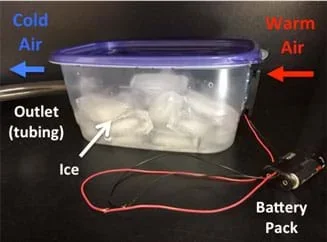 Figure 1. An assembled air conditioning unit setup.Copyright 2015 Michaela Rikard, Engineering World Health
 - Set up a challenge course at one location in the classroom. Refer to the activities pictured in Figure 2.
Challenge 1: Empty a syringe full of water into a beaker.
Challenge 2: Remove three small items from a container and place them in an individual serving cup.
Challenge 3: Touch your index finger to your nose.
Challenge 4: Submerge your arm in a bucket of water to test for leaks.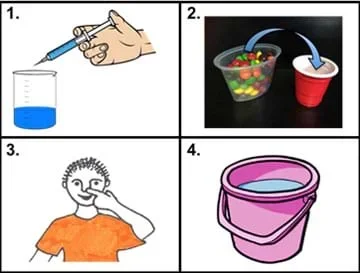 Figure 2. Challenge course activities.Copyright 2015 Michaela Rikard, Engineering World Health
With the Students—Introduction & Identifying the Needs and Constraints
Present to the class the Introduction/Motivation section content to introduce the activity context and topic, conduct an informal pre-assessment discussion and present the design challenge: To design and create an effective Ebola biohazard suit that covers your arm while also keeping it cool!
With the Students—Step 1: Save the Ice! (Insulation) (10 minutes)
- Divide the class into groups of three students each. Hand out the worksheets.
- Provide each group with an air-conditioning unit filled with approximately one quart of ice. Discuss the concepts of conduction and convection. Ask what they expect to happen to the ice if it is left out at room temperature.
- Challenge the teams to use the given limited materials to insulate their air-conditioning units so that they stay cold while they are fabricating their suits (approximately 45 minutes). Direct the students to follow along with the worksheet and answer the worksheet questions.
- Set up an air-conditioning unit with ice at the front of the room that is not insulated to serve as a control so students can compare the amount of ice that melted in the un-insulated unit to the amount of ice that melted in their own insulated units at the end of the building time.
With the Students—Step 2: Building the Suit (30-45 minutes)
- Challenge teams to design and build biohazard suits that fit the arm and hand of one teammate per group. Suggest that they start by brainstorming to get ideas from all team members.
- Make sure that students understand the Ebola biohazard glove design requirements, which are listed on the worksheet.
- The biohazard glove must extend just above the elbow, but no higher than the shoulder.
- The thermometer placed on the forearm must be visible through the suit.
- Must pass the challenge course obstacles using the gloved hand/arm—so you must have good use of the arm, hand and fingers, and make the glove waterproof!
- Must use the air-conditioning unit to keep the hand/arm cool.
- Make sure teams are following along and answering the worksheet questions.
With the Students—Step 3: Testing (and Improving) the Suit (15 minutes)
As teams finish building, begin testing. Three methods of testing are outlined on the worksheet. Conduct them in the order presented: 1) design requirements, 2) air-conditioning, and 3) challenge course. The results give students a basis for the evaluation of their prototype biohazard gloves. Refer to the Worksheet Example Answers (PDF) for more detailed explanation and example responses, including a photograph showing an example thermometer placement.
- Design Requirements Check: Students (or teachers) assess whether the Ebola biohazard glove meets the two specified design requirements listed, and record a "pass" or "fail" on the worksheet.
- Does the suit extend just above the elbow, but no higher than the shoulder?
- Is the thermometer (placed on the forearm) visible through the suit?
- Air Conditioning Check: Make sure that groups takes immediate temperature readings after hooking up the air-conditioning unit to its suit. Then students use a stopwatch and record the temperature in their suits after 30 seconds, one minute, and two minutes after turning on the fan. Students calculate the differences between the starting temperature and the ending temperature (at two minutes).
- Challenge Course: The glove-wearing students perform four challenges (see Figure 2) while their teammates record in the worksheet table a "pass" or "fail" for each challenge. Make sure all challenges are performed using only the arm/hand inside the biohazard suit and performed in the following order: 1) completely empty a syringe of water into a beaker, 2) pick three small candies from a container and place them in a cup, 3) touch index finger to nose to prove that the suit is flexible, and 4) submerge the glove in a bucket of water to test the suit for leaks.
As teams finish testing, remind them to complete the final "improve" question on the worksheet, discussing as a group what worked well and what did not work so well, and ideas for improvement. Explain to students that this is the "improve" step of the engineering design cycle. As time permits, let groups make modifications to their suits and attempt the challenge course again.
With the Students—Reflection
- Lead a class discussion, as described in the Assessment section, in which students compare their findings and reflect on how well different designs performed.
- Administer the post-activity test.
- convection
- The process by which heat is transferred from an area of high temperature to low temperature through the movement of fluids.
- constraint
- In engineering design, constraints are the objectives and requirements that a final design solution is required to meet.
- ebola
- An infectious disease that causes fever and severe internal bleeding and is spread through direct contact with infected bodily fluids. Also called Ebola hemorrhagic fever.
- heat
- The energy of a substance, which can be measured by temperature.
- infectious disease
- A disease caused by organisms such as bacteria, viruses, fungi and parasites, and that can be transmitted from person to person.
- permeability
- The property of a material or membrane that permits liquids and gases to pass through it.
- prototype
- A first attempt or early model of a new product or creation. May be revised many times.
- conduction
- The process by which heat transfers between materials of different temperatures, flowing from a hotter to a colder body through direct contact between the materials.
- insulation
- A material that reduces the movement, passage or leakage of heat between objects of differing temperatures.
- ventilation
- Providing fresh (outside) air into a building, room or space.
Pre-Activity Assessment
Informal Discussion: As a class or in small groups, ask students the following questions to get them thinking about the activity topic. Students' answers reveal their base knowledge of the subject matter.
- What is an infectious disease?
- Why do doctors wear masks and gloves?
- What do you know about Ebola?
Activity Embedded Assessment
Worksheet: Direct students to use the five-page Suit Up! Worksheet (PDF) to guide them through the activity. Review their data collection, drawings and answers to assess their engagement and mastery of the topics.
Post-Activity Assessment
Reflection Discussion: As a class, discuss the advantages and disadvantages of the prototype suit designs as well as further improvements that teams might make. Ask the following questions:
- What worked well about your suit? What did not? What challenges did you not complete?
- Was your ice melted after 45 minutes?
- How could you have insulated your suit more effectively?
- How did different group designs affect the results? Which design(s) worked the best?
- How did the design requirements (engineers call these "constraints") affect the final glove designs?
Post-Test: Administer the four-question Suit Up! Post-Test (PDF), which asks students to find the right place for six vocabulary terms in sentences with blank spots. Review their answers to gauge their comprehension.
- Do not let students connect the battery pack to the fan.
- Make sure that you connect the battery pack and fan wires in the correct orientation.
- Do not permit students to use duct tape to secure the suit to the arm.
- Make sure students do not play with plastic bags or put them around their heads and necks.
- Unhook the air-conditioning units when students are submerging their gloves in water and keep all electronics away from the bucket of water.
Encourage students to make sure that their gloves do not seal tightly around their arms. An opening is needed at the top of the glove to insert the tubing from the air-conditioning unit to cool the glove. This opening also creates a place for air to escape from the glove. Make the glove loose enough around the arm to permit it to inflate slightly.
Consider providing each group with a thermometer already placed inside a clear Ziploc bag or taped to a piece of clear plastic so that it is easier for them to incorporate into the suit.
Ask students to consider other common, everyday measures that we use to prevent ourselves from becoming sick.
For lower grades, assist students in attaching the tubing to their prototype gloves in order to connect the air-conditioning unit, or consider entirely eliminating the cooling aspect of the project.
For higher grades, consider adding a cost analysis aspect to the project. In communities where Ebola is prevalent, people have limited access to resources and it is important that solutions are low-cost and use readily available materials. Assign costs to each of the materials: make plastic and trash bags the most expensive, and make cardboard and paper the least expensive. As part of the design and planning stage, impose a budget and have teams each generate a bill of materials for what they want to purchase— a list of materials, quantities and associated costs. Also, consider having students record temperature data in either Celsius or Fahrenheit and require them to convert the data to the other temperature scale.
As part of the Introduction/Motivation section, show students the 2:15-minute CNN video about a woman in Liberia who created her own protective suit to care for her family members: Woman Saves Three Relatives from Ebola: http://www.cnn.com/2014/09/25/health/ebola-fatu-family/
These resources provide great information on heat and energy transfer for young students.
- Bill Nye the Science Guy on Heat (2:05-minute video): http://ed.ted.com/on/XZnXt1UQ#watch
- Heat Energy Examples Animation for Kids (4:23-minute video): https://www.youtube.com/watch?v=xgOlB4TmbBY
- Physics for Kids, Science of Heat: http://www.ducksters.com/science/heat.php
Cohen, Elizabeth. Woman Saves Three Relatives from Ebola. Cable News Network, Turner Broadcasting System, Inc. September 26, 2014. http://www.cnn.com/2014/09/25/health/ebola-fatu-family/
Ebola (Ebola Virus Disease), 2014 Ebola Outbreak in West Africa. Last updated May 27, 2015. Centers for Disease Control and Prevention, US Department of Health and Human Services, Atlanta GA. Accessed May 28, 2015. http://www.cdc.gov/vhf/ebola/outbreaks/2014-west-africa/
Contributors
Ben Fleishman; Michaela Rikard; Leyf Starling
Supporting Program
STEM Programs, Engineering World Health
Acknowledgements
This activity was developed by Engineering World Health with support from the Biogen Foundation and The Engineering Place, College of Engineering, North Carolina State University.
Copyright
2015 by Regents of the University of Colorado; original © 2015 Engineering World Health