
Alloy the Way to Mars
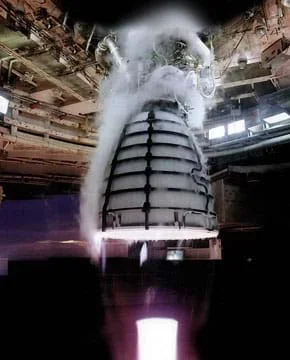 The RS-25 engine of the Space Launch System that will eventually transport astronauts to Mars.Copyright 2013 Aerojet Rocketdyne, NASA http://www.nasa.gov/exploration/systems/sls/rs25-engine-powers-sls.html
Acting as engineering teams, students take measurements and make calculations to determine the specific strength of various alloys and then report their data to the rest of the class. Using this class data, students write data-based recommendations to NASA regarding the best alloy to use in the construction of the engine and engine turbines for the Space Launch System that will eventually be used to transport astronauts to Mars.
Engineering design challenges often require careful materials selection. For example, what materials are best to make airplane engine turbines? For every application, engineers select the material(s) that exhibits the specific desired properties. In the case of airplane engine turbines, engineers might want to select a metal that is strong, resistant to corrosion, and hard. In this activity, students play the role of materials engineers by testing properties of given alloys and then making recommendations based on their findings.
After this activity, students should be able to:
- Test materials in order to determine specific strength.
- Draw conclusions about a material based on obtained data.
- Students will develop an understanding of the attributes of design.
Grades K-12
Do you agree with this alignment? - Students will develop abilities to assess the impact of products and systems.
Grades K-12
Do you agree with this alignment?
- 5-PS1-3 Make observations and measurements to identify materials based on their properties.
Grade 5
Do you agree with this alignment? - S.IA.17.13 Communicate and defend findings of observations and investigations.
Grade 7
Do you agree with this alignment? - S.IP.07.16 Identify patterns in data.
Grade 7
Do you agree with this alignment?
- 5-PS1-3 Make observations and measurements to identify materials based on their properties.
Grade 5
This resource focuses on the following Three Dimensional Learning aspects of NGSS:
Science & Engineering Practices- Make observations and measurements to produce data to serve as the basis for evidence for an explanation of a phenomenon.Do you agree with this alignment?
Disciplinary Core Ideas- Measurements of a variety of properties can be used to identify materials. (Boundary: At this grade level, mass and weight are not distinguished, and no attempt is made to define the unseen particles or explain the atomic-scale mechanism of evaporation and condensation.)Do you agree with this alignment?
Crosscutting Concepts- Standard units are used to measure and describe physical quantities such as weight, time, temperature, and volume.Do you agree with this alignment?
Do you agree with this alignment? - Make observations and measurements to produce data to serve as the basis for evidence for an explanation of a phenomenon.
Each group needs:
- 1 alloy sample; a different sample for each group; see the Class Data Table (PDF) for seven alloy suggestions and see Figure 1 for an example size, although sizes and types may vary; alloy material is available at https://www.onlinemetals.com/, including custom sizes;
- digital calipers; if limited supplies, okay to share among groups
- electronic balance; if limited supplies, okay to share among groups
- RS-25 Article (PDF), one per student
- Analysis of RS-25 Article Pre-Assessment (PDF), one per student
- Density and Specific Strength Student Handout (PDF), one per group
- Final Recommendations Post-Assessment (PDF), one per student or per group, depending on whether you want students to do the post-assessment individually or together
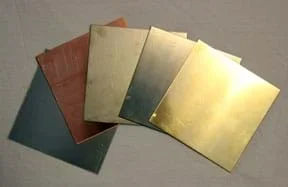 Figure 1. Samples of five alloys.Copyright 2015 Janelle Orange, RET Program, College of Engineering, Michigan State University
To share with the entire class:
- metal Slinky® (a flexible, helical spring toy), for a class demonstration
- (optional) computer or overhead projector, to display the class data table
- RS-25 Article (docx)
- RS-25 Article (pdf)
- Analysis of RS-25 Article Pre-Assessment (docx)
- Analysis of RS-25 Article Pre-Assessment (pdf)
- Analysis of RS-25 Article Pre-Assessment Answer Key (docx)
- Analysis of RS-25 Article Pre-Assessment Answer Key (pdf)
- Example Class Data Table (docx)
- Example Class Data Table (pdf)
- Example Class Data Table Answer Key (docx)
- Example Class Data Table Answer Key (pdf)
- Density and Specific Strength Student Handout (docx)
- Density and Specific Strength Student Handout (pdf)
- Density and Specific Strength Student Handout Example Answer (pdf)
- Final Recommendations Post-Assessment (docx)
- Final Recommendations Post-Assessment (pdf)
Students should know how to calculate density using the equation: density = mass/volume, and be able to use an electronic balance to measure mass (in grams). Students should also be able to convert measurements from a base unit to kilos.
In order to design an engine and engine turbines that will survive the massive forces they will encounter during the launch of the Space Launch System, we need to make sure that the materials used to build the engine meet certain criteria. You have brainstormed some ideas about the properties we want the materials to have. Let’s share some of the responses you provided for question 5 on your RS-25 article assessment. (Pause and let students share their answers. Record student ideas on the classroom board or overhead for the class to see.)
I’ve noticed that many of you repeated that the materials should be strong and lightweight. Many transportation applications require these very same properties. When engineers are looking for a material that is both strong and lightweight, they calculate the specific strength of the material. The higher the specific strength, the stronger and more lightweight the material. It appears that each of us would like to know the specific strength of the materials used to make the engine and engine turbines.
In order to understand specific strength, we need to first understand strength. Let’s think about the term “strength.” Describe what it means to you. (Pause for sharing of responses. Expected answers: Strength is how much weight a person can lift, how strong something is, etc.)
To understand the strength of a material, we need to think about how much stress the material can handle. To illustrate this, we are going to use a Slinky. As we stretch the Slinky, pay attention to when it can no longer return to its original shape. (Run a series of tests in which the Slinky is stretched and then recoils. Eventually push the Slinky beyond its capabilities so that it deforms in shape, exhibiting the limitations of its strength.) What have we learned from this demonstration? (See what students say.) We observed that the metal of the Slinky has a specific strength. This is called the ultimate tensile strength, which is the maximum amount of stress a material can sustain before breaking or failing.
When we know the ultimate tensile strength and the density of a material, we can calculate the specific strength. Next, we will enhance our initial recommendations by determining the specific strength of various alloys. Then, as if we were real-world engineers, we will use our findings to recommend the material NASA should use in the design of the RS-25 engine and engine turbines.
Background
Specific strength can be calculated using a material’s ultimate tensile strength and density. The strength of materials refers to the amount of stress or strain that a material can sustain before deformation or fracturing occurs. Most alloy materials used in transportation and biomedical applications exhibit ductility, referring to the manner in which a material fractures. Alloys that are ductile tend to show deformation, whereas non-ductile materials are very brittle.
The ultimate tensile strength (UTS), most often referred to as tensile strength, is determined by using a universal testing machine, in which a load is applied to a material sample until failure occurs.
Before the Activity
- Obtain alloy samples and gather other materials.
- Make copies of the RS-25 Article (PDF) and Analysis of RS-25 Article Pre-Assessment (PDF) (one each per student). Make copies of the Density and Specific Strength Student Handout (PDF) (one per group) and the Final Recommendations Post-Assessment (PDF) (one per person or per group, depending on whether you want students to do the post-assessment individually or together).
- Referring to the Class Data Table (PDF) as an example, prepare a class data table that reflects the actual samples available for the activity, including filling in the UTS column for the samples. Create the class data table so it can be projected for the class to see (overhead transparency, PowerPoint slide, etc.); alternatively, draw it large on the classroom board or poster paper, or make paper copies to hand out.
With the Students
- Hand out to students the article and pre-assessment. Give them time to read the article and individually answer the pre-assessment questions.
- Then present to the class the Introduction/Motivation content, which includes a demonstration using a Slinky.
- Project the class data table so that all students can see it (or hand out paper copies). During the course of the activity, groups will fill in the missing information using data obtained during the activity, typing or writing their values into the class table.
- Divide the class into groups of four students each.
- Give each group one alloy sample and one student handout.
 Using digital calipers to measure an alloy sample.Copyright 2016 Janelle Orange, RET Program, College of Engineering, Michigan State University
- Direct the teams to work together to complete the procedures on the handout. Make the following points to the class before they get started:
- In your teams, decide who takes on the following roles: senior quality engineer, senior engineering manager, principal aerospace engineer, and senior aerospace engineer.
- Then individually complete the procedures for your roles, as outlined on the “Task Table” on page 2 of the handout.
- Once you have completed the handout, record your team’s data in the class data table.
- Administer the post-assessment by having students (individually or in groups) examine the class data to make a recommendation for an alloy for NASA to use the RS-25 engine.
- alloy
- A material made by mixing two or more metallic elements, or by mixing a metal with a nonmetal. For example, bronze is a mixture of copper and tin, and steel is a mixture of iron and carbon.
- brittleness
- A characteristic of a substance that is hard and rigid, and breaks with smooth fractures, such as glass. A brittle material has very little or no deformation capabilities.
- deformation
- The changing of a material’s shape or form, without fracturing, due to the application of forces. For example, when a plastic bag is stretched and no longer retains its original shape.
- density
- The amount of mass a substance has in a given volume. Equation: density = mass / volume. Measured in grams per cubic centimeter (g/cm3).
- ductility
- A solid material’s ability to deform (stretch) under tensile stress.
- fracturing
- The cracking or breaking of a material when put under stress. For example, when glass is dropped to the ground and breaks apart.
- specific strength
- A material’s ultimate tensile strength (UTS) divided by its density. Also known as the strength-to-weight ratio. Measured in Pa/(kg/m3).
- stress
- The force exerted across a designated area before deformation occurs
- ultimate tensile strength
- The maximum amount of stress a material can sustain before breaking or failing. Measured in megapascals (MPa). Abbreviated as UTS.
Pre-Activity Assessment
Read & Answer: Before starting the activity, give students time to individually read the RS-25 Article (PDF) and answer the five questions on the Analysis of RS-25 Article Pre-Assessment (PDF). Students are asked to predict the desired properties needed to build an engine and engine turbines to sustain the launch of a NASA rocket. Students share their answers during the Introduction/Motivation content presentation.
Activity Embedded Assessment
Activity Handout: Working in teams, students determine the specific strength of a given alloy, as guided by the Density and Specific Strength Student Handout (PDF). The group data is compiled into the class data table for further comparative analysis.
Post-Activity Assessment
Written Recommendation: At activity end, have students (individually or as groups) complete the Final Recommendations Post-Assessment (PDF), in which they write letters to Ms. Jody Singer, SLS Deputy Program Manager at NASA, explaining their recommendations for which alloy to use in the construction of the RS-25 engine and engine turbines. Expect students to recommend using the material with the higher specific strength. For example, of the seven suggested alloy types, 625 nickel sample has the greatest specific strength. Ideally, expect the conclusions that students write to state that the sample with the highest specific strength be used and present data to support their reasoning.
Lots of great information about NASA’s Space Launch System at: https://www.nasa.gov/exploration/systems/sls/index.html
Callister, Jr., William D. Materials Science and Engineering: An Introduction (5th edition) New York, NY: Wiley, 2000.
Davidson, Megan. RS-25: The Clark Kent of Engines for the Space Launch System. Posted September 13, 2013; last updated July 30, 2015. Space Launch System, Exploration Systems, Journey to Mars, NASA. Accessed July 25, 2015. http://www.nasa.gov/exploration/systems/sls/rs25-engine-powers-sls.html
- Alloy Advantage
- Alloy the Way to Mars
Contributors
Janelle Orange
Supporting Program
Robotics Engineering for a Better Life and Sustainable Future RET, College of Engineering, Michigan State University
Acknowledgements
The contents of this digital library curriculum were developed through the Robotics Engineering for a Better Life and Sustainable Future research experience for teachers under National Science Foundation RET grant number CNS 1300794. However, these contents do not necessarily represent the policies of the NSF and you should not assume endorsement by the federal government.
Copyright
2016 by Regents of the University of Colorado; original © 2015 Michigan State University