
Designing Prototypes to Save Coral Reefs
Students are presented with the phenomenon of human activities killing coral reefs. They work in groups of 2-5 to create a prototype to help reduce the impact of coral loss from an assigned perspective (e.g., coral bleaching, tourism, pollution, overfishing/dredging). They should already have basic knowledge of the importance of coral reefs and why they need to be saved, as well as previous experience with general research. Students brainstorm solutions, build prototypes, and test those prototypes that will help reduce their human impact or counter the effects of their human impact. The prototype needs to be created using inexpensive materials, and interact with saltwater for certain periods of time (e.g., float, sink, be buoyant in water, filter water). Students present their prototypes to the class at the end of the process. Students have official check-ins with the teacher periodically to gauge progress, and the teacher conducts informal check-ins with students on a regular basis to provide support as needed.
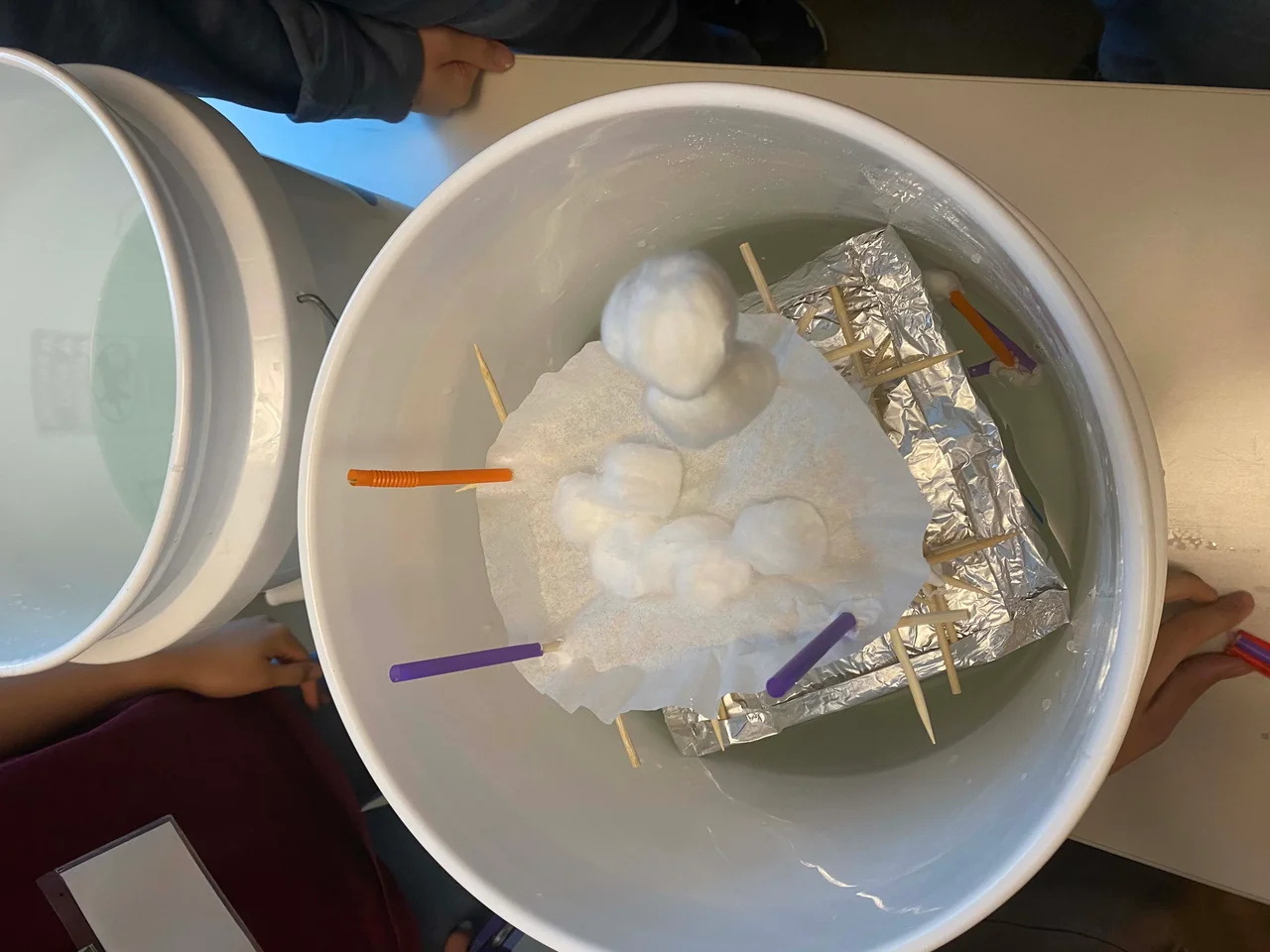 A student group’s first prototypeCopyright Photo taken by Julie Cooper, 2023.
Many human activities have negative impacts on our environment, some of which are still to be discovered or fully understood. Environmental engineers help design new technology that will help sustain our natural resources and reverse the effects of human impacts to the environment. They use their knowledge and ask questions to discover new devices that can help us keep our environment healthy for many generations to come.
After this activity, students should be able to:
- Define what anthropogenic effects are.
- Communicate the cause of mass coral die-off.
- Explain the major impacts of coral die-off.
- Explain the importance of coral reefs.
- Design, evaluate, or refine a solution (technological or otherwise) to coral loss.
- HS-ESS3-4 Evaluate or refine a technological solution that reduces impacts of human activities on natural systems.
Grades 9-12
This resource focuses on the following Three Dimensional Learning aspects of NGSS:
Science & Engineering Practices- Design or refine a solution to a complex real-world problem, based on scientific knowledge, student-generated sources of evidence, prioritized criteria, and tradeoff considerations.Do you agree with this alignment?
Disciplinary Core Ideas- Scientists and engineers can make major contributions by developing technologies that produce less pollution and waste and that preclude ecosystem degradation.Do you agree with this alignment?
- When evaluating solutions it is important to take into account a range of constraints including cost, safety, reliability and aesthetics and to consider social, cultural and environmental impacts.Do you agree with this alignment?
Crosscutting Concepts- Engineers continuously modify these technological systems by applying scientific knowledge and engineering design practices to increase benefits while decreasing costs and risks.Do you agree with this alignment?
- Feedback (negative or positive) can stabilize or destabilize a system.Do you agree with this alignment?
Do you agree with this alignment? - Design or refine a solution to a complex real-world problem, based on scientific knowledge, student-generated sources of evidence, prioritized criteria, and tradeoff considerations.
- HS-ETS1-2 Design a solution to a complex real-world problem by breaking it down into smaller, more manageable problems that can be solved through engineering.
Grades 9-12
This resource focuses on the following Three Dimensional Learning aspects of NGSS:
Science & Engineering Practices- Design a solution to a complex real-world problem, based on scientific knowledge, student-generated sources of evidence, prioritized criteria, and tradeoff considerations.Do you agree with this alignment?
Disciplinary Core Ideas- Criteria may need to be broken down into simpler ones that can be approached systematically, and decisions about the priority of certain criteria over others (trade-offs) may be needed.Do you agree with this alignment?
Do you agree with this alignment? - Design a solution to a complex real-world problem, based on scientific knowledge, student-generated sources of evidence, prioritized criteria, and tradeoff considerations.
- HS-LS2-7 Design, evaluate, and refine a solution for reducing the impacts of human activities on the environment and biodiversity.
Grades 9-12
This resource focuses on the following Three Dimensional Learning aspects of NGSS:
Science & Engineering Practices- Design, evaluate, and refine a solution to a complex real-world problem, based on scientific knowledge, student-generated sources of evidence, prioritized criteria, and tradeoff considerations.Do you agree with this alignment?
Disciplinary Core Ideas- When evaluating solutions it is important to take into account a range of constraints including cost, safety, reliability and aesthetics and to consider social, cultural and environmental impacts.Do you agree with this alignment?
- Moreover, anthropogenic changes (induced by human activity) in the environment—including habitat destruction, pollution, introduction of invasive species, overexploitation, and climate change—can disrupt an ecosystem and threaten the survival of some species.Do you agree with this alignment?
- Humans depend on the living world for the resources and other benefits provided by biodiversity. But human activity is also having adverse impacts on biodiversity through overpopulation, overexploitation, habitat destruction, pollution, introduction of invasive species, and climate change. Thus sustaining biodiversity so that ecosystem functioning and productivity are maintained is essential to supporting and enhancing life on Earth. Sustaining biodiversity also aids humanity by preserving landscapes of recreational or inspirational value.Do you agree with this alignment?
- Biodiversity is increased by the formation of new species (speciation) and decreased by the loss of species (extinction).Do you agree with this alignment?
Crosscutting Concepts- Much of science deals with constructing explanations of how things change and how they remain stable.Do you agree with this alignment?
Do you agree with this alignment? - Design, evaluate, and refine a solution to a complex real-world problem, based on scientific knowledge, student-generated sources of evidence, prioritized criteria, and tradeoff considerations.
- communicate and apply scientific information extracted from various sources such as current events, news reports, published journal articles, and marketing materials;
Grades 11-12
Do you agree with this alignment?
Each group needs:
- laptop computer (1 per student is preferred but one per group is acceptable)
- Grading Rubric (PDF)
- Research Materials Handout (PDF) (includes information on coral bleaching, pollution, marine debris, tourism)
- Define the Problem and Brainstorm Solutions Worksheet (PDF)
- Prototype #1 Sketch Worksheet (PDF)
- Prototype Reflection Worksheet (PDF)
- End Prototype Worksheet (PDF)
For the entire class to share:
- at least one tank or large plastic container full of saltwater to test prototypes (if saltwater is not available, freshwater can be used, but make sure to discuss the difference between saltwater and freshwater with students)
- materials to build prototypes, such as: (list is not exclusive; you can get more items or other items as you see fit)
- cardboard (boxes or cartons, free if recycled)
- gallon plastic zipper storage bags (e.g., available at Walmart)
- plastic wrap (e.g., available at Amazon)
- wooden skewers (e.g., available at Amazon)
- recycled plastic bottles (free if you save them up)
- straws (e.g., available at Amazon)
- super glue (e.g., available at Amazon)
- aluminum foil
- cotton balls
- scissors
- Grading Rubric (docx)
- Grading Rubric (pdf)
- Peer Evaluations (docx)
- Peer Evaluations (pdf)
- Define the Problem and Brainstorm Solutions Worksheet (docx)
- Define the Problem and Brainstorm Solutions Worksheet (pdf)
- Define the Problem and Brainstorm Solutions Worksheet Answer Key (docx)
- Define the Problem and Brainstorm Solutions Worksheet Answer Key (pdf)
- Prototype #1 Sketch Worksheet (docx)
- Prototype #1 Sketch Worksheet (pdf)
- Prototype #1 Sketch Worksheet Answer Key (docx)
- Prototype #1 Sketch Worksheet Answer Key (pdf)
- Research Materials (docx)
- Research Materials (pdf)
- Save Coral Reefs Presentation (pptx)
- Save Coral Reefs Presentation (pdf)
- Prototype Reflection Worksheet (docx)
- Prototype Reflection Worksheet (pdf)
- Prototype Reflection Worksheet Answer Key (docx)
- Prototype Reflection Worksheet Answer Key (pdf)
- End Prototype Worksheet (docx)
- End Prototype Worksheet (pdf)
- End Prototype Worksheet Answer Key (docx)
- End Prototype Worksheet Answer Key (pdf)
- Making Sense Assessment (docx)
- Making Sense Assessment (pdf)
Students must be familiar with researching answers to specific questions using reliable sources. Students must be familiar with the basic location of coral reefs (tropical, shallow waters), and have a basic understanding of what coral reefs are.
Today we’re going to begin by talking about coral reefs and why they are so important to our planet, and the impacts that human activities have on them. Then we’re going to work in teams to use the engineering design process to build devices that can help coral reefs survive.
(Optional: Use Save Coral Reefs Presentation (PPTX) slides 2-4 to guide students through the Introduction and Motivation.
Watch the following video with your students to introduce or refresh their memory on what a coral reef is.
https://www.youtube.com/watch?v=ZiULxLLP32s (0:00 to 1:21)
Then have students brainstorm, “Why are coral reefs important?” Keep track of their answers on a whiteboard/chalkboard/chart where they can see it. Then, watch the following video.
https://www.youtube.com/watch?v=ZiULxLLP32s (1:22 – end)
Discuss the brainstormed list and the video to come to a class consensus on the importance of coral reefs (the answer includes environment supporting ocean biodiversity, provide food, tourism location, coastal protection).
Then discuss what all the ways coral reefs are being killed have in common (the answer is human activity via contribution to global warming, marine debris, pollution, and tourism).)
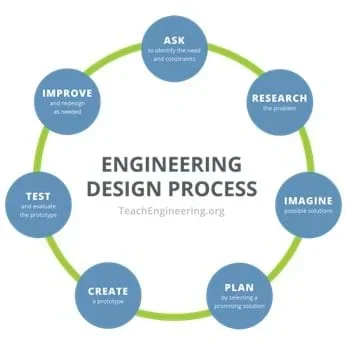 The steps of the engineering design process are a cyclical process. They can be performed in different sequences and repeated as needed.Copyright TeachEngineering.org, 2014
Background
Coral reefs are the most biologically diverse ecosystems on our planet. They are located along the coast in shallow, tropical water. Coral reefs are built by different species of hard corals and soft corals, which create the foundation for coral communities to grow on and live in. These ecosystems are a crucial resource for many countries around the world for food, tourism, and coastline protection. Coral reefs are estimated to generate roughly $375 billion a year in revenue. Given their importance, it is critical for us to protect coral reefs, but as a species we haven’t been doing a very good job of that. Everyone can help contribute to the survival of coral reefs, from small ways such as wearing coral-safe sunscreen in the water, to larger ways such as declaring areas with coral reefs as marine preservation sites. This project will get students to think about the importance of coral reefs and how people like them are able to help create solutions to a global crisis.
Coral reefs are essential habitats that play a large role in tourism, food supply, and coastal protection for countries all over the world. These habitats contain some of the highest biodiversity on our planet, and they need to be protected. Because of global warming, sea surface temperatures are rising; these rising temperatures lead to coral bleaching, which is when the microscopic zooxanthellae that live in corals leave the corals, causing the coral to become white (hence the term ‘bleaching’). Corals that bleach for too long will die, causing macroalgal species to take over reefs, changing the dynamics of the ecosystem. Other impacts to coral reefs include marine debris, pollution, and tourism. Marine debris causes physical damage to corals when it gets caught on them or over them, causing corals to be blocked from the sun or creating lesions that can make them susceptible to disease. Pollution is dangerous for corals because it causes unhealthy water conditions, leading to disease or death in mass quantities. Additionally, tourism, while lucrative for countries, can be dangerous to coral colonies; people touch corals and wear sunscreen that can leach poisonous materials onto reefs, causing them to be more susceptible to disease and death.
Before the Activity
- Gather materials. As appropriate, start collecting cardboard boxes and plastic bottles a few weeks ahead of time, and/or ask students to bring in empty, clean recyclables.
- Make copies of handouts for students: Grading Rubric (PDF), Research Materials (PDF), Define the Problem and Brainstorm Solutions Worksheet (PDF), Prototype #1 Sketch Worksheet (PDF), Prototype Reflection Worksheet (PDF), End Prototype Worksheet (PDF).
- Assign groups as necessary.
With the Students
Class 1 (50 min)
- Divide students into groups of two to four students each and assign them a coral reef health issue to tackle (coral bleaching, marine debris, pollution, or tourism). (5 minutes)
- Explain the engineering design process to students (this is included in Save Coral Reefs Presentation (PPTX) Slides 5-6). (10 minutes)
- Work through an example of the engineering design process with your students so they get a better understanding of the process, and what is expected of them (see Save Coral Reefs Presentation (PPTX) Slides 7-13). Distribute copies of the Grading Rubric (PDF). (20 minutes)
- Start working through the engineering design process with your students, beginning with ‘Ask’. Have the class as a whole brainstorm, “Can we help coral reefs? And why should we help coral reefs?” (You want to get them to the idea that humans should protect coral reefs because we are responsible for their rapid decline.) (5 minutes)
- Explain to your students that they will be building a device that will help coral reefs survive. Each group will be tackling the issue using a different human impact as their guide (coral bleaching, marine debris, pollution, or tourism). It will be tested to ensure that it can be functional in water, that it is designed to help lessen the effect of their human impact, and that it is made using everyday items. Then as a class discuss the constraints of the project; as needed, explain what a constraint is, and tell your students that they need to be realistic about their design because they will have to build it and test it in water. This means they can’t design an engine, or something that costs $5,000 dollars. Brainstorm what else this means they cannot create; other examples include recreating expensive technology, using expensive technology to build their prototype, building something larger than the container of water the class has access to, or anything too heavy that they cannot move it themselves. (see Save Coral Reefs Presentation (PPTX) Slides 14-16). (5 - 10 minutes)
Class 2 (50 min)
- Have students start the ‘Research’ phase next; each group will get the Research Materials (PDF) for their human impact. They can use the sources provided, and others as they see fit. Students will research and narrow down a specific problem to try to solve. It has to be something they can build a model to solve. Students will create a specific problem statement that they will submit to the teacher for approval. Students will start filling out the ‘define the problem’ section of the Define the Problem and Brainstorm Solutions Worksheet (PDF). The main idea here is that you approve of the issue they are tackling, and you know it is something that they will build a prototype to solve (see Save Coral Reefs Presentation (PPTX) Slides 17). (25 minutes)
- Once students have completed their research, lead them into the ‘Imagine’ phase of the engineering process. Give students examples of some brainstorming methods (see the Brainstorming Methods section of Save Coral Reefs Presentation (PPTX) Slide 18) and, if necessary, run them through a practice brainstorming activity as a class (also found in Brainstorming Methods, Save Coral Reefs Presentation (PPTX) Slides 19-20). Then, have students brainstorm ideas for their device on the second half of the Define the Problem and Brainstorm Solutions Worksheet (PDF). (25 minutes)
Class 3 (50 min)
- Once students have a good understanding of the problem they want to solve and have brainstormed ideas, have them create a sketch of their prototype, labeling each part of it with the material it is made from. Have them turn in their sketch and a summary of how they envision their prototype working using the Prototype #1 Sketch Worksheet (PDF)(see Save Coral Reefs Presentation (PPTX)Slides 21-22).
Class 4 (50 min)
- Students will now ‘Create’ their prototypes. Provide them with the materials list for the entire class, as well as anything you added that you thought might be helpful, and let them create their first prototype (see Save Coral Reefs Presentation (PPTX) Slide 23).
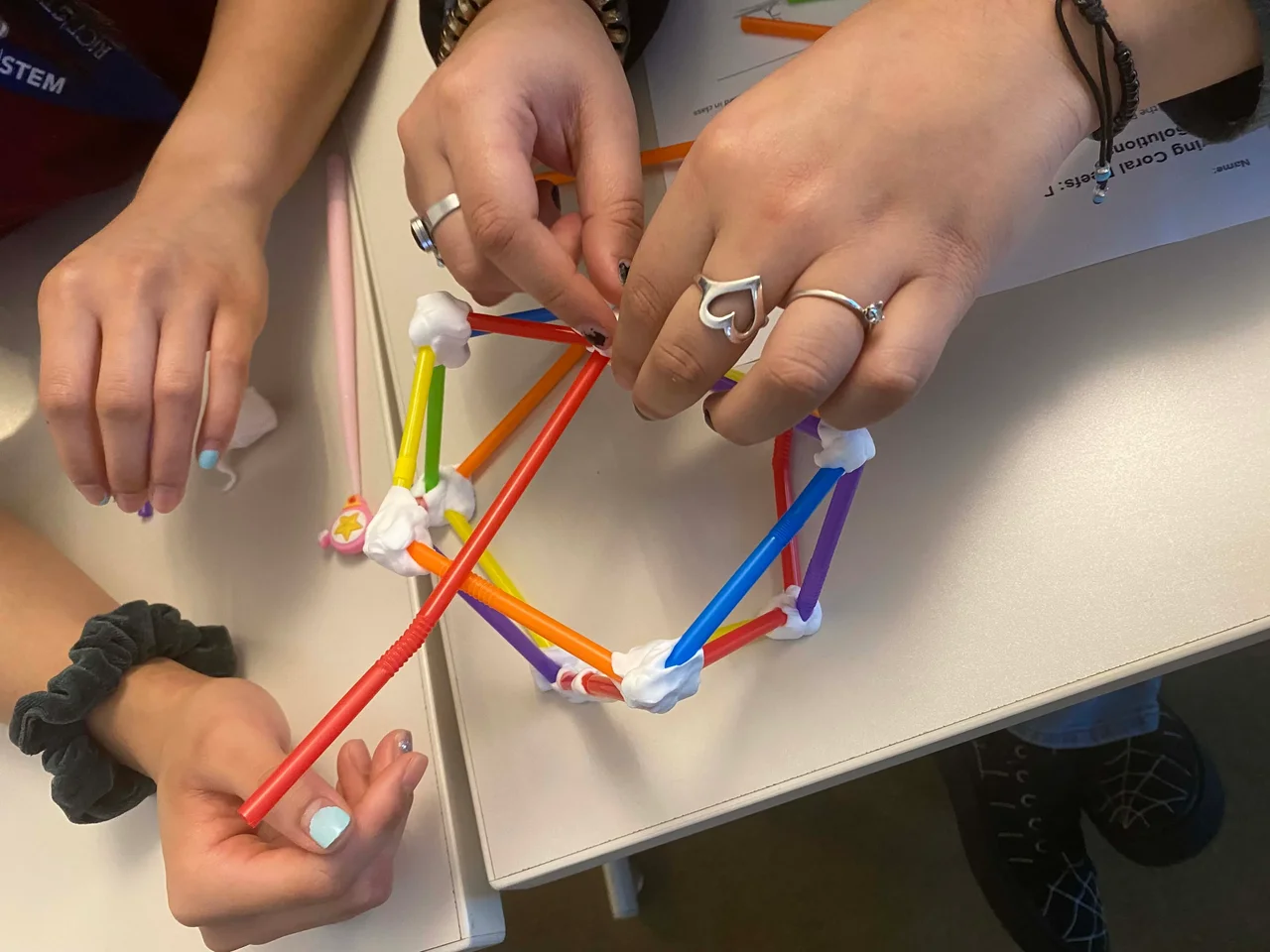 Students work together to build the first prototype of their envisioned device using straw and putty.Copyright Photo taken by Julie Cooper, 2023.
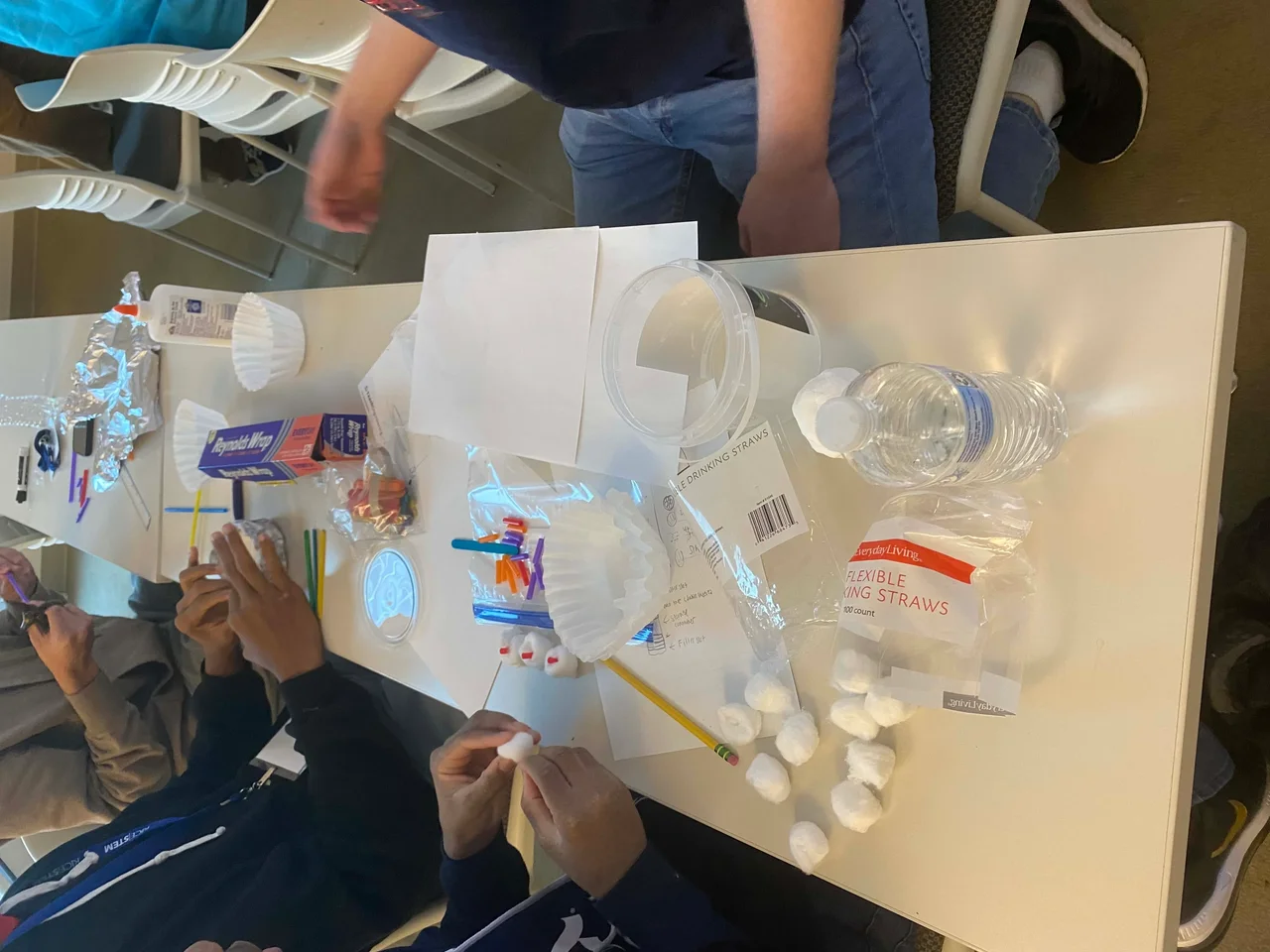 Students laying out materials and beginning to put together their first prototype.Copyright Photo taken by Julie Cooper, 2023.
Class(es) 5-6 (one or two 50-min classes, depending on whether you want students to adjust their prototype or just reflect on it)
- Once groups have their first prototype, you can now ‘Test’ them. Fill a 10-gallon (or larger) container with water (saltwater if you can) and have students place their prototype in the water and evaluate their device on how well it holds up being in the water; if time allows, leave it overnight (see Save Coral Reefs Presentation (PPTX) Slide 24). A student group’s first prototype being tested in a bucket of water for 5 minutes while students observe and reflect.Copyright Photo taken by Julie Cooper, 2023.
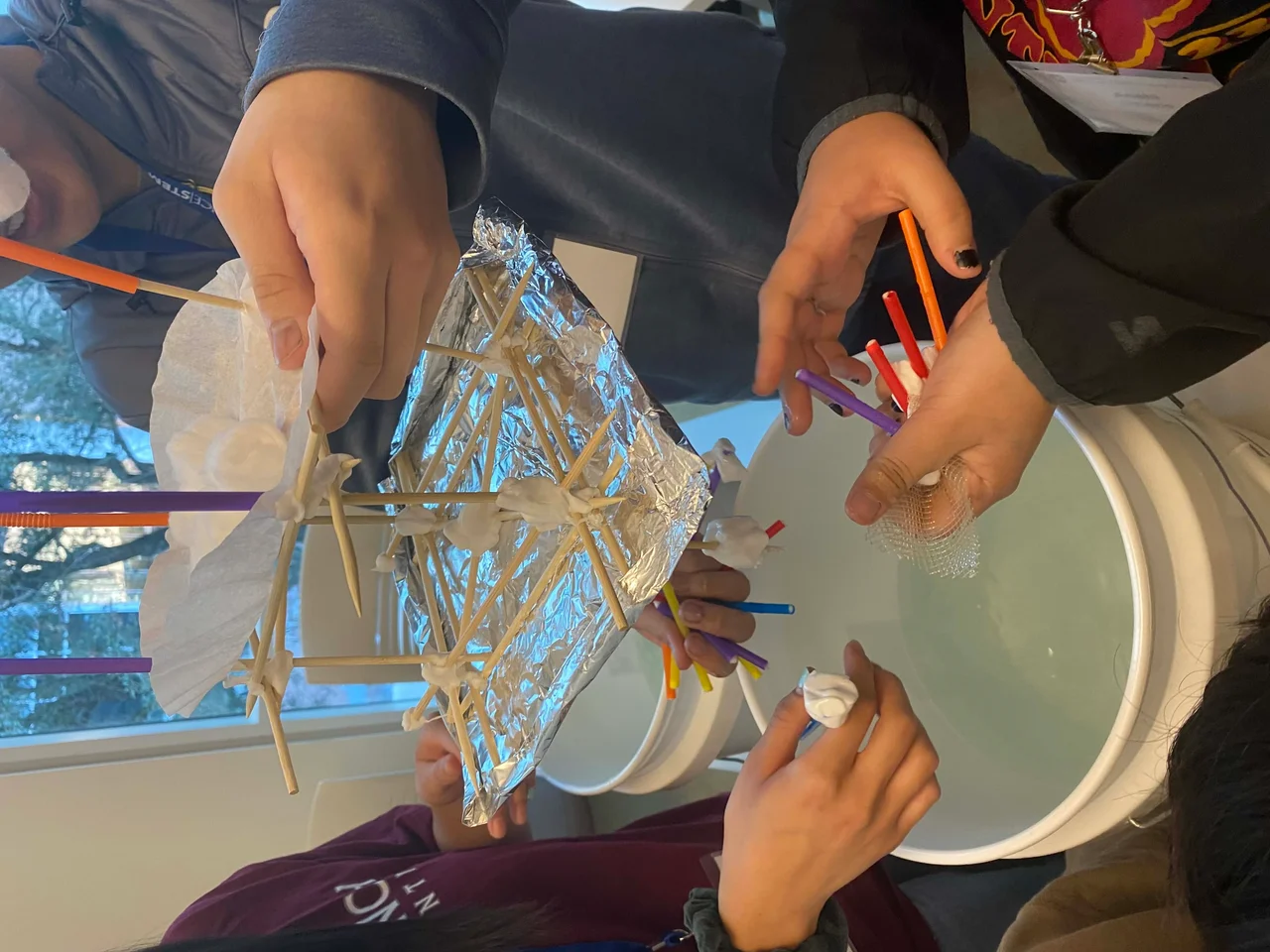 Students submerging their first prototype into water.Copyright Photo taken by Julie Cooper, 2023.
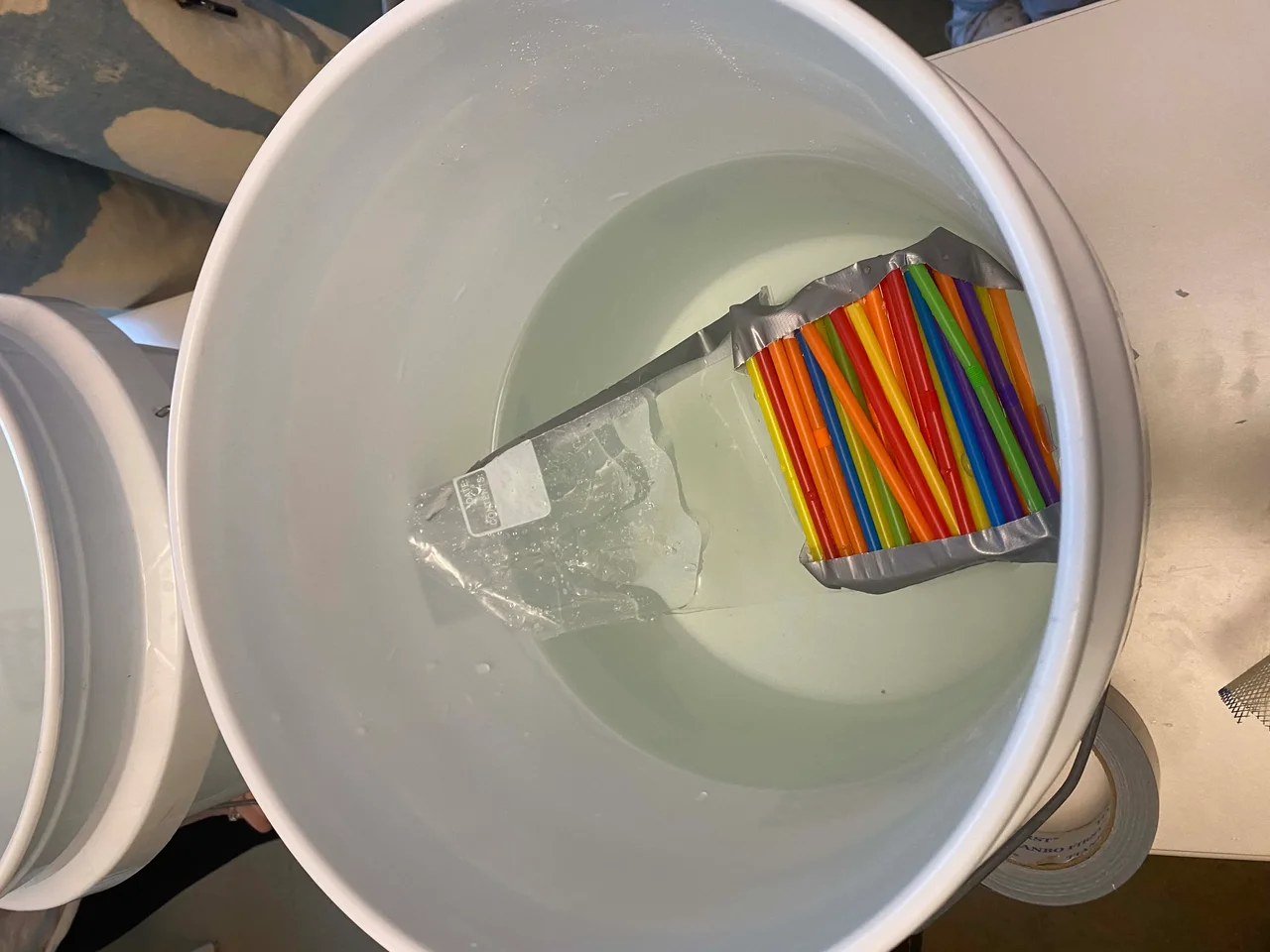 A student group’s original prototype being tested in a bucket of water.Copyright Photo taken by Julie Cooper, 2023.
- If students' devices don’t withstand being in the water for prolonged periods of time, have them reflect on what worked and what didn’t using the Prototype Reflection Worksheet (PDF) and then go back to their ‘Imagine’ or ‘Plan’ step to make adjustments to their prototype (see Save Coral Reefs Presentation (PPTX) Slide 25).
- Repeat the process of prototype testing, reflection, and improvement until either (a) they have a successful prototype, or (b) you no longer wish to or have time to test their prototypes (see Save Coral Reefs Presentation (PPTX) Slide 26).
- Once prototype testing is finished, have students complete the End Prototype Worksheet (PDF), where they draw their final design and further reflect on their device (see Save Coral Reefs Presentation (PPTX) Slide 27).
- anthropogenic
- Having its origin in the influence of human activity on nature.
- coral
- Any of many species of marine invertebrates in the class Anthozoa, most of which build hard calcium carbonate skeletons and form colonies, or a colony belonging to one of those species.
- coral reef
- A reef formed by compacted coral skeletons.
- coral bleaching
- The loss of color in a coral reef due to the loss of symbiotic algae as a result of stress.
Pre-Activity Assessment
Quick Poll and Discussion: Before you begin the activity, ask students to raise their hand if they think coral reefs are an essential ecosystem. Then, discuss why they do/do not think it is an essential ecosystem. Have someone record answers in a table or list the main points everyone comes up with during the discussion.
Brainstorming: Have students brainstorm in groups or as a class about all the ways humans impact coral reefs.
Activity Embedded (Formative) Assessment
Scheduled Check-Ins: During the project, have scheduled check-ins with your students at the following stages of the project: (1) Researching ‒ ask students how their human activity impacts coral reefs, (2) Imagine/Plan ‒ engage with students in brainstorming ideas for their solution, (3) Create and Test ‒ have students give you an ‘elevator pitch’ of their prototype and turn in a written review of how their prototype held up (or didn’t) under testing, and (4) Improve ‒ if students have time to improve on their design, have them explain why they need to improve their design.
Post-Activity (Summative) Assessment
Grading Rubric: Use the provided Grading Rubric (PDF) to assess their prototype and overall engineering design process.
Peer Evaluation: Have students fill out a Peer Evaluation Form (PDF) to assess each other’s participation in the group work (See Save Coral Reefs Presentation (PPTX)Slide 28).
Making Sense Assessment: Have students reflect on the science concepts they explored and/or the science and engineering skills they used by completing the Making Sense Assessment (PDF).
Remind students that when building their models they should be careful with scissors, glue, and other materials. If they hurt themselves, they need to report the injury to the teacher immediately.
Some students may struggle with brainstorming different categories for their prototype. If so, encourage them to research more or provide extra support, depending on their grade level and understanding of scientific and engineering practices. You can suggest brainstorming categories such as waterproofing, power, size, and more, depending on the main purpose of the filter and the issue the student group chose.
The activity can be extended by allowing students to continue to recreate prototypes or by challenging them with recreating their prototype with different objects or fewer objects. Another activity extension would be having students switch prototypes with another group and then improve that group's prototypes.
To add a real-life component, you can have students research and design their ideas using real-world technology and have them price out what it would take to build an actual prototype. This can be presented in a number of ways, including Presentation presentations, posters, or even writing a fake grant proposal.
For lower grade levels, you can give them an already created prototype and have them work to make it better. They can either try to build a better prototype or they can just design a better prototype and justify their changes/additions to the prototype with reasoning and research. You can also use this strategy if you don’t have time to do the entire engineering design process of this activity.
Sanctuary, Florida Keys National Marine. Last modified April 4, 2011. Accessed (Source of some background information) https://floridakeys.noaa.gov/corals/economy.html#:~:text=Coral%20reefs%20support%20jobs%2C%20tourism,about%20%24375%20billion%20each%20year.
Gibbens, Sarah. National Geographic. Posted June 4, 2020. National Geographic. Accessed October 29, 2022. (Source of picture in Save Coral Reefs Presentation Slide 4) https://www.nationalgeographic.com/science/article/scientists-work-to-save-coral-reefs-climate-change-marine-parks
Contributors
Julie Cooper
Supporting Program
Research Experience for Teachers (RET) in partnership with Rice University and the National Science Foundation (NSF)
Acknowledgements
This curriculum was developed under National Science Foundation Nanotechnology Research Experience for Teachers, Fund Code NSF EEC-1406885. Any opinions, findings, and conclusions or recommendations expressed in this material are those of the authors and do not necessarily reflect the views of the National Science Foundation.
Copyright
2024 by Regents of the University of Colorado; original © 2023 Rice University