
Fabrication of a Resin Keychain or Keyring
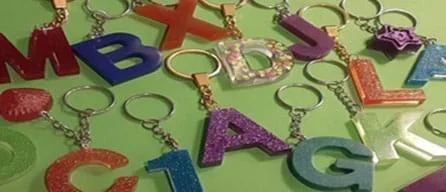 Resin key ringsCopyright Jodie Polan, Rice University RET
Using the engineering design process as a problem-solving tool, students fabricate keychains made out of resin. Since these keychains are prepared from resin, students learn about the history and thermoplastic nature of resins. Students use a silicone mold to temper the thermoplastic resin from its liquid to its solid state in a two-step casting procedure to produce the final product. The final prototype will be portable, compact, lightweight, and able to attach keys that can fit into a pocket or purse. Students also learn about prototypes and how prototypes compare to models. The aim of this activity is for students to design and assemble a functioning, high-fidelity prototype. Creative engineering of new keychains and keyring allows students to explore functions from the structures that they use in daily life.
Resin is a popular material used in engineering as it is a versatile substance that can be turned into almost anything. Consequently, resins are important in engineering products especially those products made into plastic. Keychains and keyrings are often used interchangeably, but technically they refer to different items that do provide a similar function. Engineers use innovative materials, like resin, to design functional and aesthetically-pleasing objects to improve people’s daily lives.
After this activity, students should be able to:
- Determine a relationship between parts of an object in terms of design-for-assembly and design-for-manufacture.
- Identify differences between a model and low- and high-fidelity prototypes.
- Understand ways to assemble separate pieces of an object to fit together in a conceptual and physical manner.
- Understand the thermoplastic ability of resin to go from a liquid to solid state during casting.
- Fabricate resin using casting into an ornamental object.
- Students will develop an understanding of the attributes of design.
Grades K-12
Do you agree with this alignment? - Students will develop an understanding of engineering design.
Grades K-12
Do you agree with this alignment? - STEL-5F Analyze how an invention or innovation was influenced by its historical context.
Grades 6-8
Do you agree with this alignment?
- HS-ETS1-2 Design a solution to a complex real-world problem by breaking it down into smaller, more manageable problems that can be solved through engineering.
Grades 9-12
This resource focuses on the following Three Dimensional Learning aspects of NGSS:
Science & Engineering Practices- Design a solution to a complex real-world problem, based on scientific knowledge, student-generated sources of evidence, prioritized criteria, and tradeoff considerations.Do you agree with this alignment?
Disciplinary Core Ideas- Criteria may need to be broken down into simpler ones that can be approached systematically, and decisions about the priority of certain criteria over others (trade-offs) may be needed.Do you agree with this alignment?
Do you agree with this alignment? - Design a solution to a complex real-world problem, based on scientific knowledge, student-generated sources of evidence, prioritized criteria, and tradeoff considerations.
- HS-ETS1-3 Evaluate a solution to a complex real-world problem based on prioritized criteria and trade-offs that account for a range of constraints, including cost, safety, reliability, and aesthetics, as well as possible social, cultural, and environmental impacts.
Grades 9-12
This resource focuses on the following Three Dimensional Learning aspects of NGSS:
Science & Engineering Practices- Evaluate a solution to a complex real-world problem, based on scientific knowledge, student-generated sources of evidence, prioritized criteria, and tradeoff considerations.Do you agree with this alignment?
- Use a model based on evidence to illustrate the relationships between systems or between components of a system.Do you agree with this alignment?
Disciplinary Core Ideas- When evaluating solutions it is important to take into account a range of constraints including cost, safety, reliability and aesthetics and to consider social, cultural and environmental impacts.Do you agree with this alignment?
Do you agree with this alignment? - Evaluate a solution to a complex real-world problem, based on scientific knowledge, student-generated sources of evidence, prioritized criteria, and tradeoff considerations.
- HS-PS2-6 Communicate scientific and technical information about why the molecular-level structure is important in the functioning of designed materials.
Grades 9-12
This resource focuses on the following Three Dimensional Learning aspects of NGSS:
Science & Engineering Practices- Communicate scientific and technical information (e.g. about the process of development and the design and performance of a proposed process or system) in multiple formats (including orally, graphically, textually, and mathematically).Do you agree with this alignment?
Disciplinary Core Ideas- Attraction and repulsion between electric charges at the atomic scale explain the structure, properties, and transformations of matter, as well as the contact forces between material objects.Do you agree with this alignment?
Crosscutting Concepts- Investigating or designing new systems or structures requires a detailed examination of the properties of different materials, the structures of different components, and connections of components to reveal its function and/or solve a problem.Do you agree with this alignment?
- The functions and properties of natural and designed objects and systems can be inferred from their overall structure, the way their components are shaped and used, and the molecular substructures of its various materials.Do you agree with this alignment?
Do you agree with this alignment? - Communicate scientific and technical information (e.g. about the process of development and the design and performance of a proposed process or system) in multiple formats (including orally, graphically, textually, and mathematically).
- compare solids, liquids, and gases in terms of compressibility, structure, shape, and volume; and
Grades 10-12
Do you agree with this alignment? - The student uses critical thinking, scientific reasoning, and problem solving to make informed decisions within and outside the classroom. The student is expected to:
Grades 9-12
Do you agree with this alignment? - analyze and evaluate scientific explanations by using empirical evidence, logical reasoning, and experimental and observational testing;
Grades 9-12
Do you agree with this alignment? - communicate and apply scientific information;
Grades 9-12
Do you agree with this alignment? - explain the societal impacts of scientific contributions; and
Grades 9-12
Do you agree with this alignment?
Each group needs:
- plastic tablecloth
- safety glasses
- gloves
- laboratory coat or apron
- disposable bathroom cups, small, 6-8 depending on how many colors/decorations are chosen
- silicone casting mold, reusable (in alphabetic or geometric shapes)
- super glue
- clear nail polish
- resin (two-part clear coating & casting resin), high gloss
- hardener (curing agent)
- decorating options: resin pigment, micro powder eye shadow, tinted nail polish, or acrylic paint to color resin; glitter in assorted colors & shapes or inexpensive decals as additives.
- wood popsicle sticks
- fine-tipped toothpicks
- large paperclip
- split ring pliers or needle-nose pliers
- small screwdriver
- fine grain sandpaper
For the entire class to share:
- paper towels
- hardware: closures; eyehooks; chains (see Keychain Hardware Student Worksheet (PDF))
- optional: decorative attachments or fobs (e.g., small flashlight, whistle, etc.)
- Fabrication of a Keychain or Keyring PowerPoint (pptx)
- Fabrication of a Keychain or Keyring PowerPoint (pdf)
- Fabrication Keychain Student Worksheet (docx)
- Fabrication Keychain Student Worksheet (pdf)
- Keychains and Keyrings Hardware Student Worksheet (docx)
- Keychains and Keyrings Hardware Student Worksheet (pdf)
- Keychains and Keyrings Hardware Student Worksheet Answer Key (docx)
- Keychains and Keyrings Hardware Student Worksheet Answer Key (pdf)
Students assemble resin products for hypothetical clients of their choice using hardware such as closures, eyehooks, chains into their own unique design of a keychain for a keyring. They then ask questions to test if the final product matches the preset design criteria.
- How heavy and bulky is the keychain and keyring?
- Do the attached prototype’s accessories function?
- Is it aesthetically pleasing?
- Does the assembled keychain and keyring fit into the intended location such as a pocket or a purse?
The final product must meet the design criteria including cost to be classified as a functioning, high-fidelity prototype of a keyring/keychain. Students also summarize their results in a written design brief.
If the students are willing to part with their creation, this activity is suited for producing a gift.
This Engineering Design Project allows all students to have prior “real-world” and supports learning for all genders and can be modified to teach STEM strategies to diverse learners including ELL and special education students. Students gain confidence that can encourage completing other engineering design projects. Students are introduced to the engineering a prototype into a product that can be manufactured. Attention to design purpose and materials details are covered.
Background
A keychain refers to a small chain or rope that connects a small item usually made of metal, stone or resin to a keyring. The length of a keychain allows items such as a can opener to be accessible than if connected directly to a keyring. The idea behind keychains is ancient and have served more purposes than holding keys. Artifacts from ancient civilizations such as the Egyptians attached small objects or stone amulets shaped hedgehog to rope and chains for good luck. The Celts associated rabbit feet as good luck rabbits were believed to be able to speak to the underworld in their burrows and were a sign of fertility due to how rapid they reproduced offspring. People often select keychains for souvenirs or miniature extensions of their identity. The costs of keychains vary. Even today, designing novel new parts or prototypes of keychains is patentable. Keychain manufacturing and selling is a thriving business.
Although referred to as a single unit, a keychain/keyring is designed of many parts including parts that were original, innovative and patented. For example, in 1894, keychains increased in popularity after Frederick J. Loudin (an African American descendant of former slaves; 1836-1904) invented a keychain fastener. Other inventions have given keychains on keyrings a new purpose. In particular, the invention of the automobile by Henry Ford (a first generation American from Irish immigrants; 1863-1947) provided a new use for the keychain to hold car keys. Today, dual purpose keychains such as a can opener or flashlight on one end are very popular. Keychains are given for advertisement and gifts. New keychains even exist that allow pairing of your phone with your keys by Bluetooth technology in case keys are misplaced. Although still associated with good luck, key chains are functional in our world of keys and popular for their artistic expression. Throughout the world, keychains are available customized with attachments prepared with metal, stones, paper, resin and plastic and key fobs. In this activity, each student will design a high-fidelity prototype of a fabricated resin object for use as on a keychain.
As mentioned, all finished keychains will contain one resin product prepared from casting in a silicone mold. The fabrication of the high-fidelity prototype requires design decisions based on available components to add and functionality of the components. Prior to making the resin object, students learn that they will prepare a Design Brief using the provided worksheet. Students must decide on what functions their keychain and keyring will serve and then pick the accessories to provide that function. The accessories picked must be fabricated from materials that can withstand the rigors of being carried day in and day out, as well as have an attachment for integrating into the keychain/key ring. In the Fabrication of a Keychain or Keyring PowerPoint (PPTX), students learn about the design processes called Design-for-assembly and Design-for-manufacture. Design-for-assembly focuses mostly on fabricating products with the end goal of low-cost assembly, whereas Design-for-manufacture focuses more on simplifying, optimizing and refining the product design with an end goal of producing a better product at a lower cost.
Before the Activity
- As a discussion question, ask students to discuss what types of objects engineers design and fabricate. Students should understand that engineers use the engineering design process to create new ideas and manufacture even common items such keychains. Ask them if they know what resin is and how resin is used to make products.
- Show students the Fabrication of a Keychain or Keyring PowerPoint (PPTX) to introduce design processes, resin, and their design challenge of designing keychains.
- Make copies of the worksheets, enough for one per student. Give students the Keychains and Keyrings Hardware Student Worksheet (PDF) to complete as a Pre-Activity Assessment.
- See the Resin Keychains Tutorial for more information on materials and process: https://www.youtube.com/watch?v=Uf6z3SIzn9w
With the Students
Day 1
- Distribute copies of the Fabrication Keychain Student Worksheet (PDF) and introduce students to their design challenge. Go through the worksheet to answer any student questions, and make sure students have selected their clients and scenarios before they begin designing their keychains. Students choose 5 of the 6 scenarios and design at least one keychain for each client.
- Arrange the silicon mold(s), glitter(s), pigment(s) and hardware for students to decide what their prototype keychain/keychain will look like. Then, design the procedure to match design.
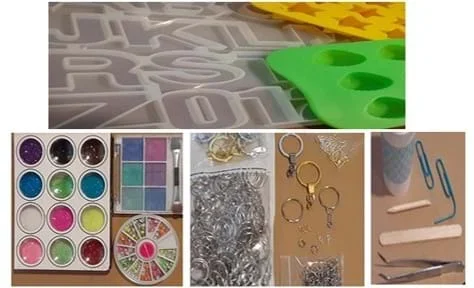 Materials needed to make resin key chains.Copyright Jodie Polan, Rice University RET
- Set out the resin casting solutions, gloves, bathroom cups, wood sticks and paper towels. Ensure molds are set up on a flat area that are covered with a plastic tablecloth preferably where the molds will not be disturbed.
- Add one of the coloring pigments and/or small decals to a small disposable bath cup.
- While wearing gloves, slowly add the two clear reagents—resin and hardener—following a one-to-one volume (not weight) ratio per casting kit instructions to a plastic mixing cup. Each mold holds 60 mL (<2oz) of reagents. A Larger batch can be prepared for multiple molds.
- Avoiding bubbles, slowly mix the resin-hardener solution with a wood stick for 2-3 minutes until the solution becomes cloudy (opaque). The activation of the resin and harder begins when the two reagents are mixed and the curing process cannot be stopped.
- Slowly add the mix resin-hardener solution into the bathroom cups along and mix it with pigment and/or glitter until there are no clumps and contents are uniformly dispersed. Use the bent paperclip to level the top of the mold. Carefully wipe excess resin over edges of inset onto a paper towel.
- Hold bathroom cup to form a slight spout (see Figure 1) and slowly pour the combined mixture into mold until full. Do not underfill. If overfilled, use the bent paperclip to level contents into mold and carefully wipe away overflowed solution with a paper towel. Use the paperclip to level top of resin mold and remove excess.
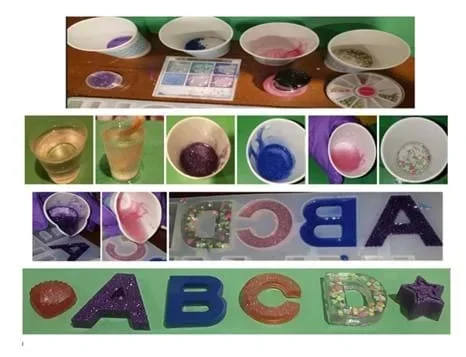 Figure 1. Steps of the procedure to make resin key rings.Copyright Jodie Polan, Rice University RET
- Allow resin mixture in molds to harden at room temperature without being moved for at least 24 hours. It takes about 15 minutes for resin to get “tacky”, about 5-6 hours to touch dry and ~24 hours to be fully cured.
Day 2
- Once hardened, push resin object from mold.
- If the part of mold facing air is still tacky, apply a light coat of clear nail polish and allow 5-10 minutes air-drying before continuing.
- Use a small screwdriver to bore a small starter hole for insertion of eyehook by using small jeweler’s size screw (see Figure 2). Note: Pick a location that is thicker to avoid the eyehook completely going through the resin.
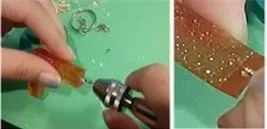 Figure 2. Inserting the eye hookCopyright Jodie Polan, Rice University RET
- Slowly screw in eyehook.
- Using a fine tipped toothpick, place a small amount of superglue around the eyehook in the resin object. Assemble attachment(s) or FOBs to eyehook in resin object using closures and chain(s). Clamp ring closed using the pliers.
- Have students refer to their Fabrication Keychain Student Worksheet (PDF) to write up a Design Brief for their clients.
- casting
- Manufacturing process in which a liquid is poured into a hollow center of a desired geometrical shape (a mold) and cooled to form a solid 3D shape.
- design statement
- Using visual elements of design and a brief description about the need and action to solve a problem, process of producing resolution, and the context of work.
- design-for-assembly (dfa)
- Design process focused on ease of assembly, fewer parts, parts that are easier to grasp, move, orient and insert them with end goal of low-cost assembly.
- design-for-manufacture (dfm)
- Process of designing parts, components or products by simplifying, optimizing and refining the product design with an end goal of producing a better product at a lower cost; allows for potential problems to be fixed in the design phase which is the least expensive place to address them.
- fabrication
- Process of making something from semi-finished or raw materials rather than from ready-made components.
- hardener (curing agent)
- Molecules which can initiate or catalyze epoxy resins.
- injection mold
- Manufacturing technique used for producing identical parts by forcing liquid thermoplastic material such as resin into a mold.
- keychain
- A chain or ring to which a key may be attached; allow one or both ends the ability to rotate.
- keyring
- A ring, normally of metal or plastic, for holding keys together.
- model
- Simplified representation of a system that explores size, shape, form and appearance.
Pre-Activity Assessment
Worksheets: Students complete the Keychains and Keyrings Hardware Student Worksheet (PDF) to prepare them for designing and assembling their own resin keychain. Allow students access to the internet to complete the worksheet in class or as homework.
Activity Embedded (Formative) Assessment
Design Peer Review: Students present their proposed design for their keychains and ask for feedback. Have them explain key features and how the features match the needs of their clients.
Post-Activity (Summative) Assessment
Redesign: Students exhibit their keychains and critique if product reflected design goals. Students can present and compare their keychains/keyrings. What would they do differently if preparing the same keychain? How does the structure of their prototype relate to its function? How would they change the design to improve the prototype? Could the resin products be used for anything other than as an ornament for a keychain?
Design Brief: Students write a short report summarizing their design process and results following the template in the Fabrication of a Keychain Student Worksheet (PDF).
Resin
Follow safety instructions for the resin casting kit. Resin polymer is a peroxidizable compound that irritates the eyes and skin. Personal protective gear for students should include gloves and safety googles. Although relatively inactive, resin belongs to the ether and epoxide groups which are potentially flammable. Therefore, precautions must be observed when handling and storing. If resin liquid spills, first assure that there are no sources for ignition; then, the resin can be wiped up using absorbent paper. Contaminated surfaces should be wiped with acetone followed by washing with a soap and water solution. Contaminated clothing and absorbent paper should be sealed in a vapor-tight plastic bag for disposal. Be assured, resin casting is a safe procedure for students with supervision.
Curing Agent
The liquid curing agent (polypropylene glycol or polypropylene oxide) is “generally recognized as safe.” It is used in food, medicines, cosmetics, paint and the plastics industries. Propylene glycol is also used to create artificial smoke or fog used in fire-fighting training and in theatrical productions.
Assembling
Metal closures should be carefully handled due its sharp edges that can puncture skin. Closures should be gripped and closed with fine or needle-nose pliers. The sides of resin shapes may also be sharp; care should be taken when holding the resin objects during assembly.
Avoid air bubbles when mixing resin and pouring into molds. Lightly sand the final resin product if there are sharp edges. Underpoured molds can produce a product that are too thin to hold the eye screw and/or the eye screw can go thru the resin.
- To simplify for middle school grades, focus on design analysis, the parts and assembly of the keychain.
- For high school, students should have basic knowledge of chemistry. Focus is design analysis, on the chemicals in the fabrication of the resin using a casting mold, and assembly of a prototype.
Why Resin
https://www.terracastproducts.com/resin/
What Are Epoxy Hardeners and Why Are They Used?
https://www.florock.net/2017/09/epoxy-hardeners-use/
What is silicone?
https://www.shinetsusilicone-global.com/info/begin.shtml
Thermoplastic and thermosetting polymers (2:08-min long)
https://www.youtube.com/watch?v=4fTtrKPySm0
What's an Engineer? Crash Course Kids #12.1 (4:26-min long)
https://www.youtube.com/watch?v=owHF9iLyxic
Prototyping and Model Making - Students of Product Design Episode 6 (15:21-min long)
https://www.youtube.com/watch?v=Oee8VfjR1CE
Resin Keychains Tutorial - First Time Making Resin Keychains (16:56-min long; Note: stop video at 16:40-min)
Contributors
Jodie Polan
Supporting Program
Engineering Research Center for Nanotechnology Enabled Water Treatment Systems (NEWT) RET, Rice University
Acknowledgements
This material was developed based upon work supported by the National Science Foundation under grant no. EEC 1406885—the Nanotechnology Research Experience for Teachers at the Rice University School Science and Technology in Houston, TX. Any opinions, findings and conclusions or recommendations expressed in this material are those of the authors and do not necessarily reflect the views of the National Science Foundation.
This activity was inspired by a second summer (2019) in the laboratory of Jeffrey Hartgerink, PhD (Depts Biomedical Engineering and Chemistry, Rice University). I appreciate the time spent learning from Dr. Hartgerink’s graduate students - Claudia Leyva Aranda, Cheuk Sun Edwin Lai, Nicole Carrejo, Doug Walker, and Tania Lopez-Silva. Special thanks to Isaias Cerdas, Christina Crawford & Carolyn Nichol, PhD for administrating the Rice RET-STEM program.
Copyright
2021 by Regents of the University of Colorado; original © 2020 University of Rice University