
Aquaponics from Bolivia to the United States
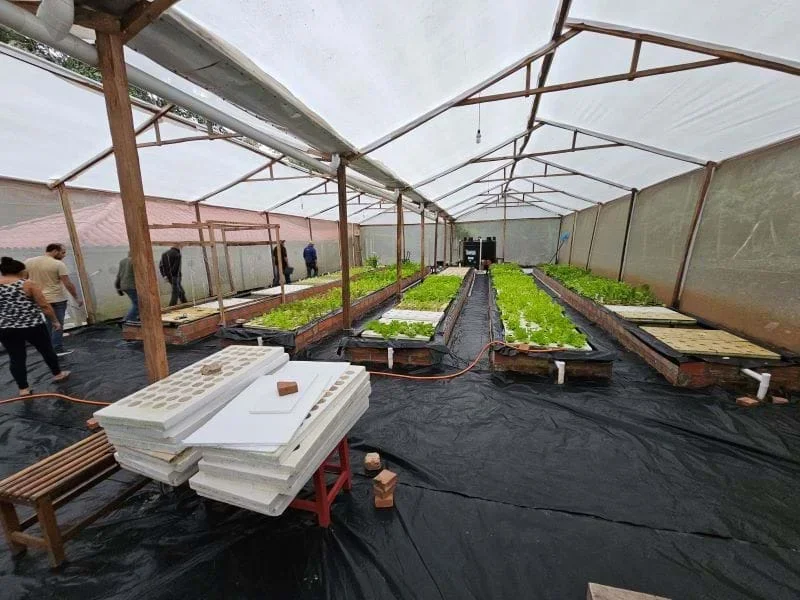 Aquaponics system located at the Community Transformation Center (CTC) for Etta Projects.Copyright Andrew Lefevre
Students use waste materials to create a medium to hold plants for an aquaponic water system as they learn to reuse materials and about the life system of plants (producers). As they learn about photosynthesis, they better understand what a plant needs to grow and how it develops. While engaging in this activity, students learn about food webs in order to identify the relationships among producers, consumers, and decomposers in an ecosystem. As students are introduced to and learn about the Sustainable Development Goals, they have the opportunity to learn about Bolivia and the United States and make connections between the two countries.
Engineers help shape the future and are essential to our health, happiness, and safety. Engineers can work on projects that help society achieve the United Nation’s Sustainable Development Goals (SDGs) related to ending hunger, developing sustainable communities, and promoting responsible consumption and production. In this activity, students design and create their own aquaponics system and explore how aquaponics relates to the listed SDGs.
After this activity, students should be able to:
- Explain/provide what plants need to grow.
- Explain a producer’s role in an ecosystem.
- Relate aquaponics to the Sustainable Development Goals 2 - Zero Hunger, 11 - Sustainable Cities and Communities, and 12 - Responsible Consumption and Production in Bolivia and the United States.
- 3-5-ETS1-1 Define a simple design problem reflecting a need or a want that includes specified criteria for success and constraints on materials, time, or cost.
Grades 3-5
This resource focuses on the following Three Dimensional Learning aspects of NGSS:
Science & Engineering Practices- Define a simple design problem that can be solved through the development of an object, tool, process, or system and includes several criteria for success and constraints on materials, time, or cost.Do you agree with this alignment?
Disciplinary Core Ideas- Possible solutions to a problem are limited by available materials and resources (constraints). The success of a designed solution is determined by considering the desired features of a solution (criteria). Different proposals for solutions can be compared on the basis of how well each one meets the specified criteria for success or how well each takes the constraints into account.Do you agree with this alignment?
Crosscutting Concepts- People's needs and wants change over time, as do their demands for new and improved technologies.Do you agree with this alignment?
Do you agree with this alignment? - Define a simple design problem that can be solved through the development of an object, tool, process, or system and includes several criteria for success and constraints on materials, time, or cost.
- 3-5-ETS1-2 Generate and compare multiple possible solutions to a problem based on how well each is likely to meet the criteria and constraints of the problem.
Grades 3-5
This resource focuses on the following Three Dimensional Learning aspects of NGSS:
Science & Engineering Practices- Generate and compare multiple solutions to a problem based on how well they meet the criteria and constraints of the design problem.Do you agree with this alignment?
Disciplinary Core Ideas- Research on a problem should be carried out before beginning to design a solution. Testing a solution involves investigating how well it performs under a range of likely conditions.Do you agree with this alignment?
- At whatever stage, communicating with peers about proposed solutions is an important part of the design process, and shared ideas can lead to improved designs.Do you agree with this alignment?
Crosscutting Concepts- Engineers improve existing technologies or develop new ones to increase their benefits, to decrease known risks, and to meet societal demands.Do you agree with this alignment?
Do you agree with this alignment? - Generate and compare multiple solutions to a problem based on how well they meet the criteria and constraints of the design problem.
- 5-LS2-1 Develop a model to describe the movement of matter among plants, animals, decomposers, and the environment.
Grade 5
This resource focuses on the following Three Dimensional Learning aspects of NGSS:
Science & Engineering Practices- Develop a model to describe phenomena.Do you agree with this alignment?
- Science explanations describe the mechanisms for natural events.Do you agree with this alignment?
Disciplinary Core Ideas- The food of almost any kind of animal can be traced back to plants. Organisms are related in food webs in which some animals eat plants for food and other animals eat the animals that eat plants. Some organisms, such as fungi and bacteria, break down dead organisms (both plants or plants parts and animals) and therefore operate as "decomposers." Decomposition eventually restores (recycles) some materials back to the soil. Organisms can survive only in environments in which their particular needs are met. A healthy ecosystem is one in which multiple species of different types are each able to meet their needs in a relatively stable web of life. Newly introduced species can damage the balance of an ecosystem.Do you agree with this alignment?
- Matter cycles between the air and soil and among plants, animals, and microbes as these organisms live and die. Organisms obtain gases, and water, from the environment, and release waste matter (gas, liquid, or solid) back into the environment.Do you agree with this alignment?
Crosscutting Concepts- A system can be described in terms of its components and their interactions.Do you agree with this alignment?
Do you agree with this alignment? - Develop a model to describe phenomena.
Each group needs:
- 1 tub of water around 12 in. x 12 in. x 4 in. (any tub will do)
- 6-8 lettuce seeds
- Chromebook
For the entire class to share:
- water from a fish tank, pond, stream, or lake; any source that has fish, or you can buy liquid plant food to simulate fish waste.
- paper
- cardboard
- pebbles
- string, yarn, or fishing line
- Styrofoam
- Other recyclable waste materials, such as bottles, plastic containers, cups (anything that can be reused from trash/recycle)
- Any other recyclable materials you can find!
Students should have basic background knowledge: Around the world, people struggle with hunger because of food insecurity. Many communities do not have access to healthy food. This can be caused by a lack of nutrients in the soil, bacteria, a lack of space, wildlife, or a lack of knowledge. Aquaponics is a sustainable way to grow healthy food despite these challenges.
Think of how often you eat food. Do you have two or three meals a day? What are some of your favorite foods? Think of all the food needed to feed the almost eight billion people on earth. Have you ever wondered where all the food comes from? Did you know that some of the lettuce and other vegetables you eat don't grow in the ground? How is that possible? (The teacher may collect student responses to the questions and ask them to predict how it is possible to grow vegetables in mediums other than soil.) The answer to these questions is aquaponics.
Scientists in a variety of fields work on ways to solve problems in the real world. This includes how to make sure people have enough food to eat. They collaborate with civil engineers to help societies meet the needs and desires of their populations. In some areas, fresh, healthy food can be expensive, limited in supply, and, in some instances, unavailable. Aquaponics can be used to help people access healthy food in their community. It also provides for food to be grown locally and organically reducing the consumption of limited natural resources. Aquaponics systems can produce 8-10 times more food than produce grown in soil.
Aquaponics is a system used to grow mainly lettuces and vegetables. It uses fish and their waste in order to nourish the plants. In turn, the plants and their root systems purify the water. This creates a closed system which can be used to grow healthy food in areas where it otherwise might not be available. In some instances, food might be over a year old or travel hundreds of miles before arriving at the grocery store. Aquaponics provides fresh, locally grown, organic food. This helps reduce wasted food, water consumption, and soil exhaustion.
(Show the How This Aquaponic Farmer is Reinventing Urban Agriculture video [17:11 minutes].
This video is a great way to introduce aquaponics to students; it explains the engineering and the importance of having fresh food available in harsh climates.)
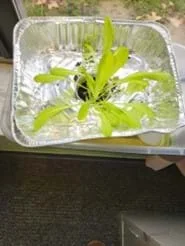 Students’ lettuce after a little more than a month of growth.Copyright Justin Stout
Background
In many places in the world, it is difficult to grow plants for a variety of reasons, from poor soil to wildlife eating crops. Aquaponics is a way to grow plants without having to deal with outside factors, because it is a closed system. Aquaponics can be a way to grow healthy food in a place where it was difficult or impossible to before. Using this system, plants can be grown in urban areas without green space. This also allows for local production of organic food sources. Locally grown organic food cuts down on fuel consumption and use of chemicals, and it ensures that produce produced in the United States has a higher chance of being consumed.
Aquaponics is still in an early stage of development in Bolivia. The need is great, due to the health benefits of growing crops using aquaponics. Using this method eliminates the need for chemicals that would be harmful to the health of a community. Aquaponics uses less water and can reduce the number of pests that would eat the harvest. Another benefit of aquaponics in the community is that produce is local and can reduce the consumption of fossil fuels associated with transportation.
In this lesson, students will be designing multiple aquaponic pots to grow lettuce. Aquaponics is a way to grow crops using no chemicals. Aquaponics uses fish to provide the nutrients needed to grow the plants. We will not use fish in the classroom, but rather water from a source that has fish if possible. Students can make their pots suspended above the water or float on top of the water. A project will be considered a success if the plants grow roots and foliage. Aquaponics system located at the Community Transformation Center (CTC) for Etta Projects.Copyright Andrew Lefevre
The United Nations outlined 17 Sustainability Development Goals (SDGs) to promote peace and prosperity now and in the future. This activity on aquaponics relates to three of the SDGs:
- 2 - Zero Hunger: End hunger, achieve food security and improved nutrition, and promote sustainable agriculture.
- Aquaponics can be used to provide fresh, healthy food in underserved communities.
- 11 - Sustainable Cities and Communities: Make cities and human settlements inclusive, safe, resilient, and sustainable.
- Aquaponics can benefit communities by ensuring sustainable and resilient food systems that are inclusive and safe.
- 12 - Responsible Consumption and Production: Ensure sustainable consumption and production patterns.
- Aquaponics is a closed system that reduces water consumption and promotes reuse of waste materials.
Before the Activity
- Gather all materials needed.
- Optional: Ask students to collect water from a fish habitat (aquarium or pond with fish).
- Prepare to show the How This Aquaponics Farmer is Reinventing Urban Agriculture video (17:11 minutes).
During the Activity
Day 1
- Introduce the activity using the Introduction/Motivation section.
- Read the Etta Projects Letter (PDF) to engage students.
- Divide the class into groups of three or four students each.
- Introduce the Sustainable Development Goals (SDGs) to students, with a focus on numbers 2 - Zero Hunger, 11 - Sustainable Cities and Communities, and 12 - Responsible Consumption and Production.
- Have students start on the Aquaponics Worksheet (PDF) to guide their thinking.
- Give students the design constraints (must fit 4-6 pots in a container, pots must hold soil, pots must float or be suspended above the water).
- Have groups research information on how plants grow and what they need to grow.
- Show students what supplies are available for construction of the container.
- Have groups then imagine and draw two designs they believe would give plants the best chance to grow.
- Have groups discuss their patterns and explain their two designs.
- Once all students in the group have shared, have them imagine two more designs they think would work the best using ideas from the group design and discussion.
- Have students then pick one of their designs and obtain permission from the teacher to make sure it is feasible to build.
- Once a student's design has been approved, have them begin building their design.
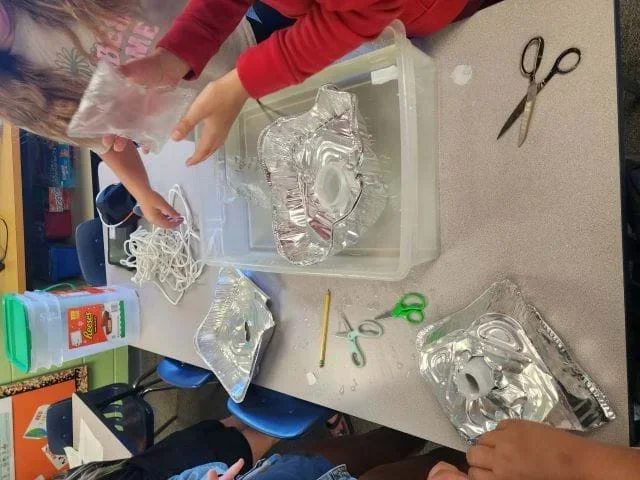 Students working on building pots to grow lettuce for an aquaponics system.Copyright Justin Stout
 - Have students fill their container with soil.
- Have students test their designs by seeing if they will float in the water.
- After students place their designs in the container, have them wait one night to make sure their design stays above the water and that the soil receives moisture.
Day 2
- Have students check their designs and improve their designs to stay above water or to bring in more moisture.
- Once designs are improved, have students plant a lettuce seed in each of their pots and place them in the water.
Days 3-7
- Allow the pots to sit in water and give the lettuce seeds time to sprout.
Day 8
- After 5 days, have students check their pots to see if anything has sprouted.
- Then have students complete the last part of the worksheet, reflecting on what went well and what did not with their project, and how the project addressed the three SDGs.
- Have students make a poster advertisement to attempt to sell their project.
- aquaponics
- A system of aquaculture in which the waste produced by farmed fish or other aquatic animals supplies nutrients for plants grown hydroponically, which in turn purifies the water.
- photosynthesis
- The process by which green plants and some other organisms use sunlight to synthesize food from carbon dioxide and water. Photosynthesis in plants generally involves the green pigment chlorophyll and generates oxygen as a byproduct.
- food insecurity
- A lack of consistent access to enough food for every person in a household to live an active, healthy life.
Pre-Activity Assessment
Questionnaire: Have students fill out a questionnaire asking for anything they know about plant growth, food production, and Bolivia. After providing response time, have students share answers while the teacher collects and records responses.
Activity Embedded (Formative) Assessment
Worksheet/Pairs Check: Have students work in small groups on the Aquaponics Worksheet (PDF). After they finish, have them compare answers with another small group, giving all groups time to finish the worksheet.
Hypothesize: Ask each group what would happen if we could add more nutrients to the water? (Answer: Adding more nutrients would allow for a wider variety of denser vegetables to be grown. This would also require a more robust container to provide support for vegetables with heavier growth.) 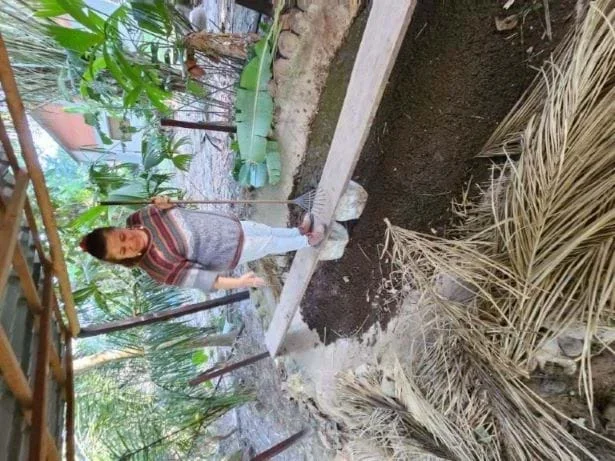 Tatiana Vera Ramos, Agricultural and Environmental Coordinator at Etta Projects, demonstrates vermiculture and compost systems.Copyright Andrew Lefevre
Post-Activity (Summative) Assessment
Problem Solving: Present the class with the activity objectives and ask students to select two of the three objectives and write about them, and to include a diagram/drawing for one of the objectives:
- Explain/provide what plants need to grow.
- Explain the role of producers in an ecosystem.
- Discuss food insecurity in Bolivia and the United States.
Diagramming: Tell students: Scientists and engineers use diagrams to better understand systems and to help create new ideas and technologies. Select one of the objectives you wrote about and include a drawing or a diagram to support your work. Label the parts of your diagram or drawing. List two to three positive outcomes you have learned from this hands-on activity that go along with your selection.
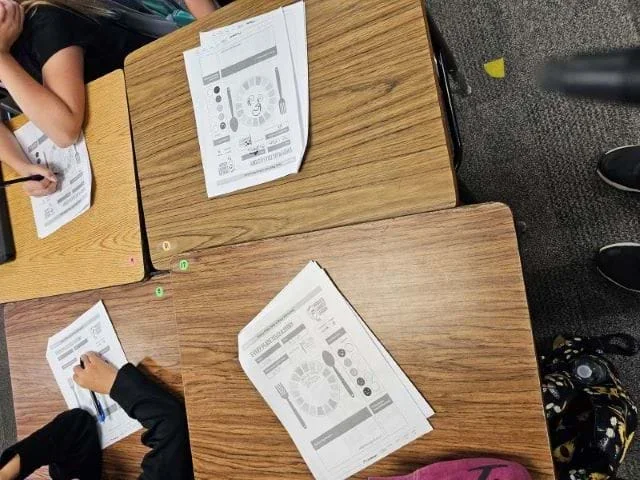 Students working on SDG goals related to engineering project.Copyright Andrew LefevreMaking Sense Assessment: Have students reflect on the science concepts they explored and/or the science and engineering skills they used by completing the Making Sense Assessment (PDF).
- Students may select materials that break down when submerged in water. They will need to change their material in their second iteration of the design build.
- Depending on student age/ability, providing guidance for research or a collection of websites/resources about what plants need to grow might be appropriate.
- Many students will be learning about the SDGs for the first time. It may be appropriate to provide background information about them.
- .Let students struggle with the design and development stage of the lesson. This is critical, and many young students will ask for help.
Extend to Other Crops: For an extension, students will design ways to grow other crops that cause issues with size, vines, or depth. Students will need to modify their design to support vegetables such as tomatoes, corn, cucumbers, carrots, and potatoes.
Redesign Extension: Have students review their designs. Ask them: What should you consider if the activity does not work right the first time? What could you change?
Post-Lesson Extension: As a follow-up, students can learn about food systems in activity from The World’s Largest Lesson. They grade a plate of food based on nutritional value, packaging, and transportation. This can be done as a whole-group activity and then work on grading a plate individually. Resource and worksheet: Every Plate Tells a Story
United Nations, Department of Economic and Social Affairs. “The 17 Goals.” Accessed: 3 July 2024. https://sdgs.un.org/goals
Contributors
Justin Stout; Andrew Lefevre; Margaret F. Pinnell, Ph.D.; Leanne Petry, Ph.D.; Marjorie Langston
Supporting Program
Global STEM Research Experience for Teachers (RET) — Appropriate Technology for Developing Communities, University of Dayton, Central State University
Acknowledgements
We would like to thank the following for their assistance on this work: Margaret Pinnell, Ph.D; Leanne Petry, Ph.D.; Kellie Schneider, Ph.D.; Amy Anderson, Ph.D; Kelly Bohrer; Suzanne Seleem, Ph.D; Sharath Krishna, Ph.D.; Rajeev Swami, Ph.D.; Dr. Denise Taylor, Ph.D.; Sharath Krishna, Ph.D.;Rydge Taylor, Ph.D.; Miranda van Iersel, Ph.D. (Note: Her last name starts with a capital "I".); Kevin Hallinan, Ph.D.; Andrew Chaisson, Ph.D.; Dave Perkins, Ph.D.; and Jacob Cress, Ph.D. This curriculum was developed under National Science Foundation RET grant number EEC. 1855231/1855239. Any opinions, findings, and conclusions or recommendations expressed in this material are those of the authors and do not necessarily reflect the views of the National Science Foundation.
Copyright
2024 by Regents of the University of Colorado; original © 2023 Central State University and University of Dayton