
Engineering a Habitat’s Humidity
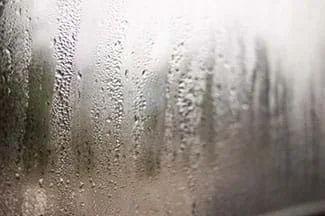 Condensation forms on a window, creating water vapor, which means there is humidity in the air.Copyright 2013 Roland Tanglao, CC-BY-2.0, Flickr https://www.flickr.com/photos/roland/8532795969
Students design a temporary habitat for a future classroom pet—a hingeback tortoise. Based on their background research, students identify what type of environment this tortoise needs and how to recreate that environment in the classroom. The students divide into groups and investigate the features of a habitat for a hingeback tortoise. These features include how many holes a temporary habitat may need, the animal’s ideal type of bedding, and how much water is needed to create the necessary humidity level within the tortoise’s environment. Each group communicates and presents this information to the rest of the class after they research, brainstorm, collect and analyze data, and design their final plan.
Engineers solve problems and discover practical solutions that impact lives—and not just for people, but for animals as well. Engineers may be called upon to build habitats for animals to ensure that the animal is comfortable and is living in environment that is suited to its needs. Designing an optimal temporary habitat for a potential classroom pet is relevant to students’ lives because they may see and interact with the animal and its habitat every day in their classroom. Students are encouraged to think like engineers and use the engineering design process. They investigate and examine variables through research and design, and conduct background research on the tortoise’s ideal living conditions. They identify needs and constraints, research, imagine possible solutions, choose a solution, and then they create, test, and iterate upon a design to reach an optimal solution. Students also act as engineers as they communicate their results to their fellow engineers.
After this activity, students should be able to:
- Understand the concept of how condensation forms in a humid environment.
- Identify humidity as the amount of moisture, or water vapor, in the air.
- Explain what happens when a liquid evaporates and when a gas condenses.
- Measure mass and volume of an object using a scale and a graduated cylinder.
- CCSS.Math.Content.3.MD.A.2 Measure and estimate liquid volumes and masses of objects using standard units of grams (g), kilograms (kg), and liters (l). Add, subtract, multiply, or divide to solve one-step word problems involving masses or volumes that are given in the same units, e.g., by using drawings (such as a beaker with a measurement scale) to represent the problem.
Grade 3
Do you agree with this alignment? - CCSS.Math.Practice.MP5 Use appropriate tools strategically.
Grades K-12
Do you agree with this alignment?
- LAFS.3.SL.1.1 Engage effectively in a range of collaborative discussions (one-on-one, in groups, and teacher-led) with diverse partners on grade 3 topics and texts, building on others' ideas and expressing their own clearly.
- Come to discussions prepared, having read or studied required material; explicitly draw on that preparation and other information known about the topic to explore ideas under discussion.
- Follow agreed-upon rules for discussions (e.g., gaining the floor in respectful ways, listening to others with care, speaking one at a time about the topics and texts under discussion).
- Ask questions to check understanding of information presented, stay on topic, and link their comments to the remarks of others.
- Explain their own ideas and understanding in light of the discussion.
Grade 3
Do you agree with this alignment? - LAFS.3.W.2.4 With guidance and support from adults, produce writing in which the development and organization are appropriate to task and purpose.
Grade 3
Do you agree with this alignment? - LAFS.3.W.3.7 Conduct short research projects that build knowledge about a topic.
Grade 3
Do you agree with this alignment?
- MAFS.3.MD.1.2 Measure and estimate liquid volumes and masses of objects using standard units of grams (g), kilograms (kg), and liters (l). Add, subtract, multiply, or divide to solve one-step word problems involving masses or volumes that are given in the same units.
Grade 3
Do you agree with this alignment? - MAFS.K12.MP.5.1 Use appropriate tools strategically.
Grades K-12
Do you agree with this alignment?
- SC.3.N.1.1 Raise questions about the natural world, investigate them individually and in teams through free exploration and systematic investigations, and generate appropriate explanations based on those explorations.
Grade 3
Do you agree with this alignment? - SC.3.N.1.3 Keep records as appropriate, such as pictorial, written, or simple charts and graphs, of investigations conducted.
Grade 3
Do you agree with this alignment? - SC.3.N.1.5 Recognize that scientists question, discuss, and check each others' evidence and explanations.
Grade 3
Do you agree with this alignment? - SC.3.N.1.6 Infer based on observation.
Grade 3
Do you agree with this alignment? - SC.3.P.9.1 Describe the changes water undergoes when it changes state through heating and cooling by using familiar scientific terms such as melting, freezing, boiling, evaporation, and condensation.
Grade 3
Do you agree with this alignment?
- Students will develop an understanding of the attributes of design.
Grades K-12
Do you agree with this alignment? - Students will develop an understanding of engineering design.
Grades K-12
Do you agree with this alignment? - Students will develop an understanding of the role of troubleshooting, research and development, invention and innovation, and experimentation in problem solving.
Grades K-12
Do you agree with this alignment? - STEL-2L Create a new product that improves someone's life.
Grades 3-5
Do you agree with this alignment? - STEL-7H Illustrate that there are multiple approaches to design.
Grades 3-5
Do you agree with this alignment? - STEL-7I Apply the technology and engineering design process.
Grades 3-5
Do you agree with this alignment? - STEL-7J Evaluate designs based on criteria, constraints, and standards.
Grades 3-5
Do you agree with this alignment?
- 3-5-ETS1-1 Define a simple design problem reflecting a need or a want that includes specified criteria for success and constraints on materials, time, or cost.
Grades 3-5
This resource focuses on the following Three Dimensional Learning aspects of NGSS:
Science & Engineering Practices- Define a simple design problem that can be solved through the development of an object, tool, process, or system and includes several criteria for success and constraints on materials, time, or cost.Do you agree with this alignment?
Disciplinary Core Ideas- Possible solutions to a problem are limited by available materials and resources (constraints). The success of a designed solution is determined by considering the desired features of a solution (criteria). Different proposals for solutions can be compared on the basis of how well each one meets the specified criteria for success or how well each takes the constraints into account.Do you agree with this alignment?
Crosscutting Concepts- People's needs and wants change over time, as do their demands for new and improved technologies.Do you agree with this alignment?
Do you agree with this alignment? - Define a simple design problem that can be solved through the development of an object, tool, process, or system and includes several criteria for success and constraints on materials, time, or cost.
- 3-5-ETS1-2 Generate and compare multiple possible solutions to a problem based on how well each is likely to meet the criteria and constraints of the problem.
Grades 3-5
This resource focuses on the following Three Dimensional Learning aspects of NGSS:
Science & Engineering Practices- Generate and compare multiple solutions to a problem based on how well they meet the criteria and constraints of the design problem.Do you agree with this alignment?
Disciplinary Core Ideas- Research on a problem should be carried out before beginning to design a solution. Testing a solution involves investigating how well it performs under a range of likely conditions.Do you agree with this alignment?
- At whatever stage, communicating with peers about proposed solutions is an important part of the design process, and shared ideas can lead to improved designs.Do you agree with this alignment?
Crosscutting Concepts- Engineers improve existing technologies or develop new ones to increase their benefits, to decrease known risks, and to meet societal demands.Do you agree with this alignment?
Do you agree with this alignment? - Generate and compare multiple solutions to a problem based on how well they meet the criteria and constraints of the design problem.
- 3-5-ETS1-3 Plan and carry out fair tests in which variables are controlled and failure points are considered to identify aspects of a model or prototype that can be improved.
Grades 3-5
This resource focuses on the following Three Dimensional Learning aspects of NGSS:
Science & Engineering Practices- Plan and conduct an investigation collaboratively to produce data to serve as the basis for evidence, using fair tests in which variables are controlled and the number of trials considered.Do you agree with this alignment?
Disciplinary Core Ideas- Tests are often designed to identify failure points or difficulties, which suggest the elements of the design that need to be improved.Do you agree with this alignment?
- Different solutions need to be tested in order to determine which of them best solves the problem, given the criteria and the constraints.Do you agree with this alignment?
Do you agree with this alignment? - Plan and conduct an investigation collaboratively to produce data to serve as the basis for evidence, using fair tests in which variables are controlled and the number of trials considered.
- 3-LS4-3 Construct an argument with evidence that in a particular habitat some organisms can survive well, some survive less well, and some cannot survive at all.
Grade 3
This resource focuses on the following Three Dimensional Learning aspects of NGSS:
Science & Engineering Practices- Construct an argument with evidence.Do you agree with this alignment?
Disciplinary Core Ideas- For any particular environment, some kinds of organisms survive well, some survive less well, and some cannot survive at all.Do you agree with this alignment?
Crosscutting Concepts- Cause and effect relationships are routinely identified and used to explain change.Do you agree with this alignment?
- Knowledge of relevant scientific concepts and research findings is important in engineering.Do you agree with this alignment?
Do you agree with this alignment? - Construct an argument with evidence.
Each group needs:
- 2 large plastic bins with lids, 5.5 L (6 qt.), available online
- 2 small rectangular plastic bins with lids, 500 ml (17 oz.), available online
- soil, 7.5 L (8 qt.) available online
- mulch, 7.5 L (8 qt.) available online
- sand, 7.5 L (8 qt.), can be collected or purchased
- container for sand
- plastic cup or trowel
- water
- hygrometer, available online
- spray bottle
- graduated cylinder
- chart paper/markers for presentation to class
To share with the entire class:
- electronic digital scale
- small bin used for measuring quantities on the scale
- gloves
- computers or laptops
- information on hingeback tortoises (see the References section)
- knife or hot-glue gun (for the teacher to make holes in plastic)
- KWL Chart (PDF)
- The Problem with Moisture - Humidity for Kids science book, available online
Each student needs:
- KWL Chart (docx)
- KWL Chart (pdf)
- Design Plan Sheet (docx)
- Design Plan Sheet (pdf)
- Chart A (docx)
- Chart A (pdf)
- Chart B (docx)
- Chart B (pdf)
- Final Design Rubric (docx)
- Final Design Rubric (pdf)
- Post-Activity Quiz (docx)
- Post-Activity Quiz (pdf)
- Post-Activity Quiz Answer Key (docx)
- Post-Activity Quiz Answer Key (pdf)
Students should know the basics of how to record data and observations in their lab notebook. Students should have a basic understanding of the three states of matter: solid, liquid, and gas. Students should also understand and recognize the stages of the water cycle (water collection, evaporation, condensation, precipitation).
Have you ever felt moisture outside in the air even though it wasn’t raining? Where do you think that if feeling comes from? Do you think that happens everywhere in the world?
The human body, for the most part, can handle environments with low humidity or high humidity. (Extreme temperatures, on the other hand, are more difficult for humans to survive in without protection.) However, other species must build their homes in environments where the humidity stays constant. Reptiles, including some tortoises, are a good example of this! The Bell’s Hingeback Tortoise (Kinixys belliana) like to live in environments where the humidity is about 70% to 80%. While tortoises can find environments like this in the wild, is it possible to engineer a similar environment for a pet or rescued tortoise?
Let’s explore this engineering challenge! For the next two weeks we will be learning about humidity and how to create an environment where we can control it for the benefit of one of our reptile friends. [Display the KWL Chart (PDF) and use it to track answers. For the title, write condensation and evaporation and read it to the students.] Let’s go over a few questions before we start: What do you already know about humidity? [Put their comments in the K column. Note: If students are having difficulty, remind them about the water cycle.] What do you want to know about condensation and evaporation? [Put their comments into the W column. Leave the chart up for reference.]
Background
The purpose of this activity is to investigate evaporation and condensation in the form of humidity found within the real world. Students learn about states of matter and the changes water undergoes when it is heated and cooled, specifically condensation and evaporation. Students come to understand that the presence of water and heat (formed within the box) will form condensation in the tortoise’s habitat. This is visual evidence that shows humidity is present.
It is important to note the connection between humidity, condensation, and evaporation in the students’ habitats. When they close the lids of their enclosures (with air holes in them), water is trapped which then creates moisture. Depending on the number of air holes made in the bin, evaporation will occur at a certain rate. If the bins have fewer holes, the liquid will not evaporate as quickly, and the humidity will be held in. If the bins have more holes, the liquid will evaporate quicker meaning the box will be less humid.
Hingeback tortoises require an environment with a humidity level of 70% to 80% in their enclosures. Thick soil works best to hold in the humidity, rather than the mulch or sand. However, based on how much water is sprayed into the habitat and how many holes are present, mulch will work as well (see the articles in Reference section).
Before Day 1:
- Have The Problem with Moisture - Humidity for Kids and the KWL Chart (PDF) on hand.
- Preview The Problem with Moisture - Humidity for Kids before reading and write down questions to ask students.
Day 1: With the Students
- Gather students in a central area to read The Problem with Moisture- Humidity for Kids. Before reading to the students, ask prediction questions such as:
- What do you think this picture on the cover means?
- What do you think this book will be about?
- Do you think it is a fiction or nonfiction book? How do you know?
- What does the title tell me about this text?
- While reading, answer questions as needed. Ask the students questions such as:
- Who has ever seen a window or glass with condensation on it?
- Who has ever heard a weather reporter talk about humidity?
- Which has more water vapor in the air? A weather forecast with 20% humidity or one with 99% humidity?
- Do you think there is more humidity in the desert or a rainforest? Why?
- After reading, ask if students still have questions. If they do, add them to the W column. Discuss the connection between humidity, condensation, and evaporation.
- Optional: have students write on a sticky note the most interesting fact they learned from the book.
Before Day 2:
- Have students gather the following materials: lab notebooks, pens.
- Play the following YouTube video: Changing Water – States of Matter. (If you have access to BrainPOP, Jr. you may also play the Changing States of Matter video.)
Day 2: With the Students:
- After either video (or both), discuss the changing states of matter: freezing, melting, condensation, and evaporation. Write these four words on the board and have the students copy them into their lab notebooks. With the help of the students, write the definitions of each word and any other things learned through the video. Encourage students to draw pictures representing the words. For example, by condensation, they can draw a glass of water with droplets forming on the outside. Since we are focusing on condensation and evaporation, have the students draw a star by condensation and evaporation.
- Introduce the scenario: the class will be designing a working habitat for a hingeback tortoise; show pictures on the Internet. (While acquiring an actual tortoise is not required for this activity, see Activity Extensions below if you choose to get one for the class.) Use the following explanation as a template from which to provide the scenario:
Our challenge is to design a habitat for a baby hingeback tortoise to live in before the materials for his permanent habitat. Like all animals, a hingeback tortoise has a specific way it likes to live, and it likes a specific humidity level in order to survive and grow. We need that humidity level to stay constant for at least 24 hours. You will play the part of engineers because you are designing something to solve a problem using the engineering design process. You will conduct research and collect information from the internet, articles, and books, much like real engineers do when presented with a problem they want to solve. The engineering design process involves identifying needs and constraints, researching, imagining possible solutions, choosing a solution, and then they create, test, and iterate; and these are the steps we are going to take during this process.
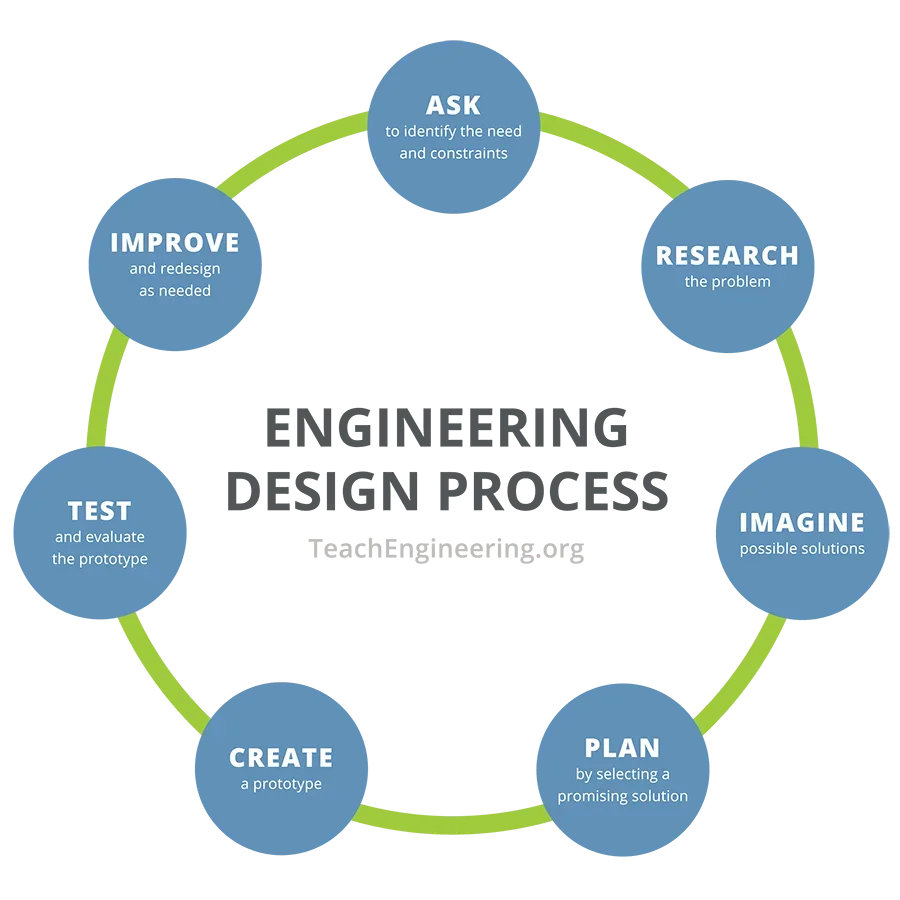 The steps of the engineering design process.Copyright 2014 TeachEngineering.org. All rights reserved.
Before Day 3:
- Have students gather the following materials: lab notebooks, pens, computers/laptops, research about hingeback tortoises (if specific books cannot be found, print out articles found in the reference section).
Day 3: With the Students:
- Research Day! Remind students that engineers conduct research on a topic before beginning the design process to see if there is information already out there to help. Brainstorm what things they should be researching and write ideas on the board; have students copy these ideas in their lab notebooks.
- What humidity percentage does the hingeback tortoise prefer? (70-80%)
- What type of materials or objects should be in the habitat to hold in humidity? (thick dirt or mulch that easily obtains moisture)
- How much water should I spray into the habitat? (varies depending on the number of air holes in a given habitat)
- Each student or group should use a laptop to conduct research on the hingeback tortoise (if there aren’t enough laptops for every student, have them research in rotations with other students looking through books or articles). Show students books or printed information on hingeback tortoises (see References below). Instruct students to write any relevant information in their lab notebooks.
- Set the hygrometer in a central location in the classroom to measure the room’s humidity level. Have student observe and note these data in their notebooks. This should help the students make their choices when deciding the types and amounts of materials to use.
Before Day 4:
Note: Design days could take longer than 45 minutes. If this occurs, take an extra day to finish and push the rest of the lesson back.
- Gather materials: small plastic bins with lids, soil, mulch, sand, cups, gloves (used for handling bedding material), water, graduated cylinders, spray bottles, scale, bin (to tare scale), hygrometers, knife or hot-glue gun, and Design Plan Sheet (PDF).
- Divide the class into four or five groups.
Day 4: With the Students:
- Imagine possible solutions and Plan by selecting a promsing solution: Students are going to practice designing a habitat on a smaller scale using the research they collected the previous day. Tell students they are not going to design the full tortoise habitat immediately, but will instead practice on elements of the habitat.
- Show students the different materials they are allowed to use. Tell students they have to determine the following in order to achieve the correct humidity level (70% - 80% for 24 hours): 1) how many air holes to put into the bins, 2) what type of bedding to use (planting soil, mulch, or soil) 3) how much water to spray into the habitat (Figure 1)*. Tell them that you will have a knife or hot-glue gun** at the ready to make holes into the bins; have the students draw on the bins where they want the holes to go.
*You might need to limit the amount of starting water in the bottles so that students don’t use too much. Tell the students that the bedding should not be soaked because the tortoise needs to be able to walk around comfortably.
**The hot-glue gun is easier to make holes with than the knife. To do so, press the gun where the hole is desired and leave for a few seconds.
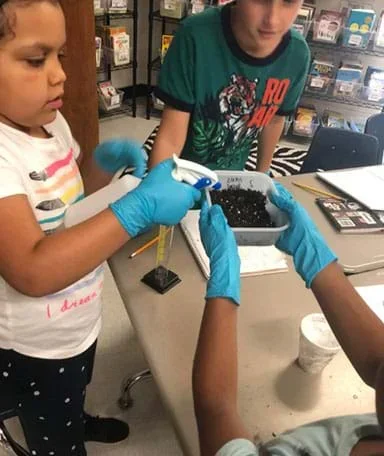 Figure 1. Working together to create an ideal habitat!Copyright 2018 Kayla Sutcliffe, University of Florida RET
- Introduce yourself as the PI, or Principal Investigator. The PI is in charge of all of the groups and their work. Groups must get permission from the PI to begin working after approving their design sheet, just like real engineers do. Pass out a Design Plan Sheet (PDF) to each student; have students glue it in lab notebooks or keep in a folder. Groups will discuss with each other what they want to achieve, write it on their Design Plan Sheet (PDF), and then gather materials one group at a time (with teacher supervision). Check the students’ design plan sheet and give feedback if necessary. Read the hygrometer in the room and write the number on the board. Tell students they need to keep the classroom’s humidity level in mind when designing the habitat.
- Students will need to measure and record the amount of water and bedding collected*. For the bedding, show students how to tare the digital scale with a plastic box, estimate the amount of bedding they want to use in the box, and record the mass in grams. For the water, they will need to put an amount into a graduated cylinder, record the level in milliliters, and pour it into a spray bottle. After they are done spraying their habitat, they will pour the remaining water from the spray bottle back into the graduated cylinder, record the new level, then subtract the two numbers to get the amount used.
*You may limit the amount of bedding and water.
- When they are completely done, have students put one hygrometer into the habitat to record the humidity level. Ideally, place habitats near a window or warm area to increase humidity.
- Have the students record the bedding’s properties: texture (moist or dry), color, and hardness.
- To examine condensation more closely, place wet soil into a small plastic demonstration box without any holes. Let it sit overnight and show it to students the next day; keep it closed to produce more condensation.
Before Day 5:
- Gather materials: same materials as previous day, round 1 practice habitats.
Day 5: With the Students:
- Record the date, time, and humidity levels present in each group’s small habitat. Note the type of bedding used in lab notebooks.
- Ask students to take note if they see condensation in their habitat.
- Ask each group to come together and discuss why they think their humidity level was too low, too high, or just right. Discuss with the class what they think they need to change to achieve that perfect humidity level and record it in their lab notebooks. (Examples: change the soil to sand, add less holes, spray more water, spray less water, etc.). You want the students to come up with these solutions on why their humidity level was what it was as much as possible. Tell students that when faced with a task, engineers try multiple solutions.
- Students will repeat this process one more time with their changes. Students record ideas on design plan sheet. Redistribute materials.
Before Day 6:
- Gather Materials: round 1 and 2 practice habitats, lab notebooks, pens, Chart A (PDF).
Day 6: With the Students:
- Examine and record humidity levels. Repeat the same process as the previous day: why did your small habitat achieve that humidity level? What did you change? Did it make the humidity level change?
- Distribute Chart A (PDF) to each student. Assign each group a number. Have each group fill in the information for their own row only. Go around and fill in each group’s row on the board; have students copy the class data in their charts.
- As a class, discuss what worked and what did not.
Before Day 7:
- Gather Materials: 5.5 L (6 qt.) plastic storage bins with lids, soil, mulch, sand, cups, gloves, water, graduated cylinders, spray bottles, scale, bin, hygrometers, knife or hot-glue gun, Design Plan Sheet (PDF).
Day 7: With the Students:
- Tortoise Habitat Design Day! Groups will first brainstorm a design for the hingeback tortoise’s habitat. Tell them that they will be using their research from the internet, books, and previous experiments to design the most optimal habitat for the tortoise. Remind the students that the tortoise prefers an environment with 70% - 80% humidity, so it is important to keep that in mind when using certain materials.
- Distribute materials the same way as the small practice habitats, but include the larger 5.5 L storage bins. Students will design on the Design Plan Sheet (PDF) first. Remind students that this design is bigger, so their variables might have to change as well (there is no one definite design that works better than another). Have students build their habitats, place hygrometers inside, and place them in the same area as the practice designs.
Before Day 8:
- Gather materials: same materials as previous day, round 3 tortoise habitats.
Day 8: With the Students:
- Record date, time, and humidity levels present on hygrometers in lab notebooks.
- Step 7 of the engineering design process: Improve and redesign as necessary. Groups will have one more chance to improve their design if needed. Have groups discuss what they should change and record on their design plan sheet. Redistribute materials. Have students rebuild or iterate upon their habitats and place them in same area as their first designs.
Before Day 9:
- Gather Materials: round 3 and 4 habitats, lab notebooks, pens, Chart B (PDF).
Day 9: With the Students:
- Come back and record the humidity levels present on hygrometers.
- Distribute Chart B to each student. Have groups write in the same row as the last chart. Ask each group their information and present this information on the board for students to copy.
- As a class, come together and discuss what worked and what did not. Encourage students to think about why the humidity levels were like that. Discuss whether they could see the condensation in the habitat. Discuss how they made the humidity level more stable the second time and how they acted like engineers.
Before Day 10-11:
- Gather materials: large chart paper for each group, markers, lab notebooks, pens.
Day 10-11: With the Students:
- Students will receive one piece of large chart paper and markers to present their design to the rest of the class (Figure 2). Say: engineers share their final designs with other engineers so that they can learn from their data. Also, other engineers might want to repeat the process and see if they can get the same results.
- Things students want to include on their paper (write on board):
- Problem: can we design a hingeback tortoise habitat that maintains 70% - 80% humidity for at least 24 hours?
- Drawing of their final design
- Practice habitats and humidity data
- Final habitat humidity data
- What they changed
- If they observed condensation in any of their designs
- Science behind the challenge
- Any other observations
- Presentations are on Day 11. Give students time to practice. They can also write what they want to say on index cards. Encourage every student in the group to speak at least once.
- Grade students according to the Engineering Rubric (PDF). Give students the Post-activity Quiz (PDF).
- Fill out the L section (what students learned) of the KWL Chart (PDF) begun at the start of the unit.
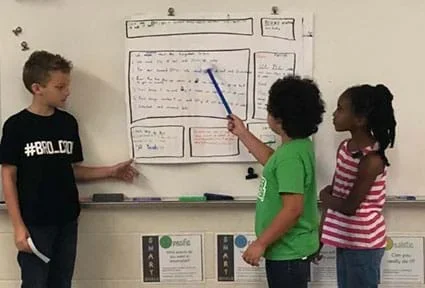 Figure 2. Presenting the Engineering Design Process and results to fellow engineers.Copyright 2018 Kayla Sutcliffe, University of Florida RET
- condensation
- A change in matter in which water changes from a gas to a liquid.
- evaporation
- A change in matter in which water changes from a liquid to a gas.
- habitat
- The natural home or environment for an animal or organism.
- hygrometer
- A tool used to measure relative humidity.
- relative humidity
- The amount of water vapor, or moisture, found in the air, compared with how much water could be in the air; measured in percent (%).
- water vapor
- The gaseous state of water.
Pre-Activity Assessment
KWL Chart: The Pre-Activity Assessment is conducted as a class with the KWL Chart (PDF) (see Day 1). Discuss what students already know about condensation and evaporation (K section) and what they want to know throughout the design process (W section). The L section (what they learned) should be discussed and filled out on Day 11 after presentations.
Activity Embedded Assessment
Charts: Chart A (PDF) and Chart B (PDF) will serve as activity embedded assessments. The class as a whole should be recording the changes in humidity from other groups’ designs. The teacher can guide this assessment by writing these changes on the board.
Post-Activity Assessment
Rubric: Using the Final Design Rubric (PDF), teachers will give each student a score out of 20 points in the following categories (4 points each): research, planning, design/redesign, participation, and presentation.
Post-Quiz: Administer the Post-Activity Quiz (PDF). Students will define humidity, identify condensation and evaporation, and explain how they behaved like engineers during the design process.
- Do not let the students cut their own holes into the plastic. Have them use a marker to draw circles on the bin; the teacher can then use a knife of hot-glue gun.
- Do not make holes in lids (they will be too brittle); make holes on sides of plastic bins. If you’d like, practice making holes with a knife or hot-glue gun first before the students’ designs.
- Be aware of the humidity level in the classroom; it might affect the habitats. Measure it beforehand and tell the students the level.
- Place the hygrometers in the same area of each group’s habitat every time for consistent results.
- When students are to record data in their lab notebooks, some might need more help than others. Encourage students to help each other record data.
- If the students put the lid completely on, it will most likely produce >90% humidity. When they test this, they should realize they need to take the lid partially off.
- Acquiring an actual tortoise for a classroom pet is possible and encouraged to make this design process real for students, whether it is an actual hingeback tortoise or a different species. A marginated tortoise may work well for classes as it doesn’t get very large (remember: the design is only optimal for 24 hours since students were designing a temporary habitat until supplies for the permanent habitat arrive. Pets in the Classroom is a grant that teachers can apply for in order to get a classroom pet and supplies at no cost. Teachers can also visit a local reptile shop or pet store to purchase items necessary for a tortoise habitat. Conduct research for specific species, but every tortoise needs at least: a UVA/UVB bulb, terrarium of at least 40 gallons, soil, shallow water dish, shallow food dish.
- Students can research different tortoises or reptiles that require varying amounts of humidity. They can then brainstorm and plan in their lab notebooks the best way to design its habitat.
- Have students research what would happen if the weather became cold and the humidity was harder to maintain.
- Take photographs of groups’ habitats final design and create a class book.
- Using Google Slides, have students create their presentation in a digital format.
- For lower grades:
- Instead of focusing on the humidity percentage, K-2 students can observe the condensation and evaporation each day.
- For higher grades:
- Students can predict whether they think water or salt water will create more humidity and test it using the other variables.
- Students can research a different species of tortoise or reptile in smaller groups or pairs and research what humidity level they would need to create an appropriate habitat.
“Bell’s Hingeback Tortoise” (Kinixys belliana). Reptile Talk. Accessed May 23, 2019. https://www.reptiletalk.net/bells-hingeback-tortoise/
Foose, Ken. “Home’s Hingeback Tortoise.” Reptiles Magazine. Accessed May 23, 2019. http://www.reptilesmagazine.com/Homes-Hingeback-Tortoise/
Hingeback Tortoise Care Sheet. Western New York Herpetological Society. Accessed May 23, 2019. http://www.wnyherpsociety.org/wp-content/uploads/2015/08/Hingeback-Tortoise-Care-Sheet.pdf
Contributors
Kayla Sutcliffe
Supporting Program
Multidisciplinary Research Experiences for Teachers Program, Herbert Wertheim College of Engineering, University of Florida
Acknowledgements
This material is based upon work supported by the National Science Foundation under grant no. EEC 1711543 and developed by a Research Experience for Teachers program at the University of Florida. Any opinions, findings, and conclusions or recommendations expressed in this material are those of the authors and do not necessarily reflect the views of the National Science Foundation.
Copyright
2019 by Regents of the University of Colorado; original © 2018 University of Florida