
Absorbing Airplane Noise!
Modern commercial aircraft are incredible examples of aerospace engineering, but they also emit large amounts of noise (as well as carbon emissions). That’s where engineering plays another role: to design buildings that can withstand or limit the amount of noise from a machine! In this activity, students engineer a solution to reduce airplane noise for a school located directly next to a large international airport. Using the engineering design process, they construct a model building that best keeps out loud sound so that students in the school are not disturbed throughout the day. Students research and use a variety of materials to create and build a model building (about 30 cm by 30 cm by 30 cm) that is soundproof or lets in the least amount of sound. Materials cost money and students are limited to a given budget. Each building is tested and re-tested based on what worked and what did not not work well.
 A jet is flying low near a house into Heathrow Airport in London. How can engineers help design buildings using materials that are more soundproof?Copyright 2017 Matt Kieffer, (CC BY-SA 2.0), Flickr: https://www.flickr.com/photos/mattkieffer/27760152828/
Materials engineers develop, process, and test materials used to create many products. In airplane design, materials engineers select, test, and evaluate the material used in all parts of the aircraft, from the fuselage and wings to the wheels and engines. The inherent nature of aircraft design allows engineers in other fields to design and build machines, structures, or technology used to mitigate the negative effects of an airplane’s impact on the environment.
After this activity, students should be able to:
- Test a variety of materials to determine which absorbs sound the best.
- Understand and discuss what materials engineers do.
- Think and outline design iteration suggestions.
- Understand what the engineering design process is and why engineers use it.
- CCSS.ELA-Literacy.W.2.7 Participate in shared research and writing projects (e.g., read a number of books on a single topic to produce a report; record science observations).
Grade 2
Do you agree with this alignment?
- CCSS.Math.Practice.MP2 Reason abstractly and quantitatively.
Grades K-12
Do you agree with this alignment?
- LAFS.2.W.3.7 Participate in shared research and writing projects (e.g., read a number of books on a single topic to produce a report; record science observations).
Grade 2
Do you agree with this alignment?
- MAFS.K12.MP.2.1 Reason abstractly and quantitatively.
Grades K-12
Do you agree with this alignment?
- Students will develop an understanding of the attributes of design.
Grades K-12
Do you agree with this alignment? - Students will develop an understanding of engineering design.
Grades K-12
Do you agree with this alignment? - Students will develop abilities to apply the design process.
Grades K-12
Do you agree with this alignment?
- 2-PS1-2 Analyze data obtained from testing different materials to determine which materials have the properties that are best suited for an intended purpose.
Grade 2
This resource focuses on the following Three Dimensional Learning aspects of NGSS:
Science & Engineering Practices- Analyze data from tests of an object or tool to determine if it works as intended.Do you agree with this alignment?
Disciplinary Core Ideas- Different properties are suited to different purposes.Do you agree with this alignment?
Crosscutting Concepts- Simple tests can be designed to gather evidence to support or refute student ideas about causes.Do you agree with this alignment?
- Every human-made product is designed by applying some knowledge of the natural world and is built using materials derived from the natural world.Do you agree with this alignment?
Do you agree with this alignment? - Analyze data from tests of an object or tool to determine if it works as intended.
- K-2-ETS1-1 Ask questions, make observations, and gather information about a situation people want to change to define a simple problem that can be solved through the development of a new or improved object or tool.
Grades K-2
This resource focuses on the following Three Dimensional Learning aspects of NGSS:
Science & Engineering Practices- Ask questions based on observations to find more information about the natural and/or designed world(s).Do you agree with this alignment?
- Define a simple problem that can be solved through the development of a new or improved object or tool.Do you agree with this alignment?
Disciplinary Core Ideas- Asking questions, making observations, and gathering information are helpful in thinking about problems.Do you agree with this alignment?
- A situation that people want to change or create can be approached as a problem to be solved through engineering.Do you agree with this alignment?
- Before beginning to design a solution, it is important to clearly understand the problem.Do you agree with this alignment?
Do you agree with this alignment? - Ask questions based on observations to find more information about the natural and/or designed world(s).
- K-2-ETS1-2 Develop a simple sketch, drawing, or physical model to illustrate how the shape of an object helps it function as needed to solve a given problem.
Grades K-2
This resource focuses on the following Three Dimensional Learning aspects of NGSS:
Science & Engineering Practices- Develop a simple model based on evidence to represent a proposed object or tool.Do you agree with this alignment?
Disciplinary Core Ideas- Designs can be conveyed through sketches, drawings, or physical models. These representations are useful in communicating ideas for a problem's solutions to other people.Do you agree with this alignment?
Crosscutting Concepts- The shape and stability of structures of natural and designed objects are related to their function(s).Do you agree with this alignment?
Do you agree with this alignment? - Develop a simple model based on evidence to represent a proposed object or tool.
Each group needs
- computer, laptop or tablet
- Design a Building Worksheet (PDF) per student
- A variety of textile materials for students to build their buildings. (Note: give groups unlimited access to each, but they will not be using all materials at once.)
- cardboard
- construction paper
- felt
- a variety of recycled materials that are consumable
- different kinds of tape (Scotch, duct, painter's)
- glue (Elmer’s, school, or white)
- Popsicle sticks
- meter stick
- scissors
- poster paper
For the entire class to share:
- markers
- sound app (for example, "Decibel Meter" or a similar app found in the Apple Store or on Google Play for free on teacher’s phone, on the computer, or an actual sound meter)
- a way to make a loud sound (for example, using cymbals or dropping a large book)
- (optional) play money, such as Monopoly money
Let us watch a video. Pay close attention to what is happening in the video. Afterwards, we will discuss any questions you may have.
[Show students the following video: “London Heathrow Plane Spotting” https://www.youtube.com/watch?v=iHVZ_Dlssec]
What did you notice about the video? What do you wonder? (Write students’ responses on the board. If the students do not notice it, direct their attention towards the video with the buildings in the background.) What is the problem with these buildings in the background of this video with the loud airplane flying close to it?
We have a problem for which we must engineer a solution: there is a school in a city that is located directly next to an airport. We have been asked to design model “buildings” that best keep out the sound of a jet engine so that they are not disturbed throughout the day. (Ask students if they have any questions about the problem.)
Before we begin, can anyone make sense of the word “insulation”? (Elicit student responses.) Insulation is material that is used to stop the passage of electricity, heat, or sound from one place to another. As we design our buildings, we must think about what materials will stop the passage of the sound of the airplanes to the schools’ classrooms the best.
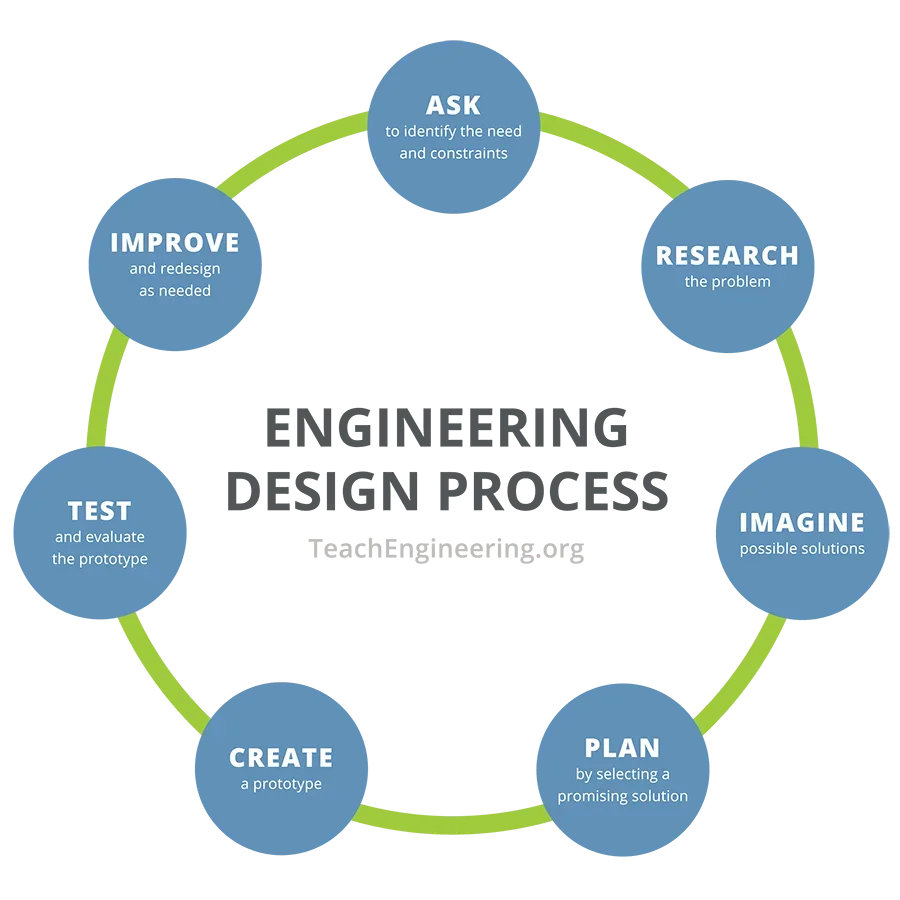
We will be acting as materials engineers in this activity to solve this problem for other people. Can anyone tell me what they think materials engineers do? (Elicit student responses.) We will use the engineering design process to choose different materials and to design a model building that best keeps the sound out caused by the very loud plane engines.
 Copyright TeachEngineering.org, 2022.
Background
Sound is a type of energy made up of vibrations. Sound is created when a force causes an object or substance to vibrate. These vibrations are called sound waves, and they travel through the surrounding substance (such as air, water, or a solid) in a wave to our ears. Stronger vibrations will result in louder sounds; weaker vibrations make softer sounds.
Sound can be reflected or absorbed. Reflection is when sound waves encounter a material and bounce back. Think of an echo in a large hall or in a canyon, or even music in a concert venue. Absorption is when the sound waves hit a material and are taken up, like a sponge takes in water. Soft items such as carpet and curtains will help to absorb sound and make a room quieter. Sound absorption materials are often used for noise control, especially in buildings and rooms that are near loud noises.
Before the Activity
- Gather materials and make copies of the Design a Building Worksheet (PDF) (one for each student).
- Pre-cut or size all the materials (for example, the pieces of cardboard / tape to a certain size / length). This will make it easier to “sell” materials to students.
- Download a sound app to a cell phone, computer, tablet or use a sound meter if you have one.
- Assign costs to each material and decide on a budget for each group. (For example, each group gets $20 to spend on their design and each material costs anywhere from $1.00 - $3.00.)
- Display the materials and costs to students in a common area. Example of costs:
- $1 per piece of 15-cm by 15-cm cardboard
- $1 per glue bottle
- $2 per 30-cm of tape
With the Students
- Divide the class into groups of three students.
- Explain the problem the students are trying to solve. Use the EDP image in the Introduction/Motivation to walk the students through the seven steps of the engineering design process. Identifying the problem and engineering criteria and constraints is the first step in the EDP.
- Give each student a copy of the Design a Building Worksheet (PDF).
- Provide students with the following design constraints:
- Each group has a $20 budget that cannot be exceeded.
- Each group’s building must be at least 30 cm tall.
- Each group’s building must sit within a 30-cm by 30-cm square.
- Have students write down, in their own words, what the problem is that they are trying to solve on their Design a Building Worksheet (PDF).
- Explain to students that they are diving into the second step of the engineering design process: research. (Engineers research what products or solutions already exist, and/or what technologies might be adaptable to their product.) Either at the library or with computers/laptop/tablet, allow students to research what materials absorb sound the best. Have them take notes on their Design a Building Worksheet (PDF).
- Give students time to brainstorm what materials they would like to try to build their building. Remind students that they have a budget of $20 and engineers often work with time, size, and constraints on how much they can spend. Their notes should be included on their Design a Building Worksheet (PDF). Remind them to think about the research they did about what materials absorb sound well.
- After imagining different ideas, each group plans by selecting their most promising solution and which materials they want to use. They should sketch their agreed upon design in their Design a Building Worksheet (PDF). At the same time, they should decide what materials they would like to purchase, how much they are, and add the costs for a final cost. Remind students that imagining and selecting the most promising solution are the third and fourth step of the engineering design process.
- Once the budget is checked by a teacher, have one student from each group take the materials they need from the materials display.
- Give students time to dive into the fifth step of the EDP and create their buildings with their chosen materials. Remind students to record their design on their Design a Building Worksheet (PDF).
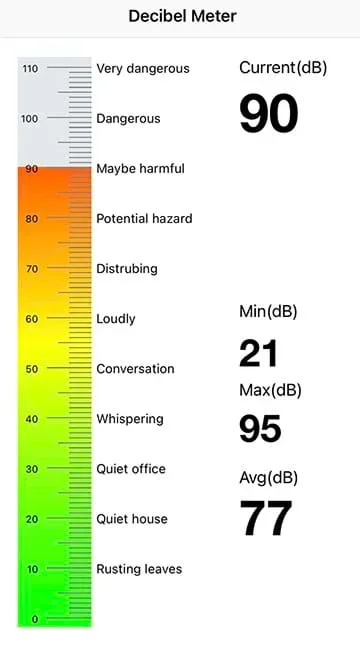 Figure 1. Decibel meter measuring 90 decibels from a test sound.Copyright 2021 Kayla Sutcliffe, University of Florida MRET
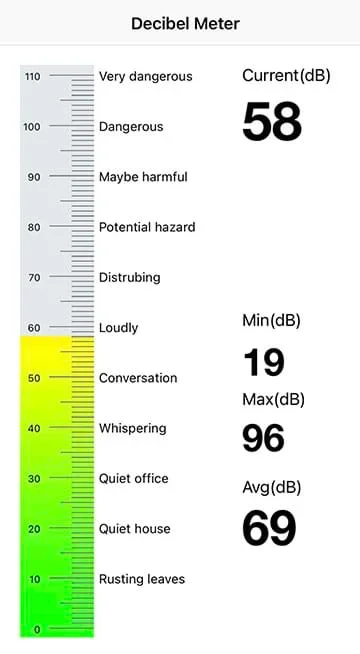 Figure 2. Decibel meter measuring 58 decibels from the sound of a plane after a model is designed.Copyright 2021 Kayla Sutcliffe, University of Florida MRET
- When a group finishes their design, have them move into the sixth step of the EDP and set up their test to evaluate their design.
- The sound meter should be placed inside the building. The loud sound should be made 1 meter away from the model. (see Figures 1 and 2). Try to keep the sound consistent to protect the reliability of the results.
- Every time the students test their design, they must record the decibels measured on their worksheets.
- Have students determine what worked and what didn’t in their design. Remind students that they should learn from their failures and encourage them to use new materials to alter their designs and record what materials they will want for their next design iteration on their worksheets.
- Have the groups complete the seventh step of the EDP as they work to improve their first design by creating more designs based on the decibels measured (number of times the students alter their design is at the teacher’s discretion). Each time students improve their designs, they may come up to the material area, and receive an extra $2 to spend on their redesign.
- Give each group one piece of poster paper and markers to present their design process. Students should include the following on their poster:
- Problem: Can we design a building that absorbs the loud sounds from a nearby airport? Can we do it without going over budget?
- Drawing of their final design.
- How many decibels were measured for each design/redesign? (A table might be very helpful here.)
- What they changed in each design phase.
- What they learned about absorption of certain materials.
- How much money they spent and why budgeting matters in engineering.
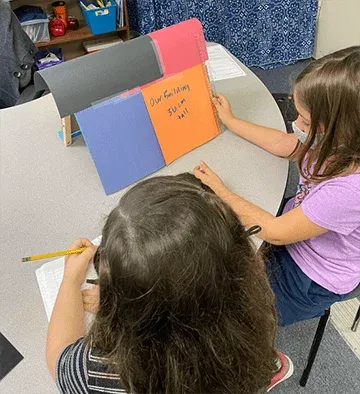 Two students design a building to protect it from the sound of a plane.Copyright 2021 Kayla Sutcliffe, University of Florida MRET
- decibel
- Unit for measuring the loudness of sounds.
- engineer
- Someone who is trained in the use or design of machines or engines, or in other technologies.
- insulation
- Material used to stop the passage of electricity, heat, and/or sound from one conductor to another.
- sound
- Anything that people or animals can hear with their ears.
- vibration
- When something quickly moves back and forth (or up and down).
Pre-Activity Assessment
Quick Poll: Before the activity begins, ask students what materials they think will act as the best insulators for their buildings. If time allows, ask students to justify their answers.
Activity Embedded (Formative) Assessment
Worksheet: Students either work individually or with their group to complete the Design a Building Worksheet (PDF).
Post-Activity (Summative) Assessment
Presentation: Each group presents their devices and findings to the class as a poster or digital presentation. Teachers can use the Teacher Presentation Rubric (PDF) for assessment.
Discuss/think-pair-share: Ask students the following questions to encourage discussion:
- Which materials met our goal today of providing insulation and blocking sound? (Answers may vary based on students’ designs.)
- How did you act as materials engineers today? (Example answer: we used materials to solve a problem, designed something for someone to use, etc.)
Students might need to be reminded that loud sounds should not be made right next the ear.
- Test the sound meter you are using before using it for students to make sure it works.
- When students record data on their worksheets, some might need more help than others, depending on learning level. Encourage students to help each other record. Pictures are also acceptable forms of recording.
- If possible, contact a materials engineer to come guest speak and discuss with students what they do.
- Consider showing students a decibel chart to show how quiet and loud certain sounds are.
- For upper grades:
- make each material a specific amount of money to match grade level math standards. For example, changing $3 to $3.08.
- have them create their own poster presentation from scratch instead of giving them a template.
- For lower grades:
- set up posters ahead of time so students only have to write in the details.
- conduct research as a class.
- provide each group with something stable to design their building around (e.g., a 30-cm tall box.)
- remove the budget constraint.
Contributors
Kayla Sutcliffe
Supporting Program
Multidisciplinary Research Experiences for Teachers of Elementary Grades, Herbert Wertheim College of Engineering, University of Florida
Acknowledgements
This curriculum was based upon work supported by the National Science Foundation under RET grant no. EEC 1711543— Engineering for Biology: Multidisciplinary Research Experiences for Teachers in Elementary Grades (MRET) through the College of Engineering at the University of Florida. Any opinions, findings, and conclusions or recommendations expressed in this material are those of the authors and do not necessarily reflect the views of the National Science Foundation.
Copyright
2021 by Regents of the University of Colorado; original © 2021 University of Florida