
Heat Transfer in Solar Dryers
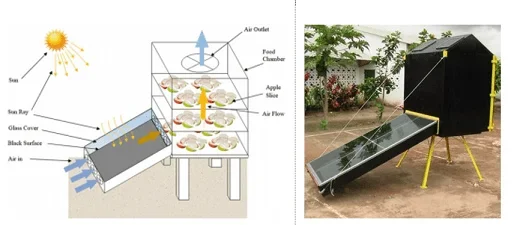 Figure 4. Two examples of mixed-mode dryers.Copyright 2022 Roberto Dimaliwat, University of Houston RET
Understanding the concepts of conduction, convection and radiation help engineers design and build systems that employ the process of heat transfer. In this activity, students use a hair dryer, hot plate and a heat lamp to show the three types of heat transfer and how these processes can be used in agricultural engineering applications. They compare the time it takes for each process and, as they learn about these processes, students delve deeper into why there are time differences for each.
Since ancient times, people have been preserving food using solar energy by the process of heat transfer using solar dryers. Designs of different solar dryers have improved from the simple hanging of food to some involving some sort of automation. All three types of heat transfer, conduction, convection, and radiation are observed in solar dryers and these processes are used to engineer efficiency within solar dryer designs.
Solar drying is considered to be a simultaneous application of heat and the removal of moisture from foods which is an important process for the future of food security and sustainability. Solar drying is a method used in the food industry and in agricultural engineering as a sustainable food processing technology that minimizes waste while complying with extremely rigorous food safety challenges.
Solar dryers are used to improve the quality of the product and to reduce the drying time compared to drying products by direct sunlight. There are many types and applications of solar dryers to dry different types of agricultural products such as cereals, fruits, vegetables, meat, fish, and aromatic plants. These applications have been, and continue to be, improved by many engineers to increase the drying efficiency and improve the final quality of the dried products.
Heat transfer is a specific concept in engineering. It deals with the impact of conduction, convection, and/or radiation in specific applications. Thermal engineers can help product engineers and designers optimize the thermal energy efficiency of their device or system.
After this activity, students should be able to:
- Define conduction, convection and radiation.
- Describe at the molecular level how heat is transferred by conduction, convection and radiation.
- Explain the time differences on each process as they transfer heat from a source to an object or a substance.
- Show how conduction, convection and radiation is applied in a solar dryer and give examples for each process.
- HS-PS3-2 Develop and use models to illustrate that energy at the macroscopic scale can be accounted for as either motions of particles or energy stored in fields.
Grades 9-12
This resource focuses on the following Three Dimensional Learning aspects of NGSS:
Science & Engineering Practices- Develop and use a model based on evidence to illustrate the relationships between systems or between components of a system.Do you agree with this alignment?
Disciplinary Core Ideas- Energy is a quantitative property of a system that depends on the motion and interactions of matter and radiation within that system. That there is a single quantity called energy is due to the fact that a system's total energy is conserved, even as, within the system, energy is continually transferred from one object to another and between its various possible forms.Do you agree with this alignment?
- At the macroscopic scale, energy manifests itself in multiple ways, such as in motion, sound, light, and thermal energy.Do you agree with this alignment?
- These relationships are better understood at the microscopic scale, at which all of the different manifestations of energy can be modeled as a combination of energy associated with the motion of particles and energy associated with the configuration (relative position of the particles). In some cases the relative position energy can be thought of as stored in fields (which mediate interactions between particles). This last concept includes radiation, a phenomenon in which energy stored in fields moves across space.Do you agree with this alignment?
Crosscutting Concepts- Energy cannot be created or destroyed—it only moves between one place and another place, between objects and/or fields, or between systems.Do you agree with this alignment?
Do you agree with this alignment? - Develop and use a model based on evidence to illustrate the relationships between systems or between components of a system.
- investigate and demonstrate the movement of thermal energy through solids, liquids, and gases by convection, conduction, and radiation such as in weather, living, and mechanical systems;
Grades 9-10
Do you agree with this alignment? - contrast and give examples of different processes of thermal energy transfer, including conduction, convection, and radiation; and
Grades 9-12
Do you agree with this alignment?
Each station needs:
An infrared thermometer
Station 1 – Conduction:
- hot plate
- cup of water
- timer dropper or pipette
Station 2 – Convection:
- hair dryer
- cup of water
- petri dish covered with aluminum foil or small ceramic or metal plate that can hold a drop of water
Station 3 – Radiation:
- heat lamp (about 200 to 300 W)
- cup of water
- dropper or pipette
- petri dish with aluminum foil
- Intro to Heat Transfer Worksheet (docx)
- Intro to Heat Transfer Worksheet (pdf)
- Intro to Heat Transfer Worksheet Answer Key (docx)
- Intro to Heat Transfer Worksheet Answer Key (pdf)
- Heat Transfer Comparison Worksheet (docx)
- Heat Transfer Comparison Worksheet (pdf)
- Heat Transfer Comparison Worksheet Answer Key (docx)
- Heat Transfer Comparison Worksheet Answer Key (pdf)
- Heat Transfer Lab Worksheet (docx)
- Heat Transfer Lab Worksheet (pdf)
- Heat Transfer Lab Worksheet Answer Key (docx)
- Heat Transfer Lab Worksheet Answer Key (pdf)
- Heat Transfer Article (pdf)
- Solar Dryer Heat Transfer Worksheet (docx)
- Solar Dryer Heat Transfer Worksheet (pdf)
- Solar Dryer Heat Transfer Worksheet Answer Key (docx)
- Solar Dryer Heat Transfer Worksheet Answer Key (pdf)
- An understanding of basic chemistry, including definitions for molecules and particles
- An understanding of the concept of heat
What dried fruit or food have you eaten or tried? Let’s take a look at some example fruit and state the differences between them. Here is a dried piece of [insert name of fruit here] and here is an example of a normal piece of the same fruit.
What is the difference between a dried fruit/food and the real thing? How does a normal piece of fruit turn into a dried one? What was removed/what was done to the normal fruit for it to become dried. What do you think was the process used? What energy was involved in the process? Were there any scientific or engineering concepts that were used to help this process?
In this activity, we’ll be exploring one key process – heat transfer – to understand how the concepts of conduction, convection and radiation work in a unique engineering application. Let’s get started!
Background
(Have students read the Heat Transfer Article (PDF) and fill out the Intro to Heat Transfer Worksheet (PDF). Alternatively, go over the background with the students.)
Solar drying technology was invented in the 1950’s as a solution to a common issue related to the scaling of commercial farms, since commercial operations could not rely on open sun drying alone. Solar drying technology was given even more attention later following the oil crisis in 1973, when nations became interested in in finding an alternative system with a sustainable energy source for grain and fish drying.
Solar drying also became a popular process in agricultural applications in tropical countries like Asia and sub-Saharan Africa, where the solar drying potential is higher.
More advanced solar drying systems are being developed through time and today based on the commodity nature, location, cost, and other factors that are of concern we can choose what is best for our purpose.
Here’s a brief introduction to several basic types of solar dryers.
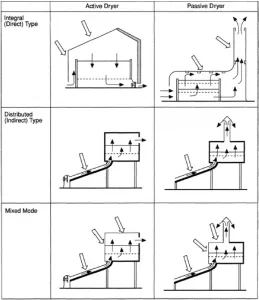 Figure 2. The design of an active dryer and a passive dryer.Copyright 2022 Roberto Dimaliwat, University of Houston RET
In active dryers, airflow inside the dryer is made by a fan powered with electricity while passive dryers use natural convection to create airflow. Further, dryers are categorized into 3 main types namely Direct, Indirect, and Mixed-mode.
Direct Type Dryers
Direct type dryers are like a cabinet with a compartment and a glass roof. Solar rays directly fall onto the commodity (the crop) through the glass and use the greenhouse effect to create heat. The airflow carries away the moisture as shown below. Tunnel, greenhouse, and cabinet-type dryers fall into this category.
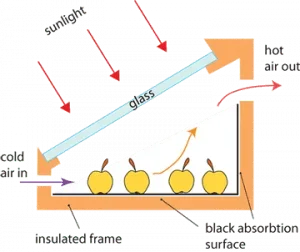 Figure 3. The function of a direct type dryer.Copyright 2022 Roberto Dimaliwat, University of Houston RET
Indirect Type Dryers
Indirect type solar dryers have separate chambers for drying and heating airflow. In here there’s no direct contact between solar rays and the crop as shown in the figure below. Airflow entering from solar collector gets heated up and carries away the moisture from drying chamber.
Two examples of mixed-mode dryersCopyright 2022 Roberto Dimaliwat, University of Houston RET
Mixed-mode Dryers
Mixed-mode dryers are a combination of above two types. The structure is similar to an indirect dryer but the drying chamber is made of transparent material such that the solar collector and drying chamber both get heated up by the greenhouse effect.
[Have students fill out the Solar Dryer Heat Transfer Worksheet (PDF) as an assessment after the background section.]
Before the activity
Set up each station with its respective materials. Hand out the Heat Transfer Lab Worksheet (PDF) to be completed during the activity and the Heat Transfer Comparison Worksheet (PDF) to be completed after the activity.
With the Students
Station 1:
- Plug the hot plate and adjust the temperature knob to medium.
- Using the thermometer, measure the temperature of the hot plate.
- Set the timer and place a drop of water using the dropper or pipette directly on the hot plate.
- Measure the time until the drop of water is completely dried out.
- Adjust the temperature knob of the hot plate to the maximum setting.
- Repeat steps 2 and 3.
- Record the time in the data section.
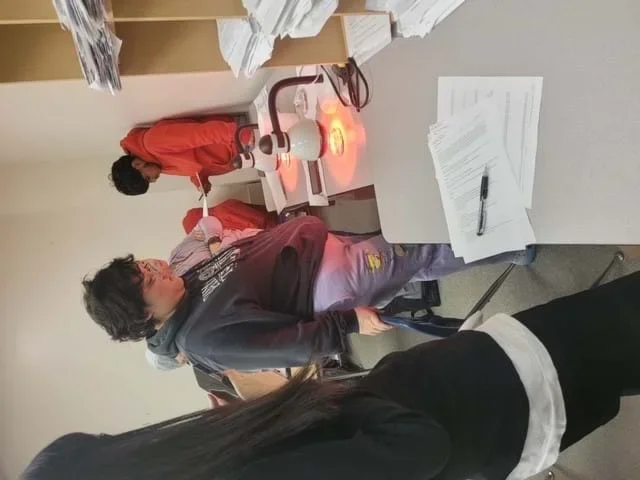 The heat transfer radiation stationCopyright 2022 Roberto Dimaliwat, University of Houston RET
Station 2:
- Plug the hair dryer.
- Using the thermometer, measure the temperature of the petri dish.
- Set the timer and place a drop of water on the petri dish and cover it with foil.
- Turn on the dryer and set it to maximum.
- Point the dryer directly on the top of the foil
- Measure the time until the water is completely dried out.
- Record the time in the data section.
- Record the time.
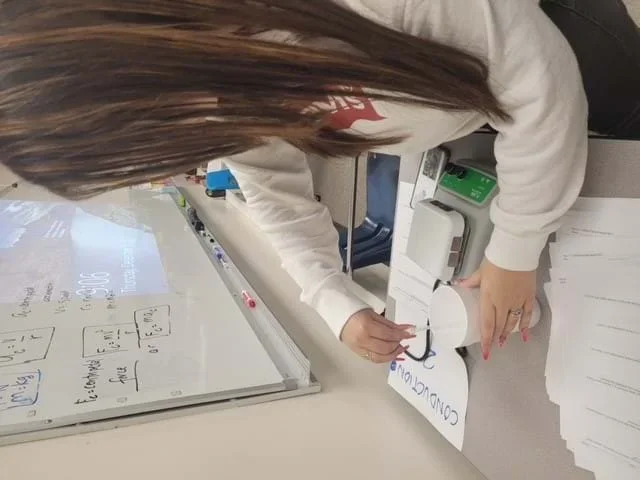 The heat transfer conduction stationCopyright 2022 Roberto Dimaliwat, University of Houston RET
Station 3:
- Plug and turn the heat lamp on.
- Using the thermometer, measure the temperature of the hot plate.
- Set the timer and place a drop of water on the petri dish.
- Point the heat lamp directly on the drop of water at about a 3 cm away from the water.
- Measure the time until the drop of water is completely dried out.
- Record the time in the data section.
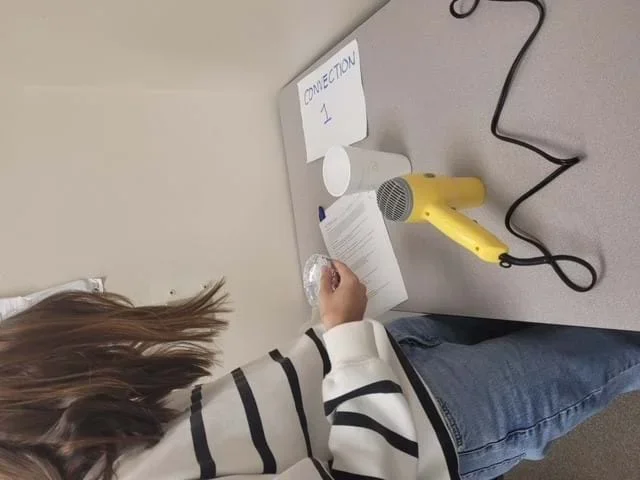 The heat transfer convection stationCopyright 2022 Roberto Dimaliwat, University of Houston RET
- conduction
- Heat transfer that involves contact, applies to solids.
- convection
- Heat transfer by moving particles carrying heat, applies to liquids and gas.
- heat transfer
- A form of energy transfer through conduction, convection, and/or radiation. Heat transfer occurs any time there is a temperature difference between two objects and occurs in the direction of decreasing temperature, meaning from a hot object to a cold object.
- solar dryer
- A device that use solar energy to dry substances, especially food. Solar dryers use the heat from sun to remove the moisture content of food.
Pre-Activity Assessment
The teacher will ask what dried fruit or food they have eaten or tried. If the budget permits, the teacher can bring some dried food for the students to try, like dried mango (or another dried fruit) and a normal mango. It can also be done by showing a picture of a dried mango and a normal mango fruit and the teacher can ask what the difference between the two. Then the deeper questions can be asked – how does a normal mango turn into a dried mango? What was removed/what was done to the normal mango for it to become dried mango. What does the students think was the process used? What energy was involved in the process? This will lead to a robust discussion and using leading questions like, how do farmers dry their food?
After the discussion and the background section, have students complete the Introduction to Heat Transfer Worksheet (PDF) and the Solar Dryer Heat Transfer Worksheet (PDF).
Activity Embedded (Formative) Assessment
Students complete the Heat Transfer Lab Sheet (PDF).
Post-Activity (Summative) Assessment
Students complete the Heat Transfer Comparison Worksheet (PDF).
- Use goggles for eye protection
- Use gloves or tongs when picking up hot objects
Contributors
Roberto Dimaliwat
Supporting Program
University of Houston College of Technology RET Program Summer 2022
Acknowledgements
This curriculum was developed under National Science Foundation RET grant no. 1855147— Research Experience for Teachers in Advanced Design and Manufacturing at the University of Houston. Any opinions, findings and conclusions or recommendations expressed in this material are those of the authors and do not necessarily reflect the views of the National Science Foundation.
Copyright
2023 by Regents of the University of Colorado; original © 2022 University of Houston