
E.G. Benedict's Ambulance Patient Safety Challenge
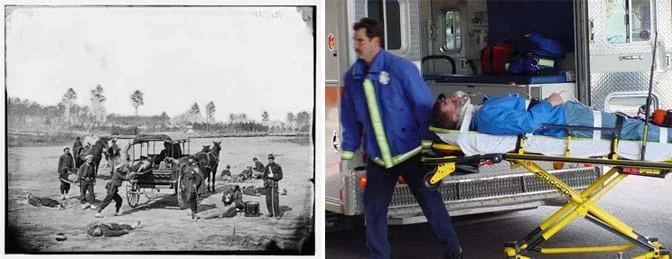 Ambulances have undergone many changes over time. These photos shows the state-of-the-art technology of 1862 and 2005.Copyright 1862 (left) U.S. National Library of Medicine, National Institutes of Health; 2005 (right) U.S. Navy via Wikipedia {PD}
http://www.nlm.nih.gov/hmd/digicolls/henkel/images/ambulancedrill.jpg http://en.wikipedia.org/wiki/File:MS1_on_stretcher.jpg
Ambulances have undergone many changes over time. These photos shows the state-of-the-art technology of 1862 and 2005.Copyright 1862 (left) U.S. National Library of Medicine, National Institutes of Health; 2005 (right) U.S. Navy via Wikipedia {PD}
http://www.nlm.nih.gov/hmd/digicolls/henkel/images/ambulancedrill.jpg http://en.wikipedia.org/wiki/File:MS1_on_stretcher.jpg
Students further their understanding of the engineering design process (EDP) while applying researched information on transportation technology, materials science and bioengineering. Students are given a fictional client statement (engineering challenge) and directed to follow the steps of the EDP to design prototype patient safety systems for small-size model ambulances. While following the steps of the EDP, students identify suitable materials and demonstrate two methods of representing solutions to the design challenge (scale drawings and small-scale prototypes). A successful patient safety system meets all of the project's functions and constraints, including the model patient (a raw egg) "surviving" a front-end collision test with a 1:8 ramp pitch.
The engineering design process (EDP) is a widely accepted way of arriving at a desirable solution to an identified problem. This activity guides students through the EDP as they apply basic engineering concepts to the real-world design problem of patient safety during emergency transport in ambulances. Like engineers, by combining their researched knowledge within the fields of transportation technology, material sciences and bioengineering, students design, build, test, and improve their small-scale prototypes in order to make recommendations for improving patient safety during emergency transport.
After this activity, students should be able to:
- Follow the steps of the engineering design process to develop solutions to given problems.
- Explain the reasons for their design and material choices.
- Make future recommendation based on the results of prototype testing.
- Students will develop an understanding of the attributes of design.
Grades K-12
Do you agree with this alignment? - Students will develop an understanding of engineering design.
Grades K-12
Do you agree with this alignment? - Students will develop an understanding of the role of troubleshooting, research and development, invention and innovation, and experimentation in problem solving.
Grades K-12
Do you agree with this alignment? - Students will develop abilities to apply the design process.
Grades K-12
Do you agree with this alignment? - Students will develop abilities to assess the impact of products and systems.
Grades K-12
Do you agree with this alignment? - There is no perfect design.
Grades 6-8
Do you agree with this alignment? - Transportation vehicles are made up of subsystems, such as structural propulsion, suspension, guidance, control, and support, that must function together for a system to work effectively.
Grades 6-8
Do you agree with this alignment? - STEL-7R Refine design solutions to address criteria and constraints.
Grades 6-8
Do you agree with this alignment? - STEL-7S Create solutions to problems by identifying and applying human factors in design.
Grades 6-8
Do you agree with this alignment?
- Given a design task, identify appropriate materials (e.g., wood, paper, plastic, aggregates, ceramics, metals, solvents, adhesives) based on specific properties and characteristics (e.g., strength, hardness, and flexibility).
Grades 6-8
Do you agree with this alignment? - Identify and explain the steps of the engineering design process, i.e., identify the need or problem, research the problem, develop possible solutions, select the best possible solution(s), construct a prototype, test and evaluate, communicate the solution(s), and redesign.
Grades 6-8
Do you agree with this alignment? - Demonstrate methods of representing solutions to a design problem, e.g., sketches, orthographic projections, multiview drawings.
Grades 6-8
Do you agree with this alignment? - Explain examples of adaptive or assistive devices, e.g., prosthetic devices, wheelchairs, eyeglasses, grab bars, hearing aids, lifts, braces.
Grades 6-8
Do you agree with this alignment?
- HS-PS2-3 Apply scientific and engineering ideas to design, evaluate, and refine a device that minimizes the force on a macroscopic object during a collision.
Grades 9-12
This resource focuses on the following Three Dimensional Learning aspects of NGSS:
Science & Engineering Practices- Apply scientific ideas to solve a design problem, taking into account possible unanticipated effects.Do you agree with this alignment?
Disciplinary Core Ideas- Criteria and constraints also include satisfying any requirements set by society, such as taking issues of risk mitigation into account, and they should be quantified to the extent possible and stated in such a way that one can tell if a given design meets them.Do you agree with this alignment?
- Criteria may need to be broken down into simpler ones that can be approached systematically, and decisions about the priority of certain criteria over others (trade-offs) may be needed.Do you agree with this alignment?
- If a system interacts with objects outside itself, the total momentum of the system can change; however, any such change is balanced by changes in the momentum of objects outside the system.Do you agree with this alignment?
- Attraction and repulsion between electric charges at the atomic scale explain the structure, properties, and transformations of matter, as well as the contact forces between material objects.Do you agree with this alignment?
Crosscutting Concepts- Systems can be designed to cause a desired effect.Do you agree with this alignment?
Do you agree with this alignment? - Apply scientific ideas to solve a design problem, taking into account possible unanticipated effects.
- MS-ETS1-1 Define the criteria and constraints of a design problem with sufficient precision to ensure a successful solution, taking into account relevant scientific principles and potential impacts on people and the natural environment that may limit possible solutions.
Grades 6-8
This resource focuses on the following Three Dimensional Learning aspects of NGSS:
Science & Engineering Practices- Define a design problem that can be solved through the development of an object, tool, process or system and includes multiple criteria and constraints, including scientific knowledge that may limit possible solutions.Do you agree with this alignment?
Disciplinary Core Ideas- The more precisely a design task's criteria and constraints can be defined, the more likely it is that the designed solution will be successful. Specification of constraints includes consideration of scientific principles and other relevant knowledge that is likely to limit possible solutions.Do you agree with this alignment?
Crosscutting Concepts- The uses of technologies and any limitations on their use are driven by individual or societal needs, desires, and values; by the findings of scientific research; and by differences in such factors as climate, natural resources, and economic conditions.Do you agree with this alignment?
- All human activity draws on natural resources and has both short and long-term consequences, positive as well as negative, for the health of people and the natural environment.Do you agree with this alignment?
Do you agree with this alignment? - Define a design problem that can be solved through the development of an object, tool, process or system and includes multiple criteria and constraints, including scientific knowledge that may limit possible solutions.
- MS-ETS1-2 Evaluate competing design solutions using a systematic process to determine how well they meet the criteria and constraints of the problem.
Grades 6-8
This resource focuses on the following Three Dimensional Learning aspects of NGSS:
Science & Engineering Practices- Evaluate competing design solutions based on jointly developed and agreed-upon design criteria.Do you agree with this alignment?
Disciplinary Core Ideas- There are systematic processes for evaluating solutions with respect to how well they meet the criteria and constraints of a problem.Do you agree with this alignment?
Do you agree with this alignment? - Evaluate competing design solutions based on jointly developed and agreed-upon design criteria.
- MS-PS2-1 Apply Newton's Third Law to design a solution to a problem involving the motion of two colliding objects.
Grades 6-8
This resource focuses on the following Three Dimensional Learning aspects of NGSS:
Science & Engineering Practices- Apply scientific ideas or principles to design an object, tool, process or system.Do you agree with this alignment?
Disciplinary Core Ideas- For any pair of interacting objects, the force exerted by the first object on the second object is equal in strength to the force that the second object exerts on the first, but in the opposite direction (Newton's third law).Do you agree with this alignment?
Crosscutting Concepts- Models can be used to represent systems and their interactions—such as inputs, processes and outputs—and energy and matter flows within systems.Do you agree with this alignment?
- The uses of technologies and any limitations on their use are driven by individual or societal needs, desires, and values; by the findings of scientific research; and by differences in such factors as climate, natural resources, and economic conditions.Do you agree with this alignment?
Do you agree with this alignment? - Apply scientific ideas or principles to design an object, tool, process or system.
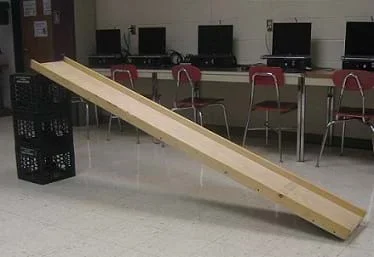 Figure 1. Activity setup for ambulance roadway prototype testing (level 3).Copyright 2012 Jared R. Quinn, Worcester Polytechnic Institute
Each group needs:
- 1 wooden small-scale prototype ambulance frame made from ¼-in x 1½-in x 6-in (.64-cm x 3.2-cm x 15.3-cm) wood plank with wheels attached using hot glue, as shown in Figure 2; pine recommended; see details in Procedures section
- 2 metal axles, such as stock #390361 at http://www.kelvin.com, 1/8-in diameter x 2½-in long steel rods (.32-cm x 6.4-cm)
- 2 plastic straw axle holders, such as stock #330327 at http://www.kelvin.com, ¼-in diameter x 7¾-in long (.64-cm x 19.69-cm)
- 4 plastic wheels, such as stock #990168 at http://www.kelvin.com, 1 3/8-in (3.5-cm) diameter, 3/32-in (.29-cm) tread width, center hole fits 1/8-in axle
- 1 raw egg in its shell
- hot glue gun
- tin snips, for cutting cardboard
- scissors
- computers with internet access, for conducting background research
- graph paper, ruler and pencil, one each per student
- Engineering Design Process Graphic Organizer (PDF), one per student
- Guided Background Research Worksheet (PDF), one per student
- Ambulance Engineering Design Project Packet (PDF), one per student
To share with the entire class:
- computer with internet access and projector to show students a short YouTube video
- E.G. Benedict's Ambulance Project Poster (PDF), a visual aid to either show the class via computer or overhead projector, post in classroom, or make handouts
- 1 adjustable "roadway" ramp, made from plywood, 8-ft long x 1.5-ft wide x 1/2-in thick (2.4-m x 45.7-cm x 1.27-cm), as shown in Figure 1)
- 5 milk crates, used to prop-up ramp at different levels, as shown in Figure 1
- a variety of recycled "building" materials, such as assorted types of cardboard (corrugated, cereal boxes, etc.), rubber bands, cotton balls, paperclips, string, plastic wrap, packing peanuts, bubble wrap; ask students to bring these types of found materials from home
- hot glue sticks
- masking tape
- wood saw, to cut wheel notches for ambulance frame (if necessary)
- (optional) drill and bits, to place small holes around ambulance frame as attachment points
- scale or triple-beam-balance, to weigh prototype ambulances
- Engineering Design Process Graphic Organizer (docx)
- Engineering Design Process Graphic Organizer (pdf)
- Guided Background Research Worksheet (docx)
- Guided Background Research Worksheet (pdf)
- Guided Background Research Worksheet Answer Key (docx)
- Guided Background Research Worksheet Answer Key (pdf)
- E.G. Benedict's Ambulance Project Poster (docx)
- E.G. Benedict's Ambulance Project Poster (pdf)
- Ambulance Engineering Design Project Packet (docx)
- Ambulance Engineering Design Project Packet (pdf)
- Ambulance Engineering Design Project Packet Answer Key (docx)
- Ambulance Engineering Design Project Packet Answer Key (pdf)
Students should have been already introduced to the engineering design process and understand that it works in a circular fashion rather than a linear process with a beginning and an end.
(Begin by administering the pre-activity assessment using the Engineering Design Process Graphic Organizer (PDF) as described in the Assessment section.)
What is safe transportation? (Listen to student ideas.) Yes, those are all good aspects of safe transportation, especially the ideas about anti-lock brakes, seat belts, child seats, air bags and other restraints—all inventions and improvements designed by engineers. Do the requirements for safe transportation vary depending on whether you are carrying goods, say a van full of furniture or textbooks or boxed appliances or a truck full of produce such as watermelons or tomatoes? Or a car with your family in it? Or a moving van full of your household items? (Listen to student ideas on the topic.)
What if you were designing a van or truck that carries patients to hospitals—ambulances? In this case, the crew in the back provides medical care to sick and injured people while the ambulance is moving, and it might be moving very fast en route to the hospital! (Listen to student ideas.) What are the difficulties in transporting people when they are not in seats? (Make a list on the classroom board.)
Now let's watch this short news story about a real-life situation that didn't turn out so well. (Show students a 1:43-minute Patient Dies in Ambulance Crash video.)
From what you heard in the news story, what happened? (Listen to student recaps. Recap: A 66-year old woman kidney dialysis patient died from injuries incurred when the ambulance she was being transported in crashed into a slowing semi-truck and then a retaining wall on a highway in Miami, FL. The driver and paramedic received non-fatal injuries.) What ideas do you have for how it could have been avoided? (Listen to student ideas.) Do you have any more ideas to add to our list of the difficulties in transporting people when they cannot be buckled up in seats?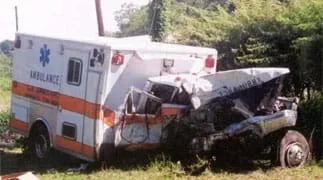 Ambulances are involved in motor vehicle collisions resulting in injury or death more than other emergency response vehicles.Copyright National Institute for Occupational Safety and Health, Centers for Disease Control and Prevention http://www.cdc.gov/niosh/face/in-house/full200111.html
Today we start on a multi-day engineering design project in which you will work on engineering teams. Let me read you our client's statement, which serves as our engineering challenge:
Here at E.G. Benedict Ambulance Company, we pride ourselves in providing the most up-to-date, cutting edge, emergency response vehicles available. Through discussions with our customers, we have identified patient safety during transport as a major concern. This has become a new focus for our development group. We would like you to design a patient safety system for our next-generation ambulance. This safety system may be limited to the safety restraints or include vehicle modifications. Patient safety is our number one goal.
To get started, let's learn more about the topic. (Hand out the Guided Background Research Worksheet (PDF). Direct students to use the internet to complete the background research. Make sure to point out that this is the second step of the engineering design process.)
Background
Bioengineering is the systematic application of the engineering design process to the fields of medicine and biology. A bioengineer must have a solid understanding of biology and be knowledgeable in other engineering disciplines, such as electrical, chemical, and mechanical engineering. Bioengineers may work in any of a range of areas including medical instrument design, assistive device design, pharmaceutical delivery systems and, as in this project, transportation technology or transportation safety.
All emergency vehicles, such as police cars, fire and rescue trucks, medical ambulances, recovery tow trucks, must be able to operate under poor environmental conditions. Whether in a blizzard, hurricane or earthquake, emergency vehicles must respond to and transport people in need as quickly as possible. Unfortunately, this puts the emergency workers, and often the people they are trying to help, in danger.
Ambulances are more likely to be involved in motor vehicle collisions resulting in injury or death than other emergency response vehicles. To make this situation worse, the ambulance crew's responsibility to provide medical attention to the patient while in transit prevents them from wearing safety restraints such as seatbelts. The lack of safety restraints puts both the crew and patients at increased risk of injury during collisions. Unrestrained occupants riding in the patient-care compartment are particularly vulnerable. One research study found that ambulance collisions tend to involve more people, and result in more injuries on a per-accident basis than non-emergency vehicles of similar size. An 11-year retrospective study found that the most fatal ambulance crashes occurred during emergency runs. Surprisingly these crashes occurred on straight, dry roads, during clear weather.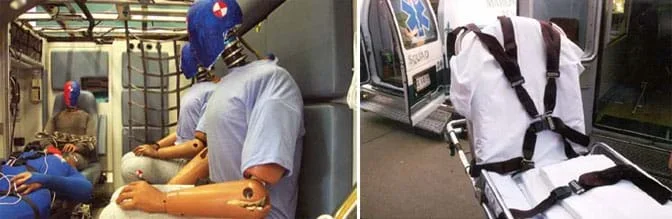 The activity's engineering challenge is to design a patient safety system for ambulances.Copyright National Institute for Occupational Safety and Health, Centers for Disease Control and Prevention http://www.cdc.gov/niosh/docs/2011-190/ http://www.cdc.gov/niosh/face/in-house/full200111.html
Activity Schedule Overview
Day 1: Guided background research.
Day 2: Introduce the project, define the problem, and general background research.
Homework: Independently conduct research and develop possible solutions.
Day 3: Discuss possible solutions, select best possible solution.
Day 4: Create formal designs, plan for material collection.
Homework: Collect materials from home for prototype construction.
Days 5–7: Build patient safety systems.
Day 8: Class testing, completion of project packet, presentation preparation.
Day 9: Group presentations and class debriefing.
Before the Activity
- Prepare the ambulance frames, one per group (refer to Figure 2).
- Depending on axle length, modify the 6-in boards to accommodate wheels, such as cut-out notches.
- (optional) Drill small holes around the perimeter of wood plank to be used as attachment points for restraint systems, as needed.
- To hold the axles, hot glue two straw "axle bushings" to the underside of the wood plank.
- Slide metal axle pins through straw bushings and press/fit the plastic wheels onto the metal axles.
- Record the frame weight before any design amendments have been made.
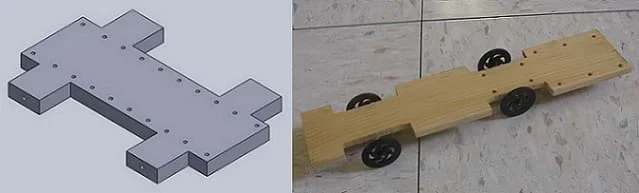 Figure 2. A CAD drawing of the wooden base for the small-size prototype ambulance frame (right). An example teacher-constructed ambulance frame (left), ready for a student group.Copyright 2012 Jared R. Quinn, Worcester Polytechnic Institute
- Make copies of Engineering Design Process Graphic Organizer (PDF), Guided Background Research Worksheet (PDF) and Ambulance Engineering Design Project Packet (PDF), one each per student
- Prepare to show students a YouTube video as part of the Introduction/Motivation section.
- Prepare to show students the E. G. Benedict's Ambulance Project Poster (PDF) visual aid, either via computer or overhead projector, by posting in the classroom, or making handouts.
With the Students
- On Day 1, administer the pre-activity assessment, as described in the Assessment section.
- As presented in the Introduction/Motivation section, lead a class discussion on the idea of safe transportation and how the definition varies depending on whether goods or people are being transported, or in other transport circumstances (such as providing medical care en route to hospitals). Have students identify the difficulties of transporting people when they are not in seats. Show them a short YouTube video news story. Discuss what may have happened in the news story and how it could have been avoided.
- Hand out the research worksheet and direct students to use the internet to conduct background research on ambulances, including pertinent vocabulary words; current ambulance purpose, laws and restraints; history of ambulances; and a recap of Newton's three laws of motion.
- On Day 2, officially introduce students to the E.G. Benedict's Ambulance Engineering Design Project.
- Build on students' research by asking the class to brainstorm 10 possible safety issues associated with ambulances.
- Read aloud the client statement from the poster, which serves as the engineering challenge. Go over the design project criteria, materials, deliverables and prototype testing, many of which are steps of the engineering design process.
- Divide the class into groups of three students each.
- Each group designs, builds and tests a small-size prototype ambulance patient safety system.
- Hand out the packets and direct groups to follow the engineering design process to complete the project. As students move through the process, using the packet as a guide, have them conference with the teacher at the following points before moving ahead.
- EDP Step 1: Identify the need (problem statement, functions, constraints): In the packet, students clearly define the problem based on the client statement. They identify the functions and constraints of a successful solution.
- EDP Step 2: Research: (homework) Students use the internet to research existing solutions to the problem as well as other topics that relate to the problem, such as how seatbelts work and various types of safety restraints.
- EDP Step 3: Imagine to develop possible solutions (3 minimum, homework): On graph paper, students sketch three or more solutions to the design problem. Require student sketches to be detailed enough to get their ideas across to their partner(s).
- EDP Step 4: Plan by selecting the best solution: On Day 3, as group members share their ideas, have the groups create pro/con T-charts for each design. Then the groups use the T-charts to help them compare, evaluate and select the best design solution to create as a group.
- EDP Step 5: Build, blueprint and prototype: On Day 4, each group member creates "blueprints" for the group's selected ambulance patient safety system design. "Blueprints" are drawn on graph paper using a ruler and a scale. Require each set of "blueprints" to include at least three different views and identification of materials. From the plans, groups make detailed materials lists and collect materials from home in anticipation of prototype construction. During Days 5-7, following the blueprint plans, student teams construct their prototype patient safety systems. Each group is provided an ambulance frame. Students supply the remaining materials for the prototypes.
- EDP Step 6: Test and evaluate: On Day 8, all groups test their prototype ambulance patient safety systems as a class competition. Weigh the prototypes to verify that they do not add more than 11 grams to the frame weight. Give groups five minutes to safely secure raw eggs for transport in the ambulances. Test all ambulances at level 1 (with one end of the 8-ft. long ramp placed 1 milk crate off the ground). Next, ambulances that prevent injury to their model patients are tested at level 2 (with the ramp 2 milk crates off the ground). Successful designs continue to the next level until no more successful designs exist or level 5 has been achieved. Remind students to record observable results in their packets.
- Communicate solutions: (evaluation of results) Students evaluate the success of their designs based on test results. In anticipation of preparing 3-5 minute class presentations, group members begin to pull together information that summarizes their project designs and results.
- EDP Step 7: Improve and redesign (future recommendations): From what they learned from their own test results and observing other teams' prototypes, in the Future Recommendations section of the packet, students describe and explain any ideas for changes to their designs that would improve the success of their prototype patient safety systems. Require this section to include a detailed sketch of the improved design.
- Students turn in completed packets, including the background research and the unselected design solution drawings, as an additional assessment tool.
- On Day 9, as a project post-assessment, student groups present their designs, test results and future recommendations to the class, as described in the Assessment section.
- bioengineering
- The application of engineering skills to solve problems in the life science fields.
- biomedical engineering
- The application of engineering skills to solve problems in the medical field.
- constraint
- A design aspect that MUST be met to be successful.
- engineering design process
- An iterative decision making process used by engineers to develop solutions to meet desired goals. The main elements of the engineering design process are: ask to identify the problem, research the problem, imagine to develop possible solutions, plan by select the best solution, build a prototype, test and evaluate, and improve by redesigning. The process is cyclical and may begin at, and return to, any step.
- function
- What the design/product will do, regardless of the chosen solution.
- problem statement
- A detailed description of the needs that will be met.
Pre-Activity Assessment
EDP Graphic Organizer: Have students draw from the word bank to fill in the missing steps of the engineering design process on the Engineering Design Process Graphic Organizer (PDF). This assessment helps students review the engineering design process, and helps the teacher assess their prior knowledge of this process. (Answer: 1-identify the problem, 2-research the problem, 3-imagine to develop possible solutions, 4-plan by selecting the best solution, 5-build a prototype, 6-test and evaluate, 7- improve and redesign.)
Activity Embedded Assessment
Project Packet: As students work through the activity, have them complete the five-page Ambulance Engineering Design Project Packet (PDF), which functions as a formative assessment for students' abilities to follow the engineering design process while creating prototype patient safety systems. The packet guides students through the activity, covering the engineering challenge, problem statement, functions, constraints, background research, possible design solutions, prototype creation and testing, test results, results evaluation, future recommendations and design process roles.
Drawings/Prototypes: Assess students' ability to demonstrate methods of representing solutions to a design problem by examining all the drawings and prototypes they create for their patient safety system designs. Examination of their pro/con T-charts shows the depth of their analysis in comparing potential solutions for their value in meeting the design challenge.
Post-Activity Assessment
Student Design Presentations: Following the completion of the design packet, each student group is responsible for sharing its project with the class. Limit presentations to 3-5 minutes with a focus on student work within the design process. Require students to make sure they include their evaluations of the test results and at least one recommendation that would improve their ambulances designs and/or test results. Assess students on their ability to follow the design process and whether they were able to succinctly summarize and share the knowledge they gained during the design process.
- Warn students to be careful when cutting cardboard. Using tin snips requires minimal effort and poses less danger than using razor blades or box cutters, which are very effective but have higher potential to cause serious injury.
- Warn students to be careful not to get burned when using hot glue guns.
Patient Dies in Ambulance Crash (1:43 minutes) news story: https://www.youtube.com/watch?v=QaHu3DdfQtU&feature=related
AEV Ambulance Crash Test Video (7:30 minutes). https://www.youtube.com/watch?v=ZT5L5t1u_fg
Ambulance Crash, Dashcam (1:40 minutes): https://www.youtube.com/watch?v=TTyPnwBAAvg&feature=related
Ambulance Crash - Patient on Stretcher (16 seconds) An example of what happens to patient with paramedic sitting in captain's chair during frontal collision at 50 kph: https://www.youtube.com/watch?feature=player_embedded&v=g2iNQWCI18M
Ambulance Crash Test, Paramedic Strikes Head on Cabinet Ledges (1:23 minutes) An example of injuries caused during emergency vehicle collision: https://www.youtube.com/watch?feature=player_embedded&v=bBntafDmtao#!
EMT Attendant Restraint System (46 seconds): https://www.youtube.com/watch?v=fgTjWyu3kQU
Ontario Ambulance Crash Test - Frontal Impact (27 seconds) An example of what happens to an ambulance in a 50 kph frontal collision: https://www.youtube.com/watch?feature=player_embedded&v=aC1Z5R3iiTg#!
Becker, L.R., E. Zaloshnja, N. Levick, Guohua Li, Ted R. Miller. "Relative Risk of Injury and Death in Ambulances and Other Emergency Vehicles." Accident Analysis & Prevention, November 2003, pp. 941-948. Accessed July 3, 2013. http://www.ncbi.nlm.nih.gov/pubmed/12971929
Bellis, Mary. "History of Seatbelts." 2010. About.com: Inventors, New York Times Co. Accessed July 8, 2012. http://inventors.about.com/od/sstartinventions/a/History-Of-Seat-Belts.htm
"Bioengineering." 2013. Encyclopædia Britannica Online Academic Edition. Encyclopædia Britannica Inc. Accessed July 3, 2013. http://www.britannica.com/EBchecked/topic/65846/bioengineering
"The History of Ambulances." 2010. EMT-Resources.com. Accessed July 5, 2013. http://www.emt-resources.com/History-of-Ambulances.html
Massachusetts Science and Technology Curriculum Frameworks. 2006. Massachusetts Department of Elementary and Secondary Education. Accessed July 8, 2012. http://www.doe.mass.edu/frameworks/scitech/1006.doc
"Materials Science." 2013. Encyclopædia Britannica Online Academic Edition. Encyclopædia Britannica Inc. Accessed July 3, 2013.http://www.britannica.com/EBchecked/topic/369081/materials-science
Nath, Mona. "History of the Ambulance." April 2005. The Automotive Chronicles, McLellan's Automotive History. Accessed July 8, 2012. http://www.mclellansautomotive.com/newsletter/articles/2005/apr/02/index.php
Operation of Emergency Vehicles. 2006. M.G.L. Chapter 89: Law of the Road, Section 7b. Operation of Emergency Vehicles. The General Laws of Massachusetts, Massachusetts Statutes. Accessed July 5, 2013. http://www.iafc.org/files/downloads/VEHICLE_SAFETY/STATEemergVEHcodes/Massachusetts.pdf
"Transportation." 2013. Encyclopædia Britannica Online Academic Edition. Encyclopædia Britannica Inc. Accessed July 3, 2013. http://www.britannica.com/EBchecked/topic/603109/transportation
Contributors
Jared R. Quinn; Terri Camesano; Kristen Billiar; Jeanne Hubelbank
Supporting Program
Inquiry-Based Bioengineering Research and Design Experiences for Middle-School Teachers RET Program, Department of Biomedical Engineering, Worcester Polytechnic Institute
Acknowledgements
This activity was developed under National Science Foundation grant no. EEC 1132628. However, these contents do not necessarily represent the policies of the National Science Foundation, and you should not assume endorsement by the federal government.
Copyright
2013 by Regents of the University of Colorado; original © 2012 Worcester Polytechnic Institute