
Lifter Phenomenon & Experiment: Measuring Thrust from Ions
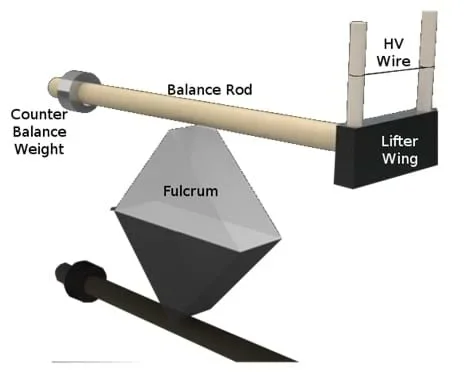 Figure 1. A 3D model of the activity experimental setup.Copyright 2009 Washington State University
Student teams each assemble a wing component of a lifter with the goal to test the lifter wing and measure the force exerted when high voltage is applied to it. After an introduction to torque and its use to measure force, students calculate the change in the torque when a high voltage is applied to the wing portion of the lifter using a fulcrum. Once a group has assembled its wing portion, the teacher tests it with a high-voltage power supply, marking the change in the balance so that students can calculate the force. Then groups adjust the gap between the electrodes and re-measure the force. Groups each repeat this process three times, which enables students to estimate the magnitude of the force as a function of the gap between the electrodes. This experiment gives students a chance to explore a fascinating physical phenomena that has, as of yet, not found a real-world application. They conclude the activity by brainstorming possible applications of this technology to solve real-world problems.
This project introduces students to two key engineering concepts. The first is systematic measurement, which is a key aspect of experimentation and hypothesis testing. Once systematic measurements are made, students evaluate their data and think about extreme cases. Next, students are engaged in a novel phenomenon that has no apparent use, but may have new applications in the future. Engineers often explore new ideas before practical applications are known—this is one component of R&D (research and development). After making measurements on the lifter wing, students think of possible uses for this technology.
After this activity, students should be able to:
- Give a basic explanation how the thrust is produced if the only thrust is from ions.
- Detail what measurements were made and why.
- Comment on applications of and precautions when working with high voltage.
- Describe applications of the engineering design process.
- CCSS.Math.Content.8.SP.A.1 Construct and interpret scatter plots for bivariate measurement data to investigate patterns of association between two quantities. Describe patterns such as clustering, outliers, positive or negative association, linear association, and nonlinear association.
Grade 8
Do you agree with this alignment? - CCSS.Math.Content.HSA-REI.B.3 Solve linear equations and inequalities in one variable, including equations with coefficients represented by letters.
Grades 9-12
Do you agree with this alignment? - CCSS.Math.Content.HSN-VM.A.3 (+) Solve problems involving velocity and other quantities that can be represented by vectors.
Grades 9-12
Do you agree with this alignment?
- STEL-1Q Conduct research to inform intentional inventions and innovations that address specific needs and wants.
Grades 9-12
Do you agree with this alignment?
- HS-PS3-5 Develop and use a model of two objects interacting through electric or magnetic fields to illustrate the forces between objects and the changes in energy of the objects due to the interaction.
Grades 9-12
This resource focuses on the following Three Dimensional Learning aspects of NGSS:
Science & Engineering Practices- Develop and use a model based on evidence to illustrate the relationships between systems or between components of a system.Do you agree with this alignment?
Disciplinary Core Ideas- When two objects interacting through a field change relative position, the energy stored in the field is changed.Do you agree with this alignment?
Crosscutting Concepts- Cause and effect relationships can be suggested and predicted for complex natural and human designed systems by examining what is known about smaller scale mechanisms within the system.Do you agree with this alignment?
Do you agree with this alignment? - Develop and use a model based on evidence to illustrate the relationships between systems or between components of a system.
- CCSS.Math.Content.8.SP.A.1 Construct and interpret scatter plots for bivariate measurement data to investigate patterns of association between two quantities. Describe patterns such as clustering, outliers, positive or negative association, linear association, and nonlinear association.
Grade 8
Do you agree with this alignment? - CCSS.Math.Content.HSA-REI.B.3 Solve linear equations and inequalities in one variable, including equations with coefficients represented by letters.
Grades 9-12
Do you agree with this alignment? - CCSS.Math.Content.HSN-VM.A.3 (+) Solve problems involving velocity and other quantities that can be represented by vectors.
Grades 9-12
Do you agree with this alignment?
Each group needs:
- aluminum foil, 1 x 2 foot piece
- square balsa wood balance rod
- counter balance weight
- Lifter Worksheet (PDF), one per student
- lifter wing components:
- 1 rod, 1 ft long, for the bottom of the wing
- 2 rods, each 1 ft long, for the sides
- 1 square piece of balsa wood, for the top of the wing and the wide portion of the asymmetric capacitor
To share with the entire class:
- 1 high-voltage DC power supply for every 3 groups, such as from Amazon
- 1 fulcrum for every 3 groups
- grounding rod
Familiarity with basic algebraic techniques. Students are introduced to torque, but do not need to know anything about torque in advance.
(Cultural relevance note for teachers: This project is meant to catapult students out of a culture of seeing and learning about known physical phenomena in which it seems like no need exists for new researchers since everything is understood. When interacting with students, the general consensus seems to be that science has solved all the mysteries of the universe and now we just work on making products. Students do not see the mysteries that have yet to be understood or studied.)
Today's lifter project will introduce to you some fascinating physical phenomena first discovered by Paul Alfred Biefield and Thomas Townsend Brown. Biefield-Townsend found that electrodes of different sizes, when separated from each other, produce a thrust. We typically refer to this as an asymmetric capacitor. During the 1950s and 60s, a significant amount of research explored ways to use this method of thrust, however interest dwindled. The most likely reason this was not further pursued stemmed from technology limitations and not being able to see any applications. Today, most lifter research is done by hobbyists who find this technology intriguing and fun to play with.
Lifter technology has gained a significant amount of attention, so much so that Myth Busters did an episode on the lifter because some researchers assert that the lifters employ a form of antigravity. In the Myth Busters episode, they busted the antigravity claim of lift, suggesting that the lift was all from ions.
In looking at research papers on the subject, not much information can be found about the physical phenomena that produces the observed thrust from an asymmetric capacitor. The prevailing theory is that part of the thrust is due to ion drift, although some research suggests that some exerted force exists even in a vacuum. If an asymmetric capacitor still exerts some force in a vacuum, then some additional mechanisms may be contributing to the thrust. The point is that this is an observable phenomenon that could benefit from more research because it is not well understood. Maybe you'll be that researcher!
Background
The high voltage applied to the wire uses the grounded aluminum foil as a capacitor and the electric field looks similar to the image on the front of the worksheet. The asymmetry causes a thrust with no moving parts. The physics behind the phenomena are still debated, but what is not debated is the effect.
Before the Activity
- Gather materials and make copies of the Lifter Worksheet (PDF).
- Prepare a lifter for demonstration to students (refer to Figure 1).
- Prior to student arrival, determine a testing procedure. Only adults should operate the high-voltage power supply to prevent misuse and shocks. Review safety procedures prior to attempting this activity. Whoever operates the power supply must understand the correct procedures to ground the connections prior to connecting or disconnecting the high-voltage leads. See the Safety Issues section.
With the Students: Demo & Discussion
- Present a demonstration of the lifter to show students what an operational device can look like.
- Talk about how things get accelerated, including the terms push, pull and thrust. Ask students to think about how the lifters are being accelerated. After talking about the idea of acceleration and forces, demonstrate the lifter.
- Ask students what type of acceleration the lifter appears to be experiencing. This question is best asked after the lifter has been demonstrated. Hopefully, after seeing the lifter work, students will conclude that acceleration experienced by the lifter is due to a thrust since no one or anything ever pushed or pulled on the lifter.
- Next, ask students how or what things could be changed to determine what parameter the thrust depends on. Since every aspect can be changed and systematically studied, explain that for this project they will limit the systematic study to the gap between the top of the lifter wing and the high-voltage (HV) wire.
With the Students: Experiment
- After explaining the experiment, have students begin the worksheet by working through the torque examples prior to building lifter wings.
- Once done with the torque introduction, have teams build the wing portions that will be tested on the fulcrum.
- String high-voltage wire on the posts.
- Connect another wire to the aluminum foil.
- Prior to testing the wing when high voltage is applied, the group must know what information they want to collect.
- Students need to know the weight of the balance weight and the initial and final lengths from the pivot point.
- After at least three different gaps lengths have been tested, have groups calculate the force and plot the data.
- The first time that a group measures a wing, mark the pivot point and make all future measurements from that location.
- Direct students to answer the questions below the graph on the last page of the worksheet. Have students turn in their worksheets for grading.
- Conclude with a class discussion in which students brainstorm possible applications of this technology to solve real-world problems. Remind students that engineers apply what they learn to solve real-world problems. Do you have the next breakthrough idea?
- electrohydrodynamics
- The study of fluids in an electric field and the interplay between the charged particles and the electric field.
- paul alfred bienfield
- (1867–1943) A German physicist and electrical engineer who taught at universities in Germany and the U.S.
- thomas townsend brown
- (1905–1985) An American physicist who worked extensively with the Navy other military research labs.
- capacitor
- A passive electrical component that stores charge. Fundamentally, a capacitor is simply two metal plates separated by insulators; when a voltage is applied, electrical charge collects on the plates. The plates can be discharged by shorting or directly connecting the two plates together with conductive material.
- ehd thruster
- An ionocraft or ion-propelled aircraft (commonly known as a lifter or hexalifter) is a device that uses an electrical electrohydrodynamic (EHD) phenomenon to produce thrust in the air without requiring any combustion or moving parts.
Worksheet: Have students use the Lifter Worksheet (PDF) to guide the experiment. Review completed worksheets to gauge student mastery of the subject matter.
- Electrical shocks are the primary safety concern. Take anyone who is shocked to the hospital!
- When the power supply is on, make sure students stay a couple of feet away from the lifter wing and high-voltage connections.
- Prior to connecting or disconnecting the high-voltage leads, turn off the power supply and touch the high-voltage leads with a grounding rod. This removes any static charge that might remain when the unit is powered off.
- When balancing the lifter wing on the fulcrum, a distance of less than 2 feet might be needed; this is not a problem as long as the person moving the weight uses only one hand and places the other hand in his or her pocket.
- The power supplies are not lethal for healthy individuals and are current limited, which is the dangerous aspect of electricity. However due to the high voltage, it is much easier to get shocked from farther away than one would typically expect. As a rule of thumb for the operator who is working with the balance, do not get closer to any of the wires than the gap between the electrodes on the lifter wing.
Expect to hear a hissing sound when the power supply is operating.
If sparks are seen in the power supply, turn it off and adjust the resistor inside the unit. Refer to the power supply assembly for assistance.
- For lower grades, treat this as a design-build or craft project and have the instructor test the lifters after they are built. In this case, don't worry about any of the mathematics or measurements—just test the lifters to show how well each group's lifter designs work.
- For upper grades, ask more probative questions, and have students take the data from all groups for a specific gap and make average plots along with error bars.
Iannini, Bob. Electronic Gadgets for the Evil Genius: 28 Build-It-Yourself Projects. USA: McGraw-Hill, 2004.
Supporting Program
CREAM GK-12 Program, Engineering Education Research Center, College of Engineering and Architecture, Washington State University
Acknowledgements
This content was developed by the Culturally Relevant Engineering Application in Mathematics (CREAM) Program in the Engineering Education Research Center, College of Engineering and Architecture at Washington State University under National Science Foundation GK-12 grant no. DGE 0538652. However, these contents do not necessarily represent the policies of the NSF, and you should not assume endorsement by the federal government.
Copyright
2013 by Regents of the University of Colorado; original © 2009 Board of Regents, Washington State University