
Climate Change and Cars (3-5)
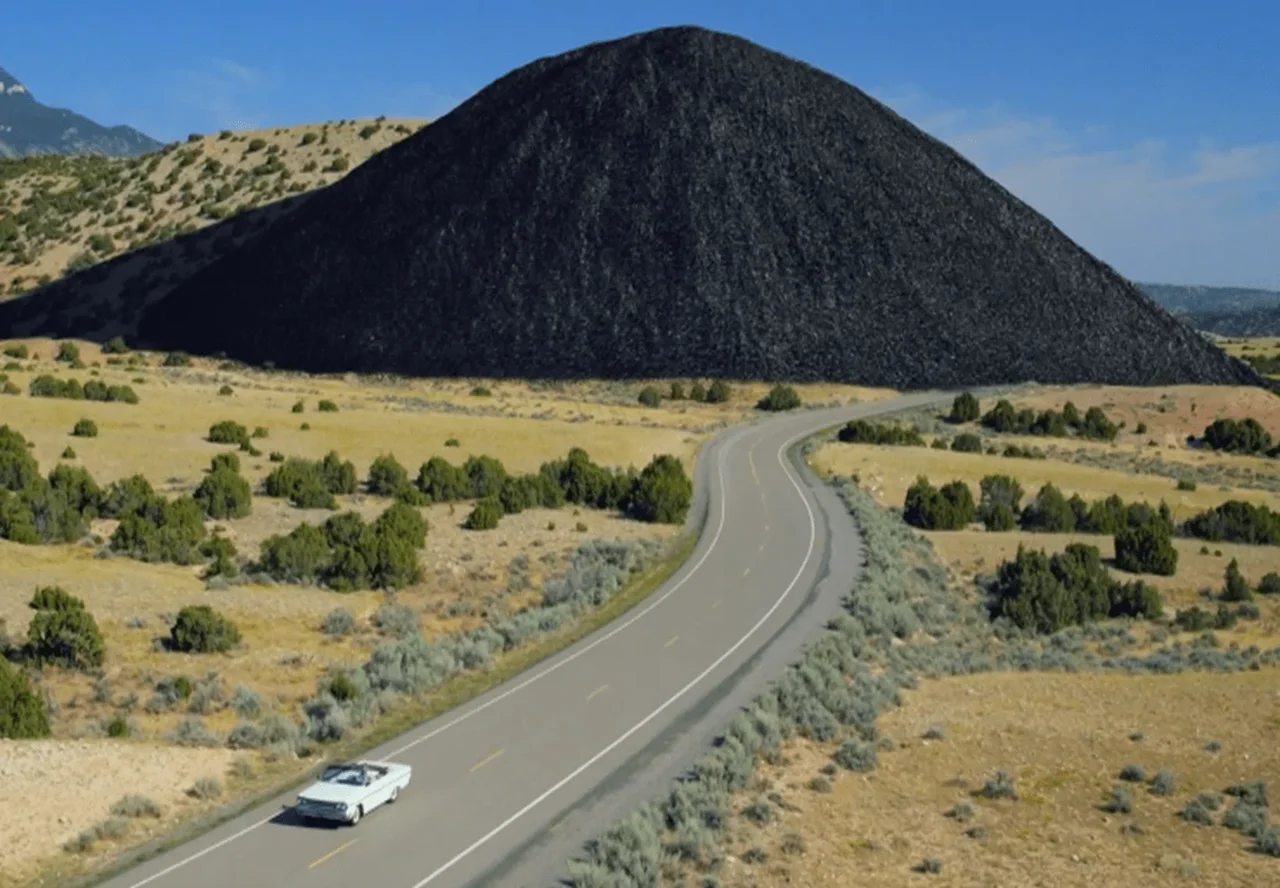 How much carbon to cars send into the atmosphere?Copyright 2020 NOVA, Public Broadcasting Service
This lesson introduces students to the concepts of climate change and how cars can contribute to climate change. Students learn the basics of the greenhouse effect and the carbon cycle. They also learn how transportation affects our atmosphere. Students work together to understand how various forms of transportation have costs and benefits, and which modes of transportation are better for the environment.
Understanding the negative impact gas-powered cars have on the environment is key to designing cars that produce little to no carbon emissions. Chemical engineers develop and test new car batteries, electrical engineers design the electrical circuitry to charge the battery and distribute the electricity from the battery to the electric motor. Mechanical engineers design, develop, and test electric motors, transmissions, drivetrains, steering systems, and more. Many electric vehicles are made of newer materials that are lighter and stronger and may incorporate environmentally friendly materials, which materials engineers develop, process, and test.
After this lesson, students should be able to:
- Describe the greenhouse effect.
- Recall the role carbon dioxide plays in the greenhouse effect.
- Recognize how transportation can affect the greenhouse effect.
- 4-ESS3-1 Obtain and combine information to describe that energy and fuels are derived from natural resources and their uses affect the environment.
Grade 4
This resource focuses on the following Three Dimensional Learning aspects of NGSS:
Science & Engineering Practices- Obtain and combine information from books and other reliable media to explain phenomena.Do you agree with this alignment?
Disciplinary Core Ideas- Energy and fuels that humans use are derived from natural sources, and their use affects the environment in multiple ways. Some resources are renewable over time, and others are not.Do you agree with this alignment?
Crosscutting Concepts- Cause and effect relationships are routinely identified and used to explain change.Do you agree with this alignment?
- Knowledge of relevant scientific concepts and research findings is important in engineering.Do you agree with this alignment?
- Over time, people's needs and wants change, as do their demands for new and improved technologies.Do you agree with this alignment?
Do you agree with this alignment? - Obtain and combine information from books and other reliable media to explain phenomena.
- 5-ESS3-1 Obtain and combine information about ways individual communities use science ideas to protect the Earth's resources and environment.
Grade 5
This resource focuses on the following Three Dimensional Learning aspects of NGSS:
Science & Engineering Practices- Obtain and combine information from books and/or other reliable media to explain phenomena or solutions to a design problem.Do you agree with this alignment?
Disciplinary Core Ideas- Human activities in agriculture, industry, and everyday life have had major effects on the land, vegetation, streams, ocean, air, and even outer space. But individuals and communities are doing things to help protect Earth's resources and environments.Do you agree with this alignment?
Crosscutting Concepts- A system can be described in terms of its components and their interactions.Do you agree with this alignment?
- Science findings are limited to questions that can be answered with empirical evidence.Do you agree with this alignment?
Do you agree with this alignment? - Obtain and combine information from books and/or other reliable media to explain phenomena or solutions to a design problem.
A basic understanding of interpreting simple graphs with keys and numeracy (ones, tens, hundreds, and greater than/less than between values), a basic idea of the atmosphere and gases.
This lesson introduces students to the concepts of climate change and how cars can contribute to it. Students learn about the basics of the greenhouse effect and the carbon cycle. They also learn how transportation affects our atmosphere. Students work together to understand how various forms of transportation have costs and benefits, and which modes of transportation are better for the environment.
Greenhouse gases are the gases in Earth’s atmosphere that trap the heat from the sun. The process of trapping heat from the sun is called the greenhouse effect. A greenhouse is a glass building used to grow plants. It stays warm through all of the seasons because it traps sunlight from the daytime and that trapped heat stays throughout the night, keeping the temperatures in the greenhouse warm enough for plants to grow. Even during the cold of winter! The Earth’s atmosphere functions like a greenhouse.
Since the Industrial Revolution, the burning of fossil fuels like coal and oil has released more carbon dioxide into the atmosphere, which in turn traps more sunlight and warms up the Earth significantly. Even cutting down trees (that take in carbon dioxide and release oxygen) and land-use changes contribute to more carbon dioxide in the atmosphere. Although carbon dioxide is naturally released in events like volcanic eruptions, and even we humans breathe out carbon dioxide, we are at a point where we are releasing more carbon dioxide into the atmosphere than the Earth can handle.
This is what we call global warming, the gradual increase of Earth’s temperature due to the excessive release of carbon dioxide into the atmosphere. Global warming is what is causing our climates to change.
Climate is the overall weather conditions that are expected in a region at a particular time of year. This is different from the weather which we can think of as more of a day-to-day phenomenon. Did it rain today? Is it sunny today? Those are weather conditions and what we describe when we say, “what’s the weather like today?” Climate is more long-term: “Antarctica is at the southern pole, so it will be cold all year round. We can expect it to snow there every day because we have seen that for the last 30 years.”
Procedure:
- Show students the following video, “What Is the Greenhouse Effect?” - https://www.youtube.com/watch?v=SN5-DnOHQmE&t=1s (2:29)
- Using the Climate Change and Cars Worksheet (PDF), ask the students to discuss what they learned in the video. Specifically, ask them the following questions:
- What is the greenhouse effect?
- Why is the greenhouse effect important to life on Earth?
- How do human activities affect the greenhouse effect?
- Have students write their answers in section 1 of the Climate Change and Cars Worksheet (PDF).
- Have students look at the following picture of the carbon cycle:
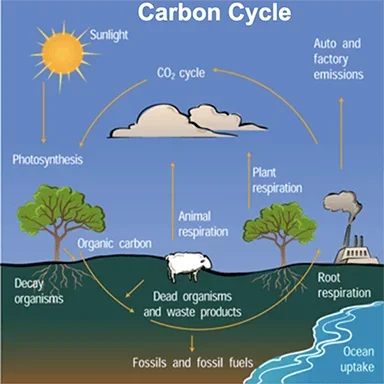 Figure 1. The carbon cycle, illustrated.Copyright 2022 ASPIRE, University of Colorado Boulder
- Tell the students: Carbon dioxide (CO2) is a gas that is naturally found on Earth. Tell students the following: Carbon is an element that is essential to life on Earth. Carbon is found in seawater, rocks, soil, all living organisms, and the atmosphere. When carbon is in the atmosphere it can be found in the form of carbon dioxide (CO2). Carbon dioxide is a gas that is naturally found on Earth. The carbon cycle describes how carbon, including the carbon in CO2, travels from the atmosphere to the Earth and back to the atmosphere. For example, carbon dioxide from the atmosphere is taken in by plants and pulled apart to make food from the carbon to grow. Eventually, animals eat plants, and the carbon is returned back to the atmosphere as carbon dioxide through animal or human respiration.
- Show students the following video, “What is the carbon cycle?” - https://oceanservice.noaa.gov/facts/carbon-cycle.html (1:16).
- Ask the students what other ways carbon dioxide travels throughout the carbon cycle and have them answer in section 2 of the Climate Change and Cars Worksheet (PDF).
- Have students look at the graph of atmospheric carbon dioxide measured at Mauna Loa in Hawaii in section 3 of their worksheet.
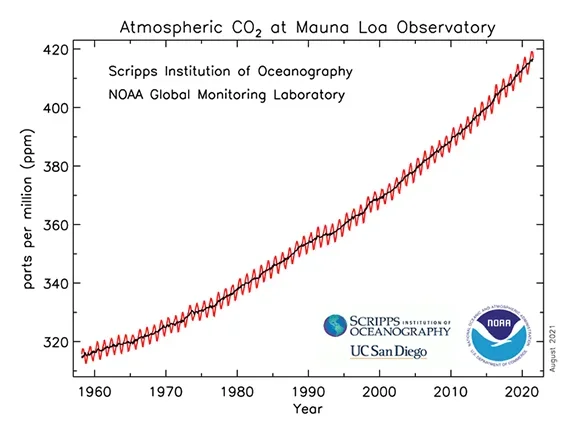 Figure 2. Atmospheric CO2 at Mauna Loa Observatory on the island of Hawai’i.Copyright 2022 NOAA, Scripps Institution of Oceanography, Public Domain.
- Ask students to look for a pattern in the data. (They should be able to see levels of carbon dioxide are steadily increasing.) They should write their answers in section 3 of the Climate Change and Cars Worksheet (PDF).
- Have students look at the 2019 greenhouse gases emissions pie chart in section 3 of their worksheet.
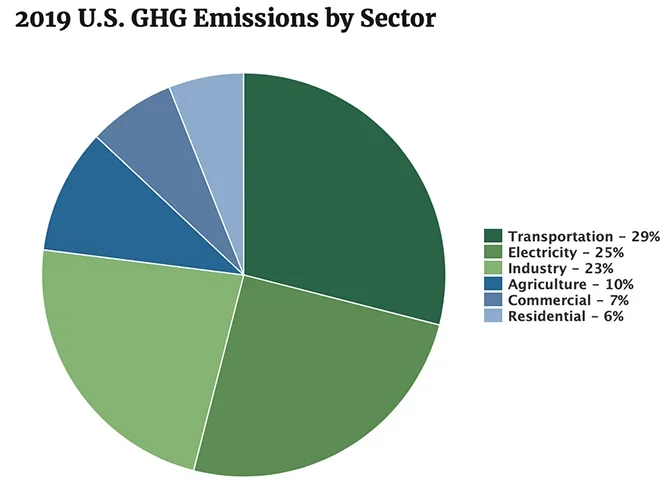 Figure 3. U.S. greenhouse gas emissions by sector, based on 2019 data.Copyright 2022 ASPIRE, University of Colorado Boulder
- Ask the students to name which section of the pie chart is the biggest (Answer: Transportation) and what is the smallest (Answer: Residential). Ask students what these numbers represent? (Answer: Transportation emitted 29% of all the human created greenhouse gases in 2019 while residential only emitted 6% of all greenhouse gases in 2019.)
- Tell students: As the climate crisis continues, it is important to recognize how human activities are affecting the crisis. One of the biggest problems negatively contributing to the greenhouse effect is carbon emissions from transportation — cars, buses, trains, etc.
- Show the students the following video, “What if Carbon Left Your Tailpipe as Solid Chunks?” - https://www.pbs.org/video/carbon-car-tailpipe-solid-chunks/ (2:12).
- Have students think-pair-share the following questions as a class:
- What do they show coming out of the car’s tailpipe in the video?
- How many car “turds” does an average car dump per year? Per mile? How is that shown in the video?
- Have a class reflection discussion to wrap up:
- How do you get to school? Do you take the bus? Do your parents drop you in their car? Do you walk? Do you carpool with a friend?
- Which form of transportation do you think is cleaner?
- Which form of transportation do you think is less clean?
- Are there cars out there that do not have exhaust or (or “turds” like the car in the video)?
- Ask students: How do you believe engineers can design better cars that produce fewer carbon emissions (car “turds”)? Ask them if they think there is another source of energy to run cars instead of using gas. Ask students if they have heard of electric vehicles (EVs) and how they work (battery-powered electric motors, which do not release any exhaust (no emissions=no car “turds”!)
It is important for us to understand how we can prevent climate change. Earth is the only planet in our solar system that supports life because it traps and releases heat at the same rate, which means that we have just enough heat to sustain life. If we release too much heat, we will become like Mars, not warm enough to sustain life. But if we trap too much heat, we will become like Venus, too hot to sustain life.
A carbon footprint is how much carbon dioxide an individual releases into the atmosphere. As people who live on this planet, our goal should be to reduce our own carbon footprints and push for industrial changes that will slow down global warming. One of the main ways an individual can reduce their carbon footprint is through the transportation they use.
What did we learn from the worksheet and activity? Transportation emits a lot of carbon into the atmosphere. As the climate crisis grows bigger, engineers are trying to reduce the carbon footprints left by their designs. Now that you have learned how transportation can affect the greenhouse effect, how would you explain what you learned to your friends or family?
- carbon dioxide
- A greenhouse gas that comes from burning fossil fuels.
- carbon footprint
- The amount of greenhouse gas emissions caused by a person or group.
- climate
- The long-term weather events of a region, such as its average rainfall or its average high/low temperatures.
- emission
- Gases released into the atmosphere.
- greenhouse gas
- A gas that traps the heat in the Earth's atmosphere like carbon dioxide, methane, water vapor, ozone, and nitrous oxide.
- transportation
- A way of moving people from one place to another like cars, buses, trains, etc.
- weather
- The short-term events such as a current rainstorm or temperature.
Pre-Lesson Assessment
Discussion Questions: Ask the students and discuss as a class:
- What is the greenhouse effect?
- Why is Earth the only planet that supports life?
- What is climate change?
- Tell students they will find out more about how vehicles (cars) affect the greenhouse effect.
Lesson Embedded (Formative) Assessment
Guided Worksheet: Scaffold students’ learning by having them work together as they complete the Climate Change and Cars Worksheet (PDF) with a partner, as directed in the Lesson Instructional Plan section.
Post-Lesson (Summative) Assessment
Class Reflection: Have the students reflect on their learning by asking the same questions from the pre-lesson assessment. Additionally, ask:
- Have you heard of climate change before this lesson?
- Did anything you learned change the ideas you had about the greenhouse effect or climate change in general?
- How would you explain the greenhouse effect to your parents or other family members?
Making Sense: Have students reflect on the science concepts they explored and/or the science and engineering skills they used, plus questions or ideas they have by completing a modified Making Sense Assessment (PDF).
“Fast Facts on Transportation Greenhouse Gas Emissions.” EPA, Environmental Protection Agency, www.epa.gov/greenvehicles/fast-facts-transportation-greenhouse-gas-emissions.
“NOVA.” PBS, Public Broadcasting Service, 5 Feb. 2020, www.pbs.org/video/carbon-car-tailpipe-solid-chunks/.
“The Carbon Cycle.” Living in the Greenhouse, Kids Crossing. Accessed July 1, 2021. eo.ucar.edu/kids/green/cycles6.htm. [Image was used with title edited on.]
“The Causes of Climate Change.” NASA, NASA, 30 Aug. 2021, https://climate.nasa.gov/causes/.
US Department of Commerce, National Oceanic and Atmospheric Administration. “What Is the Carbon Cycle?” NOAA's National Ocean Service, NOAA, 2 Apr. 2019, oceanservice.noaa.gov/facts/carbon-cycle.html.
US Department of Commerce, NOAA. “Global Monitoring Laboratory - Carbon Cycle Greenhouse Gases.” GML, NOAA, 1 Oct. 2005, gml.noaa.gov/ccgg/trends/.
“What's the Difference Between Weather and Climate?” NASA, NASA, 2021, https://climatekids.nasa.gov/weather-climate/.
“What Is the greenhouse effect?” YouTube, Nasa Space Place. Accessed July 1, 2021. Published June 11, 2020, www.youtube.com/watch?v=SN5-DnOHQmE&t=1s.
“What Is the greenhouse effect?” NASA, NASA, 2021, https://climatekids.nasa.gov/greenhouse-effect/.
- Climate Change and Cars (3-5)
Contributors
Niharika Kunapuli; Jennifer Taylor
Supporting Program
Pre-College Engineering Education, Integrated Teaching and Learning Program, University of Colorado Boulder
Acknowledgements
This curriculum was developed under National Science Foundation grant number 1941524. Any opinions, findings, and conclusions, or recommendations expressed in this material are those of the authors and do not necessarily reflect the views of the National Science Foundation.
This curriculum was developed with support from the AEROKATS and ROVER Education Network (AREN) (Henry/NNX16AB95A). AREN is a NASA Science Mission Directorate Science Activation (SciAct) Program.
Copyright
2022 by Regents of the University of Colorado Boulder