
Carbon Cycles
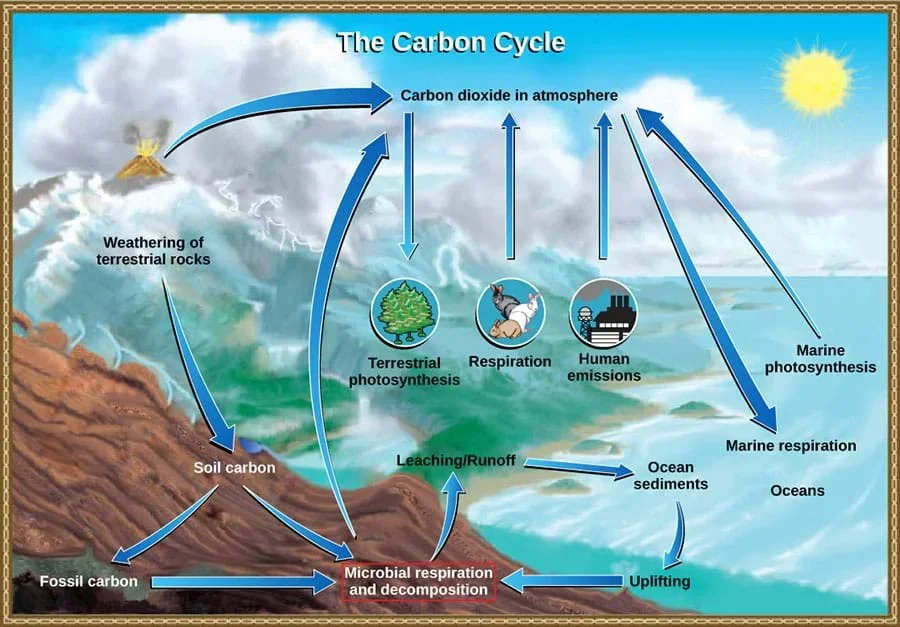 Figure 1. Diagram of the carbon cycle.Copyright National Aeronautical and Space Administration http://earthobservatory.nasa.gov
Students are introduced to the concept of energy cycles by learning about the carbon cycle. They learn how carbon atoms travel through the geological (ancient) carbon cycle and the biological/physical carbon cycle. They consider how human activities disturb the carbon cycle by emitting carbon dioxide into the atmosphere. They discuss how engineers and scientists are working to reduce carbon dioxide emissions. Lastly, with the associated activities students draw connections between the past and present to consider how they can help the world through simple energy conservation measures.
Human activities during the past 100 years, particularly fossil fuel burning and deforestation, are releasing unnatural amounts of carbon dioxide (CO2) into the atmosphere. Today, people are concerned about the rising CO2 concentration in the atmosphere and its impact on global climate change. Many engineers are working to reduce CO2 emissions. For example, environmental engineers study carbon sequestration — the processes that remove carbon from the atmosphere. Mechanical and electrical engineers design buildings, homes, cars and appliances that use less energy. Other engineered devices, such as solar panels and wind turbines, generate electricity from natural sources and do not emit CO2 into the atmosphere.
After this lesson, the student will be able to:
- Identify the main differences between the geological carbon cycle and the biological/physical carbon cycle.
- Describe how human activities have affected the carbon cycle.
- Explain how engineers are working to understand and rebalance the carbon cycle.
- Compare and contrast the flow of energy with the cycling of matter in ecosystems
Grade 6
Do you agree with this alignment?
- Students will develop an understanding of the effects of technology on the environment.
Grades K-12
Do you agree with this alignment? - STEL-4L Analyze how the creation and use of technologies consumes renewable and non-renewable resources and creates waste.
Grades 6-8
Do you agree with this alignment?
- MS-ESS3-5 Ask questions to clarify evidence of the factors that have caused the rise in global temperatures over the past century.
Grades 6-8
This resource focuses on the following Three Dimensional Learning aspects of NGSS:
Science & Engineering Practices- Ask questions to identify and clarify evidence of an argument.Do you agree with this alignment?
Disciplinary Core Ideas- Human activities, such as the release of greenhouse gases from burning fossil fuels, are major factors in the current rise in Earth's mean surface temperature (global warming). Reducing the level of climate change and reducing human vulnerability to whatever climate changes do occur depend on the understanding of climate science, engineering capabilities, and other kinds of knowledge, such as understanding of human behavior and on applying that knowledge wisely in decisions and activities.Do you agree with this alignment?
Crosscutting Concepts- Stability might be disturbed either by sudden events or gradual changes that accumulate over time.Do you agree with this alignment?
Do you agree with this alignment? - Ask questions to identify and clarify evidence of an argument.
- MS-LS1-6 Construct a scientific explanation based on evidence for the role of photosynthesis in the cycling of matter and flow of energy into and out of organisms.
Grades 6-8
This resource focuses on the following Three Dimensional Learning aspects of NGSS:
Science & Engineering Practices- Construct a scientific explanation based on valid and reliable evidence obtained from sources (including the students' own experiments) and the assumption that theories and laws that describe the natural world operate today as they did in the past and will continue to do so in the future.Do you agree with this alignment?
- Science knowledge is based upon logical connections between evidence and explanations.Do you agree with this alignment?
Disciplinary Core Ideas- Plants, algae (including phytoplankton), and many microorganisms use the energy from light to make sugars (food) from carbon dioxide from the atmosphere and water through the process of photosynthesis, which also releases oxygen. These sugars can be used immediately or stored for growth or later use.Do you agree with this alignment?
- The chemical reaction by which plants produce complex food molecules (sugars) requires an energy input (i.e., from sunlight) to occur. In this reaction, carbon dioxide and water combine to form carbon-based organic molecules and release oxygen.Do you agree with this alignment?
Crosscutting Concepts- Within a natural system, the transfer of energy drives the motion and/or cycling of matter.Do you agree with this alignment?
Do you agree with this alignment? - Construct a scientific explanation based on valid and reliable evidence obtained from sources (including the students' own experiments) and the assumption that theories and laws that describe the natural world operate today as they did in the past and will continue to do so in the future.
Carbon (C) is the building block of all living things and is the fourth most abundant element in the universe after hydrogen (H), helium (He), and oxygen (O). On Earth, carbon cycles through the atmosphere, land, ocean and the Earth's interior. The global carbon cycle can be divided into two categories: the geological, which spans millions of years, and the biological/physical, which spans shorter time scales (days to thousands of years).
The Geological Carbon Cycle
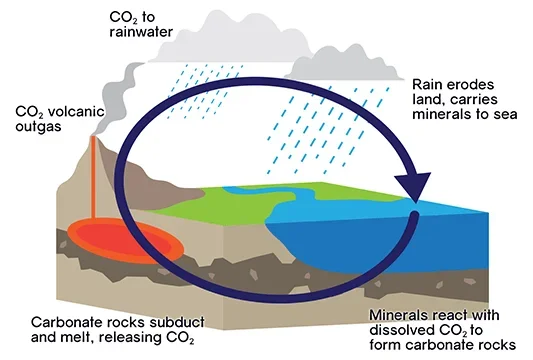 Figure 2. The geological carbon cycle.Copyright Pinterest https://www.pinterest.com/pin/19914423338303698/#
All of the carbon that cycles through the Earth's systems today was actually present 4.5 billion years ago, when our solar system was born. During this time, planetesimals (small bodies that formed the solar nebula) and carbon-containing meteorites bombarded the Earth's surface. The result of the collision between these objects and the Earth was a steady increase of the carbon content of the solid Earth, which has made life here possible.
In the geological carbon cycle, carbon moves between rocks and minerals, the Earth's oceans, and the atmosphere. Carbon dioxide in the atmosphere reacts with different minerals to form the mineral calcium carbonate (limestone) through a process called weathering. Limestone is dissolved (eroded) by rainwater and carried to the oceans, where it precipitates out of the ocean water and forms layers of sediment on the ocean floor. As the Earth's plates move through the process of tectonics, these sediments are subducted (taken away) under the continents. The tremendous amount of heat and pressure beneath the Earth's surface causes the limestone to melt and react with other minerals, releasing CO2 in the process. Through volcanic eruptions, this carbon dioxide is re-released into the atmosphere. Nature's balance between weathering, subduction, erosion and volcanic activity is very important in controlling CO2 concentrations in the atmosphere.
The Biological/Physical Carbon Cycle
In contrast to the geological carbon cycle, which can take millions of years to come full circle, the biological/physical carbon cycle takes much less time (days to thousands of years). The biological/physical carbon cycle can be described as the process by which carbon is exchanged between the four main carbon reservoirs – the atmosphere, biosphere, hydrosphere and geosphere. These four main reservoirs of carbon are interconnected by pathways of exchange. Over the past 100 years, we have been upsetting the biological/physical carbon cycle by emitting unnatural amounts of CO2 into the atmosphere.
Carbon in the Atmosphere – Carbon exists naturally in the Earth's atmosphere primarily as the gas carbon dioxide (CO2) and makes up about 0.04% of the total gas composition in the atmosphere. Other atmospheric gases that contain carbon are methane and chloroflourocarbons, which are artificial (human-produced) gases. These three gases are typically referred to as greenhouse gases, whose rising concentration is thought to contribute to global warming.
 Figure 3. Flowchart of the transfer of carbon to the atmosphere from the biosphere.
As shown in Figure 3, carbon is transferred to the atmosphere from the biosphere primarily through respiration and the burning of biomass.
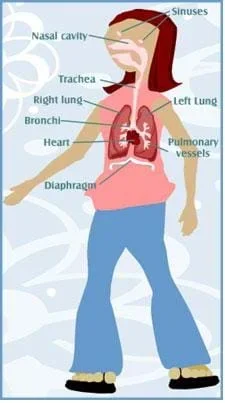 Figure 4. The human respiratory system.Copyright U.S. Department of Health and Human Services, Office on Women's Health, National Women's Health Information Center (NWHIC)
Much carbon is transferred from the biosphere to the atmosphere through respiration. Our respiratory system consists of the airways, the lungs and the respiratory muscles that control the movement of air (oxygen) into and out of the body. Within the lungs, molecules of oxygen and CO2 are exchanged between the inhaled gas and the blood. The respiratory system oxygenates the blood and removes carbon dioxide from the circulation, which is released into the atmosphere when we exhale, as illustrated in Figure 4.
Biomass is also an important part of the carbon cycle. In the energy production industry, biomass refers to living and recently living biological material (i.e., trees, plants and animal matter) which can be used as fuel to produce energy. All living (or once-living) organisms contain carbon. When the biological matter is combusted, the carbon contained in the biological matter is released back into the atmosphere. For example, dry wood is about 50% carbon. When we burn a bundle of wood, energy is released as heat. This combustion process also produces CO2 (along with methane, carbon monoxide and smoke), which is released into the atmosphere. Although biomass is a renewable fuel, it still contributes to global warming when the amount of biomass removed from the biosphere is not replaced by an equal amount of vegetation. Both deforestation (the removal of forest cover, either intentionally — e.g., agriculture or development, or via natural consequences — e.g., forest fires, floods, etc.; see Figure 5) and the urbanization of green sites disturb the natural carbon cycle by removing biomass and ultimately transferring CO2 into the atmosphere.
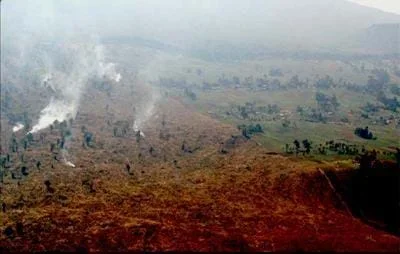 Figure 5. A hillside suffering from deforestation.Copyright National Aeronautics and Space Administration http://www.nasa.gov/images/content/104882main_gorilla-pic4-high.jpg
Carbon in the Geosphere – Fossil fuel is a general term for buried geologic deposits of organic material, formed from plants and animals that decayed millions of years ago. Fossil fuels such as coal, petroleum products and natural gas are sources of ancient biomass that were formed during the Carboniferous Period (360 – 286 million years ago). At that time, the land was covered with swamps filled with huge trees, ferns and other large leafy plants. As this carbon-containing vegetation died, it sank to the bottom of the swamps of oceans and formed layers of a spongy material called peat (see Figure 6).
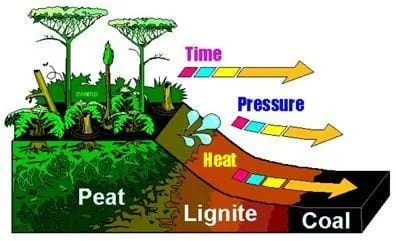 Figure 6. The formation of fossil fuels over millions of years.Copyright Commonwealth of Kentucky, Division of Mine Permits
Over many hundreds of years, the peat was covered by sand and clay and other minerals, which turned into sedimentary rock. More layers of rock piled on top and began to press down on the peat. The peat was squeezed until the water came out of it, and eventually, over millions of years, it turned into coal, oil or petroleum, and natural gas.
The utilization of fossil fuels has enabled large-scale industrial development around the world. The combustion of fossil fuels greatly disturbs the carbon cycle because they have been "out" of the cycle for a long time. The burning of fossil fuels is a major contributor to the rising carbon dioxide levels in the atmosphere. Figure 7 shows the prediction of how global carbon emissions from fossil fuels will continually increase the Earth's temperatures over the next 300 years.
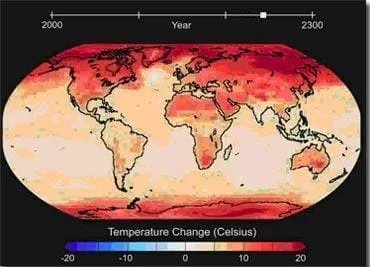 Figure 7. The predicted increase in the Earth's temperatures from global carbon emissions.Copyright Lawrence Livermore National Laboratory
Carbon in the Biosphere – Carbon is found everywhere in the biosphere and plays a crucial role in the structure, biochemistry and nutrition of all living cells. All living organisms are based on the carbon atom, and they depend on the production of sugars from solar energy and carbon dioxide (photosynthesis) to produce the chemical energy that facilitates cell growth and reproduction. The most common way that carbon is transferred to the biosphere is from the atmosphere via photosynthesis.
Photosynthesis
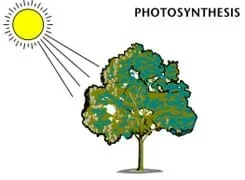 Figure 8. Photosynthesis is the process by which plants make energy using water, sunlight and CO2 from the atmosphere.Copyright Energy Information Administration, U.S. Department of Energy http://www.eia.doe.gov/kids/energyfacts/sources/renewable/images/photosynthesis1.gif
During photosynthesis, green plants absorb solar energy (see Figure 8) and carbon dioxide from the atmosphere to produce carbohydrates (sugars). Plants "burn" these carbohydrates during respiration, which releases the energy contained in sugars to be used as fuel. Plants then release oxygen to the atmosphere, which is used for respiration by humans and other organisms.
Photosynthesis plays a crucial role in balancing the carbon cycle by absorbing CO2 from the atmosphere. This process is known as "carbon sequestering." For the carbon cycle, the most important plants are trees in forests and phytoplankton in the Earth's oceans. Recently, scientists and engineers have been exploring a variety of means to artificially capture and store carbon and to enhance the natural sequestration process.
Human Activity and the Carbon Cycle
Photosynthesis, respiration and CO2 absorption/release from the ocean surfaces are all examples of natural fluxes of carbon through the Earth's systems. Human activities, particularly fossil fuel burning and deforestation, disrupt this natural flux by releasing CO2 into the atmosphere. When we mine coal and extract oil from the Earth and then burn these fossil fuels for transportation, heating, cooking, electricity and manufacturing, we are effectively moving carbon more rapidly into the atmosphere than is being removed from the atmosphere naturally through the sedimentation of carbon. This causes the concentration of CO2 in the atmosphere to increase, which leads to global warming. Also, by clear-cutting forests to support agriculture, we are transferring carbon from living biomass into the atmosphere. Because of this, the CO2 concentration in the atmosphere is higher than it has ever been.
Who can tell me what element is found in all living things? Carbon! Carbon is the essential element for life on Earth. Not only is carbon found in all living things, this element is present in the atmosphere, in layers of limestone sediment on the ocean floor, and in fossil fuels like coal. (This would be a good time to give students the Carbon Cycle Reference Sheet to help them follow along with the lesson. It would also be helpful to have several carbon-containing objects to show the students – a sea shell, a sedimentary rock (limestone), some chalk, a plant, maybe even a lump of coal.) The majority of sea shells contain carbon as calcium carbonate (CaCO3), or calcite, which is one of the most widely distributed minerals on the Earth's surface. It is found in sedimentary rocks (especially limestone) and in this piece of chalk that I am holding in front of you. A leafy green plant absorbs carbon dioxide from the atmosphere and uses it, combined with water from the soil, to make the substances it needs for growth.
What about coal? The carbon that is contained in a lump of coal is actually carbon from a very long time ago – a time when dinosaurs walked the Earth. Millions of years ago, much of the world was covered with thick vegetation and swamps. When the climate changed, this vegetation died and sunk underwater, where it lost all of its oxygen atoms, leaving sediment — containing a high percentage of carbon — on the ocean floor. As time passed, layers of sand and mud from the water settled over some of these sediments. The pressure of these overlying layers, as well as movements of the Earth's crust, compressed and hardened the deposits and produced coal. Coal, oil and natural gas are all carbon-containing substances that we call fossil fuels. Can anybody guess why we call them fossil fuels? That's right, because they were created millions of years ago, around the same time when fossils were formed.
Now that you have learned about some carbon-containing objects, let's talk about the carbon cycle. Can anybody explain what a cycle is? A cycle is a sequence of changing states that produces a final state identical to the original one. So, the carbon cycle can be described as the exchange of carbon between the land, the oceans, the atmosphere and the Earth's interior. There are two types of carbon cycles that we are going to learn about.
The first carbon cycle is the geological carbon cycle, which has been occurring over the past 4.5 billion years since our planet was born. In the geological carbon cycle, carbon moves between rocks and minerals, the oceans and the atmosphere (Refer to the Dinosaur Breath activity to have students investigate the pre-historic history of the carbon cycle and modern day factors that engineers are working to understand). The processes of weathering, erosion and volcanic activity are the forces that actually move the carbon around in this cycle. This cycle can take millions of years to come full circle, and it is happening continuously all around us.
In contrast, it only takes a few days to thousands of years for the second type of carbon cycle, the biological/physical cycle, to come full circle. This is a much shorter time period than the geologic carbon cycle, and depends on which type of biological/physical carbon cycle you are looking at — carbon as it goes through the atmosphere, biosphere, hydrosphere or geosphere. Did you ever think that you might have a carbon cycle occurring inside your own body? Well, you do, and your body depends on it! When we eat, we ingest carbon in the form of carbohydrates and proteins. In our cells, the carbon combines with oxygen in our blood to produce the energy we need. Have you ever taken a deep breath after eating a big meal? Well, you are actually exhaling carbon, or carbon dioxide, as a waste product of digestion.
So, the geological carbon cycle and the biological/physical carbon cycles are the two types of cycles we are going to consider today. Fortunately, nature does a very good job at balancing these two carbon cycles — she works hard to make sure that too much carbon does not accumulate in one place. It is important that we as humans help nature do this. Over the past 100 years, humans have been upsetting the carbon cycle by adding ever-increasing amounts of carbon into the atmosphere in the form of carbon dioxide, or CO2. One way we release carbon into the atmosphere is by burning fossil fuels for energy to light our houses, drive our cars and even play our stereos.
Many people believe that burning fossil fuels and adding extra carbon into the atmosphere is causing a problem known as global warming. Global warming is the observed increase in the average temperatures of the Earth's atmosphere and oceans. Sure, it is okay if the Earth's temperatures rise above normal levels for a few days; however, when temperatures continue to rise over long periods of time, the Earth will start to change. This type of climate change can negatively affect human health, animal health and the environment by disturbing ecosystems, causing drought and changing crop growing seasons.
Engineers are working to reduce the carbon emissions into the atmosphere by developing technologies that use less fuel and are more sensitive to the balance of the carbon cycles. We as consumers of energy can also make a big difference by conserving energy. What are some ways that we can conserve energy? (Allow students time to brainstorm and call out answers.) That's right — we can remember to turn off our lights, computers and stereos. We can take shorter showers, ride a bike or walk when we can, and adjust our thermostats a little bit during the winter (heater) and summer (air conditioner), and just as important, we can talk to our family about recycling.
Today we learned that carbon is a very important part of our Earth. In fact, carbon makes life on Earth possible and exists in many different forms. What are some carbon-containing objects? That's right – seashells, plants, the atmosphere and coal. We also learned about the carbon cycle, which can be described as the exchange of carbon between the land, the oceans, the atmosphere and the Earth's interior. There are two carbon cycles to keep in mind: 1) the geological carbon cycle started billions of years ago, when our solar system was born. In the geological carbon cycle, carbon moves between rocks and minerals, the world's oceans, and volcanoes, which release carbon into the atmosphere. 2) In contrast, the biological/physical carbon cycle takes much less time (days to thousands of years). In this shorter cycle, carbon is exchanged between the atmosphere, biosphere, hydrosphere and geosphere. Some ways in which carbon is released into the atmosphere are: respiration, burning of biomass, deforestation and combustion of fossil fuels.
Can anyone tell me how human activities have been releasing too much carbon into the atmosphere? Yes, activities such as fossil fuel combustion and deforestation, are releasing unnatural amounts of carbon dioxide into the atmosphere. Today, people are concerned that the high level of CO2 in the atmosphere is contributing to global climate change. Engineers are working to rebalance the carbon cycle by reducing CO2 emissions. For example, environmental engineers are studying how to remove carbon from the atmosphere (carbon sequestration), and mechanical and electrical engineers design buildings, homes, cars and appliances that use less energy. How can you help engineers and scientists solve the global problem of climate change? You can remember to turn off the lights, computers and stereos when you are finished, take shorter showers, ride a bike or walk, and talk to your family about recycling and other energy conservation measures. Global warming is not a problem that we can leave for the scientists and engineers — solving this problem requires everyone working to save energy and reduce our consumption of energy.
- atmosphere
- The Earth's atmosphere is a layer of gases surrounding the planet and retained by gravity; contains roughly 78% nitrogen, 0.97% argon, 0.04% carbon dioxide; protects life on Earth by absorbing ultraviolet solar radiation and reducing temperature extremes between day and night.
- biomass
- In the energy production industry, biomass refers to living and recently living biological material which can be used as fuel for industrial production.
- biosphere
- The outermost part of the Earth's shell, including land, surface rocks and the water within which life occurs.
- carbon cycle
- The carbon cycle can be described as the exchange of carbon between the land, the oceans, the atmosphere and the Earth's interior.
- fossil fuel
- Fossil fuels such as coal, petroleum products and natural gas are sources of ancient biomass that were formed millions of years ago from the decay of plant and animal matter.
- geosphere
- The solid part of the Earth which is mostly rock and regolith (a layer of loose, heterogeneous material covering solid rock); the main divisions of the geosphere are the crust, mantle and core.
- global warming
- The observed increase in the average temperature of the Earth's atmosphere and oceans in recent decades.
- photosynthesis
- The process by which green plants create energy by absorbing solar energy and carbon dioxide from the atmosphere to produce carbohydrates (sugars). Plants "burn" these carbohydrates during respiration, which releases the energy contained in sugars to be used as fuel. Plants then release oxygen to the atmosphere, which is used for respiration by humans and other organisms.
- respiration
- The process by which an organism obtains energy through the reaction of oxygen with glucose to give water, carbon dioxide and ATP (energy).
Pre-Lesson Assessment
Know / Want to Know / Learn (KWL) Chart: Create a classroom KWL chart to help organize learning about a new topic. On a large sheet of paper or on the classroom board, draw a chart with the title "The Carbon Cycle" Draw three columns titled, K, W and L, representing what students Know about the carbon cycle, what they Want to know about the carbon cycle and what they Learned about the carbon cycle. Fill out the K and W sections during the lesson introduction as facts and questions emerge. Fill out the L section at the end of the lesson.
Questions: Have students come up with questions to ask eachother about global warming (i.e., what factors have caused the rise in global temperatures over the past century?). After the lesson, have students answer the questions.
Post-Introduction Assessment
Reference Sheet: With the students, review the attached Carbon Cycle Reference Sheet (PDF). Suggest that students keep the sheet handy in their desks, folders or journals.
List it! Have students make a list of all the everyday things they can think of that would help conserve the amount of carbon being emitted into the atmosphere.
Lesson Summary Assessment
Think Like an Engineer! Engineers are working to rebalance the carbon cycle by reducing CO2 emissions. For example, environmental engineers are studying how to remove carbon from the atmosphere, and mechanical and electrical engineers are working to design buildings, homes, cars and appliances that use less energy. Engineers are also working to create technologies to capture and store carbon found in forests, oceans and soils. Have the students work in pairs to brainstorm a new invention that would help reduce carbon emissions into the atmosphere by reducing the energy used by people during an everyday activity (such as washing clothes, cooking a meal or driving a car).
Global Warming Quiz: Ask the students the following questions:
- What does not contribute to global warming?
- Burning trees
- The hole in the ozone layer
- Industrial pollutants
- Auto emissions
(Answer: b; the atmosphere traps heat from the sun, much like a greenhouse. The ozone hole lets harmful ultraviolet rays in but does not contribute to global warming.)
- What are greenhouse gases?
- Other words for inert gases
- Fuel used by farmers
- Vapors rising off greenhouses
- Heat-trapping atmospheric gases
(Answer: d; the primary greenhouse gases are water vapor, carbon dioxide, methane and ozone.)
- Which activity does not help conserve energy?
- Recycling
- Using a power strip for electronics
- Driving an electric car
- Leaving a computer on
(Answer: d; save money and reduce emissions by turning off electronics when not in use.)
- Does global warming mean that every place on Earth is getting warmer?
- No, just the summers are warmer
- No, but the world average is rising
- Yes, every spot on Earth is hotter
- No, only certain spots are hotter
(Answer: b; experts estimate that the average temperature will rise 2.5 to 10.4 degrees Fahrenheit by 2100.)
Educational Poster: Have students work individually or in small groups to create posters to educate their peers about global warming and climate change. Students can research the top contributors to global warming to create a bar graph or pie chart emphasizing what percentage each contributes. Ask students to draw/write examples of ways that they can make a difference through energy efficiency and conservation. Students might find the attached Carbon Cycle Reference Sheet helpful for this exercise. This could also be assigned as homework.
Games, links, climate animations and teaching materials: https://archive.epa.gov/climatechange/kids/index.html
Energy Information Administration, U.S. Department of Energy, Energy Kid's Page, "Energy Facts," accessed May 29, 2007. http://www.eia.doe.gov/kids/energyfacts/sources/renewable/images/photosynthesis1.gif
U.S. Department of Health and Human Services, Office on Women's Health, National Women's Health Information Center (NWHIC), GirlsHealth.gov, Body - Becoming a Woman, "Learn about your whole body - from your heart to your bones," March 2006, accessed May 25, 2007. http://www.childrencomefirst.com
U.S. Environmental Protection Agency, Kids Site, October 23, 2006, accessed May 29, 2007. http://www.epa.gov/
University of California, Lawrence Livermore National Laboratory, May 24, 2007, accessed May 29, 2007. https://publicaffairs.llnl.gov/news/news_releases/2005/images/climate_change375x275s.jpg
Wilson, Jim. National Aeronautics and Space Administration, accessed May 25, 2007. http://www.nasa.gov/images/content/104882main_gorilla-pic4-high.jpg
Wilson, Jim. National Aeronautics and Space Administration, accessed May 25, 2007. http://earthobservatory.nasa.gov/
- Carbon Cycles
Contributors
Lauren Cooper; Malinda Schaefer Zarske; Janet Yowell
Supporting Program
Integrated Teaching and Learning Program, College of Engineering, University of Colorado Boulder
Acknowledgements
The contents of this digital library curriculum were developed under a grant from the Fund for the Improvement of Postsecondary Education (FIPSE), U.S. Department of Education and National Science Foundation GK-12 grant no. 0338326. However, these contents do not necessarily represent the policies of the Department of Education or National Science Foundation, and you should not assume endorsement by the federal government.
Copyright
2007 by Regents of the University of Colorado