
Biodiversity & Probability: Mice Rule! (or Not)
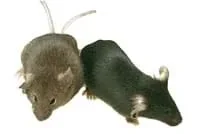 Mice!
Mice!
Students explore the relationships between genetics, biodiversity and evolution through teacher-presented information, including walking through two example Punnett squares that show the probability of freckles in offspring from parents who have and do not have freckles. Seeing how probability figures into the study of genetics prepares students to conduct the simple associated activity that involves wild mouse populations. In the associated activity, students toss coins to determine which traits mouse parents possess, such as fur color, body size, heat tolerance and running speed, and to determine the traits of a mouse pup born to these parents. Then they compare these physical features to features that would be most adaptive in several different environmental conditions, as well as what would happen to the mouse offspring if those environmental conditions changed. Which mice would be most likely to survive and produce the next generation?
Probability and statistics are just a few of the tools used by engineers. This lesson explores concepts studied by genetic scientists as well as biomedical and environmental engineers.
After this lesson, students should be able to:
- Explain what is meant by "biodiversity."
- Explain how adaptive features are maintained in a population of organisms.
- Apply probability to the study of genetics.
- CCSS.Math.Content.7.SP.C.7 Develop a probability model and use it to find probabilities of events. Compare probabilities from a model to observed frequencies; if the agreement is not good, explain possible sources of the discrepancy.
Grade 7
Do you agree with this alignment? - CCSS.Math.Content.7.SP.C.8 Find probabilities of compound events using organized lists, tables, tree diagrams, and simulation.
Grade 7
Do you agree with this alignment? - CCSS.Math.Content.HSS-CP.A.2 Understand that two events A and B are independent if the probability of A and B occurring together is the product of their probabilities, and use this characterization to determine if they are independent.
Grades 9-12
Do you agree with this alignment? - CCSS.Math.Content.HSS-CP.A.5 Recognize and explain the concepts of conditional probability and independence in everyday language and everyday situations.
Grades 9-12
Do you agree with this alignment?
- Brainstorming is a group problem-solving design process in which each person in the group presents his or her ideas in an open forum.
Grades 6-8
Do you agree with this alignment?
- HS-LS3-3 Apply concepts of statistics and probability to explain the variation and distribution of expressed traits in a population.
Grades 9-12
This resource focuses on the following Three Dimensional Learning aspects of NGSS:
Science & Engineering Practices- Apply concepts of statistics and probability (including determining function fits to data, slope, intercept, and correlation coefficient for linear fits) to scientific and engineering questions and problems, using digital tools when feasible.Do you agree with this alignment?
Disciplinary Core Ideas- Environmental factors also affect expression of traits, and hence affect the probability of occurrences of traits in a population. Thus the variation and distribution of traits observed depends on both genetic and environmental factors.Do you agree with this alignment?
Crosscutting Concepts- Algebraic thinking is used to examine scientific data and predict the effect of a change in one variable on another (e.g., linear growth vs. exponential growth).Do you agree with this alignment?
- Technological advances have influenced the progress of science and science has influenced advances in technology.Do you agree with this alignment?
- Science and engineering are influenced by society and society is influenced by science and engineering.Do you agree with this alignment?
Do you agree with this alignment? - Apply concepts of statistics and probability (including determining function fits to data, slope, intercept, and correlation coefficient for linear fits) to scientific and engineering questions and problems, using digital tools when feasible.
- 7.L.2 Understand the relationship of the mechanisms of cellular reproduction, patterns of inheritance and external factors to potential variation among offspring.
Grade 7
Do you agree with this alignment? - Bio.3.1 Explain how traits are determined by the structure and function of DNA.
Grades 9-12
Do you agree with this alignment? - Bio.3.2 Understand how the environment, and/or the interaction of alleles, influences the expression of genetic traits.
Grades 9-12
Do you agree with this alignment? - Bio.3.2.3 Explain how the environment can influence the expression of genetic traits.
Grades 9-12
Do you agree with this alignment?
An understanding of simple Mendelian inheritance, including concepts of dominant and recessive genes.
An understanding of the concept of adaptation is helpful but is not essential.
This lesson and its associated activity are designed to help students understand the theory of evolution by natural selection as put forward by Charles Darwin and as understood after many years of scientific investigation. Below is an outline of this theory, modified from a similar outline developed by ecologist Robert Ricklefs. The left column states the theory in the general terms a biologist would use, and the right column gives a specific example that is easily understood by laypersons.

Evolution by natural selection would not be possible if no variation existed among the individuals in a population; without variation, no varieties would exist from which to choose. Thus, environmental conditions, which might include climatic factors, food availability, the presence of predators, etc., favor those individuals with adaptive combinations of genes. Those individuals survive to adulthood and reproduce, passing some of their favorable genes to their offspring. Meanwhile, those individuals with undesirable, that is, non-adaptive gene combinations, are selected out of the population before they are able to reproduce.
The associated activity is called The Benefits of Biodiversity because it is intended to let students make the connection between genetic variability and long-term survival of a population. If environmental conditions change, many individuals that were previously well-adapted may no longer be well-adapted. However, if variation exists within the population, others will be. These become the individuals that leave offspring to the next generation. This idea lays the foundation for understanding how a new species can evolve from an old one.
To further explore the probabilities associated with genetics, Punnett squares (derived from Mendel's theory of genetic visualization) enable one to see what is expected to occur when two sets of genes combine. In the Figure 1, we have two parents, each with the gene Ff. Capital letters represent dominant genes, while lower-case letters represent recessive genes. Ask the class: What the difference is between the two? (Answer: Dominant genes are expressed if they are within the genotype at all [FF or Ff], while recessive genes require that the genotype be completely the recessive trait [ff].)
Using this combination of genes, in which each parent has freckles (the dominant trait), but also have the recessive allele, a 25% chance exists that a child will have FF genotype (freckles), a 50% chance of having Ff genotype (freckles with recessive allele present), and a 25% chance of having no freckles (recessive). 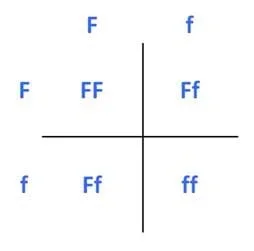 Figure 1. Punnett square for freckles in a case in which both parents have the dominant freckles gene.Copyright U.S. National Library of Medicine http://www.nlm.nih.gov/
Now, using a different combination of parents, in which one parent has a homogenous genotype with freckles (FF), and one parent has a homogeneous recessive genotype (ff), a 100% chance exists of the child having freckles (with a recessive allele) due to the presence of the F (dominant) allele. This is shown in the Figure 2.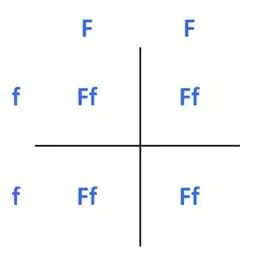 Figure 2. Punnett square for freckles in a case in which one parent has freckles (FF, homogeneous dominant) and the other parent does not (ff, homogeneous recessive).Copyright U.S. National Library of Medicine http://www.nlm.nih.gov/
Body of Lesson
At this point, change the subject of the lesson to mice. Tell students that rats and mice are examples of mammals known as rodents, along with hamsters, guinea pigs, squirrels, prairie dogs, beavers and porcupines. Of the rodents, mice and rats represent the largest number of the species. They live in all types of habitats—forests, fields, swamps, tundras and deserts.
Explain that like humans, mice use sexual reproduction, but mice are very efficient at it. A single pair can mate every few weeks and give birth to 5-6 pups at a time. Ask the students, "Why, then, isn't the world covered with mice?" Or more specifically: For what reasons might a young mouse not survive?
Expect sudents to be able to respond that some might get eaten by predators such as owls, snakes and cats. Others might not be able to get enough food, or die from disease, or freeze during the winter if they couldn't find shelter.
Point out that those that survive have good combinations of physical features that help them survive to adulthood. We call these features adaptations. Then ask students how these surviving mice acquired the adaptations they have. Expect students to respond that the surviving mice inherited their adaptations from their parents through the genes that were passed from parents to offspring.
What do you think of when you hear the word "diversity"? (After a pause, ask students to share their ideas.) The word diversity is used in many contexts. What do you think is meant by the term "biodiversity"? (Expect students to have no trouble realizing that it refers to diversity in a biological context.)
Let me tell you about two ways to think about biodiversity. One way is the many diverse types of organisms. For example, mushrooms, vegetables, giraffes, whales, spiders, mosses and bacteria all vary tremendously in their structures, body functions and behavior. No one knows how many different species of organisms exist on Earth, but the number is in the millions. Moreover, millions more lived in the past and became extinct. Presently, more than 21,000 different species of fish exist, and more than 800,000 species of insects.
Another way to think about biodiversity is the diversity that occurs within a species. For example, how many different breeds of dogs can you name? How many humans look and behave exactly alike? Even identical twins can be distinguished one from the other by parents and friends.
Where do human babies come from? (Expect that to get their attention!) Babies are the result of sexual reproduction. This means that a sperm cell from the father and an egg cell inside the mother combine into one cell, an embryo, in the process of fertilization. Not only humans, but most other animals and plants reproduce sexually. (In plants it is pollen that serves as the sperm.)
Why don't the girls in our class all look exactly like their mothers? And the boys do not look exactly like their fathers? (Listen to student explanations.) That's right. Each person obtained half of his/her genes from the mother and half of his/her genes from the father. Thus, each person shares characteristics of each of his/her parents, whose own characteristics are a mixing of their parents' characteristics, and so on. So that explains why so much diversity exists among humans. Similar amounts of diversity exist throughout all the species in the plant and animal kingdoms, even if they look very similar to each other in our eyes.
(To transition to the associated activity...) Ask students to think about what might happen if the environment in which a mouse pup was born suddenly changed. For example, what might happen if a prolonged drought struck an area that was usually wet and lush with vegetation? Would all the mice die? Could they move to a new area hundreds of miles away to get out of the drought? Let students think about these questions, and ask some to share their ideas. Instead of commenting on their responses, tell students that they will conduct an activity in order to see for themselves what might happen in such a scenario.
- adaptation
- A genetically inherited characteristic that enhances the ability of an organism to survive in its environment.
- biodiversity
- Diversity in a biological context. For example, diverse types of organisms like mushrooms, vegetables, giraffes, whales, spiders, mosses and bacteria, or variation within a species like mice or humans.
Ask students to define: 1) biodiversity and 2) adaptation.
Ricklefs, Robert E., 1979. Ecology, 2nd Edition, Chiron Press.
- Biodiversity & Probability: Mice Rule! (or Not)
Contributors
Mary R. Hebrank
Supporting Program
Engineering K-PhD Program, Pratt School of Engineering, Duke University
Acknowledgements
This content was developed by the MUSIC (Math Understanding through Science Integrated with Curriculum) Program in the Pratt School of Engineering at Duke University under National Science Foundation GK-12 grant no. DGE 0338262. However, these contents do not necessarily represent the policies of the NSF, and you should not assume endorsement by the federal government.
Copyright
2013 by Regents of the University of Colorado; original © 2004 Duke University