
Particle Sensing: The Coulter Counter
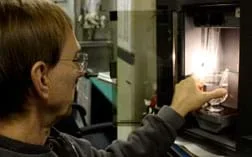 Engineers Joseph and Wallace Coulter revolutionized many fields by developing an automated method to count red particles in solution; 50 years later, this scientist on a NASA ship in the Arctic uses a Coulter counter instrument to count the phytoplankton in water samples.Copyright Kathryn Hansen, NASA http://www.nasa.gov/topics/earth/features/icescape2010_plankton.html
Students are presented with a short lesson on the Coulter principle—an electronic method to detect microscopic particles and determine their concentration in fluid. Depending on the focus of study, students can investigate the industrial and medical applications of particle detection, the physics of fluid flow and electric current through the apparatus, or the chemistry of the electrolytes used in the apparatus.
The electrical sensing zone method of particle characterization, also known as the Coulter principle, was first proposed by electrical engineers Wallace and Joseph Coulter in the 1940s. This method was used to create a machine, the Coulter Counter Model A, that automated the counting of red blood cells and ushered in modern hematology. Today, many industries use similar machines to study particle number and size, including agriculture, biotechnology, environmental testing, food and beverage production, mining, paints and coatings, petrochemicals and pharmaceuticals.
After this lesson, students should be able to:
- Describe qualitatively how a particle changes the resistance between two electrodes as it moves through an aperture and how that resistance is measured.
- Describe the basic functioning of a Coulter counter, how the original Coulter counters improved blood cell counts, and how these improvements benefited patients and medical staff.
- CCSS.Math.Content.HSF-IF.C.7a Graph linear and quadratic functions and show intercepts, maxima, and minima.
Grades 9-12
Do you agree with this alignment? - CCSS.Math.Content.HSN-Q.A.1 Use units as a way to understand problems and to guide the solution of multi-step problems; choose and interpret units consistently in formulas; choose and interpret the scale and the origin in graphs and data displays.
Grades 9-12
Do you agree with this alignment?
- Many tools and devices have been designed to help provide clues about health and to provide a safe environment.
Grades 3-5
Do you agree with this alignment?
- CCSS.Math.Content.HSF-IF.C.7a Graph linear and quadratic functions and show intercepts, maxima, and minima.
Grades 9-12
Do you agree with this alignment? - CCSS.Math.Content.HSN-Q.A.1 Use units as a way to understand problems and to guide the solution of multi-step problems; choose and interpret units consistently in formulas; choose and interpret the scale and the origin in graphs and data displays.
Grades 9-12
Do you agree with this alignment?
- Phy.2.3 Analyze the nature of moving charges and electric circuits.
Grades 9-12
Do you agree with this alignment? - Phy.2.3.5 Analyze systems with multiple potential differences and resistors connected in series and parallel circuits, both conceptually and mathematically, in terms of voltage, current and resistance.
Grades 9-12
Do you agree with this alignment?
A basic understanding of circuits and the relationship between voltage, current and resistance (Ohm's Law); see the Assessment section for a few review questions/answers.
Coulter Electric Sensing Zone Method
In 1953, engineer Wallace H. Coulter submitted a patent that proposed a deceptively simple method to count and measure the size of particles suspended in a fluid. This method, called the "electric sensing zone" method, uses the difference in resistance between a particle and surrounding fluid. The Coulter counter uses the concept of the resistivity to count particles.
Figure 2 shows a very basic Coulter counter. A test tube containing a conducting liquid is placed in a beaker also containing conducting liquid. A small aperture in the test tube connects the two. Two electrodes are placed in the beaker and in the test tube, and a voltage is applied between them through the aperture.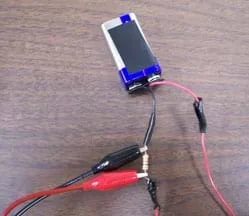 Figure 2. A voltage is applied between the two electrodes over the aperture. When a particle travels through the aperture, the resistance in the aperture increases. The resulting current drop can be measured.Copyright 2010 Jean Stave (author)
The particles to be counted, such as blood cells, are present in the liquid in the test tube. If the liquid level in the test tube is greater than that in the beaker, or if the test tube is pressurized, the fluid in the test tube flows into the beaker carrying the particles with it. The resistance between the two electrodes increases every time a non-conducting particle passes through the aperture. If the current between the two electrodes is being monitored, each drop in the current can be noted and the particles "counted."
Resistance Calculation
We can assume that the resistance of the conducting solution in the beaker and in the test tube is negligible compared to the resistance through the aperture. The resistance between the two electrodes is then determined by the resistance of a cylinder of conducting solution and given by the relation: Copyright 2010 Jean Stave (author)
In this equation, is the conductivity of the fluid and is equal to the inverse of the resistivity of the fluid (1/
 ), L is the length of the cylinder, and A =
 is the area of the cylinder. The current flowing through the cylinder will then be I = V/R.
Now, if a particle blocks part of the cylinder, the resistance will change (see Figure 3).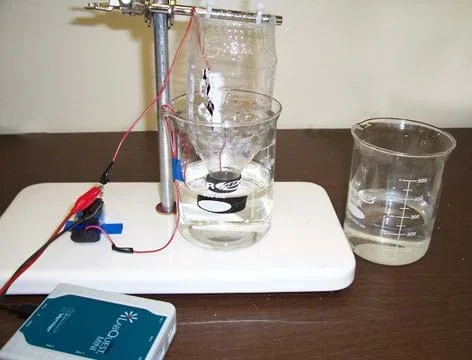 Figure 3. When a particle travels through an aperture, it changes the resistance of the aperture.Copyright 2010 Jean Stave (author)
If the particle is an appreciable size compared to the width of the cylinder, the resistance of the cylinder, and hence the current flowing through the circuit, changes a measurable amount. If the particle is more conductive than the fluid, then the resistance of the aperture decreases. On the other hand, if the particle is less conductive than the fluid, the resistance of the aperture increases. (See Figure 4.) As the fluid being studied flows from one reservoir to the other through the cylinder, the number of particles can be monitored by counting how many times the current changes.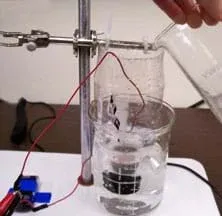 Figure 4. When a particle passes through the aperture, the resistance in the circuit increases and the current decreases. This causes a decrease in the voltage across the resistor in the counter circuit. Data taken using DATAQ DI-148U® and graphed using Microsoft Excel®.Copyright 2010 Jean Stave (author)
How many of you have had a blood sample taken by a nurse or doctor? Do you know why a blood sample is taken? (Give students time to brainstorm, either as a class or in small groups, and share stories about having blood drawn.)
One way to analyze blood is to count the number of red and white blood cells and platelets in a sample. (Depending on the focus of your course, you may wish to expand to include more in-depth information at this point.) An illness or other physical ailment can alter the number of cells in your blood from normal counts. A low red blood count, for example, might indicate that a person has anemia, and a high red blood count may be an indication of heart disease. A high white cell count could be caused by an infection, while a low count might be a sign of a serious diseases, including cancer. So, the ability to accurately and quickly count the different blood cells in a sample is an important diagnostic tool.
The original method for counting cells was to place a drop of blood on a glass slide and count the number of cells by eye while looking through a microscope. (Show Figure 1, a photograph of a microscopic blood smear slide.) This method took around 30 minutes to complete and was prone to error. Why do you think this might be the case? (Give students time to discuss this idea. You might remind them that a single slide could only show a very small sample of blood.)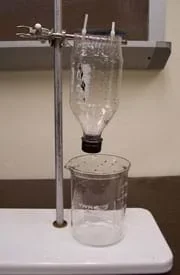 Figure 1. Prior to the application of the Coulter principle proposed by Joseph and Wallace Coulter, red and white blood cell counts were measured by placing a blood drop on a microscope slide and counting by human eye. This was slow, tedious work and prone to small-number statistical errors. Letter (a) points to red blood cells; letters (b), (c), (d) point to white blood cells.Copyright Department of Histology, Jagiellonian University Medical College, Poland, Wikimedia Commons http://commons.wikimedia.org/wiki/File:Blood_smear.jpg
Today we are going to learn about the first commercially-available machine built by engineers to automate this procedure. This machine, called a Coulter counter, produced red blood cell counts that were 10 times more accurate in one-third of the time it took for technicians to perform blood counts through microscopes. Similar machines are used today, not only to automate blood cell counts, but to measure particle sizes and numbers in a wide variety of applications.
Following the lesson, students can apply their learning by building their own Coulter counters using simple materials and data acquisition equipment in the associated activity Lab Experiment: Build Simple Coulter Counters to Count Particles.
Physics Review: At the beginning of the lesson, ask students these questions to refresh their memories of basic circuits knowledge and the underlying scientific principles of the lesson:
- What is the relationship between current and voltage? If the voltage over a circuit is increased, what happens to the current? (Answer: The voltage is the electrical potential difference between two points that cause charged particles, the current, to move through a circuit. You can visualize the voltage difference as a height difference of a hill, and the current as water flowing downhill. A battery or other electrical energy source can be visualized similar to a pump in a fountain to cause a continuous flow. If the voltage is increased, the water moves faster.)
- What is the relationship between current and resistance? If the resistance over a circuit is increased, what happens to the current? (Answer: Resistance is a measure of how difficult it is for current to move through the circuit. If the resistance in a circuit is increased, the current decreases.)
- How do the length, cross-sectional area, and material composition of a resistor affect its resistance? (Answer: You can visualize this question by thinking of a school hallway. A long, skinny hallway is harder to move students through than a wide, short hallway. [Think of examples in your school building.] The material composition can be thought of as the obstacles in the hallway. A room filled with desks is harder to move a lot of students through than an empty hallway. Length of a resistor increases resistance, cross-sectional area decreases resistance and conducting materials have less resistance than insulating materials.)
Lesson Summary Assessment Homework
Summarize: In three to four paragraphs, summarize your findings during the Simple Coulter Counter Lab (the associated activity). Include in your discussion an explanation of how the review questions at the beginning of class are related to the lab.
Good description of "The Coulter Principle" at the Beckman Coulter website at www.beckmancoulter.com. There is also a video on YouTube produced by Beckman Coulter at https://www.youtube.com/watch?v=IaaOTrdK8z4.
The Coulter Counter Model A Showcases at Chemical Heritage Foundation Exhibit. Beckman Coulter, Inc. Accessed August 31, 2010. http://www.beckmancoulter.com/resourcecenter/diagtoday/articles/DTO_Issue5_08/DTO_Issue5_08_ModelA.asp.
The Coulter Particle Counter/Sizer. Science-Projects.com. Accessed August 31, 2010. https://www.science-projects.com/Coulter/Coulter.htm
Graham, M. D. "The Coulter Principle: Foundation of an Industry." Journal of the Association for Laboratory Automation. December 2003: 72-81. Accessed January 8, 2014. https://jla.sagepub.com/content/8/6/72.full.pdf+html
Houwen, Berend. "Fifty years of hematology innovation: the Coulter Principle—Retrospective." Published November 2003. Medical Laboratory Observer, CBS Business Network. Accessed February 2011. https://findarticles.com/p/articles/mi_m3230/is_11_35/ai_111351102/
The ingredients of paint and their impact on paint properties. Published November 2005. Buildings.com. Accessed September 1, 2010. http://www.buildings.com/ArticleDetails/tabid/3321/ArticleID/2846/Default.aspx
Our Heritage—Wallace H. Coulter. Beckman Coulter, Inc. Accessed August 2009. http://www.beckmancoulter.com/hr/ourcompany/oc_WHCoulter_bio.asp.
U.S. Patent 2656508. Means for counting particles suspended in a fluid, October 20, 1953, Wallace H. Coulter.
Wallace H. Coulter (1913-1998) – Automated Blood Analysis. Updated August 2000. Lemelson—MIT Program. Accessed August 31, 2010. http://web.mit.edu/invent/iow/coulter.html
- Particle Sensing: The Coulter Counter
Contributors
Jean Stave; Chuan-Hua Chen
Supporting Program
NSF CAREER Award and RET Program, Mechanical Engineering and Material Science, Pratt School of Engineering, Duke University
Acknowledgements
This digital library content was developed under an NSF CAREER Award (CBET- 08-46705) and an RET supplement (CBET-10-09869). However, these contents do not necessarily represent the policies of the National Science Foundation, and you should not assume endorsement by the federal government.
Copyright
2013 by Regents of the University of Colorado; original © 2010 Duke University