
Can You Taste It?
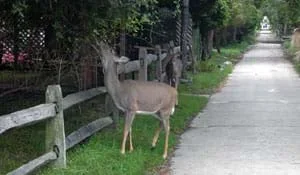 How important is smell to food recognition?Copyright U.S. National Park Service
Few people are aware of how crucial the sense of smell is to identifying foods, or the adaptive value of being able to identify a food as being familiar and therefore safe to eat. In this lesson and associated activity, students conduct an experiment to determine whether or not the sense of smell is important to being able to recognize foods by taste. In an opening discussion, students explore why it might be adaptive for humans and other animals to be able to identify nutritious versus noxious foods. This is followed by a demonstration in which a volunteer tastes and identifies a familiar food, and then attempts to taste and identify a different familiar food while holding his or her nose and closing his or her eyes. Then, the class develops a hypothesis and a means to obtain quantitative results for an experiment to determine whether students can identify foods when the sense of smell has been eliminated.
Food engineers use information about how people sense taste to develop artificial flavors that taste more like the real flavors they are designed to mimic. You might call some chemical engineers flavor engineers!
After this lesson, students should be able to explain why it is adaptive for an animal to be able to use its senses to identify foods as being either nutritious or noxious.
- CCSS.Math.Content.4.MD.B Represent and interpret data.
Grade 4
Do you agree with this alignment? - CCSS.Math.Content.5.MD.B Represent and interpret data.
Grade 5
Do you agree with this alignment? - CCSS.Math.Content.6.SP.B.4 Display numerical data in plots on a number line, including dot plots, histograms, and box plots.
Grade 6
Do you agree with this alignment? - CCSS.Math.Content.7.SP.C Investigate chance processes and develop, use, and evaluate probability models.
Grade 7
Do you agree with this alignment?
- Identify and collect information about everyday problems that can be solved by technology, and generate ideas and requirements for solving a problem.
Grades 3-5
Do you agree with this alignment?
- 4-LS1-2 Use a model to describe that animals' receive different types of information through their senses, process the information in their brain, and respond to the information in different ways.
Grade 4
This resource focuses on the following Three Dimensional Learning aspects of NGSS:
Science & Engineering Practices- Use a model to test interactions concerning the functioning of a natural system.Do you agree with this alignment?
Disciplinary Core Ideas- Different sense receptors are specialized for particular kinds of information, which may be then processed by the animal's brain. Animals are able to use their perceptions and memories to guide their actions.Do you agree with this alignment?
Crosscutting Concepts- A system can be described in terms of its components and their interactions.Do you agree with this alignment?
Do you agree with this alignment? - Use a model to test interactions concerning the functioning of a natural system.
- CCSS.Math.Content.4.MD.B Represent and interpret data.
Grade 4
Do you agree with this alignment? - CCSS.Math.Content.5.MD.B Represent and interpret data.
Grade 5
Do you agree with this alignment? - CCSS.Math.Content.6.SP.B.4 Display numerical data in plots on a number line, including dot plots, histograms, and box plots.
Grade 6
Do you agree with this alignment? - CCSS.Math.Content.7.SP.C Investigate chance processes and develop, use, and evaluate probability models.
Grade 7
Do you agree with this alignment?
- 4.L.1 Understand the effects of environmental changes, adaptations and behaviors that enable animals (including humans) to survive in changing habitats.
Grade 4
Do you agree with this alignment? - 4.L.1.2 Explain how animals meet their needs by using behaviors in response to information received from the environment.
Grade 4
Do you agree with this alignment?
Students should have an understanding of what biological adaptation is.
Taste and Smell Receptors in Humans
When we breathe through our noses, the inhaled air travels up through the nose and then makes a hairpin turn before it is pulled down the trachea and into the lungs. As the air makes the sharp turn, it passes by two small areas, one at the top of each nostril, and each about the size of a postage stamp. These areas consist of thousands of olfactory receptor cells, and together they are responsible for the sense of smell.
In normal breathing, the inhaled air barely makes contact with the olfactory receptors. But when we make an effort to smell something, we inhale more sharply as we sniff the air. This forces the inhaled air straight up the nasal cavity, where it can make more complete contact with the olfactory receptors. Similarly, when we eat, the chewing motion of the jaw forces some of the air in the mouth up toward the olfactory sensors—assuming we chew with our mouths closed! Holding the nostrils closed while eating greatly reduces the air flow past the receptors, so food loses most of its flavor in this event. Nasal congestion during colds or flu can produce the same result.
The taste receptors are more familiar to most people. These are located on the tongue, with different regions of the tongue able to detect sweetness (the tip of the tongue), saltiness (the sides just behind the tip), sourness (the sides further back on the tongue) and bitterness (the center back of the tongue). The receptors in both the tongue and the olfactory region of the nasal cavity are highly sensitive chemical receptors; they need only a few molecules to make contact with them before they send a signal to the brain. For the tongue, molecules dissolved in saliva are detected by cells within the taste buds.
For smell, however, volatile compounds in food are detected by the receptor cells. These compounds are the chemical components that can change from a liquid state (within the saliva) to a gaseous state, or a vapor, at room temperature. Vaporized molecules travel with the air up to the receptors. Thus, it is the volatile compounds in foods that we smell most readily. We refer to these foods as being particularly aromatic, with flavors of mint, coffee and cinnamon, being good examples. Blander foods, such as rice and mashed potatoes, contain far fewer volatile chemicals, and so we perceive them as both less aromatic and flavorful.
Anyone with a functional tongue can tell the difference between grains of salt and sugar placed on the tongue, but the tongue alone cannot distinguish between the sweet flavor of a peach and the sweet flavor of a strawberry. It is the volatile compounds within these fruits that give each its distinctive flavor, and so it is the sense of smell rather than the sense of taste that distinguishes one from the other. Refer to the A Tasty Experiment activity to have students expand their understanding of this phenomena with a hands-on experiment.
Body of Lesson
(Have handy a small supply of plain and flavored applesauce, such as cherry or strawberry, and a few spoons, for some taste testing with some volunteer students.)
Ask the students why they think certain foods can trigger certain feelings, either pleasant or unpleasant, in humans. Ask if they think the first humans experienced similar sorts of responses to food. You may need to ask further questions that will allow them to understand that being able to remember foods that are good to eat, that is, provide nutrition, is of benefit to humans. Likewise, being able to remember foods that are bad to eat, that is, cause vomiting or nausea, is also of benefit to humans. The ability to identify both nutritious and noxious foods would have been of particular benefit to humans who depended largely on gathered plants for their nutrition. Being able to distinguish by taste those foods that were good and those that were bad would have clearly been adaptive in an environment in which the food supply was limited or difficult to obtain.
Then ask the class how the body's nervous system, particularly the senses, enable humans to identify foods. Expect students to respond that humans are able to remember what foods taste like, smell like and look like. At this point, ask for a student volunteer willing to taste and try to identify a common food (but first check for food allergies or any dietary restrictions).
Before having the student taste the food, however, ask the class how you can make sure that only taste is involved in the determination. Expect students to respond that the taster should not be able to see the food, and they may also want to rule out smell. It is unlikely that they will name texture as a clue to what the food is, though. In that case, point out that if all foods were pureed until they had the texture of baby food, the sense of touch would also be eliminated. Also, by putting food on a spoon and feeding the volunteer, the taster would not be able to get information about what the food felt like to the hands.
Finally, ask the volunteer to close his or her eyes. Put some regular (unflavored) applesauce on a spoon and feed it to the volunteer. Then ask him or her to identify it. Next, have the student close his or her eyes and pinch his or her nose closed, and ask the student to remain this way until after he or she has stated what the food is. (This is very important, because as soon as the nose is released the student will be able to identify the food.) Then using a spoon, put some flavored applesauce (such as cherry or strawberry applesauce) in the taster's mouth. Remind the student to keep holding his or her nose until after the food has been swallowed or identified.
Expect the student to not be able to correctly identify the flavored applesauce. S/He will probably think that it is applesauce, though, so be sure to ask what made him/her think that. The texture is the main clue, but without the sense of smell, the student is unlikely to be able to distinguish between unflavored and flavored applesauce.
By now, all students will probably want to be tasters. Let them know that they will get a chance to do so when they conduct an experiment to see if smell is important to food recognition.
I am going to name some familiar foods and I want you to respond immediately with the first word that comes to mind after hearing each word.
Pumpkin pie. (Listen to student responses.) Turkey. (Listen to student responses; expect students to respond with "Thanksgiving.")
Cake and ice cream. (Listen to student responses; expect them to say "birthday" or "candles.")
All these foods are associated with celebrations and so they are also usually associated with pleasant memories.
What are some examples of foods that bring to mind happy memories for you? (Listen to some student examples.)
What are some examples of foods that bring to mind unpleasant memories for you? (Listen to student ideas. If necessary prompt them with some examples.) What about liver or lima beans? Or have you ever accidently tasted soap or pool water? Or, what about a particular food that made you sick at some point? You might be wary of eating that food again because of the memory of the illness. (Listen to students' stories.)
(Because students like talking about their favorite foods, as well as those they dislike, by this point expect them all to be interested in the discussion and ready to explore the topic further.)
- olfactory
- Referring to the sense of smell
- receptor cell
- A specialized cell that is part of the nervous system and responds only to certain types of stimuli; olfactory receptor cells, for example, send information to the brain after detecting smells.
- volatile
- A characteristic of a substance such that at room temperature or warmer, it readily changes from a liquid to a gaseous state, that is, the liquid easily produces vapors.
Assess students after completion of the associated activity.
Hebrank, Mary. 1995. "An Exercise in Good Taste," in Biology on a Shoestring, National Association of Biology Teachers, Reston, VA.
- Can You Taste It?
Contributors
Mary R. Hebrank
Supporting Program
Engineering K-PhD Program, Pratt School of Engineering, Duke University
Copyright
2013 by Regents of the University of Colorado; original © 2004 Duke University