
Get in My Body: Drug Delivery
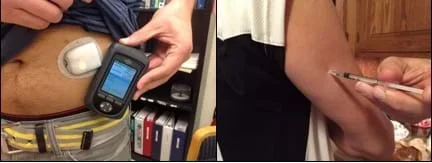 Daily insulin can be administered by various drug delivery methods.Copyright 2015 Megan Ketchum, College of Engineering, University of Houston
Students are challenged to think as biomedical engineers and brainstorm ways to administer medication to a patient who is unable to swallow. They learn about the advantages and disadvantages of current drug delivery methods—oral, injection, topical, inhalation and suppository—and pharmaceutical design considerations, including toxicity, efficacy, size, solubility/bioavailability and drug release duration. They apply their prior knowledge about human anatomy, the circulatory system, polymers, crystals and stoichiometry to real-world biomedical applications. A Microsoft® PowerPoint® presentation and worksheets are provided. This lesson prepares students for the associated activity in which they create and test large-size drug encapsulation prototypes to provide the desired delayed release and duration timing.
Pharmaceuticals are commonly used to relieve pain, fight disease and stabilize hormone levels. Each drug has its own method of action and is designed by chemical engineers to reach specific body locations. In order to reach its destination, a drug may pass through the harsh conditions of the stomach or be injected through the skin. Engineers design drug encapsulations to release drugs at the optimal time or alter drug properties to increase bioavailability through cocrystallization. These sorts of inventions and technologies designed by engineers are focused on improving our health, happiness and safety.
After this lesson, students should be able to:
- Describe the advantages and disadvantages of drug administration methods.
- List pharmaceutical design considerations.
- Discuss new drug administration methods and current drug delivery research.
- STEL-1Q Conduct research to inform intentional inventions and innovations that address specific needs and wants.
Grades 9-12
Do you agree with this alignment? - STEL-2X Cite examples of the criteria and constraints of a product or system and how they affect the final design.
Grades 9-12
Do you agree with this alignment?
- HS-ETS1-1 Analyze a major global challenge to specify qualitative and quantitative criteria and constraints for solutions that account for societal needs and wants.
Grades 9-12
This resource focuses on the following Three Dimensional Learning aspects of NGSS:
Science & Engineering Practices- Analyze complex real-world problems by specifying criteria and constraints for successful solutions.Do you agree with this alignment?
Disciplinary Core Ideas- Criteria and constraints also include satisfying any requirements set by society, such as taking issues of risk mitigation into account, and they should be quantified to the extent possible and stated in such a way that one can tell if a given design meets them.Do you agree with this alignment?
- Humanity faces major global challenges today, such as the need for supplies of clean water and food or for energy sources that minimize pollution, which can be addressed through engineering. These global challenges also may have manifestations in local communities.Do you agree with this alignment?
Crosscutting Concepts- New technologies can have deep impacts on society and the environment, including some that were not anticipated. Analysis of costs and benefits is a critical aspect of decisions about technology.Do you agree with this alignment?
Do you agree with this alignment? - Analyze complex real-world problems by specifying criteria and constraints for successful solutions.
- plan and implement descriptive, comparative, and experimental investigations, including asking questions, formulating testable hypotheses, and selecting equipment and technology;
Grades 9-11
Do you agree with this alignment? - communicate valid conclusions supported by the data through methods such as lab reports, labeled drawings, graphic organizers, journals, summaries, oral reports, and technology-based reports.
Grades 9-11
Do you agree with this alignment?
- Get in My Body: Drug Delivery Presentation (pptx)
- Get in My Body: Drug Delivery Presentation (pdf)
- Drug Delivery Worksheet (docx)
- Drug Delivery Worksheet (pdf)
- Drug Delivery Worksheet Answer Key (docx)
- Drug Delivery Worksheet Answer Key (pdf)
- Pharmaceutical Research Worksheet (docx)
- Pharmaceutical Research Worksheet (pdf)
- Pharmaceutical Research Worksheet Answer Key (docx)
- Pharmaceutical Research Worksheet Answer Key (pdf)
A basic understanding of human anatomy, the circulatory system and pharmaceuticals, as well as a familiarity with polymers, crystals and stoichiometry.
Pharmaceuticals are an important aspect of medicine; some people need them to survive. Each drug has a specific target location inside the body where it interacts. How do pharmaceuticals reach their destinations? Various methods of drug delivery have been invented; choosing the type of administration is determined by the type of injury or malady, and the patient. This lesson covers five types of pharmaceutical administration: 1) oral, 2) injection, 3) topical, 4) inhalation and 5) suppository.
(slide 3) For oral administration, a pill or liquid pharmaceutical is taken by mouth and travels through the digestive tract. Common examples of oral medication include aspirin, Advil®, Tylenol®, cough syrup, as well as some steroids and painkillers. The benefits of oral administration include ease of application and slow drug release. Oral administration is ideal in cases in which the drug needs to be long-lasting; encapsulation is often used to protect the drugs from strong digestive enzymes. Refer to the associated activity, Proof of Concept: Miracle Drug Encapsulation for students to practice with the engineering design cycle to prototype large-size shell encapsulation for oral drug delivery using household materials. Many people prefer this convenient method and it can be used in many instances, except when a person cannot swallow or is vomiting profusely. However, slow adsorption of a drug into the bloodstream is not ideal in cases when patients need something immediately, so in those cases, oral administration is not the best option. Also, pharmaceuticals administered orally have unpredictable adsorption due to degradation.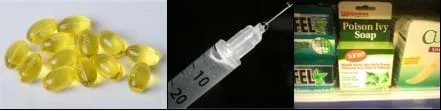 Drugs are administered differently depending on the patient malady: pills and capsules are taken orally, vaccinations via syringe, lotions and soaps on the skin.Copyright (left to right) 2014 Revision17 at English Wikipedia, Wikimedia Commons; 2010 Psychonaught, Wikimedia Commons; 2006 Sarah Marriage, Wikimedia Commons https://commons.wikimedia.org/wiki/File:100mg_generic_Benzonatate_Capsules.jpg https://commons.wikimedia.org/wiki/File:Syringe_Needle_IV.jpg http://commons.wikimedia.org/wiki/File:Poison_Ivy_Soap.jpg
(slide 4) Injection encompasses three methods: intravenous, intramuscular and subcutaneous. They all require some type of needle inserted into the vein, muscle or skin:
(slide 5) For intravenous (IV) administration, drugs are infused directly into veins. The entire dosage reaches the bloodstream immediately and the effects are dependable and reproducible, eliminating any worry about adsorption. In fact, compared to all pharmaceutical administration methods, intravenous administration delivers the highest percentage of the drug to the circulatory system. Conversely, intravenous administration is also more labor intensive, expensive, requires a cannula (IV line), can be distressing to patients and is more prone to cause them infections.
IV lines can be placed in any vein, though they are commonly inserted into a person's hand, wrist or arm. As veins "blow out," other veins in the body are used such as those in the legs, feet, chest and neck.
Common medications that utilize intravenous administration include blood transfusions, saline (for dehydration), propofol (a sleeping drug) and anesthesia medications for surgeries.
(slide 6) For intramuscular administration, drugs are injected into the muscles of the body. Flu vaccinations are intramuscular injections. When nurses insert needles into the body, they pull the syringe back to determine that they did not hit a vein or artery to ensure proper delivery into the muscle. If the vaccine is injected into the wrong area, it could have a different effect inside the body.
For subcutaneous delivery, drugs are injected into the cutis layer of the skin. The cutis layer includes the two outer layers of the skin, the epidermis and dermis.
Subcutaneous and intramuscular methods of pharmaceutical administration provide good adsorption, especially for long-lasting drugs with low oral bioavailability and rapid effects. However the adsorption can be unpredictable and injections can be painful, leave bruises and be troublesome for needle-phobic patients.
Medications commonly administered by intramuscular and subcutaneous delivery include insulin (for diabetes), morphine, vaccines (hepatitis A, rabies, influenza), penicillin, diazepam (Valium).
Diabetes is a disease in which either the body does not produce insulin at all or it does not correctly respond to insulin. Since, insulin is a hormone that regulates the amount of sugar in the bloodstream, people with diabetes who do not produce insulin at all require insulin injections daily to stabilize their levels. Early on, insulin was only available as a shot, but now insulin pumps are commonly used. As directed by the patient, the pumps insert a small tube into the skin and release insulin over days.
(slide 7) Using topical administration, a drug is delivered directly to the desired body site. This easy, non-invasive method often has high patient satisfaction, though slow adsorption makes it difficult to control dosage. Many drugs with low lipid solubility and high molecular weight cannot be absorbed through the skin and mucous membranes. Several types of common medications that use topical administration include skin ointments and creams for poison ivy and rashes, eye drops, ear drops and some birth control patches.
(slide 8) The inhalation of medication into the bloodstream via the lungs and respiratory system provides rapid adsorption due the large surface area of the lungs and is the fastest drug delivery route to the brain. Proper inhaler technique is essential to ensure that people receive the correct dosage, and it can cause patients to experience an unpleasant taste and/or mouth irritation. Drug size determines its bioavailability as an inhalation medication; large molecules cannot pass through the membranes in the lungs to the bloodstream. Common medications that are administered using inhalation include adrenocorticoid steroids (such as beclomethasone), bronchodilators (such as isoproterenol, metaproterenol and albuterol), and antiallergics (such as cromolyn).
(slide 9) Suppository administration delivers medication to the body via the rectum, vagina or urethra. Because the hemorrhoidal vein drains directly to the inferior vein cava (the largest vein in the human body), suppositories provide good adsorption, but cannot be used after rectal or anal surgery and can be uncomfortable and disliked by patients. Some common suppository medications include laxatives, diclofenac (nonsteroidal anti-inflammatory drug) and hemorrhoid medication. When a patient is vomiting and cannot take oral medications, suppository administration is likely.
(slide 10) Design considerations for the creation of pharmaceuticals include: 1) toxicity, 2) efficacy, 3) drug size, 4) solubility/bioavailability and 5) drug release duration.
- Toxicity: While the desired drug effect may eliminate certain bacteria from a patient's body, we do not want the drug to kill the healthy cells in the body. For example, in chemotherapy, the body is exposed to cytotoxic drugs to destroy the body's mutated cells, but it also has large unwanted side effects on the body's healthy cells (such as in hair follicles). Ideally, toxic medications result in more of the desired therapeutic effect than the undesirable side effects, making them useful. Pharmaceutical efficacy must be determined; if a drug is highly efficacious, 100% inhibition or eradication from the body can be achieved.
- Drug size plays a major role in whether or not certain administration methods can be utilized. If the drug's molecules are very large, they may not be able to pass through the necessary body membranes, preventing the medicine from being absorbed and reaching its intended destination.
- In order for a drug to be useful, it must be soluble, or bioavailable, in the environment where it is designed to function. Throughout the body, pH levels vary, so while a drug may dissolve in one area of the body, it may not dissolve in another area. For a drug to be effective, it must be soluble, so as pH varies, drug solubility varies.
- The duration of drug release must be considered by engineers and doctors; depending on the malady, short or long drug release duration may be desirable.
(slide 11) The circulatory system transports drugs throughout the body. Each body area has a specific pH. For example, the stomach pH ranges from 1.5 to 3.5, while the duodenum, the first section of the small intestine, has a pH of 6. The small intestine starts with a pH of 6 and increases to a pH of 7.4, while the large intestine has a lower pH of 5.7. The rectum has a slightly acidic pH of 6.7. The bloodstream has a neutral pH range of 7.35 to 7.45. As mentioned before, the pH determines drug molecule solubility/bioavailability.
(slide 12) High molecular weight drugs are difficult to administer. Polymers are used to encapsulate high molecular weight drugs so that they can be delivered throughout the body. Depending on the polymer, the rate of drug diffusion out of the shell can be controlled. The size of the polymer shell pores determines the rate of diffusion. Polymer chains that act as lock-and-key receptors can attach to the encapsulation, providing some drug release control. For some types of polymer encapsulation, the polymer degrades to release the drug. A potential hazard of polymer use for drug delivery is uneven degradation; one area can degrade more quickly than intended, leading to rapid drug release that can cause a toxic overdose.
(slide 13) Most drugs are crystals—solid materials with an ordered pattern in all directions. Some drugs are very efficacious, but have poor solution properties. To improve the properties of a drug molecule and retain the efficacy of the molecule, cocrystals are produced. Cocrystals are crystals composed of two or more different molecules, ions or atoms in a specific stoichiometric ratio. Cocrystals are used to alter/improve drug molecule solution properties, improving solubility while maintaining high efficacy.
(slide 14) The inspiration for new drug delivery devices can come from other engineering design feats, such as contraceptive microchips that merge birth control with controlled-release chemical microchips. For some women, including those without continuous access to medical resources, it can be inconvenient or difficult to continuously take oral birth control. A new, chip-like device with thousands of pharmaceutical-filled wells was designed to implant underneath the skin where it administers contraceptive pharmaceuticals for years. The well coverings degrade when a small electrical current is directed to the well. The chips can be turned on and off, enabling women to start or stop birth control at any time.
(slide 15) Medical drug delivery devices are devices implanted inside the human body to slowly release drugs at specific times or release drugs when directed. Medical devices can cause problems, including blood surface interactions resulting in infections, blood clotting, antibiotic resistance leading to device failure. These problems are caused because a foreign object is placed inside the body. The surface of the device may have had bacteria on it before implantation or the body may attempt to remove the device because it senses that it is not natural. Blood surface interactions are how the body and the surface of a device react when in contact with each other. To combat this, artificial surfaces are designed to negate these interactions. One method is a drug-eluting surface in which the surface releases a drug over time. In a drug-eluting surface, the drug is made catalytically—that means the drug is produced inside the body via a chemical reaction.
(slide 16) For example, metal organic frameworks (MOFs) are compounds composed of metals ions that connect to organic molecules creating frameworks. These frameworks can vary greatly from one dimensional to three dimensional. Three-dimensional frameworks make porous channels where chemical reactions can occur. Specifically for drugs, nitric oxide can be produced. For chronic wound treatment, nitric oxide helps neurotransmission, which is the exchange of signals between neurons in the body. If a signal is blocked, it can cause problems. For example, if the signals for pain are blocked, how would you know that you have a life-threatening injury? The sustained nitric oxide release of these metal organic frameworks has the capability to last for two to 12 weeks.
"Smart materials" inventions like MOFs have the potential use for targeted transport of drugs in the body. Endless possibilities exist for future drug delivery systems. Future research will help determine which technologies will be implemented sooner rather than later. Inventions and innovations are the result of specific, goal-directed research. What problem do you want to solve? What ideas do you have?
(Be ready to show the class the 16-slide Get in My Body: Drug Delivery Presentation (PPTX), a PowerPoint® file. In addition, hand out copies of the Drug Delivery Worksheet (PDF) for students to individually complete during the presentation.)
Pharmaceuticals help save lives by combating disease, providing vaccination against pathogens, fighting infection and adjusting hormone levels in the human body. Earlier and simpler methods of pharmaceutical administration include eating herbs that contain pharmaceutical compounds, infusing drugs into tea and using pastes such as Vicks® VapoRubTM topical ointment. As more pharmaceuticals are discovered and/or created, administration methods have evolved. For example, the invention of injections enabled doctors to save and/or improve more lives.
(Open the PowerPoint® presentation to show the entire class.)
(Slide 2) Challenge question: Imagine that you are a doctor, physician assistant or nurse practitioner. Your patient has a condition that requires her to keep constant levels of a medication in her body, but she is unable to swallow. She needs to take her medication at least twice a day for the rest of her life. What other method(s) can you use to administer her medication? To ensure patient compliance and safety, the drug delivery method must be as simple as possible.
(In groups of four or five students each, have students discuss the challenge question for five minutes. Then, have the groups share their ideas with the class. Some ideas include injections or shots, inhalation administration, topical cream so the blood absorbs the drug through the skin, etc.)
(Continue with the presentation, as guided by the Lesson Background section information.)
Over the years, pharmaceuticals have developed from simple herbal infusions in teas and pastes made by apothecaries to complex injections and implants. In the future, we can expect new pharmaceuticals, devices and methods of drug delivery to be invented.
- absorption
- The process of a molecule being absorbed or soaked up into another region or part, such as a drug being soaked up by the digestive tract into the bloodstream.
- bioavailability
- The extent to which a medication can be used by the body. How a drug interacts with the body. If a drug has good bioavailability, its physical properties enable it to be used readily.
- catalyst
- A substance that helps improve a chemical reaction in the body in order to produce more of a drug or chemical.
- cocrystal
- A crystal comprised of two or more components, such as ions, molecules or atoms, in a specific stoichiometric ratio.
- crystal
- A solid material that consists of an ordered pattern in all directions.
- degradation
- The process of decay or breakdown of an object in which it becomes unusable.
- diffusion
- The movement of molecules in a random fashion to create an evenly concentrated environment.
- drug administration
- As refers to pharmaceuticals, the method of drug delivery into the human body.
- drug delivery
- A method of transporting a pharmaceutical to a desired body location.
- drug-eluting
- An object that releases a drug over a period of time.
- duration
- The length of time something continues to exist, such as a drug release.
- efficacy
- The capacity for producing a desired result. For example, how much a drug is able to inhibit; if it causes 100% inhibition, it has a high efficacy.
- encapsulation
- As refers to pharmaceuticals, a shell-like method of coating drug molecules to enable release at specific times using diffusion.
- inhalation
- As refers to pharmaceuticals, a method of drug administration using the lungs to transfer medicine into the bloodstream.
- injection (medicine)
- As refers to pharmaceuticals, a method of drug administration that uses some type of needle to push the drug into the bloodstream, skin or muscle. Three types: intravenous, subcutaneous and intramuscular. Also called a "shot."
- intramuscular injection
- A method of drug administration by inserting a needle directly into the muscle.
- intravenous injection
- A method of drug administration using an infusion directly into the bloodstream.
- neurotransmission
- The exchange of signals between neurons in the body that help relay information throughout the body, such as pain recognition.
- oral administration
- A method of drug administration using the mouth and digestive tract to achieve adsorption into the bloodstream.
- pharmaceutical
- A drug used for medical purposes, such as to diagnose, cure, treat or prevent disease.
- polymer
- A large macromolecule that is composed of repeating subunits.
- solubility
- The property of a substance to dissolve into solution.
- subcutaneous injection
- A method of drug administration by inserting a needle directly into the cutis layer of the skin.
- suppository
- A method of drug administration using the rectum, vagina or urethra to absorb pharmaceuticals.
- topical
- As refers to pharmaceuticals, a method of drug administration directly to the affected site, such as eye drops, lotion on the skin or transdermal patch.
- toxicity
- The degree of harmfulness of a substance to humans.
Pre-Lesson Assessment
Challenge Question: As presented on slide 2, pose the following challenge question to the class. Have students brainstorm ideas in small groups for five minutes. Then have groups share their ideas in a class discussion.
- Imagine that you are a doctor, physician assistant or nurse practitioner. Your patient has a condition that requires her to keep constant levels of a medication in her body, but she is unable to swallow. She needs to take her medication at least twice a day for the rest of her life. What other method(s) can you use to administer her medication? To ensure patient compliance and safety, the drug delivery method must be as simple as possible. (Expect suggestions such as injections/shots, inhalers, ointments, etc.)
Conclude by making the point that new technologies are born by first identifying the criteria and constraints necessary to solve a problem, and then creating, developing and testing solutions that address those requirements. This specific, goal-directed research is what biomedical researchers are doing to make advances in medical care.
Post-Introduction Assessment
Presentation Worksheet: During the PowerPoint® presentation (PPTX), have students complete the Drug Delivery Worksheet (PDF). Review their answers to assess their comprehension of the presented content.
Lesson Summary Assessment
Technology Research: Assign students to complete the Pharmaceutical Research Worksheet (PDF), which requires them to use computers with Internet access to research new drug delivery methods (examples, how they work, method considerations) and future drug delivery methods (student ideas, nanotechnology possibilities, tissue engineering). Review their answers to gauge their depth of investigation and comprehension.
Biomaterials and Biotechnology: The development of controlled drug delivery systems and the foundation of tissue engineering (part 3) by Robert S. Langer, MIT (26:50-minute video); really interesting information from 22:14 to 25:55, at https://www.youtube.com/watch?v=ZOgobBrGYVM
Amazing drug delivery system; an animation shows an example long-duration drug delivery system (1:26-minute video): https://www.youtube.com/watch?v=MmGCJEqZkOY
New drug-delivery capsule may replace injections (1:35-minute video): https://www.youtube.com/watch?v=PBCa5bM3zjg
Drug Delivery Technology: Present and Future (part 2) by Robert S. Langer, MIT (35:11-minute video) at https://www.youtube.com/watch?v=o4moymWepUg
Falcaro, Paolo and Buso, Dario. (2011) Scanning electron microscope image of the seed inside the MOF crystals (photograph with caption). The Commonwealth Scientific and Industrial Research Organisation (CSIRO), Australia. Accessed January 27, 2016. http://www.scienceimage.csiro.au/image/11637
- Get in My Body: Drug Delivery
Contributors
Megan Ketchum; Andrea Lee
Supporting Program
National Science Foundation GK-12 and Research Experience for Teachers (RET) Programs, University of Houston
Acknowledgements
This digital library content was developed by the University of Houston's College of Engineering under National Science Foundation GK-12 grant number DGE 0840889. However, these contents do not necessarily represent the policies of the NSF and you should not assume endorsement by the federal government.
Copyright
2016 by Regents of the University of Colorado; original © 2015 University of Houston