
What Is Energy? Short Demos
Three short, hands-on, in-class demos expand students' understanding of energy. First, using peanuts and heat, students see how the human body uses food to make energy. Then, students create paper snake mobiles to explore how heat energy can cause motion. Finally, students determine the effect that heat energy from the sun (or a lamp) has on temperature by placing pans of water in different locations.
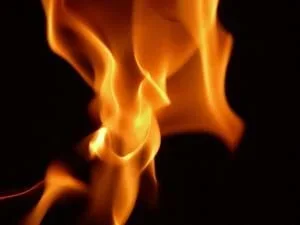 What is energy?Copyright Wikimedia Commons http://upload.wikimedia.org/wikipedia/commons/5/5b/DancingFlames.jpg
Chemical engineers apply their understanding of how the human body gets energy and what foods give the most energy to create energy bars and drinks that maximize the energy athletes get from food. When designing heating and cooling systems, mechanical engineers study thermal energy and how it creates air movement. They know rising hot air mixes with the existing room air, preventing "cold" spots and making the space more comfortable; this is why they locate heating vents low on the floor. Civil and mechanical engineers have designed ways to harness renewable energy. Two such inventions are solar panels, which produce electricity from the sun, and solar hot water heaters, which absorb energy from the sun and transfer it to water for hot showers or laundry.
After this activity, students should be able to:
- Explain that a light bulb generates heat.
- Explain that energy is produced in a reaction that takes place in the body.
- Describe how heat energy or solar energy is released, for example, by raising the temperature of the water in a pan that was exposed to this type of energy.
- Provide examples of how energy is used in our everyday lives.
- Identify and describe the variety of energy sources
Grade 4
Do you agree with this alignment?
- Energy comes in different forms.
Grades 3-5
Do you agree with this alignment?
- 4-PS3-2 Make observations to provide evidence that energy can be transferred from place to place by sound, light, heat, and electric currents.
Grade 4
This resource focuses on the following Three Dimensional Learning aspects of NGSS:
Science & Engineering Practices- Make observations to produce data to serve as the basis for evidence for an explanation of a phenomenon or test a design solution.Do you agree with this alignment?
Disciplinary Core Ideas- Energy can be moved from place to place by moving objects or through sound, light, or electric currents.Do you agree with this alignment?
- Energy is present whenever there are moving objects, sound, light, or heat. When objects collide, energy can be transferred from one object to another, thereby changing their motion. In such collisions, some energy is typically also transferred to the surrounding air; as a result, the air gets heated and sound is produced.Do you agree with this alignment?
- Light also transfers energy from place to place.Do you agree with this alignment?
- Energy can also be transferred from place to place by electric currents, which can then be used locally to produce motion, sound, heat, or light. The currents may have been produced to begin with by transforming the energy of motion into electrical energy.Do you agree with this alignment?
Crosscutting Concepts- Energy can be transferred in various ways and between objects.Do you agree with this alignment?
Do you agree with this alignment? - Make observations to produce data to serve as the basis for evidence for an explanation of a phenomenon or test a design solution.
Peanut Calorie Demo:
- 5 peanuts (out of the shell)
- metal tongs
- Bunsen burner (or candle and matches)
Coiling Snake Demo:
Each group needs:
- Coiling Snake Template (PDF) (also available in Microsoft Word (DOC); see Attachments section for all Word files)
- red construction paper (for snake tongue)
- string (or thread) (~30 cm or 1 foot per group)
- scissors
For the entire class to share:
- candle and matches, or light bulb (a light bulb is less of a fire hazard)
- glue
- hole punch
Evidence of Solar Energy Demo:
- 4 aluminum pans
- tap water
- thermometer
- (alternative energy source if no sunshine) desk lamp
Brainstorm with students to identify different ways we use energy. Create a Know / Want to Know/ Learn (KWL) chart on the classroom board (or use the provided KWL Chart (PDF)). (Possible ideas: Stoves for cooking, heating our homes, powering light bulbs.)
All the ideas you just named are inventions that use energy and benefit people. Before engineers could create any of these inventions, they first learned about the properties or characteristics of energy.
Have you ever felt really tired after a lot of exercise? What are some things you do to help? (Possible ideas: Take a nap, eat a snack, rest.) What are some of the snacks you like best? When we exercise, our bodies burn up the chemical energy available in food. Some foods have more energy than others. Chemical engineers have created high-energy bars for athletes to help them load up on energy when they need it.
Have you ever seen a hot air balloon? What happens to steam from boiling water? In both of cases, the heated air rises. This is because hot air is less dense (or weighs less) than cold air. In the snake demo, you will see how rising hot air can cause motion. This is a natural motion that engineers take advantage of when designing heating systems. Did you ever notice that most heat vents and radiators are located low, near the floor? This is because engineers know that heated air rises and provides better mixing with the cool air in the room if the hot air rises from below, near the floor.
Have you ever stood in the sun and felt really warm on a sunny day? What if you are wearing a dark-colored shirt? Does the shirt get warm to the touch? Well, the sun is a huge energy source. Can you name two types of energy that the sun produces? Light and heat! Engineers study the energy from the sun and develop ways to capture that energy for people to use. Engineers have invented devices such as solar panels and solar water heaters that capture the sun's energy for electricity and heat. Engineers also design buildings to take advantage of the sun's heat to warm up specific rooms all year long.
Today, we are going to look at some different types of energy and think about how engineers would use what we learn.
Before the Activity
- Gather materials and make copies of the Coiling Snake Template (PDF).
With the Students
Peanut Calorie Demo (conduct as a class; 5 minutes)
- Have students sit in a circle a few feet away from this demo.
- Hold your hand over the flame of a Bunsen burner (not too close!) (or use a candle and matches). Can you feel the heat?
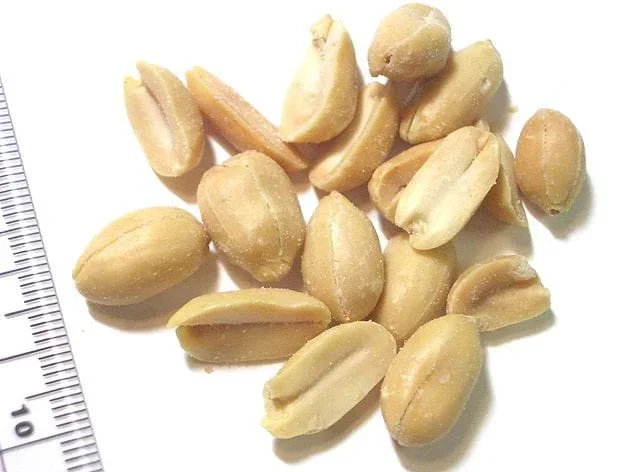 What can holding peanuts over a flame tell us about burning energy and calories?Copyright 2006 Aney, CC BY-SA 3.0, Wikimedia Commons
- Hold an unshelled peanut with tongs and light it using a Bunsen burner (or a candle or a match).
- Hold the peanut until the flame has burned it.
- Have students count the number of seconds it takes the peanut flame to go out. Explain to them that the peanut is burning fat calories.
- You may want to use the peanut to heat a small test tube of water, or try burning a different type of nut. (With a different type of nut, the time changes due to the change in amount of fat calories.)
- Class discussion. As we take in food, our bodies work as furnaces to burn and release energy. When designing sports foods and beverages, engineers study how much energy food items have and how much time it takes a body to burn those calories.
Coiling Snake Demo (students conduct; 20 minutes)
- Divide the class into teams of two or three students each.
- Have students in each team cut their Coiling Snake Templates (PDF), making sure to cut along all the lines.
- Draw and cut a forked tongue from red construction paper.
- Glue the tongue onto the snake.
- Poke a hole in the snake's head or tail; using a hole punch works best.
- Cut a piece of string (or thread) about 30 cm (1 foot) long.
- Tie the string to the snake's head or tail, and knot it.
- Hold the snake by the string over a candle or light bulb.
- As the light bulb heats up, the snake should spin.
- Explanation: When the candle burns, two forms of energy are released, heat and light energy. The heat causes the air to rise up, which in turn makes the snake spin around. (The snake does not move up because the coiled shape of the snake allows the heat to rise through the middle and spin the snake.)
- Class discussion: The energy we need comes from the food we eat. The energy required to turn the pedals of a bicycle comes from the person riding the bicycle. Cars and trucks get their energy from gasoline. Some homes are heated using oil or natural gas or firewood. When designing heating and cooling systems, engineers study thermal energy and how it creates air movement. They place heat vents and radiators low, near the floor because they know that hot air rises. As hot air rises it mixes with the existing room air, preventing "cold" spots and making the space more comfortable. The same is true for cool air vents that are placed high, near the ceiling. The cool air sinks, evenly mixing with the existing room air.
Evidence of Solar Energy Demo (conduct as a class; 20 minutes)
- Fill two aluminum pans with equal amounts of water.
- Have students take and record the temperatures of the water in both pans.
- Place one pan of water in a sunny location outside.
- Place the other pan of water in a shady location outside.
- Alternative (if no sunshine): After measuring and recording the water temperatures in the two pans of water, place a desk lamp above one pan and set the second pan away from the lamp.
- After 10 minutes (or more, as needed) check the temperature of the water in each pan.
- Class discussion: What do you do if you are standing outside on a sunny day and get too hot? (Possible answers: Get out of the direct rays of the sun by moving to the shade of a tree or going inside.) Where do you want to stand on a cold day? (Possible answer: In the sun, to warm up.) The sun produces solar energy, which comes in the form of light and heat. We observed this as we watched the sun warm up the water in the pan outside. Engineers use solar energy to design heating systems for buildings and water. They also harness solar energy with solar panels that convert the sun's energy into electricity.
Pre-Activity Assessment
Know / Want to Know / Learn (KWL) Chart: Before the activity, ask students to write down in the top left corner of the KWL Chart (PDF) (or as a group, on the board) under the title, Know, all the things they know about energy. Next, in the top right corner under the title, Want to Know, ask students to write down anything they want to know about energy. After the activity, ask students to list in the bottom half of the page under the title, Learned, all of the things that they have learned about energy.
Activity Embedded Assessment
Class Discussions: As a class, discuss each short demo as described in the Procedure section.
Questions: Which pan is warmer? Why is one pan warmer than the other? Discuss why the sun and heat affect the temperature of water and how this affects the energy given off by the water. The sun is the greatest form of natural energy and is used everyday by people in a variety of ways for a variety of purposes.
Diagramming: Have students draw diagrams of what happened during the coiling snake demonstration. Make sure they label the types of energy present (heat and light) as well as writing one or two sentences about what happened to the snake.
Post-Activity Assessment
KWL Chart (Conclusion): After the short demos, ask students to list in the bottom half of the KWL Chart (PDF)under the title, Learned (or on the board), all of the things that they have learned about energy.
Class Discussion: Ask students and discuss as a class:
- Can you feel, see and hear energy? (Answer: Yes, through musical instruments, the sun, when you eat food and go for a walk, when you turn on the light in your house or turn the heat on in the winter or air conditioning in the summer.)
- Discuss kinetic and potential energy. Which of the demos showed us kinetic energy? (Answer: Coiling snake, solar energy.) Potential energy? (Answer: Peanut demo.) What is the difference between the two types of energy? (Answer: Potential energy is stored energy while kinetic energy is the energy of motion or moving energy.)
- Have students identify and write down items in the classroom that use electricity. Also, have them identify which type of energy the electricity is transformed into. (Heat? light? sound? movement?) Examples may include items such as a radio, projector, ceiling fan and a heater.
The Bunsen burner is a fire hazard so exercise caution. Also, you may want to use a lightbulb for heat, instead of the candle.
Remind students of scissor and fire safety rules.
If you are using glass thermometers, remind students that they are breakable.
Peanut Calorie Demo: If it is unsafe or not permitted to use fire in your classroom, use a stove burner and some popcorn kernels in a pan to demonstrate a similar idea.
Coiling Snake Demo: For this demonstration, it may help to show students how the apparatus should work before they begin the activity; make a snake of your own and test it. If neither a candle nor a light bulb is available, boil water on a stove burner and use the heat from the steam.
Evidence of Solar Energy Demo: If conducting this demo on a rainy day, adjust the activity by placing one pan next to a bright lamp, heater, overhead projector or a stove, and the other pan in the middle of the classroom. The source of energy represents the sun, and the middle of the room represents the shady location.
Explain to students that a human body needs energy, even if it is lying in bed all day, to run its internal processes such as breathing, digestion and thinking. Advanced or older students can learn about the Krebs cycle, calories and how they relate to human metabolism. For example, a 173 cm (5 ft, 8 in) tall, sedentary person may have a body energy expenditure requirement of 1,400 calories per day, while a very active person of the same size may need double that amount of calories to maintain the same body weight.
Ask students to experiment with different materials to make the snake coil, such as tracing paper, cardboard, wool cloth, etc. Have students hypothesize with which material the coil will turn the most during a given amount of time.
Have students explore the responses of different media to the solar heat. For example, compare the change in temperature of water, dark-colored Kool-Aid©, juice and milk. The expected result should support the idea that dark-colored objects retain more heat than light-colored ones. In the climate where you live, what color would be best for your house? Your car? Your dog's house?
For more advanced students, have them graph the temperature results of the two pans placed outside in the sun and shade at the beginning of the day. Measure and record the temperature of the water at equal intervals (every 10+ minutes) throughout the day. Prepare a graph with temperature vs. time, with data from both pans of water in the same graph. In addition, have students find the slope of a best-fit line and develop an equation for the line.
For more advanced students, have them evaluate other sources of energy for the coiling snake. They could use the sun and wind. For each energy source, measure the amount of times that the coil turns in given amount of time. By comparing these results, have them determine which energy source was more efficient.
Contributors
Sharon D. Perez-Suarez; Natalie Mach; Malinda Schaefer Zarske; Denise W. Carlson
Supporting Program
Integrated Teaching and Learning Program, College of Engineering, University of Colorado Boulder
Acknowledgements
The contents of this digital library curriculum were developed under grants from the Fund for the Improvement of Postsecondary Education (FIPSE), U.S. Department of Education and the National Science Foundation (GK-12 grant no. 0338326). However, these contents do not necessarily represent the policies of the DOE or NSF, and you should not assume endorsement by the federal government.
Copyright
2005 by Regents of the University of Colorado