
Design a Net-Zero Energy Classroom
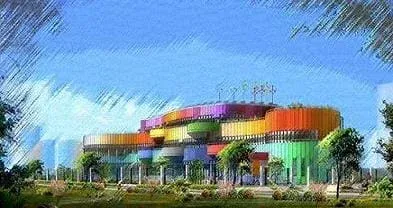 Figure 1. Concept sketch of a new energy-efficient building.Copyright Science@Berkeley Lab http://www.lbl.gov/Science-Articles/Archive/sabl/2007/Apr/04-greenChina.html
Students create a concept design of their very own net-zero energy classroom by pasting renewable energy and energy-efficiency items into and around a pretend classroom on a sheet of paper. They learn how these items (such as solar panels, efficient lights, computers, energy meters, etc.) interact to create a learning environment that produces as much energy as it uses.
Engineers who understand how energy is used—and can create solutions to reduce energy use—in buildings are in high demand. Energy-efficient buildings are advantageous because they are more comfortable to inhabit, more environmentally-friendly and save in energy bills over the life of a building. More engineers are needed to design the next generation of buildings in our country—buildings that create as much energy as they use and conserve limited natural resources. Many schools have started to take advantage of the pleasant atmosphere, increased productivity, and cost savings associated with energy-efficient buildings by installing renewable energy systems and redesigning existing classrooms to use less energy.
After this activity, students should be able to:
- Explain how electrical energy is used in the classroom.
- Summarize how renewable energy can be harnessed on-site and used to power a building.
- List several ways how buildings can conserve energy and resources.
- Use multiple resources – including print, electronic, and human – to locate information about different sources of renewable and nonrenewable energy
Grade 4
Do you agree with this alignment?
- Students will develop an understanding of the effects of technology on the environment.
Grades K-12
Do you agree with this alignment? - Energy comes in different forms.
Grades 3-5
Do you agree with this alignment?
- 4-ESS3-1 Obtain and combine information to describe that energy and fuels are derived from natural resources and their uses affect the environment.
Grade 4
This resource focuses on the following Three Dimensional Learning aspects of NGSS:
Science & Engineering Practices- Obtain and combine information from books and other reliable media to explain phenomena.Do you agree with this alignment?
Disciplinary Core Ideas- Energy and fuels that humans use are derived from natural sources, and their use affects the environment in multiple ways. Some resources are renewable over time, and others are not.Do you agree with this alignment?
Crosscutting Concepts- Cause and effect relationships are routinely identified and used to explain change.Do you agree with this alignment?
- Knowledge of relevant scientific concepts and research findings is important in engineering.Do you agree with this alignment?
- Over time, people's needs and wants change, as do their demands for new and improved technologies.Do you agree with this alignment?
Do you agree with this alignment? - Obtain and combine information from books and other reliable media to explain phenomena.
- 5-ESS3-1 Obtain and combine information about ways individual communities use science ideas to protect the Earth's resources and environment.
Grade 5
This resource focuses on the following Three Dimensional Learning aspects of NGSS:
Science & Engineering Practices- Obtain and combine information from books and/or other reliable media to explain phenomena or solutions to a design problem.Do you agree with this alignment?
Disciplinary Core Ideas- Human activities in agriculture, industry, and everyday life have had major effects on the land, vegetation, streams, ocean, air, and even outer space. But individuals and communities are doing things to help protect Earth's resources and environments.Do you agree with this alignment?
Crosscutting Concepts- A system can be described in terms of its components and their interactions.Do you agree with this alignment?
- Science findings are limited to questions that can be answered with empirical evidence.Do you agree with this alignment?
Do you agree with this alignment? - Obtain and combine information from books and/or other reliable media to explain phenomena or solutions to a design problem.
Each group (student) needs:
- 1 set of the Net-Zero Energy Classroom Items (PDF)
- Net-Zero Energy Classroom Design Sheet (PDF)
- glue stick
- scissors
- colored pencils
- Net-Zero Energy Classroom Presentation (pptx)
- Net-Zero Energy Classroom Presentation (pdf)
- Net-Zero Energy Classroom Items (docx)
- Net-Zero Energy Classroom Items (pdf)
- Net-Zero Energy Classroom Items – Sorted (docx)
- Net-Zero Energy Classroom Items – Sorted (pdf)
- Net-Zero Energy Classroom Design Sheet (ppt)
- Net-Zero Energy Classroom Design Sheet (pdf)
Students should be familiar with the basic concept of energy, and the difference between renewable and non-renewable energy.
(Use the nine-slide Net-Zero Energy Classroom Presentation (PPTX), a PowerPoint® file, in conjunction with this section.)
In the U.S., buildings consume about 40% of all energy that is used. Most of this energy is produced by coal plants that create a lot of pollution and cause environmental problems.
Energy is used in buildings in a variety of ways. Can you spot a few things in this classroom that use energy? It takes energy to heat and cool buildings so that we feel comfortable. We need energy for lights so we can see. Energy is used to power computers, TVs, fans and most electrical appliances. Essentially, everything we plug into the wall uses energy. We also use energy for cooking and other everyday tasks. Can you imagine what life would be like without easy access to energy in our buildings, homes and schools?
We need the ability to produce energy, but we also need to be environmentally responsible and wisely use the energy we have. Can you imagine a building that actually generates as much energy as it uses? This is called a net-zero energy building. Homes, offices, stores and even schools can be net zero-energy buildings. Today we are going to redesign our classroom so that it is a net-zero energy classroom.
Background
The first step in designing a net-zero energy building, or in our case — a classroom, is to make sure that everything that uses energy, uses it wisely and efficiently. Look around you: what do you see? Think of all the things you spot that use energy, and now think of ways that they could do it more efficiently. What are some ways we could use energy more efficiently in this classroom?
For example, we could put in compact florescent lights (CFLs), also known as the "squiggly bulbs," in all lamps and desk lights. These use one-quarter of the energy of traditional incandescent light bulbs because they do not heat up as much. In the ceiling, we could make sure that we have the most efficient florescent lighting. We can also replace lights with natural daylight. If we let natural light shine in from the outside through big windows or skylights, then we do not need to turn on as many lights in the classroom.
We can also use the light that shines in the windows to heat the classroom in the winter; this means we would not need to use the heaters as much. This is called passive solar heating. Locations that are sunny and have a colder climate, such as Colorado, are perfect for passive solar heating. To take advantage of the sun's warmth, windows need to be on the south side of a classroom because in the winter (in the Northern Hemisphere at least), the sun shines from the south. We can then put a curtain on the window or a shade above it outside to block the sun in the summer when it is higher in the sky and hotter in the classroom.
Once we are using energy wisely, we can place renewable energy technologies in our classroom to generate electricity and power our classroom. Who can name a form of renewable energy that we can harness right here at our school? Solar and wind are two very practical types of renewable energy that can be harnessed on-site and used to power anything that uses electricity. We should measure the energy in our classroom so we know exactly how much energy we are using all the time and how much we need to generate.
Lastly, we can add some other cool features to conserve water, recycle and help make our classroom sustainable in many ways. Let's get started!
Before the Activity
- Print the Net-Zero Energy Classroom Items (PDF) and cut them so that each group/student has one set. If you have shorter class periods, then it may be more practical to cut the items out in advance and presort them for each group. (Note: Use a different attachment that has all the items grouped together so that can be printed and easily cut using a paper cutter—Net-Zero Energy Classroom Items - Sorted (PDF)).
- Print the Net-Zero Energy Classroom Design Sheet (PDF), one per group/student.
- Show the class the Net-Zero Energy Classroom Presentation (PPTX), a PowerPoint® file, to explain all of the features for students to include in their net-zero energy classrooms and how they should be placed. Show the presentation in conjunction with the Introduction/Motivation content.
With the Students
1. Give each group or student a design sheet and a set of the classroom items.
2. Hand out scissors and glue sticks.
3. Direct students to place all of their classroom items inside the classroom in the locations they think would be most appropriate, and to draw in windows and other doors or lights, etc. Some common item placements:
- Indoor: computers, lights, heater, air conditioning, digital display, recycling bins
- Outside: compost bin, water storage tank (pipe flows from roof to tank), bike rack, energy meter (attached to side of building), solar panels (on roof), wind turbine (on roof or away from building sides)
- Students should also draw windows in the classroom wall.
4. Have students label all items they have placed in the classroom.
5. Have students color their classroom diagrams.
6. (optional) Have students draw wires that connect the renewable energy items to the energy meter and then from the meter to the items in the classroom that use energy. (Wires go to the energy meter before going to lights and computers.) Also have them draw wires to the power lines and utility.
7. (optional) Have students include other items in their designs that might be used around the inside or outside of the classroom, including gardens, rain collected by gutters and flowing to a storage tank, bicycles or scooters, desks and chairs, etc.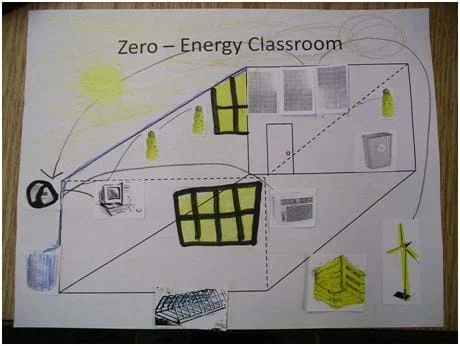 Figure 2. An example student-designed zero-energy classroom project.Copyright 2009 William Surles, ITL Program, College of Engineering and Applied Science, University of Colorado at Boulder
- compact fluorescent
- a bulb that uses one-quarter the amount of energy of an incandescent bulb.
- efficient
- A process that creates as little waste as possible.
- electricity
- The energy that moves through wires, which powers lights, computers, etc.
- passive solar heating
- Heating a space by using the sun's radiation, without using any equipment or electricity.
Pre-Activity Assessment
Brainstorming: As a class, have students engage in finding the major energy-using items in their classroom. Remind students that in brainstorming, no idea or suggestion is "silly." All ideas should be respectfully heard. Take an uncritical position, encourage wild ideas and discourage criticism of ideas. Have them raise their hands to respond. Write their ideas on the board.
Class Discussion: Ask a discussion question to get students to think about the upcoming activity. After soliciting answers, explain that these questions will be answered during the activity.
- Ask students what they already know about solar panels and wind turbines, such as where outside they should be placed and why.
- Have students discuss the list generated during brainstorming. Ask students to think about how any of the listed items could use energy more efficiently.
Activity Embedded Assessment
Zero-Energy Classroom Design Sheet: Give students time to place all of their classroom items on their classroom design sheets in order to design their net-zero energy classrooms. Expect students to be able to correctly place these items either inside or outside of the classroom space. If drawing wires and connections, expect students to be able to connect the classroom items correctly. Observe students' progress and ask them (individually) to explain why they are putting an item in a certain place and how it works.
Post-Activity Assessment
Homework: Direct students to take home their zero-energy classrooms, and as homework, explain to a family member how all the items work. What items are similar to those they have at home? Ask them to make a list of electricity-using appliances around their houses and make suggestions for improving the energy efficiency of any of these items.
Students may put things in places that don't make sense, so stroll around and observe how each student is doing and guide them as necessary. (See step #3 under Procedures for correct placement of items.)
Completing the Design: Ask students to add any of the following to their classroom designs. Ask students to explain their final designs aloud to the class or in writing. Suggest that students draw:
- All the wiring from the solar panels and wind turbine to the meter and then from the meter to the lights, computer and air conditioning.
- Gutters and downspouts to catch and route the water to a storage tank.
- Themselves in the classroom.
- A variety of different items that can be recycled next to the recycle bin.
- The sunlight coming through the windows and the passive heating in the room.
- For upper grades, have students add up the amount of energy each solar panel and wind turbine in their design can make. (Note: a typical solar panel may create 200 watts in full sunlight. While small wind turbine power outputs vary widely, assign the ones in this activity as creating 300 watts at a wind speed of 15 mph.) Next, have the students calculate how much energy all the items in their classroom design use. Lastly, have the students calculate how many solar panels or wind turbines are needed to completely power the classroom.
- For more advanced students, give them different time periods of sunlight, wind and item use in the classroom for each day, and have them calculate the number of panels and turbines needed to create enough energy to power the classroom.
Financial benefits of green school buildings https://www.centerforgreenschools.org/green-schools-are-better-budgets
Fossil Ridge High school wins the 2005 Colorado Renewable Energy in Buildings Award in the category for institutional buildings http://www.cres-energy.org/reba_2005_frhs.html
Fossil Ridge High School Case Study Video from RMI http://bet.rmi.org/video/case-study-videos.html
Zero-Energy Classroom built by Project FROG – Photo Tour http://www.jetsongreen.com/2008/11/project-frog-in.html
Contributors
William Surles; Malinda Schaefer Zarske; Janet Yowell
Supporting Program
Integrated Teaching and Learning Program, College of Engineering, University of Colorado Boulder
Acknowledgements
The contents of this digital library curriculum were developed under grants from the Fund for the Improvement of Postsecondary Education (FIPSE), U.S. Department of Education, and National Science Foundation (GK-12 grant no 0338326). However, these contents do not necessarily represent the policies of the Department of Education or National Science Foundation, and you should not assume endorsement by the federal government.
Copyright
2009 by Regents of the University of Colorado