
Conductivity
Student groups make simple conductivity testers each using a battery and light bulb. They learn the difference between conductors and insulators of electrical energy as they test a variety of materials for their ability to conduct electricity.
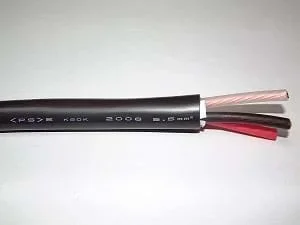 Students learn about conductors and insulators.Copyright 2007 Chatama, Wikimedia Commons http://commons.wikimedia.org/wiki/File:600V_CV_5.5sqmm.jpg
To choose the best materials for use in electrical applications, some engineers specialize in understanding the conducting and insulating characteristics of materials. To carry electricity through buildings, electrical engineers use copper wire. To keep people from being harmed, they incorporate rubber and plastics as insulators for objects used around electrical current. For example, electrical tools often have rubber handles and many wires have a plastic coating. Engineers have also design more complicated materials called semi-conductors. In certain conditions a semi-conductor behaves more like a conductor, while in other conditions it becomes more like an insulator.
After this activity, students should be able to:
- Define a conductor and an insulator in the flow of electrical energy.
- Give examples of conductors and insulators.
- Explain how engineers use conductors and insulators.
- 5.3.1.a Represent and interpret data.
Grade 5
Do you agree with this alignment?
- Show that electricity in circuits requires a complete loop through which current can pass
Grade 4
Do you agree with this alignment? - Describe the energy transformation that takes place in electrical circuits where light, heat, sound, and magnetic effects are produced
Grade 4
Do you agree with this alignment?
- CCSS.Math.Content.4.MD.B Represent and interpret data.
Grade 4
Do you agree with this alignment?
- The process of experimentation, which is common in science, can also be used to solve technological problems.
Grades 3-5
Do you agree with this alignment? - Energy comes in different forms.
Grades 3-5
Do you agree with this alignment?
- 4-PS3-2 Make observations to provide evidence that energy can be transferred from place to place by sound, light, heat, and electric currents.
Grade 4
This resource focuses on the following Three Dimensional Learning aspects of NGSS:
Science & Engineering Practices- Make observations to produce data to serve as the basis for evidence for an explanation of a phenomenon or test a design solution.Do you agree with this alignment?
Disciplinary Core Ideas- Energy can be moved from place to place by moving objects or through sound, light, or electric currents.Do you agree with this alignment?
- Energy is present whenever there are moving objects, sound, light, or heat. When objects collide, energy can be transferred from one object to another, thereby changing their motion. In such collisions, some energy is typically also transferred to the surrounding air; as a result, the air gets heated and sound is produced.Do you agree with this alignment?
- Light also transfers energy from place to place.Do you agree with this alignment?
- Energy can also be transferred from place to place by electric currents, which can then be used locally to produce motion, sound, heat, or light. The currents may have been produced to begin with by transforming the energy of motion into electrical energy.Do you agree with this alignment?
Crosscutting Concepts- Energy can be transferred in various ways and between objects.Do you agree with this alignment?
Do you agree with this alignment? - Make observations to produce data to serve as the basis for evidence for an explanation of a phenomenon or test a design solution.
- 5-PS1-3 Make observations and measurements to identify materials based on their properties.
Grade 5
This resource focuses on the following Three Dimensional Learning aspects of NGSS:
Science & Engineering Practices- Make observations and measurements to produce data to serve as the basis for evidence for an explanation of a phenomenon.Do you agree with this alignment?
Disciplinary Core Ideas- Measurements of a variety of properties can be used to identify materials. (Boundary: At this grade level, mass and weight are not distinguished, and no attempt is made to define the unseen particles or explain the atomic-scale mechanism of evaporation and condensation.)Do you agree with this alignment?
Crosscutting Concepts- Standard units are used to measure and describe physical quantities such as weight, time, temperature, and volume.Do you agree with this alignment?
Do you agree with this alignment? - Make observations and measurements to produce data to serve as the basis for evidence for an explanation of a phenomenon.
Each group needs:
- 1 battery (1.5 or 6 V)
- 1 light bulb in a light bulb holder; 1.5 or 6 V, to match the battery; available at Radio Shack or other electronics shops or websites
- (optional) 1 piece of wood, ~5 x 15 cm (2 x 6 inches), any thickness, on which to mount the light bulb holder for stability
- 1 meter (3 ft) of insulated copper wire in 30 cm (1 ft) sections), or 3 alligator clips
- 1 thick rubber band
- 2 large paper clips
- 2 pencils with eraser tips
- 2 clean-head, metal thumbtacks
- Conductivity Testing Worksheet (PDF), one per team
- an assortment of several objects to be tested as conductors or insulators, such as aluminum foil, paper, glass, copper, plastic, salt water, etc.
A basic understanding of a circuit.
What are some items that get really warm to the touch on a hot day? (Possible answers: Metals, dark-colored items.) Have you ever touched a metal spoon that had been sitting in a bowl of hot soup and found the spoon handle to be very hot? The metal spoon conducts heat from the hot soup through the spoon to the handle. Materials that conduct heat also may conduct electricity.
Have you ever heard of conductors or insulators? These are important vocabulary words when we are learning about how electrical current moves. A conductor is any item or material that provides a path for energy to flow. This means that electricity and electrical current can move freely around, in and through a conductor. A wire is a good example of a conductor of electrical energy. Wires connect appliances to electrical outlets in walls. Electrical current ( electrons) flows through the wires to make the appliances work. In an electric train or a light rail system, the tracks are actually the conductors of electricity. The electrical current flows through the tracks and runs the train. Another example of a conductor is an electric fence. People use an electric fence to keep animals in and strangers out of a yard. Electrical fences have a strong electrical current running through the wires that can really hurt the animal or person that touches it.
The opposite of a conductor is an insulator. An insulator is any item or material that does not let electricity or electrical current flow thought it. Insulators are important in keeping us safe from strong electrical current. Electrical engineers use a rubber glove, which is a good insulator, to protect themselves from any wires they touch. Glass, plastic, rubber and wood are good insulators that protect us from the hazardous electrical current running through a material or item that is a conductor. The plastic or rubber coatings on the wire for your keyboard, mouse or TV plug are examples of insulated wires. Insulators also keep two wires from touching each other or keep a person from touching the electricity in a wire.
Safety is the main reason to understand which materials are conductors of electrical current and which are insulators. For example, engineers who measure the electricity flowing through wires, panels or equipment must use the right insulator for testing equipment so they do not get shocked. Getting an electrical shock can be very dangerous. That is why we never stick a piece of metal (a good conductor) into a wall outlet. The amount of electrical current that would flow through the metal into your body can really hurt you! When designing electrical equipment, engineers keep in mind what parts of their equipment need to be insulated and what parts need to conduct electricity, so the electrical current flows in the right direction and the equipment works properly.
Do you remember what a circuit is? A circuit is the path through which electrical current flows. Electrical engineers use conductors to connect the elements in a circuit, such as a light bulb to a battery. Can you imagine a flashlight in which no electrical current flows from the battery to the light bulb? It would not light up, which would not be a useful flashlight when it is dark outside. Today, we are going to make a conductivity tester and then test many items to see if they are conductors or insulators. This will help us understand a little more about how electrical charge moves through a circuit and how much engineers need to know about electricity to keep us safe.
Before the Activity
- Gather materials and make copies of the Conductivity Testing Worksheet (PDF).
With the Students
- Ask the class if electrons flow through all materials the same? Discuss the difference between conductors and insulators.
- Divide the class into teams of three students each. Direct the teams to construct a conductivity tester (see Figure 1).
- Create the bulb assembly by placing a small 1.5V bulb in a bulb holder, which can be mounted on a piece of wood for stability.
- Place a paper clip at each end of the battery. Use the rubber band to hold the paper clips in place.
- Attach a wire to each paper clip, making sure that either the insulation is removed from each end of the wire touching the paper clip, or use alligator clips instead of the wire.
- Attach one wire from the battery terminal to the light bulb assembly.
- Attach a second wire to the other end of the battery.
- Attach the third wire from the open end of the light bulb assembly.
- Wrap the free ends of wire around two, clean-head, metal thumbtacks.
- Push the thumbtacks firmly into the erasers of the two pencils to create testing probes.
- Make sure the circuit works by pressing the two testing probes (thumbtacks) together. If the light bulb does not light up, the circuit was constructed incorrectly.
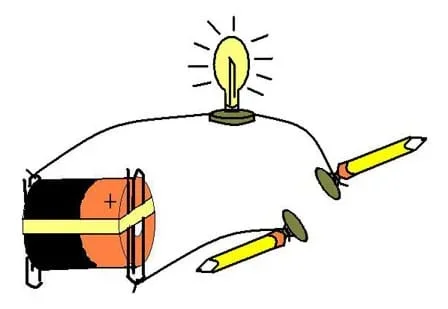 Figure 1. Conductivity tester setup.Copyright 2005 Malinda Schaefer Zarske, ITL Program, College of Engineering and Applied Science, University of Colorado Boulder
- To test an object, apply the two testing probes to opposite ends of each object. If the light bulb lights up, then the object is a conductor. If the bulb does not light up, then the object is an insulator. Hint: Make sure you do not touch the two testing probes together or the reading is invalid.
Explanation: In a conductor, electric current flows freely; in an insulator it cannot flow freely. "Conductor" implies that the outer electrons of the atoms in the material are loosely bound and free to move through the material. Most atoms hold on to their electrons tightly and are insulators.
- Have students complete the worksheet. After defining a conductor and an insulator, complete the chart by listing which test items are conductors and which are insulators (poor or non-conducting objects).
- Math extension: Cut two of the same-size circles out of two sheets of different color construction paper (cut at the same time so they are exactly the same size). Next, cut both circles (again, cut them together) into equal-sized, pie-shaped pieces, with the number of pieces being how many different items were tested. Have students create a new, mixed-color circle by using one color to represent the conductors they tested and another color to represent the insulators they tested. Write each test item name on its pie-shaped piece. The resulting mixed-color circle provides a way to visualize the percentage for each category, conductors vs. insulators.
- After testing is completed, have the student teams compare their results for which test objects were considered conductors and which were considered insulators. Have them look for patterns and hypothesize theories. For example: Most metals are good electrical conductors. Most non-metals are good insulators
- To conclude, ask students to think of everyday examples in which materials, like those they tested, are used as conductors and insulators. For example, plastic wall outlet covers, light switch covers, metal wires in plugs with plastic coatings, jumper cables with plastic handles and wire coatings, etc.
- circuit
- The path through which electrical current flows.
- conductor
- An object or material that allows the transfer of electrons (electricity).
- current
- The movement of electrons.
- electrical energy
- Energy produced through the movement of electrons (voltage x current).
- electron
- A very small, negatively charged particle.
- energy
- The ability to do work.
- insulator
- An object or material that inhibits the transfer of electrons (electricity).
- resistance
- An object or substance that prevents the passage of a steady electric current.
Pre-Activity Assessment
Discussion: Ask students to recall what they know about electricity. Have they ever received a small electric shock from an outlet or from another person? Have them list any instances where electricity can be dangerous to people.
Brainstorming: In small groups, have the students engage in open discussion. Remind them that no idea or suggestion is "silly." All ideas should be respectfully heard. Take an uncritical position, encourage wild ideas and discourage criticism of ideas. Ask students to think of examples of conductor and insulator materials. As a class, record all ideas on the board.
Activity Embedded Assessment
Worksheet / Teams Check: Have the student teams record their test results on the Conductivity Testing Worksheet (PDF). Review their answers (PDF) and results to gauge their mastery of the subject. After they finish the worksheet, have them compare answers with other student teams, giving all students time to finish the worksheet.
Ranking Tool: Have the students create a ranking tool for the items they have tested. Have them rank the items in order from most conductive to least conductive (best insulator).
Post-Activity Assessment
Concluding Discussion: After testing is completed and the explanation is given, have the student teams compare their results for which objects were considered conductors and which were considered insulators. Have them look for patterns and hypothesize theories. Ask the students to think of everyday examples in which materials, like those they tested, are used as conductors and insulators.
Safety Engineers: Tell students that they work for Totally Safe Engineering Company. Have them complete one of the following assignments:
- Compile a list of materials that are insulators or conductors found in the kitchen. Have them create a flyer for the local community that describes which of the items are safe to use around electrical appliances and which are not.
- Compile a list of materials that are insulators or conductors. Have them design a flyer that describes the use of conductors in electrical energy, where you would find them around the community, and how to keep yourself safe from electrical shock.
- Draw a picture of a household appliance, labeling the parts of the appliance that are conductors or insulators.
- Design a new bathroom appliance. How would they take electrical safety into consideration? What parts of the appliance would they design using materials that are conductors and which parts using materials that are insulators?
An alternative to this circuit-making activity is to have students test materials for their conducting and insulating properties using hot water instead of the battery, wires and bulb. Boil water and place non-conducting and conducting items in the pot in such a way that one of the ends of each item does not touch the hot water and is exposed to cool air. Have the students measure the temperature of the object before placing it in the pot with hot water, and then have them measure the temperature of the tip of the object that is exposed from the pot. A conductor should have a dramatic increase in temperature at the tip that is dry because the heat migrates easily from the end that is in hot water.
To add a math component, measure the amount of voltage moving through the conductor or insulator with a multimeter or voltmeter, and graph the results.
Have students bring in items from home and hypothesize about which would be conductors and insulators. Test the items using their conductivity testers.
For more advanced students, discuss how capacitors can store energy and their role in engineering technologies.
Have students explore the role of resistance in the large cables that carry electricity across the country (cables are made of an alloy of metals that combine strength with low resistance) or in the small thin wire filaments in a light bulb (electricity must push hard to get through the filament; this makes the filament so hot that it glows with a bright white light).
For younger students, it may help to have the conductivity testers already assembled. This activity is fun for younger students to discover what items are conductors or insulators.
Conductors and Insulators. Hyperphysics, Department of Physics and Astronomy, Georgia State University. Accessed September 28, 2005. hyperphysics.phy-astr.gsu.edu/hbase/electric/conins.html
Contributors
Sharon D. Perez-Suarez; Jeff Lyng; Malinda Schaefer Zarske; Denise W. Carlson
Supporting Program
Integrated Teaching and Learning Program, College of Engineering, University of Colorado Boulder
Acknowledgements
The contents of this digital library curriculum were developed under grants from the Fund for the Improvement of Postsecondary Education (FIPSE), U.S. Department of Education and National Science Foundation (GK-12 grant no. 0338326). However, these contents do not necessarily represent the policies of the Department of Education or National Science Foundation, and you should not assume endorsement by the federal government.
Copyright
2005 by Regents of the University of Colorado