
Counting Calories
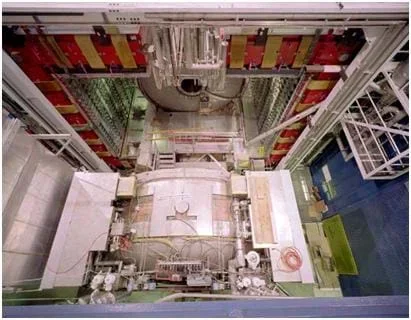 Figure 1. The DZero Liquid Argon Calorimeter is used to detect subatomic particles in complex quantum mechanical experiments.Copyright U.S. Department of Energy, Office of Science, Fermi National Accelerator Laboratory http://www.fnal.gov/pub/today/archive_2004/today04-01-29.html
The students discover the basics of heat transfer in this activity by constructing a constant pressure calorimeter to determine the heat of solution of potassium chloride in water. They first predict the amount of heat consumed by the reaction using analytical techniques. Then they calculate the specific heat of water using tabulated data, and use this information to predict the temperature change. Next, the students will design and build a calorimeter and then determine its specific heat. After determining the predicted heat lost to the device, students will test the heat of solution. The heat given off by the reaction can be calculated from the change in temperature of the water using an equation of heat transfer. They will compare this with the value they predicted with their calculations, and then finish by discussing the error and its sources, and identifying how to improve their design to minimize these errors.
Chemical engineers design and operate among other things large plants and processes that make usable products from chemicals, ranging from electrical power, food products, medicines, materials, fuels and refined chemicals. In order to safely and efficiently apply and control these processes, an engineer must know how much heat will be generated in a given reaction. If too much heat is generated, proteins denature, products burn or decompose, or a reactor might violently explode. If too little heat is generated, chemicals do not react, not enough energy is generated, or the wrong products are favored. Additionally, an engineer has to be aware of how the process equipment itself will affect the chemical process. By being able to predict how much heat will be produced in a reaction (as well as pressure), systems can be designed with specific tolerances in mind and reaction conditions maximized.
After this activity, students should be able to:
- Describe several basic principles of thermodynamics and heat transfer in action.
- Compare and contrast the differences between real-world application and on-paper analysis.
- HS.2.4.c.i Solve linear equations and inequalities in one variable, including equations with coefficients represented by letters.
Grades 9-12
Do you agree with this alignment?
- Use appropriate measurements, equations and graphs to gather, analyze, and interpret data on the quantity of energy in a system or an object
Grades 9-12
Do you agree with this alignment? - Use direct and indirect evidence to develop predictions of the types of energy associated with objects
Grades 9-12
Do you agree with this alignment? - Identify different energy forms, and calculate their amounts by measuring their defining characteristics
Grades 9-12
Do you agree with this alignment?
- CCSS.Math.Content.HSA-REI.A.2 Solve simple rational and radical equations in one variable, and give examples showing how extraneous solutions may arise.
Grades 9-12
Do you agree with this alignment? - CCSS.Math.Content.HSA-REI.B.3 Solve linear equations and inequalities in one variable, including equations with coefficients represented by letters.
Grades 9-12
Do you agree with this alignment?
- Energy cannot be created nor destroyed; however, it can be converted from one form to another.
Grades 9-12
Do you agree with this alignment? - Energy can be grouped into major forms: thermal, radiant, electrical, mechanical, chemical, nuclear, and others.
Grades 9-12
Do you agree with this alignment?
- HS-PS3-1 Create a computational model to calculate the change in the energy of one component in a system when the change in energy of the other component(s) and energy flows in and out of the system are known.
Grades 9-12
This resource focuses on the following Three Dimensional Learning aspects of NGSS:
Science & Engineering Practices- Create a computational model or simulation of a phenomenon, designed device, process, or system.Do you agree with this alignment?
Disciplinary Core Ideas- Energy is a quantitative property of a system that depends on the motion and interactions of matter and radiation within that system. That there is a single quantity called energy is due to the fact that a system's total energy is conserved, even as, within the system, energy is continually transferred from one object to another and between its various possible forms.Do you agree with this alignment?
- Conservation of energy means that the total change of energy in any system is always equal to the total energy transferred into or out of the system.Do you agree with this alignment?
- Energy cannot be created or destroyed, but it can be transported from one place to another and transferred between systems.Do you agree with this alignment?
- Mathematical expressions, which quantify how the stored energy in a system depends on its configuration (e.g. relative positions of charged particles, compression of a spring) and how kinetic energy depends on mass and speed, allow the concept of conservation of energy to be used to predict and describe system behavior.Do you agree with this alignment?
- The availability of energy limits what can occur in any system.Do you agree with this alignment?
Crosscutting Concepts- Science assumes the universe is a vast single system in which basic laws are consistent.Do you agree with this alignment?
- Models can be used to predict the behavior of a system, but these predictions have limited precision and reliability due to the assumptions and approximations inherent in models.Do you agree with this alignment?
Do you agree with this alignment? - Create a computational model or simulation of a phenomenon, designed device, process, or system.
For demonstration:
- 2 beakers
- KCl (potassium chloride) salt
- water
- a thin, lightweight piece of wood or 6-8 Popsicle® sticks
- thermometer
- stirring device (such as a Popsicle stick or coffee stirrer)
Each group should have:
- 2-3 Styrofoam® coffee cups
- paper cups
- cloth
- felt
- foam
- thermometer
- one stir rod
- water
- rubber bands
- tape
- paper
- any other materials that may be beneficial for a team's design
- Wait, What Just Happened? Worksheet (PDF), one per student
- Your Calorimeter and Your Lab Worksheet, (PDF) one per student
- Evaluation and Improvement Worksheet (PDF), one per student
To share with the entire class:
- scissors
- aluminum foil
- potassium chloride
- Wait, What Just Happened? Worksheet (doc)
- Wait, What Just Happened? Worksheet (pdf)
- Wait, What Just Happened? Worksheet – Answers (doc)
- Wait, What Just Happened? Worksheet – Answers (pdf)
- Your Calorimeter and Your Lab Worksheet (doc)
- Your Calorimeter and Your Lab Worksheet (pdf)
- Evaluation and Improvement Worksheet (doc)
- Evaluation and Improvement Worksheet (pdf)
- Evaluation and Improvement Worksheet – Answers (doc)
- Evaluation and Improvement Worksheet – Answers (pdf)
Algebra: Students need to know how to perform basic algebraic manipulation of equations and substitution techniques.
Chemistry: Students should be aware that chemicals interact in reactions that change the chemical and/or physical properties of a system. Also, students should have some experience with mole balances or stoichiometry (the math behind chemistry).
Physical Science: Students should be familiar with concept of energy, that it can be exchanged, and that it comes in different forms.
Do you ever wonder exactly how it is known how many calories are in a delicious bag of chips? Or how much energy is in a refreshing can of pop? What about chemical reactions like hydrogen and oxygen? It reacts so quickly, how can a scientist or engineer even begin to measure the energy released? How can we scale reactions for different sizes and amounts of the reactants? Many of you might be thinking "Well, they look it up of course!" Ultimately, the data had to come from somewhere. The answer to all these questions is calorimetry. If we react our item of interest in the presence of a substance with a known heat capacity, we can measure the temperature change of the known substance using a calorimeter. Oftentimes, this substance is water. We can then relate the temperature change to the amount of heat transferred using certain equations of heat transfer.
This activity demonstrates not only the heats of solution, but how we measure these values and certain problems we encounter in trying to do this accurately and inexpensively in real-world situations.
Background
[For teacher] The Styrofoam cups are good insulators (which is part why we use them for hot coffee). Provide several different materials and cups for the students, and let them decide what would best insulate their reaction. One of the better ways to use Styrofoam cups is to nest them in each other, creating a double layer of insulation. If possible, avoid air space above the water and below the nested cup. A cap is also important to prevent heat escaping into the air. Provide cloth and plastic for use as caps, in addition to regular coffee cup caps. Have students create some variations on this general theme based on their knowledge of calorimeters. More background is provided on the associated pre-worksheet, "Wait, What Just Happened? (PDF)"
Before the Activity
- Cool two beakers of 100mL of water to just about freezing.
- Gather materials.
With the Students
Part 1: Demo
Cool two beakers of water to just about freezing. Place enough Popsicle® sticks, or the thin piece of wood, on a flat surface, ensuring that the beaker fits on top of the wood/sticks. Pour some of the ice-cold water from the first beaker onto the wood/popsicle-sticks. Place the second beaker on top of the wood, making sure there is water between the wood and glass. In the second beaker, drop a few teaspoons of salt and stir well. Use a thermometer to measure the temperature as it drops below 0°C (or 32°F, the freezing point of water), even though no ice has formed inside the beaker. After a couple minutes of the beaker water being at a temperature below the freezing point of water, lift the beaker off the table. If the demo was successful, the wood should be frozen to the beaker. Ask students how much energy it might take to do this per mole of water. Tell them they need to design a way to measure how much heat is absorbed in dissolving this salt per gram of salt.
Part 2: Designing a Calorimeter
- After the demonstration, have the students read the Wait, What Just Happened? Worksheet (PDF). After they have finished reading the background information, the students should answer the worksheet questions. Next, discuss places where heat can be lost, such as the air, a table or even a calorimeter.
- Show the class the materials available to them for their calorimeter design.
- As a class, discuss some of the qualities of the different materials. How is a paper cup different than a foam cup? How is foil different than felt?
- Divide the students into groups of 2-3 and have them brainstorm ideas for what they think would be the most efficient calorimeter. Have each group design a calorimeter on paper, using the materials at their disposal.
- Check to make sure the devices are feasible. If they are not, direct students to keep thinking and designing. A feasible device should be able to hold water, and be made of something somewhat insulating. A cup should probably be used in the design. Ensure that each group includes access points for thermometer and stir device. Sign off on feasible designs. See Figure 2 for a sample calorimeter.
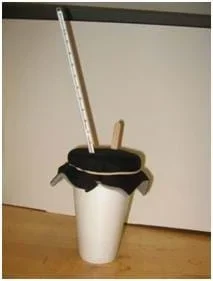 Figure 2. An example student-made calorimeter.Copyright 2008 James Prager, ITL Program, College of Engineering, University of Colorado at Boulder
 - Distribute supplies to each group.
- As groups complete their design, have them conduct a test to ensure the calorimeter will actually hold water and is more or less insulated. For example, have the students fill their calorimeter with hot water. If they can feel the warmth on the outside, then a design iteration (redesign) should be considered.
- After everyone has a satisfactory calorimeter, the students should begin to measure the heat of solution of KCl in water. The procedure is explained in the Your Calorimeter and Your Lab Worksheet (PDF).
- After the activity, the students should complete the Evaluation and Enhancement Worksheet.
- calorimeter
- A device designed to measure transferred energy, or heat.
- calorimetry
- The applied use of a calorimeter.
- heat
- Energy transferred between two systems as a result of a temperature difference.
- heat of solution
- The energy generated or consumed when dissolving one substance in another.
- constant pressure heat capacity
- (Cp) The amount of energy required to raise or lower a given amount of a substance by one unit temperature at a constant pressure.
- enthalpy
- A special value used in engineering to describe the amount of energy in a system including pressure and volume, relative to a reference state.
- adiabatic
- Does not conduct heat, Q=0. Impermeable to heat
- equilibrate
- To go to equilibrium; to come to a balanced, stable state.
Pre-Activity Assessment
Brainstorming: In small groups, have the students engage in open discussion. Remind students that no idea or suggestion is "silly." All ideas should be respectfully heard. Encourage wild ideas and discourage criticism of ideas. Before showing students the available supplies, have students begin to think about how to make a calorimeter the most effectively. Should they use a glass jar vs. a plastic container vs. a paper or foam cup. Give them time to come up with wild ideas as well as feasible ideas so that they begin to think like engineers.
Worksheet: Instruct the students to complete the Wait, What Just What Happened? Worksheet (PDF). Review their answers to gauge their mastery of the subject.
Activity Embedded Assessment
Your Calorimeter and You Worksheet: Have the students complete the Your Calorimeter and Your Lab Worksheet (PDF). Review their answers to gauge their mastery of the subject.
Post-Activity Assessment
Worksheet: Have the students complete the Evaluation and Improvement Worksheet (PDF). Review their answers to gauge their mastery of the subject.
Students should use gloves and goggles when using the salt. Remind the students not to eat the KCl, and not to rub it in their eyes.
The KCl may become lumped together in a large chunk and need to be broken up. To prevent this from happening over and over again, store it in an airtight container in a dry location.
If the calorimeter loses too much heat to surroundings, the temperature might not noticeably change. Try using more salt, ensuring that it is well mixed, and touch the calorimeter as little as possible. Your hands add heat to the system.
To add another real-world dimension to the activity, give each group a starting amount of fake money (for example, Thermodollars) and require them to "buy" each item. This puts some constraints on their designs, such as only being able to afford two cups and one piece of foil instead of three cups and unlimited foil.
- For lower grades, provide a standard plan for the calorimeter to test the same reaction.
- For upper grades, the students should talk to local college/university professors about getting the opportunity to work in the lab and use actual calorimeters for chemical reactions.
U.S. Department of Energy, Office of Science, Fermi National Accelerator Laboratory, January 29, 2004, accessed November15, 2009. http://www.fnal.gov/pub/today/archive_2004/today04-01-29.html
- Heat Transfer: From Hot to Not
- Counting Calories
- Hot Potato, Cool Foil
Contributors
James Prager; Megan Schroeder; Malinda Zarske; Janet Yowell
Supporting Program
Integrated Teaching and Learning Program, College of Engineering, University of Colorado Boulder
Acknowledgements
The contents of this digital library curriculum were developed under a grant from the Fund for the Improvement of Postsecondary Education (FIPSE), U.S. Department of Education and National Science Foundation GK-12 grant no. 0338326. However, these contents do not necessarily represent the policies of the Department of Education or National Science Foundation, and you should not assume endorsement by the federal government.
Copyright
2009 by Regents of the University of Colorado.