
Hot Potato, Cool Foil
 Figure 1. An artist's conception of the shuttle re-entering the atmosphere. Friction with the air causes the shuttle's outer surface to heat substantially.Copyright 2008 National Aeronautics and Space Administration http://www.nasa.gov/centers/ames/multimedia/images/2006/shuttlehistory.html
Students explore material properties by applying some basic principles of heat transfer. They use calorimeters to determine the specific heat of three substances: aluminum, copper and another of their choice. Each substance is cooled in a freezer and then placed in the calorimeter. The temperature change of the water and the substance are used in heat transfer equations to determine the specific heat of each substance. The students compare their calculated values with tabulated data.
All engineers must know the properties and tolerances of the materials they are using in a project, whether it be the reaction temperature in a chemical process, the strength of a composite material in airplanes, the steel in a bridge, or the temperature tolerances in an engine. In particular, NASA has to know the tolerances and properties of the materials engineers use to build space vehicles. The heat shield is a good example. Engineers have to be able to predict how much the heat shield will expand, how hot it will get, and how quickly it will wear down using the various material properties. Heat capacity is one of these important properties, and can be determined using basic knowledge of heat transfer.
After this activity, students should be able to:
- Explain that heat capacity is the amount of heat a quantity of a substance can absorb/release when changing by one unit temperature.
- Explain that material properties and tolerances are important in the design and construction of engineering projects in order to assure functionality and safety as well as exploit a substance's natural abilities to solve a problem.
- HS.1.2.a Reason quantitatively and use units to solve problems.
Grades 9-12
Do you agree with this alignment? - HS.2.4.c.i Solve linear equations and inequalities in one variable, including equations with coefficients represented by letters.
Grades 9-12
Do you agree with this alignment?
- Use appropriate measurements, equations and graphs to gather, analyze, and interpret data on the quantity of energy in a system or an object
Grades 9-12
Do you agree with this alignment? - Use direct and indirect evidence to develop predictions of the types of energy associated with objects
Grades 9-12
Do you agree with this alignment?
- CCSS.Math.Content.HSA-CED.A.4 Rearrange formulas to highlight a quantity of interest, using the same reasoning as in solving equations.
Grades 9-12
Do you agree with this alignment? - CCSS.Math.Content.HSA-REI.C.6 Solve systems of linear equations exactly and approximately (e.g., with graphs), focusing on pairs of linear equations in two variables.
Grades 9-12
Do you agree with this alignment?
- Materials have different qualities and may be classified as natural, synthetic, or mixed.
Grades 9-12
Do you agree with this alignment? - Energy can be grouped into major forms: thermal, radiant, electrical, mechanical, chemical, nuclear, and others.
Grades 9-12
Do you agree with this alignment?
- HS-PS3-1 Create a computational model to calculate the change in the energy of one component in a system when the change in energy of the other component(s) and energy flows in and out of the system are known.
Grades 9-12
This resource focuses on the following Three Dimensional Learning aspects of NGSS:
Science & Engineering Practices- Create a computational model or simulation of a phenomenon, designed device, process, or system.Do you agree with this alignment?
Disciplinary Core Ideas- Energy is a quantitative property of a system that depends on the motion and interactions of matter and radiation within that system. That there is a single quantity called energy is due to the fact that a system's total energy is conserved, even as, within the system, energy is continually transferred from one object to another and between its various possible forms.Do you agree with this alignment?
- Conservation of energy means that the total change of energy in any system is always equal to the total energy transferred into or out of the system.Do you agree with this alignment?
- Energy cannot be created or destroyed, but it can be transported from one place to another and transferred between systems.Do you agree with this alignment?
- Mathematical expressions, which quantify how the stored energy in a system depends on its configuration (e.g. relative positions of charged particles, compression of a spring) and how kinetic energy depends on mass and speed, allow the concept of conservation of energy to be used to predict and describe system behavior.Do you agree with this alignment?
- The availability of energy limits what can occur in any system.Do you agree with this alignment?
Crosscutting Concepts- Science assumes the universe is a vast single system in which basic laws are consistent.Do you agree with this alignment?
- Models can be used to predict the behavior of a system, but these predictions have limited precision and reliability due to the assumptions and approximations inherent in models.Do you agree with this alignment?
Do you agree with this alignment? - Create a computational model or simulation of a phenomenon, designed device, process, or system.
Each group needs:
- a calorimeter (Note: The associated Counting Calories activity provides instructions for students to build their own calorimeters.)
- a stir rod or Popsicle® stick
- thermometer
- 1 piece of aluminum, ~75g
- 1 piece of copper, ~75g
- an object of their choice (rubber, wood, rock, etc.), ~75g
- tongs, to hold the samples
- As Cold as Ice Worksheet (PDF), one per student
- To Heat or Not to Heat Worksheet (PDF), one per student
- Do You Have the Capacity? Worksheet (PDF), one per student
Each group should have access to:
- a freezer
- As Cold as Ice Worksheet (doc)
- As Cold as Ice Worksheet (pdf)
- To Heat or Not to Heat Worksheet (doc)
- To Heat or Not to Heat Worksheet (pdf)
- Do You Have the Capacity? Worksheet (doc)
- Do You Have the Capacity? Worksheet (pdf)
- Do You Have the Capacity? Worksheet – Answers (doc)
- Do You Have the Capacity? Worksheet – Answers (pdf)
Algebra: Students need to know how to perform basic algebraic manipulation of equations and substitution techniques.
Physical Science: Students should be familiar with the concept of energy, that it can be exchanged, and that it comes in different forms.
Different materials hold different amounts of heat. For example, think of a baked potato wrapped in aluminum foil freshly removed from an oven. Initially, both the potato and the foil are at the same temperature, the oven temperature. However, after several minutes exposed to the room temperature air, there is a large difference in temperature between the foil and the potato. The potato is still very hot, whereas the aluminum foil has already cooled to the ambient air temperature.
Why is this? Many factors contribute to this interesting phenomenon, but what we are interested in is the specific heat, or heat capacity. Heat capacity is the amount of energy a substance can absorb while increasing in temperature. Objects with a high heat capacity can absorb a lot of energy before getting hotter, while things with a low heat capacity only need a little energy before changing temperature. Since the aluminum has a lower heat capacity, it contains less energy and thus cools more quickly to room temperature. Our baked potato on the other hand has a higher heat capacity, and has a lot more energy to release before it cools down again.
Understanding this phenomenon is an important part of engineering. By understanding this and other material properties, engineers ensure the materials they are working with stay safe and are reliable. Aerospace and mechanical engineers need to know the amount of heat a material can absorb in a space vehicle or automobile in order to ensure it does not overheat and explode or disintegrate. Chemical and biological engineers need to know how much energy it will take to heat substances to an appropriate reaction temperature for ideal chemical or biological synthesis. Other engineers can use this information for everything from cooling systems in buildings to operating temperatures in circuits. Knowledge of heat capacity is obviously a very important connect for engineering.
Background
[For teachers] If students have already completed the Counting Calories activity, have them reuse their calorimeter for this activity. If you do not have manufactured calorimeters or if the students did not save their calorimeters from the Counting Calories activity, have students build their own calorimeters at this point. (Refer to the instructions in the Counting Calories activity or see below.)
Simple Calorimeter: With two Styrofoam® coffee cups, nest one into the other. Take a plastic lid for one of the coffee cups and cut two holes in the top approximately the diameter of a pen. These holes are for thermometer and stir rod access. If a glass stir rod is not available, use a Popsicle® stick. Make sure that the lid opens so that students can access the contents of their calorimeter.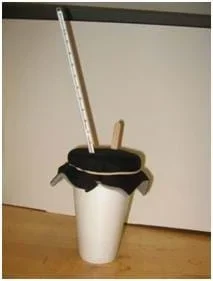 Figure 2. An example student-made calorimeter.Copyright 2008 James Prager, ITL Laboratory, College of Engineering, University of Colorado at Boulder
Before the Activity
- Have students weigh their material samples before putting them in the freezer.
- Make sure to put each group's three materials of interest into the freezer at least an hour in advance of the activity.
- Place a thermometer in the freezer to measure the freezer temperature.
- The students need to be able to transfer their sample quickly between the freezer and the calorimeter. Provide plenty of desk/counter space next to the freezer for students to conduct their experiments.
- Make enough copies of each worksheet so that each student gets their own.
[For students]
Calculations
To determine the heat capacity, we first must know some important equations. First, the heat (Q) is related to the change in temperature (T) by the heat capacity CP for a given number of moles (n). The equation we get is as follows: Q=nCP∆T
In this case, we want to use the heat, moles and temperature change of the water and the blocks to calculate CP .
With the Students
- Before the activity, have the students read the introduction on the As Cold as Ice Worksheet.
- As a class, discuss the questions on the Do You Have the Capacity? Worksheet. If necessary, guide the discussion towards the subject of heat capacity.
- If the students are building calorimeters, distribute the materials and demonstrate the construction. If not, then tell students to retrieve their calorimeters from the previous activity.
- The students should follow the instructions given on the As Cold as Ice Worksheet.
- The students will fill their calorimeter with 100ml of water and wait for it to equilibrate with its surroundings.
- The students will record the temperature of their water and the freezer temperature.
- Quickly, the students should use the tongs to transfer their samples from the freezer to their calorimeter. Instruct them to seal the calorimeter very quickly!
- The students will record the lowest temperature the thermometer reaches and do the calculations on their As Cold as Ice Worksheet.
- After the activity, give the students the To Heat or Not to Heat Worksheet to complete in their groups.
- heat
- Energy transferred between two systems as a result of a temperature difference.
- heat capacity
- The amount of energy transfer required to raise or lower a given amount of a substance by one unit temperature at a constant pressure.
- enthalpy
- A value which describes the amount of energy in a system including pressure and volume, relative to a reference state.
Pre-Activity Assessment
Accessing Prior Knowledge: Have the students complete the Do You Have the Capacity? Worksheet (PDF) to start them thinking about heat capacity. Review their answers to gauge their mastery of the subject.
Activity Embedded Assessment
Worksheet: Have the students follow along with the As Cold as Ice Worksheet (PDF). Review their answers to gauge their mastery of the subject.
Post-Activity Assessment
Reflection: Have the students complete the To Heat or Not to Heat Worksheet (PDF). On this worksheet, they calculate the accuracy of their calculations as well as suggest improvements for the next iteration of the design. Have them share their ideas with the class. Review their answers to gauge their mastery of the subject.
- If the calorimeters are empty, the thermometer will likely be heavy enough to tip the device over and possibly break the thermometer. Therefore, instruct student to not leave their thermometer in an empty calorimeter.
- Make sure to transfer the cold metals into the calorimeter quickly and instantly be prepared to record the temperature change. The heat exchange happens quickly and is easy to miss.
- Do not touch the cold sample with anything other than the tongs! This will instantly skew the results as heat from your fingers will transfer to the material. Use only the tongs to transfer the material object between the freezer and the calorimeter.
- It may be somewhat difficult to obtain the metal pieces. A local machine shop may have scrap aluminum or copper that they will provide free of charge or for a low cost. Failing that, hardware stores sell lengths of pipe; a piece in that form is suitable. Finally, if only a couple pieces of each material type can be found, then simply have groups share each piece of metal and take turns with them rotating through the steps.
Have students go online or to a library to learn more about heat capacity and specific heat. For example, find equations describing how heat capacity can be calculated for different temperatures or how it changes with temperature. Also, the students should report on why different substances hold more heat than others.
- For lower grades, do the activity as a demonstration for the entire class.
- For upper grades, do the activity as is.
Dino, Jonas, National Aeronautics and Space Administration, "25 Years of Space Shuttle History in Pictures," March 29, 2008, accessed December 2, 2009. http://www.nasa.gov/centers/ames/multimedia/images/2006/shuttlehistory.html
- Heat Transfer: From Hot to Not
- Counting Calories
- Hot Potato, Cool Foil
Contributors
James Prager; Megan Schroeder; Malinda Zarske; Janet Yowell
Supporting Program
Integrated Teaching and Learning Program, College of Engineering, University of Colorado Boulder
Acknowledgements
The contents of this digital library curriculum were developed under a grant from the Fund for the Improvement of Postsecondary Education (FIPSE), U.S. Department of Education and National Science Foundation GK-12 grant no. 0338326. However, these contents do not necessarily represent the policies of the Department of Education or National Science Foundation, and you should not assume endorsement by the federal government.
Copyright
2009 by Regents of the University of Colorado.