
Permeable Pavement
Students investigate how different riparian ground covers, such as grass or pavement, affect river flooding. They learn about permeable and impermeable materials through the measurement how much water is absorbed by several different household materials in a model river. Students use what they learn to make recommendations for engineers developing permeable pavement. Also, they consider several different limitations for design in the context of a small community.
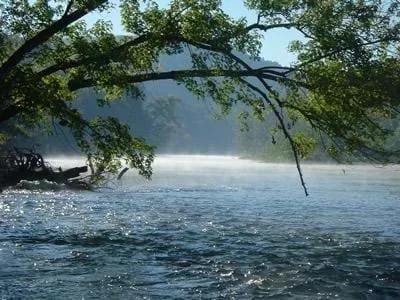 Students use a model river to test the permeability of several different common materialsCopyright State of Missouri http://www.mo.gov/mo/mophotos/lakes/LA_MorningontheCurrentRiver_McDaniel_102606.jpg
Engineers design buildings, roads and paved areas for people to use in cities. Sometimes the pavement affects the natural ecosystem of the area. For example, a city with a lot of impermeable surface area (pavement) can be more prone to flooding than one with permeable and semi-permeable surfaces (grassy areas, parks). Engineers continue to improve pavement materials for the safety of people and the environment and are now developing semi-permeable and permeable pavement that are both aesthetically pleasing as well as functional.
After this activity, students should be able to:
- Describe how the type of riparian area next to a river affects the river.
- Use a model river to test the permeability of several different common materials.
- List several things engineers consider when deciding what type of materials to use for pavement.
- Use evidence to model how water is transferred throughout the earth
Grade 6
Do you agree with this alignment? - Identify problems, and propose solutions related to water quality, circulation, and distribution – both locally and worldwide
Grade 6
Do you agree with this alignment?
- Students will develop an understanding of the attributes of design.
Grades K-12
Do you agree with this alignment? - Students will develop an understanding of engineering design.
Grades K-12
Do you agree with this alignment?
- MS-ETS1-1 Define the criteria and constraints of a design problem with sufficient precision to ensure a successful solution, taking into account relevant scientific principles and potential impacts on people and the natural environment that may limit possible solutions.
Grades 6-8
This resource focuses on the following Three Dimensional Learning aspects of NGSS:
Science & Engineering Practices- Define a design problem that can be solved through the development of an object, tool, process or system and includes multiple criteria and constraints, including scientific knowledge that may limit possible solutions.Do you agree with this alignment?
Disciplinary Core Ideas- The more precisely a design task's criteria and constraints can be defined, the more likely it is that the designed solution will be successful. Specification of constraints includes consideration of scientific principles and other relevant knowledge that is likely to limit possible solutions.Do you agree with this alignment?
Crosscutting Concepts- The uses of technologies and any limitations on their use are driven by individual or societal needs, desires, and values; by the findings of scientific research; and by differences in such factors as climate, natural resources, and economic conditions.Do you agree with this alignment?
- All human activity draws on natural resources and has both short and long-term consequences, positive as well as negative, for the health of people and the natural environment.Do you agree with this alignment?
Do you agree with this alignment? - Define a design problem that can be solved through the development of an object, tool, process or system and includes multiple criteria and constraints, including scientific knowledge that may limit possible solutions.
- MS-ETS1-3 Analyze data from tests to determine similarities and differences among several design solutions to identify the best characteristics of each that can be combined into a new solution to better meet the criteria for success.
Grades 6-8
This resource focuses on the following Three Dimensional Learning aspects of NGSS:
Science & Engineering Practices- Analyze and interpret data to determine similarities and differences in findings.Do you agree with this alignment?
Disciplinary Core Ideas- There are systematic processes for evaluating solutions with respect to how well they meet the criteria and constraints of a problem.Do you agree with this alignment?
- Sometimes parts of different solutions can be combined to create a solution that is better than any of its predecessors.Do you agree with this alignment?
- Although one design may not perform the best across all tests, identifying the characteristics of the design that performed the best in each test can provide useful information for the redesign process—that is, some of the characteristics may be incorporated into the new design.Do you agree with this alignment?
Do you agree with this alignment? - Analyze and interpret data to determine similarities and differences in findings.
Each group needs:
- model clay river (prepared in advance by teacher using a thin aluminum baking pan, modeling clay and scissors)
- large plastic tub (large enough to fit an aluminum baking pan)
- paper towels
- sponges
- cotton balls
- plastic cup
- permanent marker
- worksheets
To share with the entire class:
- water
Let's talk about rivers. A river is a part of land that has water flowing in it at least some part of the year. What else do we already know about rivers? (Make a list of student answers on the board or overhead projector.)
A river is also an ecosystem, or a community of organisms and their environment. Did you know that a river ecosystem is made of more than just what is in the river water? Besides the plants, fish and bugs that live in the water, many plants, animals and insects live in the riparian area of the river, the land along the sides of a river, and depend upon the water and nutrients provided by the river. Who can tell me some of the things that they see in the riparian area of rivers around here? (Possible answers: Trees, plants, bushes, mud, rocks, logs, sidewalks, bike paths, parking lots, etc.)
Now, let's think about the differences between rivers that have trees and plants along their riparian area compared to those that have sidewalks and parking lots. Have you ever seen a river after a huge storm? What does the riparian area look like then? That's right – it can be covered with water, be very muddy or even look just the same as it did before. It depends on what exists along the river as to how it will look after a storm. The natural surfaces, such as grass, earth or sand can absorb some of the rainwater. We call these areas permeable, which means that the ground can absorb water like a sponge or a paper towel. How about pavement? Can pavement absorb water like a sponge? Not exactly, so we call the paved areas impermeable, or not able to absorb water. Rainwater usually runs off areas that are impermeable into areas that are permeable, like grass or a river, or into a drain or sewer. If no place exists for the water to run, then it forms a puddle and sits there until it dries up or evaporates.
Sometimes, it can rain long enough on a riparian area that it causes a river to flood, or flow over the riparian area. This can happen even faster in a riparian area that is paved, or impermeable. Why? (Answer: Because an impermeable riparian area does not absorb any of the rainwater, it becomes water logged or even flooded.) When a river floods, this can be dangerous to the plants, animals, buildings and people in the riparian area. Engineers care about the health and safety of people and the environment, so they design ways to keep rivers from flooding. One way that engineers reduce river flooding in cities and paved areas is by creating permeable pavement — or pavement that can absorb some of the rainwater, so less of it flows into the river or forms large, hazardous puddles. This type of pavement enables people to use the riparian areas the way they want without causing flood damage from water that cannot be absorbed by the ground. Today, we are going to act like engineers and see how different materials behave in absorbing water as permeable pavement. Which materials might you recommend be used by engineers who are designing new pavement?
Lesson Background & Concepts for Teachers
When introducing the vocabulary you might liken the difference between permeable and impermeable to the difference between possible and impossible. They are opposites. Semi-permeable can be related to permeable by drawing a semi-circle and showing how it is half of a circle. So, semi-permeable is similar to being "half-permeable." Encourage student use of the vocabulary. Examples of permeable riparian areas are wetlands and forests where the soil has not been compacted (compressed). Semi-permeable soil examples include sodded areas (lawns, playing fields) and farms where the soil has been compacted, but can still absorb some water. Impermeable riparian areas are paved areas with sidewalks, roads and retaining walls.
Before the Activity
- Gather materials.
- Draw a line on each plastic cup within an inch of the top.
- Make model rivers, one per student team. (Note: You can use these same model rivers to conduct the associated Floodplain Modeling activity.) Follow these instructions:
- Step 1: Use the aluminum baking pan as the base for the riverbed and floodplain. To allow water to flow out of it, cut off one end of the baking pan, or cut two corners and fold the end flap under (see Figure 1).
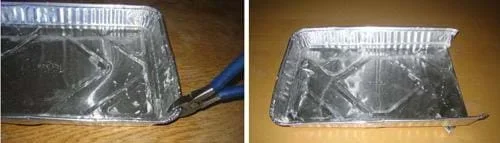 Figure 1. Preparation of the river basin.Copyright 2006 Tim Nicklas, ITL Program, College of Engineering, University of Colorado at Boulder.
- Step 2: Pat modeling clay into the baking pan to a depth of ~1 cm (see Figure 2).
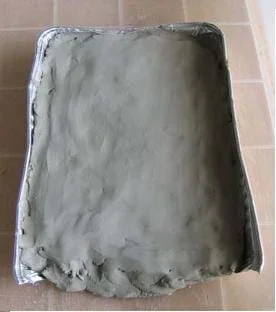 Figure 2. Baking pan packed with clay.Copyright 2006 Tim Nicklas, ITL Program, College of Engineering, University of Colorado at Boulder.
- Step 3: Create a river in the bed of clay using a finger (see Figure 3). Make sure your river "runs" into the cut-off end of the clay bed. If time allows, have students design their own river models. Monitor their work so the clay beds drain as intended.
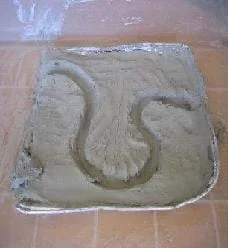 Figure 3. A model river made from a modified pan and modeling clay.Copyright 2006 Tim Nicklas, ITL Program, College of Engineering, University of Colorado at Boulder.
With the Students
- Divide the class into groups of four students each. Assign each student a job: filler, pourer, measurer and materials placer.
- Review instructions with the students. It may be helpful to model steps 4-6 with the class to help students understand the activity.
- Ask students to vote as a class on which material they think will be the best at absorbing water: paper towel, cotton or sponge.
- Pass out materials and have the students put the model river into the plastic tub.
- At the sink or another water source, have the filler fill the cup to the line.
- Next, have the pourer pour the water onto the model river. Remind students that it does not rain just over the river, but everywhere on the landscape.
- Have the measurer remove the model river from the plastic tub and carefully pour the water from the plastic tub back into the cup (the water level should be about the same, to the line on the cup). The measurer should record his/her observations on the team's worksheet.
- Have the filler refill the cup to the original level.
- Then, have the material placer put a paper towel in the riparian area (along the side of the river).
- Again, have the pourer pour water all over the model river.
- Have the measurer remove the model river with the wet paper towel and pour the remaining water back into the plastic cup. Have the student draw a line at the water level with the marker and label it "towel." (Expect a noticeable difference between the beginning and ending water levels). The measurer should record his/her observations on the team's worksheet.
- Have the material placer throw away the paper towel.
- Have students repeat steps 7 through 11 using the cotton balls and labeling the cup with the new line for "cotton." (Expect a difference between the original level and the water level after the cotton). The measurer should record his/her observations on the team's worksheet.
- Have students repeat steps 7 through 11 using the sponges and labeling the cup with the new line for "sponge." (Expect a significant difference between the original level and the water level after the sponges). The measurer should record his/her observations on the team's worksheet.
- If time allows, have students repeat steps 7 through 11 using the already wet sponges and labeling the cup with the new line for "wet sponge." The measurer should record his/her observations on the team's worksheet.
- Have student teams look at their observations on their worksheets. Which material worked best at absorbing the water? Have them write sentences about which material they would recommend be used when creating permeable pavement.
- Discuss the results and findings as a class.
See Introduction/Motivation section
- impermeable
- A material that cannot absorb water.
- permeable
- A material that can absorb water.
- riparian area
- The land along the sides of a river.
- river
- A landform that has flowing water in it at least some of the year.
- semi-permeable
- A material that can absorb some water, but not as much as a permeable surface.
Pre-Activity Assessment
Opening Discussion: As a class, have the students engage in open discussion. Remind students that all ideas should be respectfully heard. Have them raise their hands to respond. Write their ideas on the board. Ask the students:
- What do we know about rivers?
Activity Embedded Assessment
Worksheet: Have students record their observations on the activity worksheet; review their answers to gauge their mastery of the subject.
Post-Activity Assessment
Engineering Constraints: Have students think about the materials they just used to absorb water. Which did they recommend that engineers use in creating permeable pavement? Well, different materials cost different amounts. Now tell the students that the sponges are very expensive, the cotton balls are moderately expensive, and the paper towels are the least expensive material. Would that change their recommendation to the engineers? What if the community needed a lot of area of pavement around a very big river, would that change their recommendation? How about if a very poor community needed permeable pavement? Would the cost affect the students' recommendation? How would the pavement material affect the ecosystem of the river? These are the sorts of factors that engineers must think about when designing something for a community. Engineers call these things constraints.
Engineering Optimization: Have students design a custom pavement for a small community that has a river running through the middle of it using the attached Community Engineering Post-Assessment Worksheet. The community would like a sidewalk alongside their river for the people to run, bike and walk their children (and pets) on nice days. However, the community has a limited budget for materials and maintenance. Also, the community knows that the riparian area needs to absorb at least 1/3 of the water from a storm to prevent a flood. Students can use a combination of different riparian covers materials in their design. For example, the students could design an area with some impermeable, semi-permeable and permeable surfaces (where they cost different amounts) to achieve the goal. Have students compare and contrast possible solutions for this design. Have them draw sketches of their designs.
Make sure the paper towels are thick enough to absorb a noticeable amount of water.
Combinations: Suggest that students use a combination of different riparian covers on their river models. For instance, require that they must absorb at least 1/3 of the water from a storm using the least amount of resources. The students could design an area using a combination of paper towels, cotton and sponges to see how much water they can absorb. Have students sketch their designs. If time allows, have students try out their new combination designs
Concept Juggle: Have students stand in a circle and toss a ball to each other. Each time they toss the ball, have them name a type of permeable surface. One round can be "name a permeable surface," the next round can be "name an impermeable surface," or "a cause or effect of changing the type of riparian area," and so on.
- For lower grades, conduct this activity with less emphasis on vocabulary.
- For upper grades, have the students use a graduated cylinder to measure the water volume remaining after each material test. Have them record these measurements on the worksheet alongside their observations. Also, assign each material a cost. Have students make their recommendations based on cost as well as volume.
- Raging Rivers
- Floodplain Modeling
- Permeable Pavement
Contributors
Kaelin Cawley; Tim Nicklas; Malinda Schaefer Zarske; Janet Yowell
Supporting Program
Integrated Teaching and Learning Program, College of Engineering, University of Colorado Boulder
Acknowledgements
The contents of these digital library curricula were developed by the Integrated Teaching and Learning Program under National Science Foundation GK-12 grant no. 0338326. However, these contents do not necessarily represent the policies of the National Science Foundation, and you should not assume endorsement by the federal government.
Copyright
2008 by Regents of the University of Colorado.