
Frictional Force in Hockey: The Puck Stops Here
After learning about the concept of transfer of energy, specifically the loss of kinetic energy to friction, students get a chance to test friction. Student groups are each given a wooden block and different fabrics and weights and challenged to design the "best" puck. First the class defines what makes the "best" puck. They come to realize that the most desirable puck is the one that travels the farthest, thus the puck with the least amount of friction. In the context of hockey, the "best" puck is the one that travels farthest and loses the least kinetic energy to friction. Students then apply their knowledge of friction—the energy transfer from kinetic to heat energy—to design new, optimal pucks for the National Hockey League.
 Students examine the loss of kinetic energy to friction in hockey pucksCopyright http://cdn.foodbeast.com.s3.amazonaws.com/content/wp-content/uploads/2013/01/hockey-puck.jpg
Engineers design the optimal equipment for all sorts of sports. Students act as engineers working for the NHL to design new hockey pucks. This problem can be solved with their knowledge of friction and understanding of the problem at hand. Like mechanical and materials engineers, groups must analyze their resources to design the optimal design challenge solution.
After this activity, students should be able to:
- Identify the frictional force and how it acts to slow an object in motion.
- Explain the conservation of energy both when friction is present and when it is limited by the hover pucks.
- Explain the concept of inertia and how it relates to a puck sliding on the floor.
- Explain that friction slows down motion, because of the transfer of kinetic to heat energy.
- Explain why an engineer must understand friction when designing a hockey puck.
- CCSS.Math.Content.6.SP.B.5c Giving quantitative measures of center (median and/or mean) and variability (interquartile range and/or mean absolute deviation), as well as describing any overall pattern and any striking deviations from the overall pattern with reference to the context in which the data were gathered.
Grade 6
Do you agree with this alignment? - CCSS.Math.Practice.MP2 Reason abstractly and quantitatively.
Grades K-12
Do you agree with this alignment?
- Energy is the capacity to do work.
Grades 6-8
Do you agree with this alignment? - Energy can be used to do work, using many processes.
Grades 6-8
Do you agree with this alignment? - STEL-7Q Apply the technology and engineering design process.
Grades 6-8
Do you agree with this alignment?
- MS-ETS1-4 Develop a model to generate data for iterative testing and modification of a proposed object, tool, or process such that an optimal design can be achieved.
Grades 6-8
This resource focuses on the following Three Dimensional Learning aspects of NGSS:
Science & Engineering Practices- Develop a model to generate data to test ideas about designed systems, including those representing inputs and outputs.Do you agree with this alignment?
- Conduct an investigation and evaluate the experimental design to produce data to serve as the basis for evidence that can meet the goals of the investigation.Do you agree with this alignment?
Disciplinary Core Ideas- Models of all kinds are important for testing solutions.Do you agree with this alignment?
- The iterative process of testing the most promising solutions and modifying what is proposed on the basis of the test results leads to greater refinement and ultimately to an optimal solution.Do you agree with this alignment?
Crosscutting Concepts- Models can be used to represent systems and their interactions.Do you agree with this alignment?
Do you agree with this alignment? - Develop a model to generate data to test ideas about designed systems, including those representing inputs and outputs.
- MS-PS3-5 Construct, use, and present arguments to support the claim that when the kinetic energy of an object changes, energy is transferred to or from the object.
Grades 6-8
This resource focuses on the following Three Dimensional Learning aspects of NGSS:
Science & Engineering Practices- Science knowledge is based upon logical and conceptual connections between evidence and explanations.Do you agree with this alignment?
- Develop a model to predict and/or describe phenomena.Do you agree with this alignment?
Disciplinary Core Ideas- When the motion energy of an object changes, there is inevitably some other change in energy at the same time.Do you agree with this alignment?
Crosscutting Concepts- Energy may take different forms (e.g. energy in fields, thermal energy, energy of motion).Do you agree with this alignment?
Do you agree with this alignment? - Science knowledge is based upon logical and conceptual connections between evidence and explanations.
- CCSS.Math.Content.6.SP.B.5c Giving quantitative measures of center (median and/or mean) and variability (interquartile range and/or mean absolute deviation), as well as describing any overall pattern and any striking deviations from the overall pattern with reference to the context in which the data were gathered.
Grade 6
Do you agree with this alignment? - CCSS.Math.Practice.MP2 Reason abstractly and quantitatively.
Grades K-12
Do you agree with this alignment?
- 7.P.1 Understand motion, the effects of forces on motion and the graphical representations of motion.
Grade 7
Do you agree with this alignment? - 7.P.1.2 Explain the effects of balanced and unbalanced forces acting on an object (including friction, gravity and magnets).
Grade 7
Do you agree with this alignment?
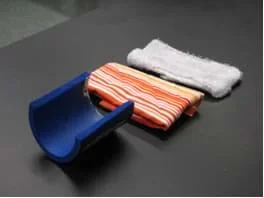 Figure 2. Example fabric materials.Copyright 2007 Engineering K-PhD Program, Duke University
Each group needs:
- 1 container, reusable plastic containers or Tupperware works well, see Figures 8 through 10 for an example.
- 5 100-gram weights, such as weights that are typically used with science balances found in the classroom
- 10 cm x 10 cm squares of fabric of different materials such as wool, silk, flannel, jersey t-shirt material, etc. Easy examples include socks, bandanas and foam drink holders that can be folded or cut up, see Figure 2.
- duct tape
To share with the entire class:
- measuring tape or meter sticks
- testing device made of hammer and string (see Figures 3 -7)
Students should be able to collect data, create a stem and leaf plot, and calculate the mean, median and mode.
Watch this demonstration. (Hit a stationary block on the floor with a meter stick to simulate hockey.) Did you see any energy being transferred?
You might not be able to see it, but energy IS being transferred. Before we start to look at the transfer of this energy, what do you think energy is? (Expect students to be able to name some examples of energy, such as food for animals and sun for plants.)
Energy is the ability to do work. For example, if you do not eat for a long time, you get tired and it gets hard to move and think and finish your homework. If I did not have food in my body, I would not have had the energy to hit the block. As we were discussing earlier, many different kinds of energy exist in our world. When we talk about the transfer of energy, we need to understand potential energy, kinetic energy and thermal energy. Energy is never lost; it transfers from one object to the next and from one type to another.
Potential energy is the energy you get from position. Has anyone been told they have potential? (Expect students to be able to explain that potential is the power or ability to do something.) For example, if you are standing on the ground and holding a ball, it does not have that much potential energy, because it is not that high. But if you were standing on the tenth floor, the ball would have a high potential energy, because if you were to drop it, it would have a long way to go down. So when I lifted the stick, I gave it potential energy.
If we take it step by step, we can track the energy as it flows. If I drop the ball, it starts falling and moving. When the ball is dropped, the potential energy becomes kinetic energy. Kinetic is a word used to talk about motion. In the other example, first I lifted the meter stick, which gave it potential energy. Now that my stick has potential energy, if I let it go, it will start moving. When an object moves, it has kinetic energy. The faster it goes, the higher its kinetic energy is. A hockey player makes the stick move faster, giving it even more kinetic energy by applying a force in addition to gravity. This energy is transferred when it hits the block. Now explain to me what has happened with the energy so far. (Expect students to explain understanding of potential and kinetic energy and how it has transferred.)
Now the block has been hit – it has energy too. And since it is moving, it is kinetic energy. And if I do it again (hit the block again), can you notice if it is getting faster or slower? It looks to me like it is slowing down. So you could say it is losing its kinetic energy. But where is that energy going? If we think about it, what is the only thing that the block is touching? You're right; the floor is where the energy is transferred. And what kind of energy is this? Well, it cannot be potential or kinetic, because the floor cannot move. But something is moving on top of the floor. Let's try this ourselves. Rub your hands quickly on your legs. Do you feel it getting hotter? That is what happens to the floor, the block is rubbing on it. And even though you probably cannot feel it, the floor is getting hotter. This kind of energy is called thermal energy, which makes sense, because thermal is an adjective to describe temperature. Some scientists also call it heat energy, but it means the same thing. And you might have heard thermal energy talked about as friction. Friction is the loss of kinetic energy into thermal energy, which is why the block slows down.
So let's think about this—can you relate this to hockey? The players each have a hockey stick and they want to hit the puck into the goal. But I have just been told that engineers are trying to design a hockey game to play inside where there is no ice. And this means that they need to come up with new pucks. So this is our engineering design challenge—to design the "best" puck.
Background
The main motivation behind this activity is to provide a hands-on example of the conservation of energy. Energy cannot be destroyed, it can only be transferred from one system to another or change energy type. Three types of energy are discussed: kinetic, potential and thermal, which are related to velocity, position (height in most instances) and heat, respectively. Thermal energy is also referred to as heat energy.
Friction causes kinetic energy to transfer into thermal energy—as the kinetic energy decreases, so does velocity. The equations for kinetic and potential energy are not required for this activity.
Create a Hockey Puck Testing Device
 Figure 3. Example puck testing device.Copyright 2007 Engineering K-PhD Program, Duke University
Create a puck testing device for all groups to use. The goal of the testing device is to ensure the hammer delivers approximately the same impact to each of the experimental pucks. An example of a testing device is shown in Figure 3. In the picture, a hammer is suspended from a rod using duct tape and a string loop, and the rod is suspended between two chairs. Make this testing device by following these steps. Note that Figures 3 through 7 are also provided as higher resolution attachments (see Attachments section).
- Take a loop or two of string and attach it to both sides of a hammer handle, as shown in Figure 4.
 Figure 4. Attach a string loop to a hammer.Copyright 2007 Engineering K-PhD Program, Duke University
 - Through the loop, insert a rod long enough to span the distance between two chairs and rest it on two chair seats, as shown in Figure 5. For the rod, use a wooden dowel, a strong yardstick, a small pipe or even a long screwdriver.
 Figure 5. Suspend the hammer so it swings freely between two chairs.Copyright 2007 Engineering K-PhD Program, Duke University
 - Use duct tape to secure the rod to the chair seats. Verify that the hammer swings on the rod without any rod movement.
- Move the chairs (and entire setup) to a place in the classroom near a wall in order to limit the distance the hammer may be pulled back prior to release, as shown in Figures 5 and 6. This way, the amount of initial potential energy from lifting the hammer is consistent between tests.
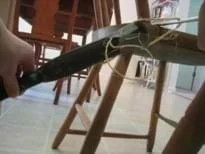 Figure 6. Place the setup near a wall for consistent energy application.Copyright 2007 Engineering K-PhD Program, Duke University
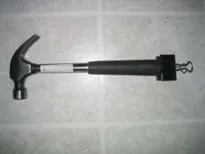 Figure 7. Alternate way to hook a hammer to a rod.Copyright 2007 Engineering K-PhD Program, Duke University
That's it. Your testing device may look somewhat different, depending on what you have available in the classroom. For example you could use a large binder clip instead of a string loop on the hammer, as shown in Figure 7.
Before the Activity
- Make sure a strip of floor is clean and smooth.
- Cut the fabric pieces to match the face of the container.
With the Students
- Divide the class into groups of three students each.
- Give each group a container, a set of weights, pieces of each type of fabric and duct tape.
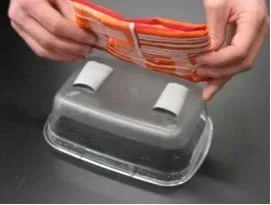 Figure 8. How to attach test fabric to the container.Copyright 2007 Engineering K-PhD Program, Duke University
 - Direct students to use duct tape rolls to attach the fabric and weights to the container, which represents the shell of the hockey puck (see Figures 8 and 9).
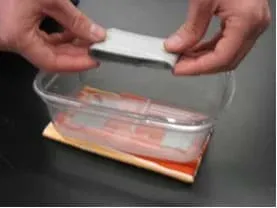 Figure 9. How to attach weights to the inside of the container using a roll of duct tape.Copyright 2007 Engineering K-PhD Program, Duke University
 - In the end, the student-designed hockey pucks may look something like Figure 10. Give the class 10-15 minutes to test different options. In this part of the activity, groups are not be allowed to test their designs using the testing device.
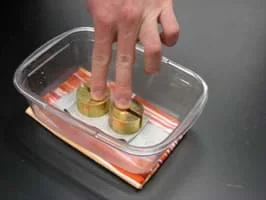 Figure 10. Example completed student-designed puck.Copyright 2007 Engineering K-PhD Program, Duke University
 - After time is up, and most groups are ready to test their design, gather the class to test each group's puck.
- As a class, record each result.
- Divide the class into their groups again and ask them to "analyze" their data. Expect each group to be able to put the data into a stem and leaf plot, and find the basic statistics of the data set: mean, median and mode.
- As a class, ask each group what they would do differently if they were given another trial.
- conservation of energy
- The total amount of energy in an isolated system remains constant although it may change form.
- friction
- A force that resists motion when two surfaces are in contact.
- kinetic energy
- The energy an object possesses due to its motion.
- potential energy
- The energy an object possesses due to its position.
- optimal
- Best suited for the situation.
Activity Embedded Assessment: Observe students during the activity and ask yourself: Is each group able to identify the problem? Do students realize that to get the "best" puck, they must design a block with the least friction so it travels as far as possible?
Post-Activity Assessment: In their science journals, have students write which puck modifications worked the best, and why they think those designs were the best. Stress that students should tie their conclusions to the concepts of friction and energy transformation. Secondly, have students apply the transfer of energy to another sport. [Possible Answer: In baseball, the batter holds the bat over his shoulder which gives it potential energy, when he swings, the kinetic energy from the motion of the swing transfers into the ball giving kinetic energy because it moves, and potential energy if it travels any higher. The ball eventually drops to the ground because of gravity and friction with air, called drag.]
Make sure to keep the hammer testing device away from unattended students.
The floor must be a smooth surface; the activity will not work on carpet or concrete.
Be sure to have at least one kind of fabric that does not have too much friction with the floor.
Conduct a class shuffleboard game competition by placing lines with masking tape on the floor. On each side of a 5-meter "court," place three lines of masking tape on the floor separated by half a meter. Have teams sit on each side of the court and try to slide their pucks into the opposing teams' scoring zones. Award 1 point for landing the puck between the middle line and the close line, and 3 points for landing the puck between the far line and the middle line. The first team to reach 10 points wins.
- For lower grades, only use one variable; keep the weight constant and only change the fabric.
- For upper grades, have the class design a way to start the pucks at the same speed (for example using a spring instead of a hammer). Introduce more variables such as surface area and the speed at which the system is started. For example, drop the hammer from different heights to investigate the transfer of potential to kinetic energy.
- Imagine Life without Friction in Hockey
- Frictional Force in Hockey: The Puck Stops Here
Contributors
Anne Vanderschueren; Greg Larkin
Supporting Program
Engineering K-PhD Program, Pratt School of Engineering, Duke University
Acknowledgements
This content was developed by the MUSIC (Math Understanding through Science Integrated with Curriculum) Program in the Pratt School of Engineering at Duke University under National Science Foundation GK-12 grant no. DGE 0338262. However, these contents do not necessarily represent the policies of the NSF, and you should not assume endorsement by the federal government.
Copyright
2013 by Regents of the University of Colorado; original © 2007 Duke University