
Artificial Heart Design Challenge
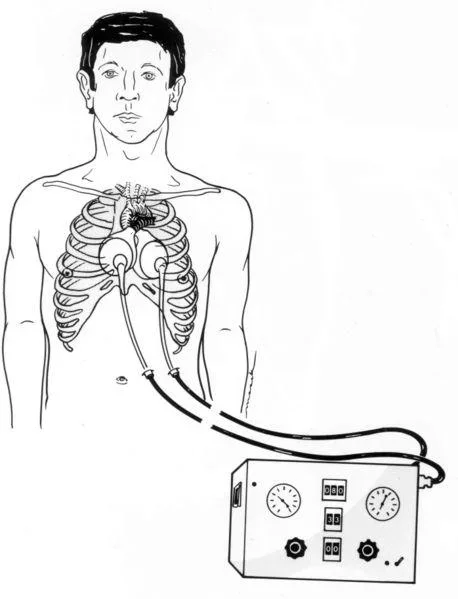 Students are tasked in creating artifical heartsCopyright National Institutes of Health http://en.wikipedia.org/wiki/File:Jarvik-7_Artificial_Heart_Image_3559-OT.jpg
Students are presented with a hypothetical scenario in which they are biomedical engineers asked to design artificial hearts. Using the engineering design process as a guide, the challenge is established and students brainstorm to list everything they might need to know about the heart in order to create a complete mechanical replacement (size, how it functions, path of blood etc.). They conduct research to learn the information and organize it through various activities. They research artificial heart models that have already been used and rate their performance in clinical trials. Finally, they analyze the data to identify the artificial heart features and properties they think work best and document their findings in essay form.
The engineering design process is a proven approach to research, design, model and create viable new ideas. Biomedical engineering is a growing research field that merges engineering with the medical field to create new devices, procedures and medicines that enhance or extend human quality of life.
After this activity, students should be able to:
- Trace the path of blood through the human heart.
- Describe the general size, location and function of the heart, and compare that to artificial heart models.
- Discuss their opinions of how the invention of the artificial heart impacts society.
- Describe the engineering design process and give an example of each step of the process.
- Students will develop an understanding of the attributes of design.
Grades K-12
Do you agree with this alignment? - Students will develop an understanding of engineering design.
Grades K-12
Do you agree with this alignment? - Students will develop abilities to apply the design process.
Grades K-12
Do you agree with this alignment? - Technological problems must be researched before they can be solved.
Grades 9-12
Do you agree with this alignment? - STEL-1Q Conduct research to inform intentional inventions and innovations that address specific needs and wants.
Grades 9-12
Do you agree with this alignment? - STEL-7AA Illustrate principles, elements, and factors of design.
Grades 9-12
Do you agree with this alignment?
- HS-ETS1-2 Design a solution to a complex real-world problem by breaking it down into smaller, more manageable problems that can be solved through engineering.
Grades 9-12
Do you agree with this alignment?
- HS-ETS1-2 Design a solution to a complex real-world problem by breaking it down into smaller, more manageable problems that can be solved through engineering.
Grades 9-12
This resource focuses on the following Three Dimensional Learning aspects of NGSS:
Science & Engineering Practices- Design a solution to a complex real-world problem, based on scientific knowledge, student-generated sources of evidence, prioritized criteria, and tradeoff considerations.Do you agree with this alignment?
Disciplinary Core Ideas- Criteria may need to be broken down into simpler ones that can be approached systematically, and decisions about the priority of certain criteria over others (trade-offs) may be needed.Do you agree with this alignment?
Crosscutting Concepts- Investigating or designing new systems or structures requires a detailed examination of the properties of different materials, the structures of different components, and connections of components to reveal its function and/or solve a problem.Do you agree with this alignment?
Do you agree with this alignment? - Design a solution to a complex real-world problem, based on scientific knowledge, student-generated sources of evidence, prioritized criteria, and tradeoff considerations.
Each group needs:
- Artificial Heart Design Worksheet (PDF), one per student
- Blood Flow Worksheet (PDF), one per student
- Diagram of the Human Heart (PDF), one per student
- pencils with erasers
To share with the entire class:
- science textbooks with information on the human heart
- computer with internet access (to access free video and podcast)
- (optional) projector to show students the video
What devices have engineers designed to help people who have lost arms or legs? (Listen to student ideas. Possible answers: crutches, wheelchairs, replacement artificial hands, arms, legs.) And what do we do when people have damaged body organs, such as livers or eye corneas? (Listen to student ideas.) We have developed ways to transplant donor organs into patients, to extend their lives.
The human heart is a pretty important and complicated organ. What do we do when people have troubles with the functioning of their hearts? (Listen to student ideas.) Well, our best bet is to find a donor heart, but if we have to wait awhile for that, what do we do? (Listen to student ideas.) Engineers have designed artificial hearts that can be used temporarily when people are waiting for human heart donation matches or to keep patients alive during heart surgeries.
Engineers are continuing to work towards the ultimate goal of designing artificial hearts that are more than temporary—that can sustain people's lives indefinitely. What would it take to do this?
Today, let's imagine that you are biomedical engineers asked to design artificial hearts. What do you need to know about the human heart in order to create a complete mechanical replacement? Let's find out.
Background
The main function of the cardiovascular system is for the heart to pump blood throughout the body's network of veins and arteries. The function of blood is to pick up oxygen from the lungs through small capillaries, and carry oxygen to organs all over the body. Blood is also responsible for picking up unwanted carbon dioxide and bringing it to the lungs for waste disposal via expiration. The heart is the main pump for this system, and the veins and arteries serve as "pipes" that carry the blood.
With heart disease being the number one cause of death in the U.S., many people with heart disease die before heart donations become available to them. Thus, a huge demand exists to develop a fully functioning artificial heart.
Refer to the Teacher Background section in the associated lesson for additional background information.
Before the Activity
- Gather materials and make copies of the Design Process Handout (PDF), Blood Flow Worksheet (PDF), and Diagram of the Human Heart (PDF).
- Check internet video and podcast links to make sure they are still accessible.
- (optional) Make copies of the article associated with the NPR podcast, "Heart with No Beat Offers Hope of New Lease on Life."
With the Students
Day 1
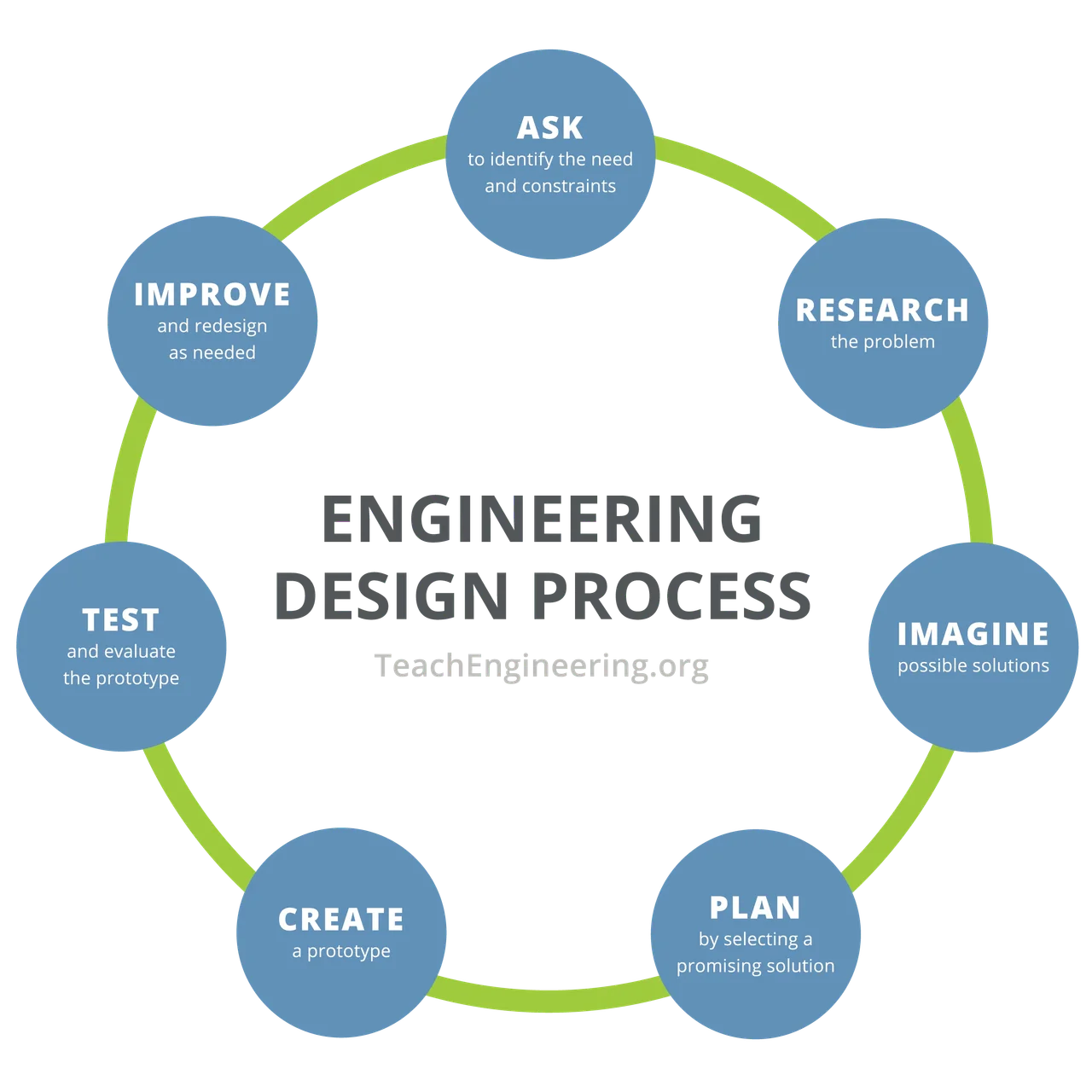
- Pass out the Design Process Handout. Explain that the steps of the engineering design process are what engineers follow as they design new products and systems, and that those steps will be used as an outline for the activity.
- Briefly review each step of the engineering design process.
- Divide the class into teams of three students each.
- Step 1: Identify. What is our engineering challenge? Give teams some time to clearly define the problem and identify needs and constraints. Example: Design an artificial heart that can carry out all the functions of a human heart. Explain that this is the first step of the engineering design process and engineers need to understand the problem before solving it.
- Step 2: Research. Once groups have listed what they need to know about the heart, have them move to Step 2: researching. Hand out the Blood Flow Worksheets for students to begin working on. Permit them to use textbooks or the internet to research blood flow through the human heart. For example, the American Heart Association has a good website, How the Healthy Heart Works.
- Step 3: Imagine. Write on the classroom board the brainstorming guidelines and review them with students.
Brainstorming Guidelines
No negative comments allowed
Encourage wild ideas
Record all ideas
Build on the ideas of others
Stay focused on the topic
Allow only one conversation at a time
- Give teams 5-10 minutes to brainstorm what information they would need to know about the heart in order to design and create a working artificial heart. Suggest they use the back of the handout to write down all ideas. Example: What are the functions of the heart? What does it need to do? How does it pump blood and in what order? What size is it? Where does it connect to the rest of the body? What are its chemical and physical characteristics? From what materials is it made?) Encourage students to focus on the quantity of ideas rather than the quality. All ideas are good ideas!
Day 2
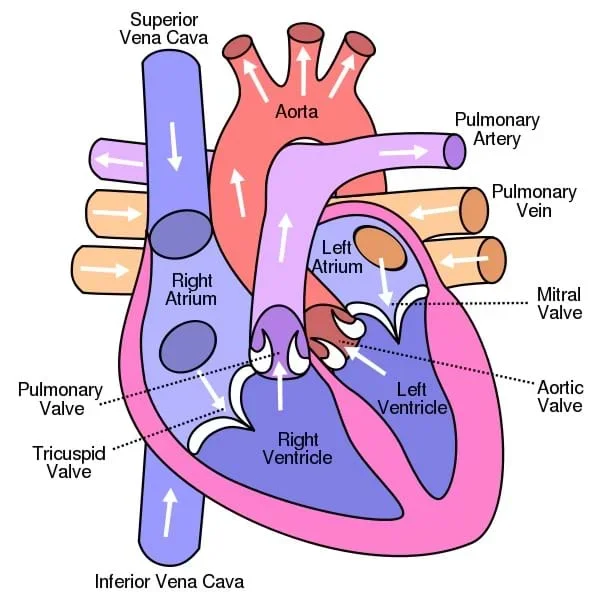 Diagram of the human heart.Copyright 2006 Wapcaplet, Wikimedia Commons {PD} http://commons.wikimedia.org/wiki/File:Diagram_of_the_human_heart_%28cropped%29.svg
- Give students the first part of class to finish their flow charts.
- Have groups trade their flow charts with at least two other groups for peer review. Make sure to explain the importance of peer review in research. For example, engineers have co-workers review their work and make suggestions for improvement before presenting the work to bosses or clients, much like we are peer-reviewing in class before submitting to the teacher for grading. Have groups write comments on the flow chart for the original authors to see.
- Once groups have flow charts with comments, give them a few minutes for revisions.
- Hand out the Diagram of the Human Heart depicting the path of blood through each part.
- Have students compare the two methods and explain their comparisons in the form of short essays on the diagram handout. (Remind them that both diagrams should have the same information.)
Day 3
- Have students identify the constraints on an artificial heart design based on their research (cost, materials, size, attachment sites, power or pump system).
- Explore earlier artificial heart models as a class (refer to the Teacher Background section in the associated lesson). End the discussion at the Jarvik-7 with the 400-pound pump system information.
- Step 4: Plan. Selecting an approach. Point out that each artificial heart design tries to mimic the function of the human heart. Engineers often mimic nature in their designs. Have each team go through their designs and select the most promising solution.
- Ask students if they know what "design a proposal" means. Engineers prepare proposals (written description and diagrams) to request project funding, in order to be able to make functional prototypes (Step 5: Build) to test and evaluate (Step 6: Test).
- Introduce the story of Charles Okeke and his dilemma of living at the hospital with his 400-pound artificial heart. Then show the YouTube video on his "freedom pack"
and ask students to evaluate this design (it worked!). Discuss how his must have changed his life, and what limitations he might remain. Inform them that he DID receive a donor heart, and is doing great! For more information on the success of the freedom pack, refer students to the article, Charles Okeke Update Mayo Clinic, at: https://www.businesswire.com/news/home/20110215007655/en/Mayo-Clinic-Patient-Artificial-Heart-Receives-Heart.
Day 4
- Begin class by having students listen to a six-minute National Public Radio podcast on the break-through design of a "pump-less" artificial heart. (Alternatively, print out the podcast as an article to be read.) NPR podcast at: https://www.npr.org/2011/06/13/137029208/heart-with-no-beat-offers-hope-of-new-lease-on-life
- Step 7: Improve. Engineers are always looking to improve and iterate their design to make their design the best it can be. Ask students: How was the design refined and why (the heart was made to function without a pump)? Use the discussion text provided in the Lesson Closure section of the associated lesson.
- Remind students that engineers must knowhow to communicate their ideas and designs so that other people and engineers can understand and replicate it. Ask students to talk about why or why not they think this model was a success. Use the discussion text provided in the Lesson Closure section of the associated lesson.
- Give students the rest of the hour to write essays in which they talk about the features of the artificial heart that they think will work best, and how the development of a working artificial heart will impact society (focus on health, economics and attitudes). Use the discussion text provided in the Lesson Closure section of the associated lesson.
- aorta
- The biggest and longest artery in the body. It carries oxygen-rich blood from the left ventricle of the heart to the body.
- aortic valve
- The flaps between the left ventricle and aorta. When the ventricle contracts, the valve opens, causing blood to rush into the aorta. When the ventricle relaxes, the valves close.
- artery
- A blood vessel carrying blood away from the heart.
- brainstorming
- A method of shared problem solving in which all members of a group quickly and spontaneously contribute many ideas.
- coronary artery
- The arteries that are the first to branch off the aorta and supply blood to the heart tissue.
- engineering design process
- A decision-making process used by engineers. Combines an understanding of basic sciences, mathematics and engineering sciences to use available resources to meet a desired goal, usually resulting in a product.
- inferior vena cava
- A large vein that carries oxygen-poor blood to the right atrium from the lower half of the body.
- left atrium
- The left upper chamber of the heart. It receives oxygen-rich blood from the lungs via the pulmonary vein.
- left ventricle
- The left lower chamber of the heart. It pumps the blood through the aortic valve into the aorta.
- mitral valve
- The valve between the left atrium and the left ventricle. It prevents the back-flow of blood from the ventricle to the atrium.
- prototype
- A first attempt or early model of a new product or creation. Used to test aspects of it. May be revised many times.
- pulmonary artery
- The blood vessel that carries oxygen-poor blood from the right ventricle of the heart to the lungs.
- pulmonary valve
- The flaps between the right ventricle and pulmonary artery. When the ventricle contracts, the valve opens, causing blood to rush into the pulmonary artery. When the ventricle relaxes, the valves close.
- pulmonary vein
- The blood vessel that carries oxygen-rich blood from the lungs to the left atrium of the heart.
- right atrium
- The right upper chamber of the heart. It pumps the blood into the pulmonary artery.
- right ventricle
- The right lower chamber of the heart. It pumps the blood into the pulmonary artery.
- superior vena cava
- A large vein that carries oxygen-poor blood to the right atrium from the upper parts of the body.
- tricuspid valve
- The flaps between the right atrium and the right ventricle. It is composed of three leaf-like parts and prevents the back-flow of blood from the ventricle to the atrium.
- vein
- A blood vessel carrying blood to the heart.
Activity Embedded Assessment
Worksheet: On Day 1, after brainstorming, have students complete the Blood Flow Worksheet (PDF). Review their answers to gauge their mastery of the subject matter.
Post-Activity Assessment
Concluding Essay: After the design process review is complete, assign students to write essays based on the discussions that took place during the lesson. Use the Lesson Closure discussion provided in the associated lesson. Ask them to imagine a world in which a total functioning artificial human heart exists, but is so expensive that it is not affordable for everyone. How would this invention impact our culture, focusing on health, economics and people's attitudes. Essays due at end of class period (or if assigned as homework, due first thing the next day.)
Podcast (6:20 min): Heart With No Beat Offers Hope of New Lease on Life by Carrie Feibel, June 13, 2011 on KUHF, National Public Radio, at https://www.npr.org/2011/06/13/137029208/heart-with-no-beat-offers-hope-of-new-lease-on-life.
Artificial heart breakthrough video (3:55 min): For CBS, Dr. Jennifer Ashton reports artificial heart recipient Charles Okeke has regained his freedom by carrying around a remarkable new device, May 21, 2010 on YouTube at: https://www.youtube.com/watch?v=Gv9xB9HQsww.
Learn more about the engineering design process at https://www.teachengineering.org/engrdesignprocess.php.
Chapter 4: Blood Vessels and Aging: The Rest of The Journey. Published April 2005. Last updated November 22, 2011. Aging Hearts and Arteries: A Scientific Quest, Health & Aging, National Institute on Aging, National Institutes of Health, U.S. Department of Health & Human Services. Accessed July 25, 2011. http://www.nia.nih.gov/health/publication/aging-hearts-and-arteries-scientific-quest/chapter-4-blood-vessels-and-aging-rest
Heart Assist Devices. April 2006. The Texas Heart Institute. Accessed July 25, 2011. http://texasheart.org/Research/Devices/
Mayo Patient on Artificial Heart Receives Heart Transplant: Charles Okeke was first in U.S. to go home with artificial heart. Published February 4, 2011. Mayo Foundation for Medical Education and Research. Accessed July 25, 2011. http://www.mayoclinic.org/news2011-sct/6166.html
- The Heart of Our Cardiovascular System
- Artificial Heart Design Challenge
Contributors
Angela D. Kolonich
Supporting Program
Bio-Inspired Technology and Systems (BITS) RET, College of Engineering, Michigan State University
Acknowledgements
The contents of this digital library curriculum were developed through the Bio-Inspired Technology and Systems (BITS) research experience for teachers under National Science Foundation RET grant no. EEG 0908810. However, these contents do not necessarily represent the policies of the NSF and you should not assume endorsement by the federal government.
Special thanks to the NSF for supporting this research, Dr. Kim and Dr. Tan for developing and supporting the program for teachers, and Dr. Seungik Baek and Alexander Dupay for guiding my research throughout the summer.
Copyright
2013 by Regents of the University of Colorado; original © 2012 Michigan State University