
Wear’s the Technology?
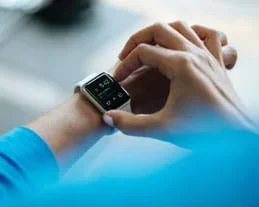 Wearable technology!Copyright 2015 Unsplash, Pixabay, CC0 (public domain) https://pixabay.com/en/smartwatch-gadget-technology-smart-828786/
Students apply their knowledge of scale and geometry to design wearables that would help people in their daily lives, perhaps for medical reasons or convenience. Like engineers, student teams follow the steps of the design process, to research the wearable technology field (watching online videos and conducting online research), brainstorm a need that supports some aspect of human life, imagine their own unique designs, and then sketch prototypes (using Paint®). They compare the drawn prototype size to its intended real-life, manufactured size, determining estimated length and width dimensions, determining the scale factor, and the resulting difference in areas. After considering real-world safety concerns relevant to wearables (news article) and getting preliminary user feedback (peer critique), they adjust their drawn designs for improvement. To conclude, they recap their work in short class presentations.
Transforming core technology in the areas of sensors, processing and communication into wearable devices is a hot engineering trend. Engineers design wearables to help solve many problems and make other products and technologies more economical, capable, compact and practical. Examples of wearable technology are Apple’s Watch, which provides smartphone capabilities (and more), and Fitbit’s wearable bracelet, which monitors physical activity. Other creative wearables are focused on medical products that embed sensors in fabric-like patches to monitor blood, wounds and collect other physiological data. Other more fashion-concerned wearables provide smartphone and communications capabilities into accessories like rings and eyeglasses. Wearable technology is advancing every year, and like the development of all sorts of products, engineers follow the steps of the engineering design process to invent new and better wearables that have the potential to impact all areas of our lives.
After this activity, students should be able to:
- Research and solve a real-world problem by designing a 2D or 3D wearable.
- Demonstrate an understanding of the steps of the engineering design process
- CCSS.Math.Content.7.G.A.1 Solve problems involving scale drawings of geometric figures, including computing actual lengths and areas from a scale drawing and reproducing a scale drawing at a different scale.
Grade 7
Do you agree with this alignment? - CCSS.Math.Content.7.G.B.6 Solve real-world and mathematical problems involving area, volume and surface area of two- and three-dimensional objects composed of triangles, quadrilaterals, polygons, cubes, and right prisms.
Grade 7
Do you agree with this alignment?
- Students will develop an understanding of the attributes of design.
Grades K-12
Do you agree with this alignment? - Students will develop an understanding of engineering design.
Grades K-12
Do you agree with this alignment? - Students will develop abilities to apply the design process.
Grades K-12
Do you agree with this alignment? - STEL-7S Create solutions to problems by identifying and applying human factors in design.
Grades 6-8
Do you agree with this alignment?
- CCSS.Math.Content.7.G.A.1 Solve problems involving scale drawings of geometric figures, including computing actual lengths and areas from a scale drawing and reproducing a scale drawing at a different scale.
Grade 7
Do you agree with this alignment? - CCSS.Math.Content.7.G.B.6 Solve real-world and mathematical problems involving area, volume and surface area of two- and three-dimensional objects composed of triangles, quadrilaterals, polygons, cubes, and right prisms.
Grade 7
Do you agree with this alignment?
- MS-ETS1-1 Define the criteria and constraints of a design problem with sufficient precision to ensure a successful solution, taking into account relevant scientific principles and potential impacts on people and the natural environment that may limit possible solutions.
Grades 6-8
This resource focuses on the following Three Dimensional Learning aspects of NGSS:
Science & Engineering Practices- Define a design problem that can be solved through the development of an object, tool, process or system and includes multiple criteria and constraints, including scientific knowledge that may limit possible solutions.Do you agree with this alignment?
Disciplinary Core Ideas- The more precisely a design task's criteria and constraints can be defined, the more likely it is that the designed solution will be successful. Specification of constraints includes consideration of scientific principles and other relevant knowledge that is likely to limit possible solutions.Do you agree with this alignment?
Crosscutting Concepts- The uses of technologies and any limitations on their use are driven by individual or societal needs, desires, and values; by the findings of scientific research; and by differences in such factors as climate, natural resources, and economic conditions.Do you agree with this alignment?
- All human activity draws on natural resources and has both short and long-term consequences, positive as well as negative, for the health of people and the natural environment.Do you agree with this alignment?
Do you agree with this alignment? - Define a design problem that can be solved through the development of an object, tool, process or system and includes multiple criteria and constraints, including scientific knowledge that may limit possible solutions.
- MS-ETS1-2 Evaluate competing design solutions using a systematic process to determine how well they meet the criteria and constraints of the problem.
Grades 6-8
This resource focuses on the following Three Dimensional Learning aspects of NGSS:
Science & Engineering Practices- Evaluate competing design solutions based on jointly developed and agreed-upon design criteria.Do you agree with this alignment?
Disciplinary Core Ideas- There are systematic processes for evaluating solutions with respect to how well they meet the criteria and constraints of a problem.Do you agree with this alignment?
Do you agree with this alignment? - Evaluate competing design solutions based on jointly developed and agreed-upon design criteria.
- MS-ETS1-4 Develop a model to generate data for iterative testing and modification of a proposed object, tool, or process such that an optimal design can be achieved.
Grades 6-8
This resource focuses on the following Three Dimensional Learning aspects of NGSS:
Science & Engineering Practices- Develop a model to generate data to test ideas about designed systems, including those representing inputs and outputs.Do you agree with this alignment?
Disciplinary Core Ideas- Models of all kinds are important for testing solutions.Do you agree with this alignment?
- The iterative process of testing the most promising solutions and modifying what is proposed on the basis of the test results leads to greater refinement and ultimately to an optimal solution.Do you agree with this alignment?
Do you agree with this alignment? - Develop a model to generate data to test ideas about designed systems, including those representing inputs and outputs.
Each group needs:
- Brainstorming and Research Guide (PDF)
- Wearables of the Future Design Worksheet (PDF)
- printout of news article: Safety is an essential concern for the future of wearables, one per student http://betanews.com/2015/05/11/safety-is-an-essential-concern-for-the-future-of-wearables/
- computer with Internet access and drawing/computer graphics software such as Microsoft® Paint®, for drawing the design
To share with the entire class:
- computer with Internet access and projector to show students online videos and for students to share their designs with the class
(As an introduction, show students some or all of the five-part video series, Intel Presents the “Make It Wearable" Challenge:
- Episode 1: Human Communication (5:17 minutes)—Explore how wearable technology is improving communication and changing how we interact. Interviews with experts who are pushing the technology forward, including a mobile journalist and “the grandfather of wearables.”
- Episode 2: Human Health (5:26 minutes)—Wearables are expected to impact future medical technology, affecting health and fitness decisions and redefining the doctor-patient relationship. Interviews with academics, researchers and a former NFL athlete explore how wearables can improve our way of life and change the way we treat everything from mental disorders to sports injuries.
- Episode 3: Human Expression (5:42 minutes)—Wearable technology is enabling new forms of human expression, enabling fashion and technology to coalesce like never before. This episode explores how designers across fashion and beauty are using wearable tech to push their products into new realms, from DIY, LED-enabled fashion to eyelashes that control lights via RFID sensors.
- Episode 4: Becoming Superhuman (6:17 minutes)—This episode focuses on stories about people who have personally experienced wearable technology's potential to enhance the human condition, from Neil Harbisson the “sono-chromatic” cyborg, to an art product that enhances the senses, to the latest breakthroughs in prosthetics and exoskeleton technology.)
- Episode 5: Daily Life (4:57 minutes)—What if the technology you use was not handheld, but integrated with your body on a personal and wearable level? This episode examines how wearable technology could dramatically impact our daily lives from aesthetic advancements and health tracking, to changing the way we express and communicate with each other.
(After watching the videos, lead a class discussion.) What are some of the examples of wearables that you liked? Why might engineers want to make the electronic devices that we use every day wearable? (Listen to student ideas. See what they gleaned from watching the videos. Expect some answers to address the needs and desires for medical monitoring and diagnostics, convenient communication and compact size, and other ways to make existing technologies more economical, practical and capable.)
In today’s engineering challenge activity, you will use your imaginations to think about the various electronic devices that you use each day and how we might make them wearable. This kind of thinking is how engineers create things that have never existed before. You will apply your understanding of scaling and geometry to reduce or enlarge your drawings as part of the process of designing your own wearables products. In the real world, this is important for thinking about how your designs will work for people of different sizes and how much of various materials your designs will require in order to be manufactured.
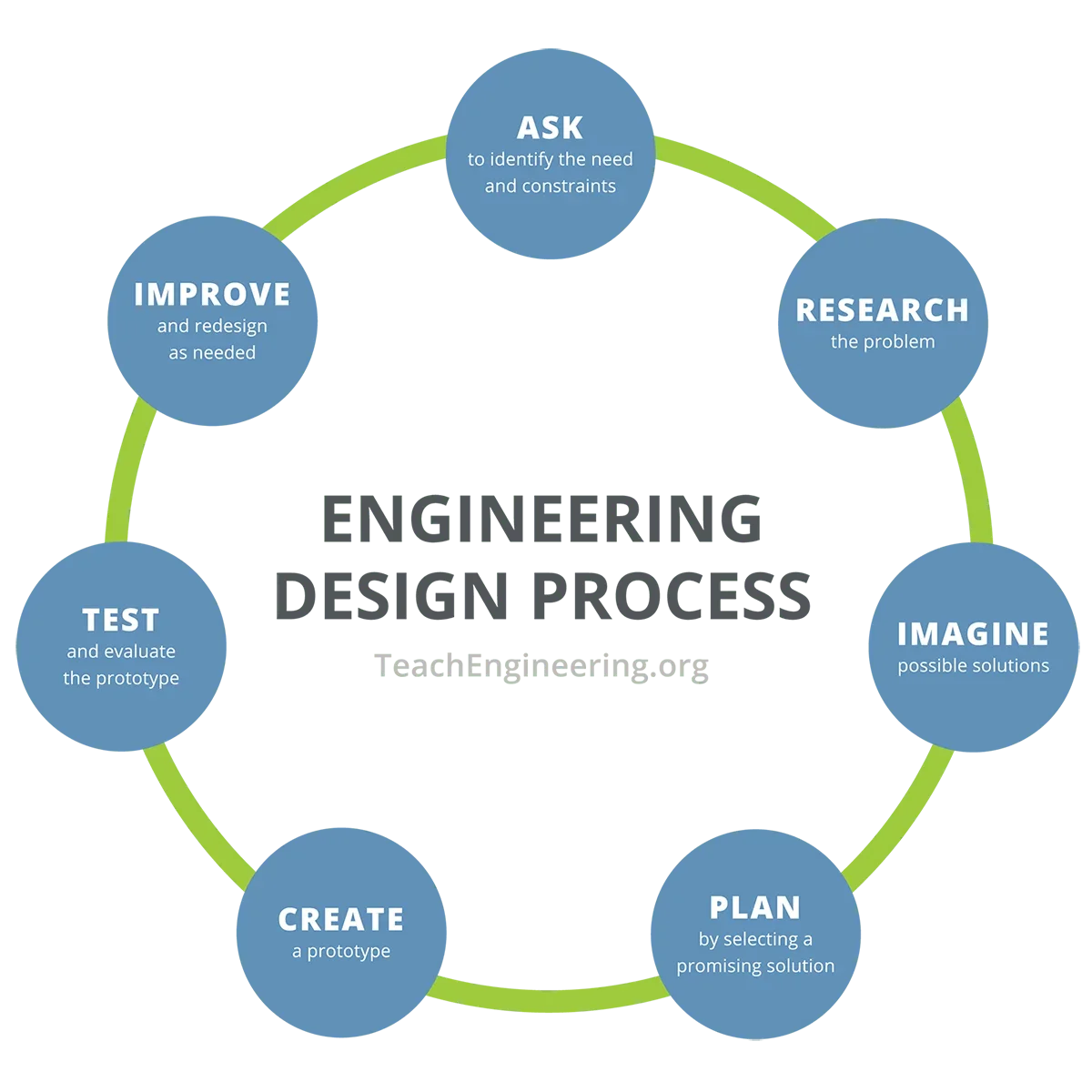 Figure 1. The steps of the engineering design process.Copyright 2019 TeachEngineering.org. All rights reserved. https://www.teachengineering.org/k12engineering/designprocess
Who can tell me the steps of the engineering design process? (See what students know. Then review the basic steps with them, as provided in Figure 1.) Now let’s get started!
Overview and Background
Student teams design and revise prototype drawings of wearable technologies. Wearable technology is exploding in the consumer and healthcare marketplaces. Apple Watch and Fitbit’s bracelets are just the start. Engineers have designed gloves that can translate sign language in real time. Soon we will have shoes that track posture and activity level, and sensors that detect diseases from sweat. And in the medical world, the new frontier is implanted and applied biosensors. Student teams are challenged to imagine unique and thoughtful wearable technology product designs that help support some aspect of human life, from a medical need to convenience. They conduct research, brainstorm ideas, draw up their designs, get feedback, make improvements and present their final prototype concepts to the class (no physical prototypes, just on paper).
Before the Activity
- Make copies of Brainstorming and Research Guide (PDF) and Wearables of the Future Design Worksheet (PDF), one each per group, as well as the news article linked in the Materials List, one per group.
- Prepare to show the class numerous online videos.
- Make available computers with Internet access and drawing software for students to conduct research on the types of wearables currently available, and generate their own unique wearable designs.
With the Students
- Conduct the warm-up, pre-activity brainstorming exercise, as described in the Assessment section.
- Research: Present the Introduction/Motivation content, beginning with the five “Make It Wearable” online video episodes and concluding with a review of the steps of the engineering design process (see Figure 1).
- Divide the class into groups of three students each.
- Idea generation: Hand out to each group a Brainstorming and Research Guide (PDF), which provides questions to guide online research on what types of wearables are currently available and idea generation of unique concepts for new wearable technology. Give students about 25-30 minutes to brainstorm and research in their teams. Make it clear to students that they will not be constructing the wearables with real electronics and/or sensors, but will be creating detailed drawings with specified dimensions and materials.
- Write on the classroom board some possible wearables website URLs to aid in student research. See the URLs provided in the Additional Multimedia Support section, or other websites you find.
- (optional) To help with idea generation, show students some of the 15+ short videos in the Creators Project playlist that show student team finalists for the Make It Wearable Challenge; see https://www.youtube.com/playlist?list=PL6uqON-thyrYdIJxlmFlsnmLzAr_yIUCz.
- As additional prompts, ask teams the Investigating Questions.
- Prototype designing: As groups finalize their design ideas and decide on their team wearable concepts, have them check with you for approval to proceed, and then give each team a worksheet.
- Direct the teams to independently create prototype designs of their wearable products using the provided computer software. Require the drawings specify shapes, dimensions, materials, components and features. Point out the grading rubric on the second page of the worksheet so students know the project expectations. The worksheet asks students to compare the size of the drawn prototype to its real-life, manufactured size, determining estimated length and width dimensions, determining the scale factor, and the resulting difference in area between the drawing and life-size.
- Testing, feedback and redesigning:
- After all groups have finished the worksheet, hand out the news article about safety concerns for future wearables, directing students to read and discuss the content in their groups. As a recap, while wearables hold vast potential to enhance everyday life, their underlying technologies used in or in close proximity to human bodies also has the potential for harm, such as thermal injuries, allergic responses, electrical shock, mechanical hazards, body tissue rejection, electromagnetic radiation and wireless interoperability. What are the safety risks of the wearable you have designed? How could it be made safer for people? Ask students to think about the safety and health concerns raised in the article as they apply to their design ideas, and then make adjustments to their designs, as needed.
- Have teams swap designs and examine them to provide early prototype user feedback: Then, have students redesign their prototypes based on peer input.
- Have teams present their designs to the class, as described in the Assessment section.
- To conclude, have teams fill in the “self-eval” column of the grading rubric on page 2 of the worksheet, and turn in their deliverables. This includes electronically sending their final designs to the teacher, as well as their completed guide and worksheet questions.
- area
- The space inside a shape.
- perimeter
- The distance around a shape.
- scale
- The relationship, or proportional ratio, of a linear dimension of some feature of a model, prototype, map or drawing of an object to the same feature of the original object.
- wearable technology
- Smart electronic devices that can be worn on the body as clothing, accessories or implants, often incorporating practical functions and features such as communications or physiological data. Examples: Bluetooth headset, watch that monitors miles walked, implanted or applied medical devices and biosensors.
Pre-Activity Assessment
Wearable Think-Pair-Share: As a brainstorming activity, ask students to write down what they know about wearable technologies. Then, have them share their thoughts with a partner, and then with the entire class. Record student ideas on the classroom board. Students’ ideas reveal their knowledge about the activity topic.
Activity Embedded Assessment
High Tech Challenge: At the core of this activity, student teams conduct research guided by the Brainstorming and Research Guide (PDF), come up with concepts for unique, wearable technology products that help solve some real-world problems, document their design specifics using a software drawing app, consider safety aspects of their designs, get user feedback on their designs, and then make revisions to improve the designs. This work includes completing the dimensions, scaling and area questions on the Wearables of the Future Design Worksheet (PDF).
Peer Feedback: Teams swap designs and examine them to provide early prototype user feedback: What makes sense? What doesn’t make sense? What are some suggestions for improvement? Then teams revisit and redesign their prototypes based on peer input and any safety concerns.
Post-Activity Assessment
Presentations: Have teams present their wearable product designs to the class, showing their drawings and providing brief explanation of their motivation, concept, benefits, features and risks. Suggested follow-up and discussion questions:
- What is the wearable technology supposed to do?
- How did you consider the safety of the user?
- How did you use your understanding of scale in your designs?
- How might it be helpful to know about math concepts such as length, width, perimeter, area and scale as you design wearables? (Example answer: For example, if engineers were designing a woven fabric-embedded sensor or a device that was attached to an ankle or wrist, they would need to scale-up or scale-down their designs so as to plan the details so they fit various human sizes as well as plan for the amount of manufacturing materials such as thread.)
- Which of all these products seems the most feasible?
- Thinking back, which steps of the engineering design process did you do during this activity? (Expected answers: Identify the need; research the problem; brainstorm and imagine, develop possible solutions; develop a promising solution, make a plan, create a prototype design for a prototype; test by getting feedback from possible users; redesign as needed to make improvements.)
- What did you learn from the process?
- How important do you think wearable technology is in engineering today, and in your future?
Assess team designs and overall success based on the grading rubric provided on page 2 of the Wearables of the Future Design Worksheet (PDF). Considerations include: A unique and thoughtful wearable product idea, answers to questions on the Brainstorming and Research Guide (PDF), answers to math questions on the worksheet, final design in digital format, and teamwork.
Have students take their designed wearables to the next level by creating physical prototypes. This requires making available an assortment of fabrication materials and tools such as cloth, plastic, rubber, elastic, leather, thread, embroidery and sewing machines, glue guns and other resources to support the design specifications. (Note: Expect that not all design concepts are conducive to making physical prototypes in a classroom setting.)
Assign students to investigate nanotechnology and determine scaling factors from everyday objects to nano-devices.
- For younger students, such as grades 4-5, eliminate the scaling component and have students research and design pieces of wearable technology.
- For more advanced students, have them make 3D designs using Solidworks or other CAD software and then 3D-print their scaled designs.
As a student handout, print the following online article by Anura Fernanco: “Safety is an essential concern for the future of wearables.” Beta News. https://betanews.com/2015/05/11/safety-is-an-essential-concern-for-the-future-of-wearables/
Helpful wearable research websites for teachers and students:
- https://www.wearable-technologies.com/ (for the latest news in wearable technology)
- https://www.wearables.com/ (helping to make sense of wearable tech; search by body part)
Wanshel, Elyse. “Students Invented Gloves That Can Translate Language into Speech and Text: Two Students Have a Finger on the Pulse of Communication. Published April 28, 2015. The Huffington Post. Accessed December 28, 2016. http://www.huffingtonpost.com/entry/navid-azodi-and-thomas-pryor-signaloud-gloves-translate-american-sign-language-into-speech-text_us_571fb38ae4b0f309baeee06d
- Scaling, Go Figure!
- Wear’s the Technology?
Contributors
Evelynne Pyne; Lauchlin Blue; Denise W. Carlson
Supporting Program
Robotics Engineering for Better Life and Sustainable Future RET, College of Engineering, Michigan State University
Acknowledgements
The contents of this digital library curriculum were developed through the Robotics Engineering for Better Life and Sustainable Future research experience for teachers under National Science Foundation RET grant number CNS 1300794. However, these contents do not necessarily represent the policies of the NSF and you should not assume endorsement by the federal government.
Copyright
2016 by Regents of the University of Colorado; original © 2015 Michigan State University