
Mapping the Brain: Neurons, Synapses, and Movement
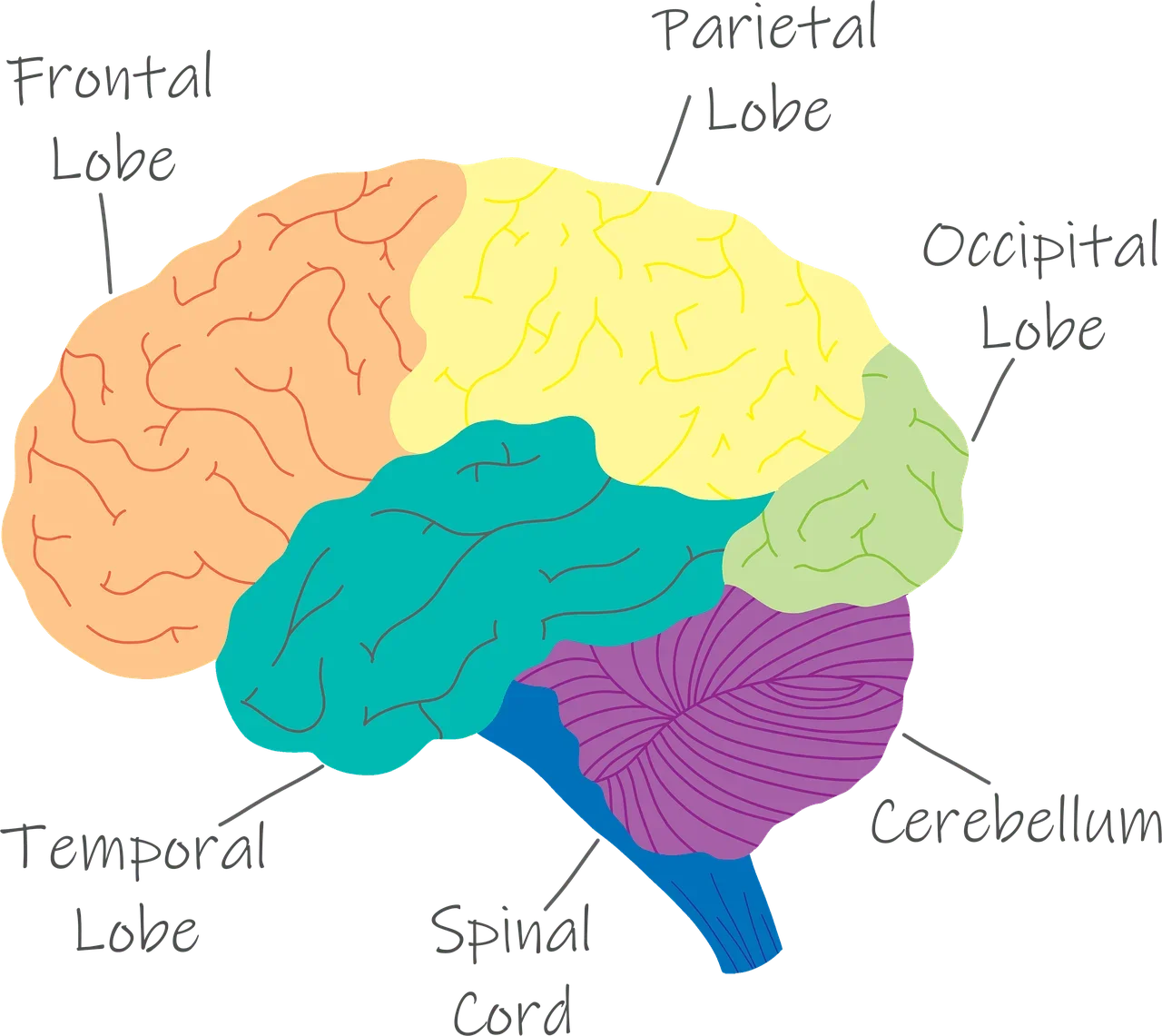 Students explore the brain anatomy and construct a basic homunculus to map brain regions to body functionsCopyright https://pixabay.com/illustrations/brain-anatomy-lobes-medical-7174144
This is the first activity in a unit of four activities. Students are introduced to foundational neuroscience concepts, focusing on motor and sensory neurons and their connections to muscles at the synapse. Through handouts and activities, they explore brain anatomy and construct a basic homunculus to map brain regions to body functions. Students then engage in a hands-on micro:bit activity—observing and manipulating a simulated “beating heart” and a finger dexterity game—where wrist and finger movements control the heart’s size. This experiment helps students explore how different levels of movement affect neuron recruitment. Using an inquiry-based approach, they analyze these patterns and apply their findings to build a detailed neuron-muscle interaction map.
Biomedical, neural, and biomechanical engineers play a crucial role in studying neuron recruitment due to its significance in medical technology, rehabilitation, and human movement. Biomedical engineers develop prosthetics, brain-machine interfaces, and electromyography (EMG) devices to measure muscle activation. Neural engineers, a specialized subset, focus on brain-computer interfaces (BCIs), deep brain stimulation (DBS) for neurological disorders, and neuroprosthetics that translate brain activity into motion. Meanwhile, biomechanical engineers analyze muscle function and neuron recruitment to enhance sports performance, rehabilitation devices, and injury prevention strategies, ensuring optimal movement efficiency in both medical and athletic settings.
After this activity, students should be able to:
- Identify and describe neurons, synapses, and different lobes of the brain and their functions.
- Describe how neurons are recruited for muscle function, specifically how neuron recruitment is increased or decreased depending on muscle need.
- Be able to design an experiment to predict neuron recruitment based on the beating heart micro:bit demonstration.
- Be able to use data obtained from the micro:bit beating heart experiment to draw a diagram or map of brain areas where neurons are recruited for specific muscle activities.
- CCSS.ELA-Literacy.RST.11-12.7 Integrate and evaluate multiple sources of information presented in diverse formats and media (e.g., quantitative data, video, multimedia) in order to address a question or solve a problem.
Grades 11-12
Do you agree with this alignment? - CCSS.ELA-Literacy.WHST.11-12.2 Write informative/explanatory texts, including the narration of historical events, scientific procedures/experiments, or technical processes.
Grades 11-12
Do you agree with this alignment? - CCSS.ELA-Literacy.WHST.11-12.2e Provide a concluding statement or section that follows from and supports the information or explanation provided (e.g., articulating implications or the significance of the topic).
Grades 11-12
Do you agree with this alignment?
- HS-ETS1-4 Use a computer simulation to model the impact of proposed solutions to a complex real-world problem with numerous criteria and constraints on interactions within and between systems relevant to the problem.
Grades 9-12
This resource focuses on the following Three Dimensional Learning aspects of NGSS:
Science & Engineering Practices- Use mathematical models and/or computer simulations to predict the effects of a design solution on systems and/or the interactions between systems.Do you agree with this alignment?
Disciplinary Core Ideas- Both physical models and computers can be used in various ways to aid in the engineering design process. Computers are useful for a variety of purposes, such as running simulations to test different ways of solving a problem or to see which one is most efficient or economical; and in making a persuasive presentation to a client about how a given design will meet his or her needs.Do you agree with this alignment?
Crosscutting Concepts- Models (e.g., physical, mathematical, computer models) can be used to simulate systems and interactions—including energy, matter, and information flows—within and between systems at different scales.Do you agree with this alignment?
Do you agree with this alignment? - Use mathematical models and/or computer simulations to predict the effects of a design solution on systems and/or the interactions between systems.
- HS-LS1-2 Develop and use a model to illustrate the hierarchical organization of interacting systems that provide specific functions within multicellular organisms.
Grades 9-12
This resource focuses on the following Three Dimensional Learning aspects of NGSS:
Science & Engineering Practices- Develop and use a model based on evidence to illustrate the relationships between systems or between components of a system.Do you agree with this alignment?
Disciplinary Core Ideas- Multicellular organisms have a hierarchical structural organization, in which any one system is made up of numerous parts and is itself a component of the next level.Do you agree with this alignment?
Crosscutting Concepts- Models (e.g., physical, mathematical, computer models) can be used to simulate systems and interactions—including energy, matter, and information flows—within and between systems at different scales.Do you agree with this alignment?
Do you agree with this alignment? - Develop and use a model based on evidence to illustrate the relationships between systems or between components of a system.
Each student needs:
- 1 Pre-Assessment (PDF)
- 1 Post Assessment (PDF)
- 1 Handout 1: Basic Brain Information (PDF)
- 1 Handout 2: Neurons and Neuron Recruitment for Muscle Work (PDF)
- 1 Handout 3: Drawing a Homunculus (PDF)
- 1 Making Sense Assessment (PDF)
- 1 Engineering Design Process Worksheet (PDF)
- 1 writing utensil
Each group needs:
- 1 micro:bit (or MakeCode simulator)
- 1 laptop or computer with access to MakeCode or Python editor
- 1 stopwatch or timer feature on cell phone
- 1 battery pack (optional)
For the entire class to share:
- laptop or computer with a projector (to show class presentations on last day)
- Pre-Assessment (docx)
- Pre-Assessment (pdf)
- Pre-Assessment Answer Key (docx)
- Pre-Assessment Answer Key (pdf)
- Post-Assessment (docx)
- Post-Assessment (pdf)
- Post-Assessment Answer Key (docx)
- Post-Assessment Answer Key (pdf)
- Handout 1: Basic Brain Information (docx)
- Handout 1: Basic Brain Information (pdf)
- Handout 1: Basic Brain Information Answer Key (docx)
- Handout 1: Basic Brain Information Answer Key (pdf)
- Handout 2: Neurons and Neuron Recruitment for Muscle Work (docx)
- Handout 2: Neurons and Neuron Recruitment for Muscle Work (pdf)
- Handout 2: Neurons and Neuron Recruitment for Muscle Work Answer Key (docx)
- Handout 2: Neurons and Neuron Recruitment for Muscle Work Answer Key (pdf)
- Handout 3: Drawing a Homunculus (docx)
- Handout 3: Drawing a Homunculus (pdf)
- Handout 3: Drawing a Homunculus Answer Key (docx)
- Handout 3: Drawing a Homunculus Answer Key (pdf)
- Making Sense Assessment (docx)
- Making Sense Assessment (pdf)
- Making Sense Assessment Answer Key (docx)
- Making Sense Assessment Answer Key (pdf)
- Engineering Design Process Worksheet (docx)
- Engineering Design Process Worksheet (pdf)
Have you ever stopped to think about how your muscles work, or how many muscles are in your body? Have you ever wondered what controls them, and how that process happens? The way our muscles function is truly fascinating, and in this activity, you’ll get the chance to explore just how amazing our bodies really are!
Muscles are essential for movement. They allow us to walk, run, jump, and even do things as simple as blink or smile. But what would happen if we didn’t have muscles? How would our bodies look or move? Take a moment to discuss with your peers. (Give students a minute or two to share their thoughts.) Without muscles, we’d probably look like blobs from outer space, unable to move or interact with the world around us!
 Figure 1. Without muscles, we would look like a blob.Copyright https://pixabay.com/vectors/blob-goo-animal-green-eyes-161097Now, let’s dive deeper into how our bodies actually work. In this activity, we’ll explore how specific parts of the brain control muscle function. You’ll learn how the brain sends signals to muscles, telling them when to contract and when to relax. We will focus on neuron recruitment—that’s how your brain recruits different neurons to activate muscle fibers depending on the task at hand. For example, when you make small, fine movements, such as typing, fewer neurons are recruited. But when you perform larger or more forceful movements, such as lifting something heavy, your brain recruits more neurons and muscle fibers to make the movement happen.
Figure 2. Lobes of the brain.Copyright https://pixabay.com/illustrations/brain-anatomy-lobes-medical-7174144
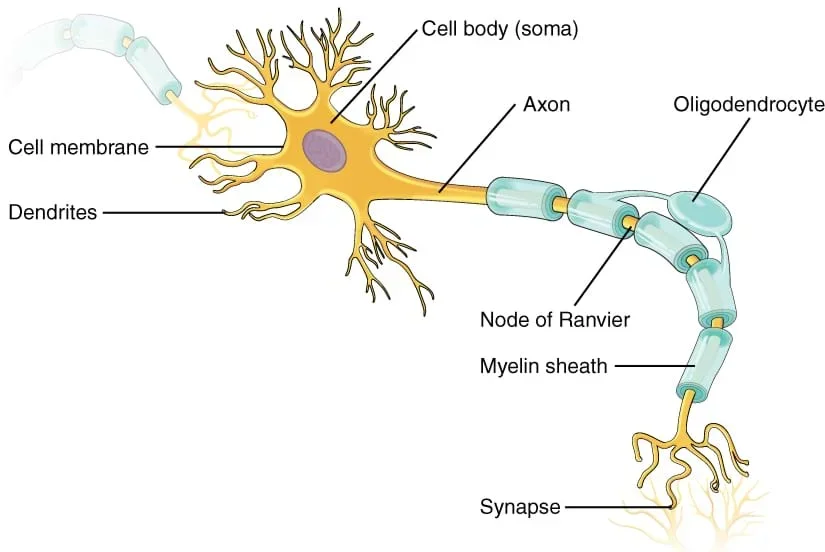 Figure 3. Picture of a basic neuron.Copyright https://upload.wikimedia.org/wikipedia/commons/8/86/1206_The_Neuron.jpg
OpenStax, CC BY 4.0 <https://creativecommons.org/licenses/by/4.0>, via Wikimedia Commons
https://cnx.org/contents/FPtK1zmh@8.25:fEI3C8Ot@10/PrefaceIn this activity, we’ll also explore how you can manipulate the number of neurons that are recruited for different muscle activities. You'll gain insights into how increasing or decreasing the number of neurons can affect your muscle performance, whether it’s for speed, strength, or precision. By the end, you’ll have a better understanding of how the brain, neurons, and muscles all work together to make movement possible!
Figure 3. Picture of a basic neuron.Copyright https://upload.wikimedia.org/wikipedia/commons/8/86/1206_The_Neuron.jpg
OpenStax, CC BY 4.0 <https://creativecommons.org/licenses/by/4.0>, via Wikimedia Commons
https://cnx.org/contents/FPtK1zmh@8.25:fEI3C8Ot@10/PrefaceIn this activity, we’ll also explore how you can manipulate the number of neurons that are recruited for different muscle activities. You'll gain insights into how increasing or decreasing the number of neurons can affect your muscle performance, whether it’s for speed, strength, or precision. By the end, you’ll have a better understanding of how the brain, neurons, and muscles all work together to make movement possible!
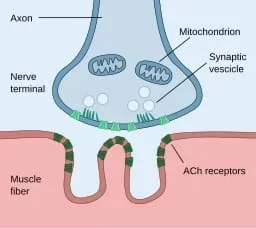 Figure 4. Neuromuscular junction where signals are transmitted between adjacent neurons.Copyright https://upload.wikimedia.org/wikipedia/commons/6/62/Neuromuscular_junction.svg
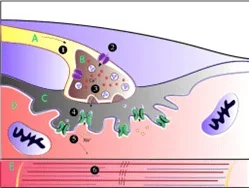 Figure 5. A signal is conveyed from the motor neuron to the muscles.Copyright Wikimedia Commons CC BY-SA 4.0
https://upload.wikimedia.org/wikipedia/commons/2/2e/The_Muscle_Contraction_Process.png
Figure 5. A signal is conveyed from the motor neuron to the muscles.Copyright Wikimedia Commons CC BY-SA 4.0
https://upload.wikimedia.org/wikipedia/commons/2/2e/The_Muscle_Contraction_Process.png
Background
The brain sends signals to muscles through a complex process involving the nervous system, particularly the motor pathways in the central and peripheral nervous systems. When you decide to move, the motor cortex in the brain generates an electrical signal, which travels through neurons in a specific pathway:
- Initiation in the Brain – The primary motor cortex (in the frontal lobe) plans and initiates movement, working with the premotor cortex and basal ganglia to refine the action.
- Signal Transmission Through the Spinal Cord – The brain sends signals down the corticospinal tract, a bundle of nerve fibers that carries impulses from the brain to the spinal cord.
- Activation of Motor Neurons – In the spinal cord, the signal reaches lower motor neurons, which directly innervate muscles. These neurons exit the spinal cord and travel through peripheral nerves.
- Neuromuscular Junction Activation – When the signal reaches the muscle, it triggers the release of acetylcholine, a neurotransmitter that stimulates the muscle fibers to contract.
- Muscle Contraction – Calcium ions are released within the muscle, allowing myosin and actin filaments to slide past each other, shortening the muscle and producing movement.
- Feedback and Adjustment – Sensory neurons provide feedback to the brain, allowing for coordination, balance, and adjustments in movement through structures such as the cerebellum.
This system enables precise, coordinated movements, from simple reflexes to complex voluntary actions.
The primary goal of this activity is to explore how the brain communicates with muscles to perform specific tasks. Students begin by learning about the brain's structure, including its lobes, as well as the functions of neurons and synapses. They then create a preliminary homunculus map, illustrating how different brain regions recruit neurons to control specific muscle movements. Finally, they engage in a hands-on experiment using micro:bits to observe and manipulate neural activation in real time.
Before the Activity
- Gather materials.
- Make copies of the Pre-Assessment (PDF) (one per student).
- Make copies of Handout 1 (PDF), Handout 2 (PDF), and Handout 3 (PDF) (one per student).
- Make copies of the Engineering Design Process Worksheet (PDF) (one per student).
- Make copies of the Post Assessment (PDF)(one per student).
- Make copies of the Making Sense Assessment (PDF) (one per student).
- Optional: Set up a micro:bit demonstration using either MakeCode or Python.
- Get familiar with increasing and decreasing the beating heart animation with the micro:bit: https://microbit.org/projects/make-it-code-it/beating-heart/#how-it-works
During the Activity
Day 1: Basic neuroscience and pre-activity assessment (50 minutes)
- Pre-Assessment (15 min)
- Hand out one Pre-Assessment (PDF) to each student.
- Have students complete their Pre-Assessment (PDF).
- Neurons, neurotransmitters, and synapses worksheets (15 min)
- Organize students into groups of 3-4.
- Give each student Handout 1 (PDF)and Handout 2 (PDF).
- Give students 15 minutes to complete the handouts and watch the accompanying videos to learn about the parts and functions of the brain, neurons, neurotransmitters, and synapses.
- Peer discussion (10 min)
- Have students summarize their understanding and discuss their insights with their peers.
- Lead a class discussion about the two handouts. Make sure to emphasize the lobes of the brain and their functions:
- Parietal lobe: The parietal lobes help interpret feeling, known as sensory information. The lobes process taste, texture, and temperature.
- Occipital lobe: The occipital lobes process images from your eyes and connect them to the images stored in your memory. This allows you to recognize images.
- Frontal lobe: The frontal lobes help control thinking, planning, organizing, problem-solving, short-term memory, and movement.
- Temporal lobe: The temporal lobes help process information from your senses of smell, taste, and sound. They also play a role in memory storage.
- Cerebellum: The cerebellum is a wrinkled ball of tissue below and behind the rest of the brain. It works to combine sensory information from the eyes, ears, and muscles to help coordinate movement. The cerebellum activates when you learn to play the piano, for example.
- Spinal cord: The spinal cord carries nerve signals from the brain to help us move and feel sensations.
- What is a neuron? (Answer: A neuron is a nerve cell.)
- What is a synapse? (Answer: A synapse is also called the neuromuscular junction. It allows one neuron to pass along a signal or impulse to another neuron at the synaptic cleft.)
- How does information from the brain get relayed to different parts of the body? (Answer: The spinal cord does this; its purpose is to send motor signals from the brain to the peripheral nerves and also relay signals from sensory organs to the brain. For example, if someone touches a hot stove, signals are immediately relayed to the brain and the person removes the hand without further damage occurring. Or, if a person finds themselves falling, their hand reaches out to support themselves, which is an example of the sensory signal being relayed to the brain and back to the peripheral nerves to make this happen.)
- How would you set about drawing a map matching areas of the brain to specific muscle actions? (Answer: First make a list of specific muscle actions, then use what you know of the functions of brain lobes to make connections between them and specific muscle actions. For example, the occipital lobe helps process images from the eyes, so this is the area involved in sight reading music, for example.)
- What is a homunculus? (Answer: The homunculus represents either the motor cortex or somatosensory cortex along the cerebral cortex of the brain. It is important because it shows what portion of the brain is responsible for what function.)
- Preliminary homunculus mapping (10 min)
- Give each student Handout 3 (PDF) to start mapping a preliminary homunculus.
- Give students 10 minutes to work on Handout 3 (PDF), letting them know that they will complete the activity at the beginning of the next class.
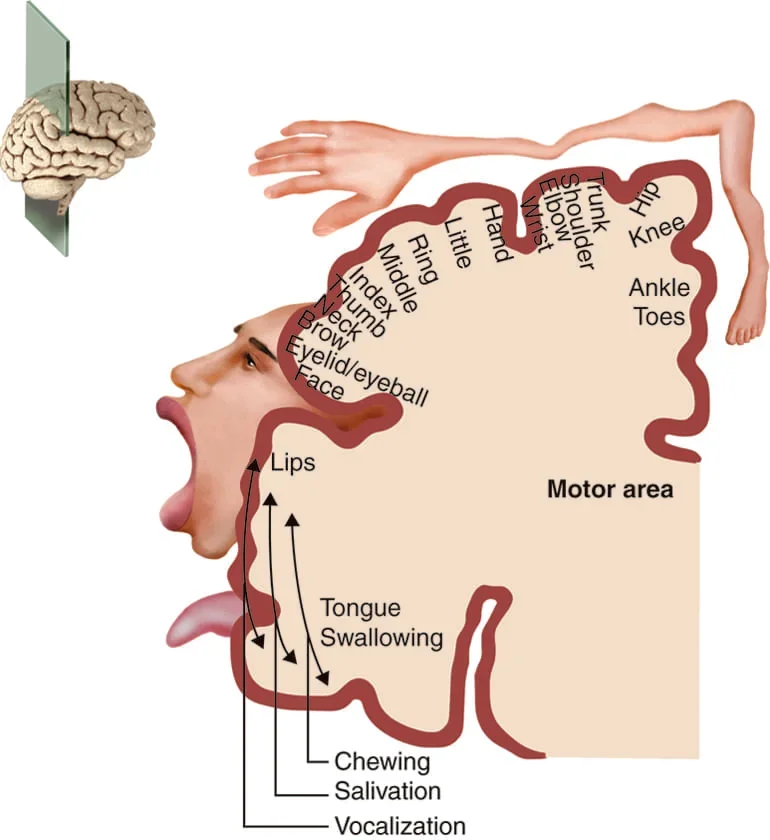 Figure 6. Example of a homunculus.Copyright Cenveo, CC BY 4.0 <https://creativecommons.org/licenses/by/4.0>, via Wikimedia Commons https://upload.wikimedia.org/wikipedia/commons/4/41/Anatomytool_Sensory_homunculus_English.jpg
Day 2: Drawing a homunculus and getting familiar with the micro:bit (50 minutes)
- Preliminary homunculus mapping continued (10 min)
- Have students complete their homunculus drawings from the last class (Handout 3 (PDF)).
- Getting familiar with the micro:bit (10 min)
- Make sure each group has a computer or laptop and one micro:bit set.
- In groups, have students input the following code (either Python or MakeCode) on their computer or laptop to get the activity started.
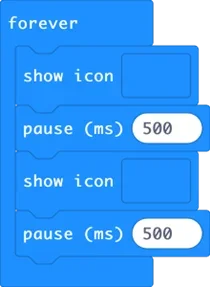 Figure 7. Code for MakeCode.Copyright https://microbit.org/projects/make-it-code-it/beating-heart/#how-it-works
- MakeCode guide and demo (15 min)
- Have students watch the following two videos of how to set up. MakeCode coding guide and a demo of the working micro:bit: (1:36 minutes) https://www.youtube.com/watch?v=2yzT7_QGLLc&t=8s and (00:29 minutes) https://www.youtube.com/watch?v=8qzYWH10o6E.
- Have students set up their micro:bit to run with the program.
- Notes for the teacher:
- The program shows a beating heart using two built-in pictures, a large and a small heart, on the LED display of the micro:bit.
- The heart image gets larger or smaller due to different images shown in a sequence that create the illusion of movement.
- After showing each image, the program will pause for half a second (500 milliseconds) before showing the next image.
- The animation will repeat the sequence of showing the big and small heart images and pausing. It will keep going forever in an infinite loop unless you unplug the micro:bit.
- The code uses a loop, so it will keep running for as long as the micro:bit has power.
- Beating heart trials (10 min)
- Give students time:
- To make the heartbeat faster or slower by changing the delay time.
- To animate other built-in images such as the small and large diamond or square.
- To create their own animations using their own designs.
- Tell the students that they need to repeat the activity five times (five 1-minute trials).
- For each minute trial:
- One group member uses the stopwatch to measure 60 seconds.
- One group member taps their finger or wrist in time with the animation.
- One group member counts the number of taps over the 60 seconds. (For example, if the finger is moved five times to make the heart go faster, this is written down.)
- One group member records the number of movements per minute at the end of the 60 sec.
- Summary (5 min)
- Have students end the day by recording their overall observations from the trials.
- Have students draw an updated homunculus using the data they just collected.
Day 3: Start the micro:bit experiment (50 min)
(Note: This is the engineering component of the experiment. Refer to this page for help: https://microbit.org/projects/make-it-code-it/beating-heart/#how-it-works)
- Engineering Design Process (5 min)
- Hand out one Engineering Design Process Worksheet (PDF) to each student.
- Review the steps of the of the engineering design process.
- Ask and Research (10 min)
- Give students time to identify the need and constraints of the problem and record that in their Engineering Design Process Worksheet (PDF). (Answer: To create a micro:bit experiment that shows how different body parts require different levels of neural recruitment.)
- Give students time to summarize what they know and/or learned about basic neuroscience from Handout 1 (PDF), Handout 2 (PDF), and Handout 3 (PDF) in their Engineering Design Process Worksheet (PDF). (5 min)
- Imagine (5 min)
- Give students time to individually brainstorm how they would create a micro:bit experiment to show how different body parts require different levels of neural recruitment.
- Plan (5 min)
- Once students have individually brainstormed ideas, have each group come back together and share their brainstormed ideas. (5 min)
- As a team, have each group come up with a plan and write it down in their Engineering Design Process Worksheet (PDF).
- Create and Test (15 min)
- Let students run their experiments and collect data on how many times they need to move their finger or wrist to change an animation (make it bigger or smaller, create a new animation etc.).
- Give students time to answer the questions in the Test section of the Engineering Design Process Worksheet (PDF).
- Class Discussion (5 min)
- Have a class discussion about what the students observed.
Day 4: Continue the micro:bit experiment (50 min)
- Improve (20 min)
- Have students reflect on what they would change to improve their experiment.
- Give students time to create and/or alter their own animations using their own designs and/or changing the delay time accordingly. Make sure they continue to keep count of the number of movements needed per minute. (20 min)
- Note: Creating their own animations by changing the delay time will mean that the movements may be faster or slower, depending on what animation they create. Hence, counting the number of times the finger and wrist move per minute gives perspective on how many neurons need to be recruited to make their specific activities or animations happen.
- Collect data (30 min)
- Repeat the activity up to five times and have the students’ partners keep track of how many movements they make with their finger and wrist per minute for each change in animation.
Day 5: PowerPoint presentation by students (50 min)
- Prep (10 min)
- Give students time to create a five-minute PowerPoint presentation of their groups’ design and results.
- Presentations (40 min)
- Have each group present their PowerPoint and observations to the class.
- If time permits, let students give each other feedback.
Day 6: Conclusions and reflection (50 min)
- Post Assessment (15 min)
- Distribute the Post Assessment (PDF) to each student.
- Instruct students to complete the assessment individually.
- Reflection (20 min)
- Hand out the Making Sense Assessment (PDF)for students to reflect on their learning.
- Provide time for students to discuss their reflections in small groups.
- Class discussion (15 min)
- Facilitate a class discussion on how the activity connected to both science and engineering methods.
- Encourage students to share insights on how the micro:bit was applied in their designs.
- ach receptors
- Integral membrane proteins that respond to the binding of the neurotransmitter acetylcholine.
- action potential
- A rapid series of changes in the voltage across a membrane.
- axon
- A thin, long fiber of nerve cell (neuron) that transmits electrical impulses from the cell body or soma to the target cells such as other neurons and muscles.
- axon hillock
- A specialized part of the cell body or soma of a neuron that connects to the axon.
- axon terminal
- The end of an axon that transmit messages to other cells by using neurotransmitters at synapses.
- brain lobe
- A major part of the cerebral cortex of the brain that can be identified; it makes up the surface of each hemisphere of the cerebrum.
- dendrite
- A short finger-like branching cell present on the end of the neuron that branches from the cell body of the nerve cell; its function is to increase the surface area available for receiving incoming information.
- homunculus
- In neuroanatomy, the cortical homunculus represents either the motor or the sensory distribution along the cerebral cortex of the brain.
- mitochondrion
- A membrane-bound cell organelle found in the cells of most eukaryotes, such as animals, plants and fungi. Mitochondria are known as the powerhouse of the cell because they generate most of the chemical energy of the cell in the form of ATP.
- motor cortex
- The area of the cerebral cortex involved in the planning, control, and execution of voluntary movements such as skeletal muscle movements.
- motor neuron axon
- Projects to the spinal cord or outside the spinal cord to directly or indirectly control effector organs, which are mainly muscles and glands.
- muscle cell
- A cell that makes up muscle tissue.
- muscle function
- The primary function of muscle tissue is contraction. Different muscles have different functions.
- myelin sheath
- Made of a substance called myelin, which coats the axons in the brain and the rest of the central nervous system.
- myofibrils
- Long contractile fibers, groups of which run parallel to each other on the long axis of myocytes.
- nerve terminal
- A specialized region of a neuron, separated from the soma by an axon, whose function is to release neurotransmitter when stimulated by an electrical signal carried by the axon.
- neuromuscular junction
- A synapse between a motor neuron and a muscle fiber.
- neuron
- A nerve cell that fires electrical signals called action potentials across the synapse.
- neurotransmitter
- A signaling molecule secreted by a neuron to affect another nerve or muscle cell or gland across a synapse.
- neurotransmitter reuptake pump
- A relevant example of transporters. Reuptake is the removal of neurotransmitter molecules from the synaptic cleft back into the nerve terminal that released them.
- neurotransmitter transporter
- A membrane transport protein whose function is to carry neurotransmitters across the membrane and direct their further transport to specific intracellular locations.
- oligodendrocyte
- A type of neuroglia whose main function is to provide support and insulation to axons (myelination) within the central nervous system.
- postsynaptic density
- A protein-dense specialization attached to the postsynaptic membrane.
- postsynaptic neuron
- Integrates all the signals it receives to determine what it does next, such as firing an action potential.
- presynaptic neuron
- Passes the signal at the synapse.
- protein degradation
- The process by which proteins are naturally destroyed in a cell to maintain protein homeostasis in the human body.
- protein synthesis
- The process used by cells to create proteins.
- ranvier node/node of ranvier
- Gaps in the myelin sheath of a nerve cell’s axon.
- sheathed axon
- An axon that has an insulating layer called the myelin sheath wrapped around it.
- soma
- The cell body of a neuron.
- somatosensory cortex
- Encodes incoming sensory information from receptors all over the body.
- synapse
- A neural junction used for communication between neurons.
- synaptic cleft
- The gap between the pre- and post-synaptic neuron cells, usually about 20 nm wide.
- synaptic vesicle
- Small vesicles clustered at presynaptic terminals. They store neurotransmitters and release them by calcium-triggered exocytosis.
- voltage-gated calcium channel
- Integral membrane proteins that enable the passage of selected inorganic ions across cell membranes.
A pre-activity assessment for use on Day 1, and a Making Sense assessment, an Activity embedded (formative) assessment, and a post assessment (summative) activity for use on Day 6 have been provided for you.
Pre-Activity Assessment
Pre-Activity Assessment Questions: Students complete the Pre-Assessment (PDF)before the activity starts for you to see how much they already know about the homunculus.
Handout 3: Students complete a homunculus drawing prior to starting the activity. By drawing the homunculus before conducting the activity, students are basically showing what they understand of the neuron recruitment before starting the experiment.
Activity-Embedded (Formative) Assessment
Engineering Design Process Worksheet: Students work through the Engineering Design Process Worksheet (PDF)to create a micro:bit experiment that shows how different body parts require different levels of neural recruitment.
Post-Activity (Summative) Assessment
Post-Activity Assessment Questions: Students complete the Post Assessment (PDF)after they connect regions of the brain to specific muscle activities in in their homunculus drawing.
Making Sense Assessment: Students expand their knowledge and reflect on what they learned in the Making Sense Assessment (PDF).
- Please check to make sure the cables are plugged in correctly.
- If there are issues setting up the MakeCode, this video may be helpful: https://www.youtube.com/watch?v=2yzT7_QGLLc&t=8s
- For issues with Python, refer to the code specified earlier.
- For guidance on how to work the micro:bit, see the demo video: https://www.youtube.com/watch?v=8qzYWH10o6E
Neuron Recruitment and Human Pathologies: Students can investigate disorders where neuron recruitment is deficient (e.g., muscular dystrophy, ALS) or overactive (e.g., spasticity, Parkinson’s disease), leading to muscle dysfunction.
Adaptations for Different Learning Levels and Settings
- Remote Learning: Teachers can demonstrate the beating heart kit and utilize the online MakeCode simulator, allowing students to conduct the experiment virtually.
- Younger Students/Lower Grades: A teacher-led demonstration and discussion on brain structures, their functions, and how the brain controls muscle movement.
- Advanced Students: Incorporate the micro:bit food chewing experiment to explore how the masseter and temporalis muscles function differently when chewing various foods. This can lead to discussions on real-world applications, such as temporomandibular joint (TMJ) disorders and muscle function in everyday activities.
Connections to Artificial Intelligence (AI) and Medical Technology
Students can explore the intersection of neuroscience and AI by discussing applications such as robotic surgery, prosthetics, and AI-driven medical technologies that rely on neuron recruitment for movement control.
Amisha, Malik P, Pathania M, Rathaur VK. Overview of artificial intelligence in medicine. J Family Med Prim Care. 2019 Jul;8(7):2328-2331. doi: 10.4103/jfmpc.jfmpc_440_19. PMID: 31463251; PMCID: PMC6691444.
Carpenter AE, Singh S. Bringing computation to biology by bridging the last mile. Nat Cell Biol. 2024 Jan;26(1):5-7. doi: 10.1038/s41556-023-01286-7. PMID: 38228822; PMCID: PMC10880119.
Christensen, D., Lombardi, D. Computational thinking through the lens of biological evolution learning: enhancing understanding through the levels of biological organization and computational complexity. Evo Edu Outreach 17, 10 (2024). https://doi.org/10.1186/s12052-024-00202-3
James Jacob, W. Interdisciplinary trends in higher education. Palgrave Commun 1, 15001 (2015). https://doi.org/10.1057/palcomms.2015.1
Kulkarni PG, Paudel N, Magar S, Santilli MF, Kashyap S, Baranwal AK, Zamboni P, Vasavada P, Katiyar A, Singh AV. Overcoming Challenges and Innovations in Orthopedic Prosthesis Design: An Interdisciplinary Perspective. Biomed Mater Devices. 2023 May 12:1-12. doi: 10.1007/s44174-023-00087-8. Epub ahead of print. PMID: 37363137; PMCID: PMC10180679.
Li, Y., Schoenfeld, A.H., diSessa, A.A. et al. On Computational Thinking and STEM Education. Journal for STEM Educ Res 3, 147–166 (2020).
Paul Medvedev, Modeling biological problems in computer science: a case study in genome assembly, Briefings in Bioinformatics, Volume 20, Issue 4, July 2019, Pages 1376–1383, https://doi.org/10.1093/bib/bby003
National Research Council (US) Committee on Frontiers at the Interface of Computing and Biology; Wooley JC, Lin HS, editors. Catalyzing Inquiry at the Interface of Computing and Biology. Washington (DC): National Academies Press (US); 2005. 6, A Computational and Engineering View of Biology. Available from: https://www.ncbi.nlm.nih.gov/books/NBK25465
Reddy K, Gharde P, Tayade H, Patil M, Reddy LS, Surya D. Advancements in Robotic Surgery: A Comprehensive Overview of Current Utilizations and Upcoming Frontiers. Cureus. 2023 Dec 12;15(12):e50415. doi: 10.7759/cureus.50415. PMID: 38222213; PMCID: PMC10784205.
Rubinstein A, Chor B. Computational thinking in life science education. PLoS Comput Biol. 2014 Nov 20;10(11):e1003897. doi: 10.1371/journal.pcbi.1003897. PMID: 25411839; PMCID: PMC4238948. https://doi.org/10.1007/s41979-020-00044-w
Xu C, Wu CF, Xu DD, Lu WQ, Wang KY. Challenges to Student Interdisciplinary Learning Effectiveness: An Empirical Case Study. J Intell. 2022 Oct 17;10(4):88. doi: 10.3390/jintelligence10040088. PMID: 36278610; PMCID: PMC9624323.
- Neural Engineering in Action: Exploring Muscle Movement Through Data and Design
- Mapping the Brain: Neurons, Synapses, and Movement
- Decoding Muscle Movement: Analyzing Neuromuscular Signals With EMG
- Collaborative Data Analysis: Building a Virtual Lab With Python
- Visualizing Neural Signals: Interpreting Data to Understand Movement
Contributors
Dr. Ashwin Mohan (Computer Science Faculty, Illinois Mathematics and Science Academy (IMSA)); Dr. Sowmya Anjur (Emeritus Science Faculty, Illinois Mathematics and Science Academy (IMSA)); Mrs. Namrata Pandya (Retired Computer Science Faculty, Illinois Mathematics and Science Academy (IMSA)); Matthew Stroud (Pre-med Student, University of Missouri); Dr. David Bergin (Emeritus, College of Education & Human Development, University of Missouri); Dr. Satish Nair (Professor of Electrical Engineering and Computer Science, University of Missouri)
Supporting Program
Research Experience for Teachers (RET), University of Missouri Columbia
Acknowledgements
This work is based on work supported in part by the National Science Foundation under grant no. EEC-1801666—Research Experiences for Teachers at the University of Missouri. Any opinions, findings, and conclusions or recommendations expressed in this material are those of the authors and do not necessarily reflect the views of the National Science Foundation.
This endeavor would not have been possible without the guidance and support of Prof. Satish S. Nair, University of Missouri, Neural Engineering Laboratory, Columbia, Missouri (https://nairs.mufaculty.umsystem.edu/home)
We wish to thank the Illinois Mathematics and Science Academy (IMSA), Aurora, IL, where student testing was conducted.
Copyright
2025 by Regents of the University of Colorado; original © 2024 University of Missouri