
The Science and Engineering Behind Harry Potter
 Harry Potter in Engineering!Copyright NYC Department of Education http://schools.nyc.gov/SchoolPortals/28/Q206/AboutUs/Photos/default.htm
Basically Acids and Basically Acidic Ink
In this lesson/activity set, students learn the basics of acid/base chemistry in a fun, interactive way, inspired by instances of acid/base chemistry seen in popular films such as Harry Potter and the Prisoner of Azkaban and National Treasure. In National Treasure, characters apply lemon juice and heat to the back of the original Declaration of Independence to reveal an old message written in invisible ink. In the Harry Potter movie, a blank piece of parchment becomes a magical Marauder's Map. As students create their own invisible inks, they learn what acids, bases and indicators are and how they can be used. They also learn how engineers use acids and bases everyday better our quality of life.
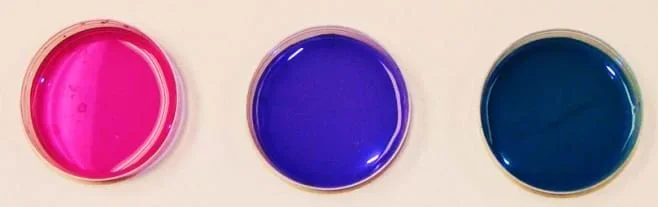 Using red cabbage juice as a pH indicator.Copyright 2010 Rachel Howser, GK-12 Program, University of Houston
Don't Be a Square
Students watch a video clip from Harry Potter and the Goblet of Fire to learn about genetic traits. Specifically, they realize that the ability to speak parseltongue (being able to speak to snakes) is a genetic trait possessed by some characters and their parents. Students explore the use of Punnett squares to predict trait inheritance, learning about genotypes and phenotypes.
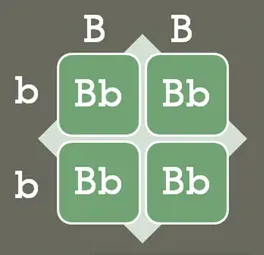 Example Punnett square.Copyright 2011 Rachel Howser, GK-12 Program, University of Houston
Projectile Magic and Magical Motion
In this lesson/activity set, students watch video clips from October Sky and Harry Potter and the Sorcerer's Stone to learn about projectile motion. In October Sky, Homer Hickam calculates the trajectory of a homemade rocket in front of his science class. In the Harry Potter movie, Malfoy throws Neville's remembrall and Harry races after it, making a spectacular catch (all while flying on broomsticks). Then students explore the relationships between displacement, velocity and acceleration and calculate simple projectile motion.
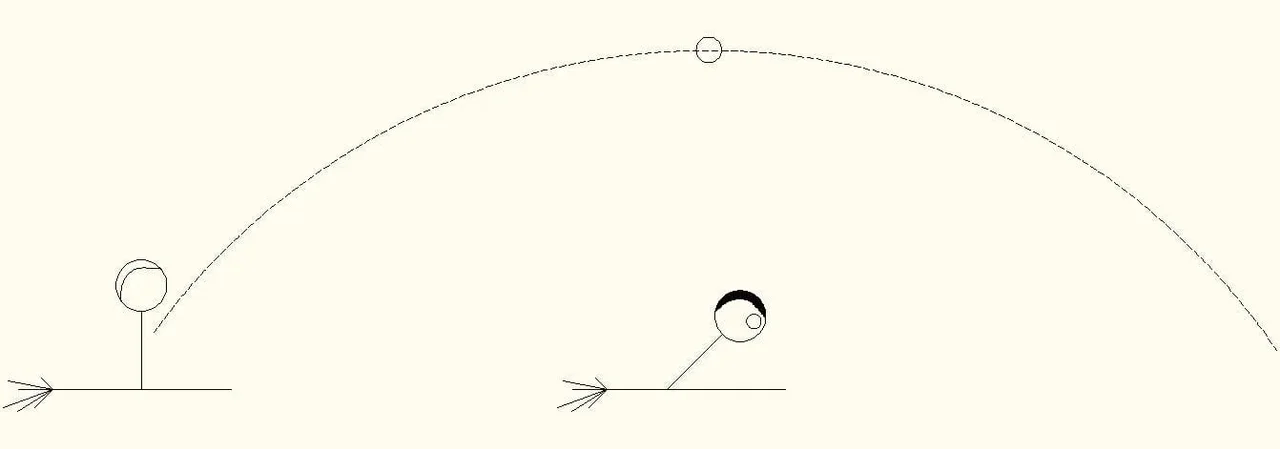 Projectile motion of the remembrall (a device from the Harry Potter wizardry world).Copyright 2011 Rachel Howser, GK-12 Program, University of Houston
Evidence of human engineering is present in nearly every type of applied science field. Mechanical engineers use their knowledge of force and motion to build engines that transport goods and people, machines and tools, ranging from vacuum cleaners to assembly equipment in factories, which make our ways of life possible, along with many other types of devices. Structural engineers use their knowledge of force and motion to design structures that can withstand normal forces such as wind and atypical forces such as earthquakes, monsoons and hurricanes. Other engineers apply their understanding of genetics to the design of insect repellant crops, genetically modified food, cloning and stem cell research. Engineers use their knowledge of acid and base chemistry to design non-corrosive infrastructures, car batteries, chemical fertilizers and food preservation techniques. Engineering is truly all around us.
- Scientific investigation and reasoning. The student knows how to use a variety of tools and safety equipment to conduct science inquiry. The student is expected to:
Grades 6-8
Do you agree with this alignment? - Matter and energy. The student knows that interactions occur between matter and energy. The student is expected to:
Grade 7
Do you agree with this alignment? - Matter and energy. The student knows that matter is composed of atoms and has chemical and physical properties. The student is expected to:
Grade 8
Do you agree with this alignment? - Scientific processes. The student uses a systematic approach to answer scientific laboratory and field investigative questions. The student is expected to:
Grades 9-12
Do you agree with this alignment? - design and implement investigative procedures, including making observations, asking well-defined questions, formulating testable hypotheses, identifying variables, selecting appropriate equipment and technology, and evaluating numerical answers for reasonableness;
Grades 9-12
Do you agree with this alignment?
- Day 1: Basically Acids lesson
- Day 2: Basically Acidic Ink activity
- Day 3: Don't Be a Square lesson
- Day 4: Projectile Magic lesson
- Day 5: Magical Motion activity
- The Science and Engineering Behind Harry Potter
Contributors
Rachel Howser; Christine Hawthorne
Supporting Program
National Science Foundation GK-12 and Research Experience for Teachers (RET) Programs, University of Houston
Acknowledgements
This digital library content was developed by the University of Houston's College of Engineering under National Science Foundation GK-12 grant number DGE-0840889. However, these contents do not necessarily represent the policies of the NSF and you should not assume endorsement by the federal government.
Copyright
2013 by Regents of the University of Colorado; original © 2011 University of Houston