
Cell Celebration!
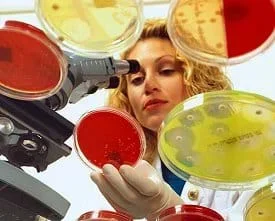 Figure 1. A chemical and biological engineer develops new antibiotics.Copyright National Aeronautics and Space Administration http://science.nasa.gov/science-news/science-at-nasa/2002/29mar_antibiotics/
Students use the hands on associated activity to look at the components of cells and their functions. The lesson focuses on the difference between prokaryotic and eukaryotic cells. Each part of the cell performs a specific function that is vital for the cell's survival. Bacteria are single-celled organisms that are very important to engineering. Engineers use bacteria to break down toxic materials in a process called bioremediation, and they also disable or kill harmful bacteria through disinfection.
Engineers rely on their knowledge of cellular function to control the growth of microorganisms. For example, engineers design systems to remove harmful bacteria commonly found in drinking water. Engineers use their knowledge of cells to make products that offer strong protection against harmful bacteria and also enhance the growth of beneficial bacteria. Soap is an example of a product that offers protection from harmful bacteria. The cell membrane, the protective layer surrounding a cell, is made of fat layers. If the cell membrane is broken, then the cell dies. This is why soaps, which break up fats and the fatty layers, can kill bacteria. Thus, soap is an engineered product that was made for a specific purpose (solving the problem of dirty, contaminated "things"), but is widely used for a multitude of applications.
After this lesson, students should be able to:
- Compare and contrast prokaryotic and eukaryotic cells.
- List examples of how engineers use cells to keep people and the environment safe and healthy.
- Develop, communicate, and justify an evidence-based scientific explanation regarding cell structures, components, and their specific functions
Grade 7
Do you agree with this alignment?
- STEL-3G Explain how knowledge gained from other content areas affects the development of technological products and systems.
Grades 6-8
Do you agree with this alignment?
- MS-LS1-2 Develop and use a model to describe the function of a cell as a whole and ways parts of cells contribute to the function.
Grades 6-8
This resource focuses on the following Three Dimensional Learning aspects of NGSS:
Disciplinary Core Ideas- Within cells, special structures are responsible for particular functions, and the cell membrane forms the boundary that controls what enters and leaves the cell.Do you agree with this alignment?
Crosscutting Concepts- Complex and microscopic structures and systems can be visualized, modeled, and used to describe how their function depends on the relationships among its parts, therefore complex natural structures/systems can be analyzed to determine how they function.Do you agree with this alignment?
Do you agree with this alignment? - Within cells, special structures are responsible for particular functions, and the cell membrane forms the boundary that controls what enters and leaves the cell.
- Prokaryotic Cell Overhead (jpg)
- Prokaryotic Cell Overhead (doc)
- Eukaryotic Cell Overhead (jpg)
- Eukaryotic Cell Overhead (doc)
- Eukaryote and Prokaryote Cell Bingo Sheet (doc)
- Eukaryote and Prokaryote Cell Bingo Sheet (pdf)
- Eukaryote and Prokaryote Cell Bingo Sheet Answers (doc)
- Eukaryote and Prokaryote Cell Bingo Sheet Answers (pdf)
Cells are living organisms. In order to be alive, a cell must have a metabolism, respond to stimuli and reproduce. While the science behind cells is important to know, the engineering behind cells is fascinating. Let's briefly review the science behind cells.
Prokaryotes
Prokaryotes are simple cells that do not contain a nucleus or other membrane bound organelles. The major parts of a prokaryotic cell include: cell wall, cell membrane, ribosomes, and a nucleoid (see Vocabulary section). Even with a minimal number of parts, these cells are able to eat, breathe and reproduce.
Two kingdoms of organisms comprise prokaryotes: bacteria and archaea. Bacteria make up most of the prokaryotes. In additon, archaea are found in extreme environments such as hot springs or near volcanoes. The difference between bacteria and archaea is their type of cell wall: archaea have a thicker cell wall that is very strong and protects it from the heat and chemicals found in harsh environments, and bacteria have a more permeable cell wall that provides less protection from high temperatures or extreme pH, but takes less energy to build. Both bacteria and archaea are unicellular organisms. Although they sometimes live in colonies, each cell could survive on its own and reproduce without the others.
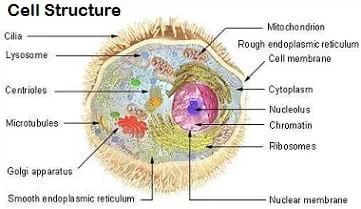 Figure 2. The diagram of a cell.Copyright Surveillance, Epidemilogy and End Results (SEER) Program, National Cancer Institute http://training.seer.cancer.gov/
Eukaryotes
Eukaryotes are complex cells with many organelles. The major organelles found in a eukaryotic cell are: cell membrane, cell wall, ribosomes, nucleus, mitochondria, endoplasmic reticulum and lysosomes (see Vocabulary section). There are both unicellular and multicellular eukaryotes. The four kingdoms of eukaryotic organisms are plants, animals, fungi and protists. Plants are photosynthetic organisms containing cell walls and specialized reproductive tissue. Animals are organisms that lack cell walls, but are capable of locomotion and have a digestive tract. Fungi digest their food externally and then absorb it through their cell walls. Plants, animals and fungi are all multicellular organisms. Protists are single celled motile organisms that can be either photosynthetic or heterotrophic.
Eukaryotes and Prokaryotes Similarities
Some similarities between prokaryotes and eukaryotes exist. First, they both have cell membranes that separate the cell interior from the outside environment. They both have ribosomes that help make proteins and enzymes for metabolism. Finally, both prokaryotes and eukaryotes have their genetic material in the form of DNA. Deoxyribonucleic acid, or DNA, contains the information the cell needs to make proteins to breakdown food into energy as well as the instructions for reproduction.
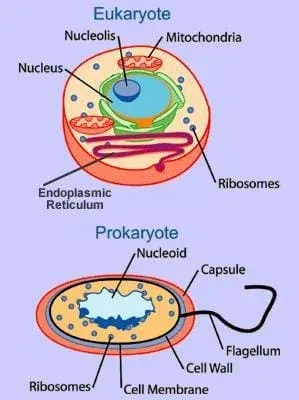 Figure 3. Eukaryotic and prokaryotic cells.Copyright National Aeronautics and Space Administration, The Remote Sensing Tutorial http://landsat.gsfc.nasa.gov/
Today, we are going to talk about cells and how important they are. Even though most cells are much too small for us to see, they are still very important. Engineers use their knowledge of cells to benefit our health and safety, by creating disenfectants, medicines, materials and many other "things" that rely on cells. Did you know that there are millions of cells living in and on your body right now? (Note: If students seem to already know this, take a few comments about what kinds of cells live in and on our bodies.) We have bacteria in our digestive tracts that help us turn our food into energy so that we can run, jump and grow. There are also microorganisms in our body that can make us sick. For example, strep throat is another a type of bacteria, but it makes us sick instead of helps us digest food and nutrients.
Engineering advancements help people stay healthy — clean drinking water, for example. Engineers work to protect people from harmful cells while making sure they do not destroy beneficial cells. Can anyone think of a way that we might protect ourselves from cells that might make us sick? (Possible examples include: washing your hands and covering your mouth when you cough; the sterilization of surgical tools; the treatment of drinking water before it comes out of the tap.) Now, can anyone name one way to make sure that helpful bacteria stay alive? (Discuss how doctors recommend that we eat unpasturized yogurt to keep good bacteria in our digestive tract). Refer to the Sudsy Cells activity to have students engineer their own investigation of bacteria gowth and applications to help prevent those that are unwanted!
Not only is it important to have good bacteria living in our bodies, but it is also beneficial to have organisms in the environment that "eat" pollution. Have any of you seen pictures of oil spills? (Note: If available, show students pictures from the Deepwater Horizon oil spill in the Gulf of Mexico in 2010 or the Exxon Valdez oil spill off the coast of Alaska in 1989.) They are very damaging to the environment. Although we can clean up a lot of the oil, it is usually impossible to clean up all of the oil right away since the spills often cover a large area and spread quickly. Engineers have learned to use bacteria that "eat" oil as a way to speed up oil spill clean-up. This process is called bioremediation.
For engineers to control cell growth, whether it is to promote it or prevent it, they must know how the cells live. Today we are going to learn about the two major types of cells: eukaryotes and prokaryotes. Eukaryotes are the cells that make up our body, and they have many parts called organelles. Prokaryotes are cells that are found in bacteria, and they do not have organelles. Even though the two types of cells are very different, they are both able to eat, breathe, grow and reproduce.
Today we learned about the two types of cells: eukaryotes and prokaryotes. Can anyone tell me one difference between the two kinds of cells? (Answer: Prokaryotes do not have a nucleus or other membrane bound organelles while eukaryotes do.) Can anyone name one example of a prokaryote? (Answer: Bacteria that can make us sick or the beneficial bacteria used in bioremediation and in our digestive tract.) Can anyone give an example of a eukaryote? (Possible answers: Plants, animals, mushrooms, algae, not all eukaryotic organisms are multicellular.) The differences and similarities between the two types of cells are important to engineers because they use this information when trying to control cell growth in the environment, which is important to plans, animals and especially humans. Engineers must understand cell structure in order to design strategies to destroy harmful cells so that we can lead healthy lives. For example, engineers must understand cell structure before designing soaps that can break up the fatty layers of a cell membrane in order to destroy the cells that can make us sick. It's fascinating!
- cell membrane
- (P) (E) A thin layer that separates the inside of the cell from the outside environment; a boundary that governs what goes in and out of the cell.
- cell wall
- (P) A layer that supports the cell and acts as a further barrier between the cell interior and the environment.
- chloroplast
- (E) Captures energy from sunlight in a photosynthetic cell.
- cytoplasm
- (P) (E) A fluid inside the cell that is similar to gel.
- deoxyribonucleic acid
- (P) (E) Known as DNA; contains the information the cell needs to make proteins to breakdown food into energy as well as the instructions for reproduction.
- endoplasmic reticulum
- (E) A system of membranes that transports nutrients and proteins within the cell; some parts of it are covered with ribosomes to facilitate making proteins.
- enzyme
- (P) (E) Protein the cell produces to speed up chemical reactions.
- golgi apparatus
- (E) The part of a cell that modifies and transports proteins.
- lysosome
- (E) A sack that contains various enzymes.
- mitochondria
- (E) The part of a cell that produces energy for the cell by respiration.
- nucleoid
- (P) The circular genetic material found in a coil in a prokaryotic cell.
- nucleus
- (E) The control center of the cell that contains the DNA; found in strands in the nucleus.
- organelle
- (E) "Little organs" inside the cell; examples are the mitochondria, ribosomes, endoplasmic reticulum, golgi apparatus and lysosomes.
- ribosome
- (P) (E) The structure that reads DNA in order to make proteins.
Pre-Lesson Assessment
Discussion Question: Ask a discussion question to get students to think about the upcoming lesson. Ask the students about organisms that are good for them and those that can make them sick. See if any students already know about prokaryotes and eukaryotes or that a classification system exists for organisms.
Post-Introduction Assessment
Voting: Ask a true/false question and have students vote by holding thumbs up for true and thumbs down for false. Count the votes and write the totals on the board. Give the right answer.
- True or False: Eukaryotes are complex cells with a nucleus and other membrane bound organelles. (Answer: True)
- True or False: Bacteria are an example of eukaryotes. (Answer: False, bacteria are an example of prokaryotes.)
- True or False: Engineers try to kill all bacteria because they are all harmful. (Answer: False, engineers often use good bacteria to help keep humans and the environment healthy.)
- True or False: Through a process called bioremediation, engineers try to promote the growth of bacteria to can eat substances that are toxic to humans. (Answer: True)
Lesson Summary Assessment
Cell Bingo: Give students a sheet of paper with either a eukaryotic or prokaryotic cell drawn on it (see Attachments section). Cut small strips of paper and write one of the following words on each piece of paper: cell membrane, cell wall, nucleoid, ribosome, cytoplasm, nucleus, mitochondria and endoplasmic reticulum. Place all strips of paper with cell structures written on them in a hat. Remove only one cell structure from the hat at a time. Students who have that structure in their cell must fill in the blank on their bingo sheet. The first student to fill in all the blanks on his/her cell raises his/her hand. To be the winner, the student must have labeled each structure properly and be able to tell the class the function of each cell structure and what type of cell it is.
Make Your Own Yogurt: As engineers, students can make their own yogurt (by growing prokaryotes in milk) and sweeten it with preserves from fruit (eukaryotes). It takes 6-8 hours to culture, so if the activity is done in the morning, it should be ready by the end of the day. The recipe for making your own yogurt is: 1.75 cups powdered milk, 4 cups very warm water (110-125˚F), 1/3 cup plain yogurt with no preservatives. Whisk the first two ingredients until smooth and then whisk in yogurt. Incubate in an insulated cooler to keep it warm for 6-8 hours. Add fruit preserves to sweeten the yogurt and enjoy. It might also be interesting to note that the pH of the yogurt is very low, making it difficult for other, potentially harmful, bacteria to grow in the yogurt.
Short, Sr., Dr. Nicholas M. National Aeronautics and Space Administration, The Remote Sensing Tutorial, Section 20, "Nature and Origin of Life on Planetary Bodies," June 30, 2008. http://landsat.gsfc.nasa.gov/education/tutorials.htmlSect20/celltypes.jpg Accessed September 29, 2008.
National Cancer Institute, Surveillance, Epidemiology and End Results (SEER) Program, September 2000. http://training.seer.cancer.gov/module_anatomy/images/illu_cell_structure.jpg Accessed September 26, 2008,
National Institute of Standards and Technology, "Nanotechnology at NIST," March 18, 2003. http://www.nist.gov/public_affairs/nanotech/images/plant.jpg Accessed July 22, 2008.
Contributors
Kaelin Cawley; Glen Sirakavit; Malinda Schaefer Zarske; Janet Yowell
Supporting Program
Integrated Teaching and Learning Program, College of Engineering, University of Colorado Boulder
Acknowledgements
The contents of this digital library curriculum were developed under a grant from the Fund for the Improvement of Postsecondary Education (FIPSE), U.S. Department of Education and National Science Foundation GK-12 grant no. 0338326. However, these contents do not necessarily represent the policies of the Department of Education or National Science Foundation, and you should not assume endorsement by the federal government.
Copyright
2008 by Regents of the University of Colorado.