
How Hot Is It?
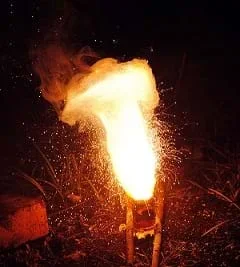 Students explore thermal energy.Copyright 2010 Nikthestunned, WIkimedia Commons https://commons.wikimedia.org/wiki/File:ThermiteReaction.jpg
Students learn about the nature of thermal energy, temperature and how materials store thermal energy. They discuss the difference between conduction, convection and radiation of thermal energy, and complete activities in which they investigate the difference between temperature, thermal energy and the heat capacity of different materials. Students also learn how some engineering requires an understanding of thermal energy.
Engineers must understand the thermal properties of materials to be able to predict the performance of any given material over its lifetime in a specific application. Engineers apply their understanding of the thermal properties of materials to the design of efficient heat transfer materials for better engines, spacecraft and electronic devices. They also examine the thermal properties of insulation to design more efficient buildings and homes. Engineers develop ways to minimize heat transfer from a motor to the surrounding environment. Often they find ways to insulate the motor to decrease the convective heat transfer from the motor. They design a refrigerator to keep heat out of the inside, as well as keep the refrigerator contents cool.
After this lesson, students should be able to:
- Define, describe and identify the three methods of heat transfer: conduction, convection and radiation.
- Explain that some materials are good conductors of heat while others are insulators.
- Explain that different materials gain and lose thermal energy at different rates.
- Relate examples of engineered products that use a material's heat capacity and heat transfer.
- Energy comes in many forms such as light, heat, sound, magnetic, chemical, and electrical
Grade 4
Do you agree with this alignment? - Identify and describe the variety of energy sources
Grade 4
Do you agree with this alignment?
- Energy comes in different forms.
Grades 3-5
Do you agree with this alignment?
- 4-PS3-2 Make observations to provide evidence that energy can be transferred from place to place by sound, light, heat, and electric currents.
Grade 4
This resource focuses on the following Three Dimensional Learning aspects of NGSS:
Science & Engineering Practices- Use evidence (e.g., measurements, observations, patterns) to construct an explanation.Do you agree with this alignment?
Disciplinary Core Ideas- Energy can be moved from place to place by moving objects or through sound, light, or electric currents.Do you agree with this alignment?
- Energy is present whenever there are moving objects, sound, light, or heat. When objects collide, energy can be transferred from one object to another, thereby changing their motion. In such collisions, some energy is typically also transferred to the surrounding air; as a result, the air gets heated and sound is produced.Do you agree with this alignment?
- Light also transfers energy from place to place.Do you agree with this alignment?
Crosscutting Concepts- Energy can be transferred in various ways and between objects.Do you agree with this alignment?
Do you agree with this alignment? - Use evidence (e.g., measurements, observations, patterns) to construct an explanation.
More on Conduction
When you cook on an electric stove, the pots and pans are heated by conduction. In this process, heat is transferred from the burner to the bottom of the pot. The particles (both the molecules and electrons) at the bottom of the pot move faster and have more collisions with neighboring particles, causing them to move faster. Eventually, the entire pot is hot because of transmission of thermal energy through these collisions.
Materials that are good conductors of electricity are also good conductors of heat. This is because the transmission of heat depends on the outermost electrons, just as the ability to conduct electricity does. Solids with weakly-bonded electrons are good conductors of both heat and electricity. Materials that are poor conductors of heat and electricity are insulators. In general, both gases and liquids are good insulators.
Engineers use good insulator materials to maintain an object's temperature, whether it is hot or cold. For example, many types of materials are used to insulate buildings, including fiberglass and rigid foam. Much of the insulation value of these materials is provided by tiny air pockets in the material. Insulation works both ways; it slows the rate of heat transfer between a building and the environment. If it is warm in the building and cold outside, insulation slows the rate of heat transfer to the outside. If it is cold in the building and warm outside, insulation slows the rate of heat transfer to the inside.
More on Convection
Heat is transferred by convection in liquids and gases. When a fluid, either a liquid or gas, is in contact with a hot object, warmed fluid rises and cooler fluid sinks to take the place of the warmed fluid. This produces currents in the fluid. When a pan of water is heated on the stove, heat is transferred to the pan and then to molecules of water that are in contact with the pan by conduction. As a packet of water gains heat, and its molecules speed up, it expands, becoming less dense than the surrounding water. This less dense packet of water rises like a balloon through the surrounding liquid. Colder, denser water packets sink to take its place.
More on Radiation
Heat transfer can also occur between objects that are not touching and that are separated by empty space. This is exactly how energy from the sun reaches Earth across 150 million kilometers (93 million miles) of nearly empty space. Similarly, energy from a fire or stove burner reaches our bodies through empty space. In fact, all objects transfer energy in this way at all times. This phenomenon is known as radiation. Besides heat, radiation transmits other forms of energy, such as visible light, x-rays, radio, which are all forms of electromagnetic radiation. The energy in x-rays is greater than the energy in visible light, which is greater than the energy of heat (infrared radiation), which is greater than the energy of radio waves. In a vacuum, energy is transmitted at the speed of light by radiation. In an object that absorbs infrared radiation, the motion of its particles increases, thus increasing its temperature.
Everything is continually radiating energy and absorbing energy by radiation. An object's temperature increases if it absorbs more energy than it radiates and vice versa. If an object is warmer than its surrounding it transfers heat to its surroundings by radiation (and by conduction, if it is touching another object, and by convection if there is a fluid in the environment).
Black objects are good absorbers and radiators, while shiny or white objects are poor absorbers and radiators. For example, dark-colored cars get much hotter than white cars on hot days. White and shiny surfaces reflect radiation. This is why engineers, architects and builders sometimes paint roofs or houses white in hot climates to help reduce the need for air conditioning.
What is the difference between thermal energy and temperature?
The atoms and molecules in all matter (solids, liquids, gases and plasmas) are constantly vibrating. There is more movement of the particles in a warmer object and less movement of the particles in a cooler object. Temperature is a quantitative measurement of how warm or cool an object is. Measuring the temperature of an object gives the average kinetic energy — the energy due to motion — of the particles in the object. Refer to the hands-on design associated activity Make Your Own Temperature Scale to help students illustrate the difference between these two concepts.
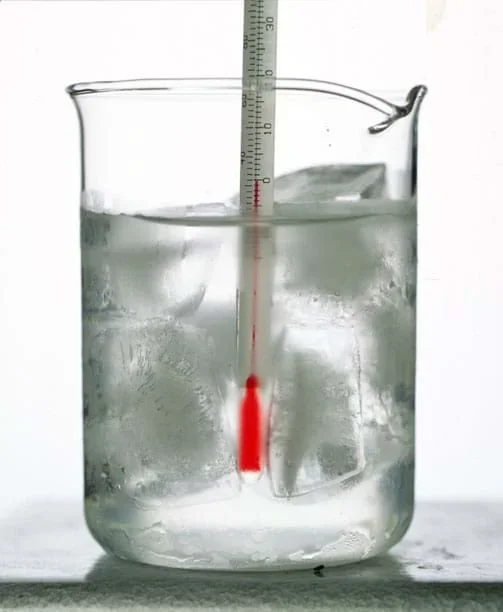 Engineers use many types of thermometers to measure and monitor temperatures.Copyright Science and Nature.
Materials that are good conductors of heat feel hotter to the touch than materials than are insulators even if they are at the same temperature. Two objects at the same temperature that are identical in all respects but size have different amounts of thermal energy. The larger object has a greater amount of thermal energy than the smaller object due to its greater mass.
As the temperature of matter changes, its characteristic properties, such as electrical conductivity, may change. Almost all materials also change volume as their temperature changes. Most materials expand as their temperature increases and contract as their temperature decreases. Materials expand when their temperature increases because the particles are moving about a higher average speed and therefore have more energetic collisions. The energetic collisions force the particles to move farther apart.
The expansion and contraction of gases is dramatic. For example, the volume of a balloon decreases greatly if it is dunked in liquid nitrogen. The balloon returns to its original size as it warms back up to room temperature. The volume change of solids with a change in temperature is less noticeable. However, most people have experienced the result of the expansion of a metal lid on a glass jar (making it easier to open) when it is held under hot water. The metal lid expands more than the glass jar, so the lid can be removed. In general, expansion and contraction of liquids is greater than expansion and contraction of solids. Different materials expand and contract at different rates.
Why do some things heat up and cool down faster than others?
How long it takes a material to heat up or cool down depends on the amount of the material and its specific heat. Specific heat is the amount of heat required to raise the temperature of one unit mass of a material by one degree. Specific heat is unique for every type of material. Diamonds have high specific heat and thermal conductivity, which is why they are cold to the touch. The specific heat of water is much higher than for most materials. So, for example, it takes much longer to heat up or cool down a given mass of water than an equal mass of aluminum or iron. The high specific heat of water makes it useful for both cooling and warming. This characteristic of water explains why locations next to large bodies of water tend to have more moderate climates than those further inland. Most people have experienced the effects of varying specific heats when eating fruit pie right out of the oven. The fruit filling, which is made mostly of water, can still burn your mouth even though the crust is no longer hot. Refer to the associated activity How Much Heat Will It Hold? for students to explore the relationship between different materials and heat capacity.
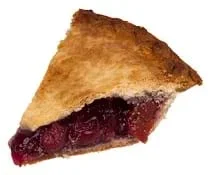 A pie's fruit filling has a different specific heat than its crust.Copyright 2011 Evan-Amos, Wikimedia Commons https://commons.wikimedia.org/wiki/File:Cherry-Pie-Slice.jpg
How is heat transfer important in engineering?
Understanding heat transfer, whether the goal is to maximize or minimize it, is important to engineers. Civil and architectural engineers use insulation and passive solar design to construct buildings that neither lose nor gain too much heat. Mechanical engineers design appliances, such as air conditioners, refrigerators, heaters and ventilation systems. Civil engineers design heating, cooling and ventilation systems for buildings. Aerospace engineers design thermal control systems for spacecraft and study how airplane designs affect aerodynamic heating.
Sometimes engineers need to maximize heat transfer of devices that tend to overheat or work less efficiently at higher temperatures. For example, the waste heat from an electric generator, a computer CPU, or a refrigerator compressor must be transferred away from the devices as much as possible. In other applications, engineers must minimize heat transfer to keep a device working efficiently. For instance, the storage space of a refrigerator must be well insulated to minimize the heat transfer from the outside to the inside.
Just below the Earth's surface is a virtually limitless supply of energy. What type of energy do you think it is? Can you guess? Well, the Earth's middle or core is very, very hot, so the type of energy just under the earth's surface is heat energy! We have another name for heat energy and that is thermal energy. The thermal energy in the six miles of the Earth's crust, right below us, is equal to 50,000 times the energy of all the oil and gas resources in the world. That's a lot of energy from heat!
How do we measure thermal energy or heat? We use a thermometer or take a temperature reading. Temperature is a way we measure heat or thermal energy. Heat is energy that is transferred from one object to another due to a difference in their temperatures. Have you every noticed that when you lay your head on a cold pillow, it soon warms up? Well, that's heat transferring from your head to the pillow. Heat can be transferred between objects at different temperatures in three ways: conduction, convection or radiation.
Conduction is when heat or thermal energy is transferred between two objects touching each other. Resting your head on a cool pillow is one example. Other examples include burning your hand by touching a hot pan, sitting on a hot car seat, and a pot warming up when you put it on a stove burner. Convection is similar to conduction, but it happens when one material is a liquid or a gas, like water and air. Examples of convection include boiling water in a pot and when warm air moves towards the ceiling in a heated room. Radiation occurs when heat is transferred between two objects that are not touching, and can even be very be far apart. Examples of radiation include the heat from the sun traveling through space or feeling the warmth of a fire or heater when you are in the same room.
Have you ever noticed that some materials heat up or cool down faster than others? That is because each material has a different rate for transferring its thermal energy. Do you remember learning about conductors and insulators? Who can remember what they are? A conductor is a material that helps energy pass through and an insulator is a material that prevents energy from passing through it. This happens with any type of energy, thermal energy included. When you wear an oven mitt while removing a pot from a burner, the oven mitt insulates your hand from the thermal energy of the pot, or keeps the heat from burning your hand. Common insulators for heat are plastic, Styrofoam and wood, because these materials heat up very slowly. Common conductors for heat are... can you guess? What materials get hot quickly on a sunny day? That's right, metals! They heat up really fast!
Some everyday appliances designed by engineers use thermal energy to work for us. Can you think of a few devices that need heat to work? (Possible answers: Air conditioner, oven, stove, convection oven, toaster, water heater and furnace.) Engineers need a good understanding about thermal energy and how heat is transferred for many different reasons. Engineers who work with new materials must understand their thermal energy properties to be able to predict how materials will behave. They use their knowledge of thermal energy of materials to design better engines, spacecraft and electronic devices to help people. When designing new buildings, homes and refrigerators, engineers study how well insulation works to keep thermal energy out.
Today, we are going to learn more about thermal energy and how it is useful for us and engineers.
Ask the students to list examples of each of the three methods of heat transfer. (Possible answers: Conduction: Burning your hand touching a hot pan, sitting on a hot car seat, a pot warming up when placed on a hot burner. Convection: Boiling water in a pot, warm air moving towards the ceiling in a heated room. Radiation: Sunlight traveling through space, feeling the warmth of a fire or other heat source, feeling the warmth of anything without touching it.) What is another name for heat? (Answer: Thermal energy.) Engineers use thermal energy when designing all sorts of devices. Who can name an example of an appliance that uses thermal energy? (Possible answers: Water heater, stove, oven and toaster.)
- absorb
- To be taken into a material without transmission or reflection.
- compressor
- A pump or other machine that increases the pressure of a gas by reducing its volume.
- conduction
- The transmission of electric charge or heat through a non-insulating medium without perceptible motion of the medium itself.
- conductor
- A material through which energy (electrical, thermal or sound) can be easily transferred.
- convection
- The transfer of thermal energy in a fluid (gas or liquid) by the circulation of currents in the heated fluid causing warmer packets to rise while cooler packets sink.
- coolant
- A fluid used to cool a system by transferring heat from one part to another.
- cryogenic
- Of or relating to very low temperatures.
- electromagnetic radiation
- Electromagnetic energy transmitted in the form of waves or particles (photons); the electromagnetic spectrum is composed of (in order of increasing energy): radio waves, microwaves, infrared radiation, visible light, ultraviolet radiation, x-rays, gamma rays, cosmic-ray photons.
- heat
- A form of energy associated with the motion of atoms or molecules, and capable of being transmitted through solid and fluid media by conduction, through fluid media by convection, and through empty space by radiation.
- heat capacity
- The amount of heat required to raise the temperature of one mole or one gram of a substance by one degree Celsius without a change of phase (from solid to liquid, or liquid to gas, etc.)
- heat transfer
- The transfer of thermal energy between bodies due to a difference in their temperatures.
- insulator
- A material through which energy (electrical, thermal or sound) cannot be easily transferred.
- radiation
- The emission and propagation of energy in the form of electromagnetic waves or particles (photons).
- reflect
- To cause to bend back or return upon striking a surface.
- refrigerant
- A substance, such as air, ammonia, water or carbon dioxide, used to provide cooling either as the working substance of a refrigerator or by direct absorption of heat.
- specific heat
- The amount of heat required per unit mass to raise the temperature of a substance by one degree.
- temperature
- The degree of hotness or coldness of a body or environment. A measurement of thermal energy. The average kinetic energy of the particles that make up an object.
- thermal energy
- The energy an object has due to the motion of its particles. Also called heat energy.
- thermal equilibrium
- When the temperatures of two or more bodies are equal.
- thermometer
- An instrument for measuring temperature, especially one having a graduated glass tube with a bulb containing a liquid (typically mercury or colored alcohol) that expands and rises in the tube as the temperature increases.
- transmit
- To allow to pass through a material.
Pre-Lesson Assessment
Brainstorming: As a class, have the students engage in open discussion. Remind them that in brainstorming, no idea or suggestion is "silly." All ideas should be respectfully heard. Take an uncritical position, encourage wild ideas and discourage criticism of ideas. Have students raise their hands to respond. Write their ideas on the board. Ask the students:
- One type of energy is heat energy. What object can you think of that use heat to work?
Post-Introduction Assessment
Question/Answer: Ask students the following questions and have them raise their hands to respond. Write their answers on the board.
- If an engineer is looking for a material to minimize heat transfer by conduction in a device she is building, what type of material should she choose? (Answer: An insulator, such as Styrofoam, plastic or wood.)
- Name some devices that engineers have designed in which heat transfer is an important part of their function. (Possible answers: Oven, stove, hair dryer, air conditioner, convection oven, toaster, clothes dryer, dish washer, water heater and furnace.)
Lesson Summary Assessment
Numbered Heads: Divide the class into teams of three to five students each. Have the students each team number off so each member has a different number. Ask the students a question (give them a time frame for solving it, if desired). The members of each team work together to answer the question. Everyone on the team must know the answer. Call a number at random. Students with that number should raise their hands to give the answer. If not all the students with that number raise their hands, allow the teams to work a little longer. Ask the students:
- Heat transfer between two objects is always from the (colder or hotter) object to the (colder or hotter) object. (Answer: Hotter to colder.)
- True or False: Heat transfer occurs between objects at the same temperature. (Answer: False)
- A shiny surface (absorbs, transmits or reflects) most of the light that shines on it. (Answer: Reflects)
- Heat transfer in liquids is by (conduction, convection or radiation). (Answer: Convection)
- Name a material that would be a good conductor of heat. (Possible answer: Any metal)
- Heat transfer over a distance is by (conduction, convection or radiation). (Answer: Radiation)
- What is another name for heat energy? (Answer: Thermal energy.)
- Challenge Question: What types of engineers use thermal energy in their work? (Answer: Thermal energy is considered in almost every engineering application! For example, civil and architectural engineers take thermal energy into consideration when planning the insulation and passive solar design of buildings so they neither lose nor gain too much heat, as well as solar-paneled stop lights, and power generators. Mechanical engineers design appliances, such as air conditioners, refrigerators, heaters and ventilation systems. Civil engineers design heating, cooling and ventilation systems for buildings. Aerospace engineers design thermal control systems for spacecraft, and study how airplane designs affect aerodynamic heating. Electrical and computer engineers use their understanding of thermal energy and heat transfer when designing electrical and computer components.
Ask students to investigate how a mood ring works. In what way is heat transferred (conduction, convection or radiation)? How is thermal energy being used? How is the choice of material important? For more information, see Mood Rings, How Stuff Works, http://science.howstuffworks.com/question443.htm.
Ask student teams to research how refrigerators and air conditioners use thermal energy to work. Start with the following good Internet resources: Refrigerators, How Stuff Works, http://www.howstuffworks.com/refrigerator.htm and Air Conditioning, How Stuff Works, http://www.howstuffworks.com/ac.htm.
A vital part of satellite and spacecraft construction is ensuring that they can shed excess heat. Have students conduct an Internet search to determine what systems engineers design to overcome this challenge.
A high heat capacity is an important property in passive solar design. Have students investigate thermal mass and passive solar design. Search the following terms on the Internet: phase changes and refrigeration, thermochemistry of heat engines and water heater diagram.
Geothermal Technologies Program. Updated October 3, 2005. Energy Efficiency and Renewable Energy, U.S. Department of Energy.
Hewitt, Paul G. Conceptual Physics. Boston, MA: Little, Brown and Company, 1977.
Kagan, S. Cooperative Learning. San Juan Capistrano, CA: Kagan Cooperative Learning, 1994. (Source of Numbered Heads assessment tool.)
Contributors
Sabre Duren; Jeff Lyng; Malinda Schaefer Zarske; Denise W. Carlson
Supporting Program
Integrated Teaching and Learning Program, College of Engineering, University of Colorado Boulder
Acknowledgements
The contents of this digital library curriculum were developed under grants from the Fund for the Improvement of Postsecondary Education (FIPSE), U.S. Department of Education and National Science Foundation (GK-12 grant no. DGE 0338326). However, these contents do not necessarily represent the policies of the Department of Education or National Science Foundation, and you should not assume endorsement by the federal government.
Copyright
2005 by Regents of the University of Colorado