
Blood Clots, Polymers and Strokes
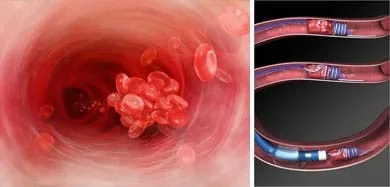 Biomedical engineers design and test procedures, devices and medicines that break down blood clots within blood vessels that could lead to strokes.Copyright (left) 2010 Lawrence Livermore National Laboratory, U.S. Department of Energy, (right) 2008 Neilbarman, Wikipedia {PD} https://newsline.llnl.gov/_rev02/articles/2010/mar/03.12.10-dvt_print.php http://en.wikipedia.org/wiki/File:Merci_L5.jpg
Students are introduced to the circulatory system with an emphasis on the blood clotting process, including coagulation and the formation and degradation of polymers through their underlying atomic properties. They learn about the medical emergency of strokes—the loss of brain function commonly due to blood clots— including various causes and the different effects depending on the brain location. Students investigate blood clot removal devices designed by biomedical engineers with the hands-on and design based associated activity.
Biomedical engineers apply their understanding of the science of the human body to the medical sciences to create practical solutions to biological problems. Biomedical engineering is a highly interdisciplinary field with diverse applications—from clearing out blood vessels to designing medicines to creating artificial organs. Biomedical engineers create new technologies to improve patient treatment. They develop and test both physical and chemical methods to treat blood clots that could lead to strokes.
After this lesson, students should be able to:
- Explain what a polymer is and provide examples
- Explain how different regions of the brain control different human body functions.
- Describe different causes and effects of strokes, as well as technologies created by biomedical engineers to treat and help prevent the occurrence of strokes.
- Communicate scientific information about why the molecular-level structure of polymers is important in the functioning biomedical engineering designs.
- HS-PS2-6 Communicate scientific and technical information about why the molecular-level structure is important in the functioning of designed materials.
Grades 9-12
Do you agree with this alignment?
- Students will develop an understanding of the relationships among technologies and the connections between technology and other fields of study.
Grades K-12
Do you agree with this alignment? - Medical technologies include prevention and rehabilitation, vaccines and pharmaceuticals, medical and surgical procedures, genetic engineering, and the systems within which health is protected and maintained.
Grades 9-12
Do you agree with this alignment?
- HS-PS2-6 Communicate scientific and technical information about why the molecular-level structure is important in the functioning of designed materials.
Grades 9-12
This resource focuses on the following Three Dimensional Learning aspects of NGSS:
Science & Engineering Practices- Communicate scientific and technical information (e.g. about the process of development and the design and performance of a proposed process or system) in multiple formats (including orally, graphically, textually, and mathematically).Do you agree with this alignment?
- New technologies advance scientific knowledge.Do you agree with this alignment?
Disciplinary Core Ideas- Attraction and repulsion between electric charges at the atomic scale explain the structure, properties, and transformations of matter, as well as the contact forces between material objects.Do you agree with this alignment?
Crosscutting Concepts- Investigating or designing new systems or structures requires a detailed examination of the properties of different materials, the structures of different components, and connections of components to reveal its function and/or solve a problem.Do you agree with this alignment?
Do you agree with this alignment? - Communicate scientific and technical information (e.g. about the process of development and the design and performance of a proposed process or system) in multiple formats (including orally, graphically, textually, and mathematically).
- Blood Clots, Polymers and Strokes Presentation (pptx)
- Blood Clots, Polymers and Strokes Presentation (pdf)
- Blood Clots, Polymers and Strokes Worksheet (docx)
- Blood Clots, Polymers and Strokes Worksheet (pdf)
- Blood Clots, Polymers and Strokes Worksheet Answers (docx)
- Blood Clots, Polymers and Strokes Worksheet Answers (pdf)
(Have available a computer with internet access and a projector to show students the 10-slide Blood Clots, Polymers and Strokes Presentation (PDF) along with the information below, as well as a showing them the 3-D animation and short videos listed in the Additional Multimedia Support section that are helpful in teaching this material. The slides are "animated," so clicking the mouse or space bar brings up the next item. Also, having a real brain for students to see and touch, or a classroom model, is helpful.)
Strokes and the Brain
Every year, approximately 800,000 people experience strokes, the leading cause of adult-onset disability in the U.S. A stroke, also called a brain attack, is a loss of brain function due to an interruption of blood supply to the brain. Lack of adequate blood supply or ischemia, starves the affected region of the brain of nutrients and can cause it to die. The human brain has more than 100 billion neurons and different functions are localized in different regions of the brain. Despite the large number of neurons, the slightest loss of brain tissue can result in catastrophic disabilities.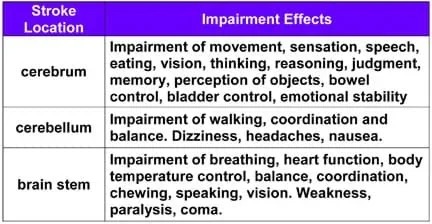 Table 1. Different regions of the brain have different functions, and consequently, different stroke reactions.Copyright 2012 Victoria Lanaghan, Integrated Teaching and Learning Program, College of Engineering, University of Colorado Boulder
Different regions of the brain have different functions; therefore, the effects of a stroke are dependent upon its location and severity, that is, how much tissue is deprived of blood and for how long. The major regions of the brain are the cerebrum, cerebellum and brain stem. The consequences of strokes are different for each region (see Table 1). As a general rule, strokes occurring in the left hemisphere of the brain affect the left side of the face and the right side of the body. Likewise, strokes occurring in the right hemisphere affect the right side of the face and the left side of the body.
In each region of the brain, localized areas are responsible for particular functions. For example Broca's area and Wernicke's area, located on the left side of the cerebrum (see Figure 1), control speech and language comprehension, respectively. A stroke occurring in Broca's area leaves a person with an impaired ability to speak, while not affecting his/her language comprehension.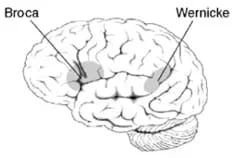 Figure 1. The Broca's area and Wernicke's area control human speech and language comprehension, respectively.Copyright National Institutes of Health via Wikimedia {PD} http://en.wikipedia.org/wiki/File:BrocasAreaSmall.png
Have ready some resources to inform students about the various regions of the brain (see website URLs in the Additional Multimedia Support section), such as:
- An interactive "3-D brain" visual aid provides moveable illustrations of brain regions and information on their functions.
- A 2.5-minute animation explains how a stroke happens and the different types of strokes.
- A human brain, if available for demonstration. If possible, allow students to touch the brain to observe its texture and consistency.
Using whatever resources are available, point out the different regions of the brain and their corresponding functions. What would occur if certain portions of the brain atrophied? How difficult it would be to go through life lacking these functions and dependent on others?
Ischemic stroke can occur due to a blood vessel blockage as a result of a formed blood clot (thrombosis), or a blood clot or plaque that migrated to block blood flow (embolism). Stroke can also be due to hemorrhage, called hemorrhagic stroke, which is when a weakened blood vessel ruptures and bleeds. Hemorrhages cause blood to accumulate in surrounding brain tissue, causing damage and compression. Ischemic stroke is far more common, causing 87% of all strokes.
Polymers
A polymer is a large molecule composed of repeating units covalently bonded to one another. The repeating units are termed monomers, which are composed of collections of atoms. Polymerization is the process of covalently linking together monomers to form long chain polymers, with carbon, oxygen, nitrogen, and silicone commonly found in the backbone. The monomer structure and its connectivity in making the polymer determine the overall polymer properties. Also, separate polymer chains can bind to one another through connections known as cross-links. Cross-links hold polymers together, reducing the ability for polymers to slide past one another, effectively altering their physical properties.
Polymers can be naturally or synthetically created. Synthetic polymers are diverse and widespread, and include nylon, polystyrene and Teflon. In humans, polymers are paramount for life processes; examples include polysaccharides (polymers of sugars), polypeptides (polymers of amino acids), and polynucleic acids (polymers of nucleic acids).
Blood Clots/Coagulation
Blood is a fluid composed of plasma, blood cells, platelets, and a variety of dissolved proteins, sugars and minerals. For every cell in the body, blood is essential for the delivery of nutrients and removal of waste. Blood is confined to the blood vessels of the body, pushed through the system by the heart. Loss of blood, even through a small cut, can lead to death if not healed or treated. Blood clots form at the sites of damaged blood vessels in order to stop bleeding.
The process of forming a blood clot is called coagulation. (Show students a two-minute video on how blood clots; see website URL provided in the Additional Multimedia Support section.) Damage to a blood vessel is sensed by platelets, which immediately begin to bind to the damaged tissue and plug the opening. The damage is also sensed by protein molecules floating by in the blood, called clotting or coagulation factors. Through a complex cascade of reactions involving dozens of molecules and proteins, fibrinogen, an important blood-clotting protein, is recruited to the damage site and converted to fibrin. Fibrin then polymerizes to form a meshwork in conjunction with the platelets to form a blood clot. Abnormalities in this process can lead to severe complications; excessive clotting can result in heart attack and stroke, whereas less effective clotting can result in hemorrhage.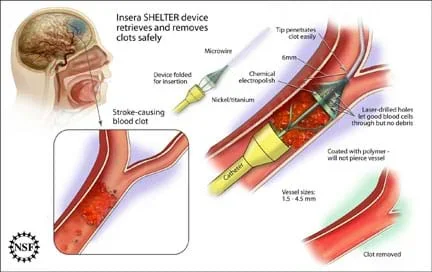 Figure 2. An example tool developed by biomedical engineers to remove blood clots in human blood vessels in the brain.Copyright National Science Foundation http://www.nsf.gov/news/news_images.jsp?cntn_id=117083&org=NSF
Biomedical Engineering Inventions
Generally, stroke treatment consists of a variety of drugs designed to thin the blood and break-down clots, with the end goal to restore blood flow to the ischemic area. Sometimes, clots do not respond to these treatments, and must be physically removed. In response to this need, biomedical engineers have created minimally invasive, catheter-based tools that are inserted into arteries to travel to the blockage sites where they remove or destroy blood clots in order to restore blood flow to the region.
Examples: FDA-approved in 2004, the Merci Retrieval System is a small, long and narrow, corkscrew-shaped device that is fed into the femoral artery in the groin area and navigates to the brain blockage site where it grabs the clot, and slowly pulls it back through the vessels and out of the body. The Penumbra System is designed to "suck up" the clot and remove it from the body. (Show photos and/or short animation videos on both of these devices; see website URLs provided in the Additional Multimedia Support section). Figure 2 shows another example, the Insera SHELTER device.
Engineering and the medical field are very different career paths... or are they? You might be surprised to hear that one field of engineering is called biomedical engineering. Biomedical engineers develop new technologies, devices and procedures that doctors and surgeons use to help patients. To design effective and safe technologies, biomedical engineers must have a well-developed understanding of the human body and its systems, from biological, chemical and physical perspectives.
We are going to conduct the activity, Let the Blood Flow: Biomedical Artery Unclogging Experiment, in which you work as biomedical engineers to develop a solution for a problem related to the circulatory system. Before we start the activity, let's make sure we fully understand the problem. To do that, we are going to learn all about strokes, blood clots and polymers. The relationships between these three topics involve biological, chemical and physical science! We will learn how these three realms of scientific knowledge help us to understand the causes and effects of strokes, as well as how biomedical engineers invent creative chemical and mechanical solutions to protect the health of patients at risk for strokes.
Biomedical engineers who focus on issues related to the circulatory system, blood clots and strokes must conduct extensive research about these topics. They must understand how the circulatory system operates, how blood clots are formed and how they function, as well as understanding all the causes and effects of different strokes. Just like biomedical engineers, we have learned a lot of new information about all these topics. Now we are ready to apply this information! In our upcoming activity, we apply our knowledge to design a way to break down a potentially life-threatening blood clot.
- blood clot
- A meshwork of fibrin and platelets that stops blood loss at the site of damage.
- coagulation
- The process of forming a blood clot.
- degradation
- The process of breaking down a substance.
- embolism
- An object (blood clot, plaque) that travels through a vessel and blocks blood flow.
- hemorrhage
- A discharge of blood from a ruptured blood vessel; bleeding.
- ischemia
- Lack of blood flow.
- polymer
- Large molecule made of repeating units covalently bound to one another.
- stroke
- A loss of brain function due to interruption of the blood supply to the brain.
- thrombosis
- Abnormal blood clot formation within a vessel.
- vessel
- The "pipes" of the circulatory system that transport blood.
Pre-Lesson Assessment
Brainstorming: Ask students to brainstorm any type of disease or health issue that could be helped through engineering. Have them list their ideas, along with how they think engineering could help. Ask each student to share at least one idea with the class and record the ideas on the board.
Lesson Summary Assessment
Show What You Know! Have students complete the Blood Clots, Polymers and Strokes Worksheet (PDF)as an assessment of what they learned during the lesson. Worksheet questions cover polymers, blood clots, different types of strokes and vocabulary words. Collect the completed worksheets at lesson end, once the presentation is finished, to gauge student comprehension of the information presented.
Take it one step further: Have the students complete the following writing assignment:
- Imagine you are a biomedical engineer and you are contracted to design a device to remove blood clots. Write a paragraph explaining your design. Be sure to include:
- How your device operates and why it is innovative.
- Explain what a polymer is and how it is formed.
- Explain why it is important for a biomedical engineers, such as yourself, to consider the way polymers function at a molecular-level, specifically in the context of blood clots. More specifically, state how your medical device considers the molecular-structure of blood and polymers.
An interactive "3-D brain" visual aid provides moveable illustrations of brain regions and information on functions at the Genes to Cognition Online website at: http://www.g2conline.org/ (select "3-D Brain" from the top right side, then on the left side, choose the portion of the brain to view; use the far right controls to move the images and turn on/off descriptive labels).
Stroke: Explains how a stroke happens and different types of strokes. See the National Health Service (UK) website: https://www.nhs.uk/conditions/stroke/.
Stroke Animation Video (41 seconds) shows what happens to the brain during a stroke, on YouTube at: https://www.youtube.com/watch?v=M_fo6ytlmD0.
How Does Blood Clot video (2:01 minutes) explains how blood clots and why it is important, on YouTube at: https://www.youtube.com/watch?v=--bZUeb83uU.
Photo of the Merci Retrieval System and Penumbra System, devices created by biomedical engineers to remove blood clots in human blood vessels, at the Annals of Internal Medicine, February 15, 2011, Vol. 154, No. 4: https://annals.org/article.aspx?articleid=746808
Merci Retrieval System X Series Animation (2:14 minutes) shows how this blood clot removal tool works, on YouTube at: https://www.youtube.com/watch?v=99x_APzvD1c.
Penumbra for Stroke (1:23 minutes) shows how this blood clot removal device works, on YouTube at: https://www.youtube.com/watch?v=_-irwhRes90
Chemistry. Encyclopædia Britannica. 2009. Encyclopædia Britannica Online. Accessed May 3, 2009 http://www.britannica.com/EBchecked/topic/108987/chemistry
Heart Disease and Stroke Statistics. 2009 Update: A Report from the American Heart Association Statistics Committee and Stroke Statistics Subcommittee. 2009. Accessed May 3, 2009 http://circ.ahajournals.org/cgi/reprint/CIRCULATIONAHA.108.191261
Types of Stroke. Ohio State University Medical Center. Accessed January 22, 2013. http://medicalcenter.osu.edu/patientcare/healthcare_services/stroke/types/Pages/index.aspx
- Blood Clots, Polymers and Strokes
Contributors
Azim Laiwalla; Ann McCabe; Carleigh Samson; Victoria Lanaghan
Supporting Program
Science and Engineering of the Environment of Los Angeles (SEE-LA) GK-12 Program, UCLA
Acknowledgements
This digital library content was developed by the University of California's SEE-LA GK-12 program under National Science Foundation grant number DGE 0742410. However, these contents do not necessarily represent the policies of the National Science Foundation, and you should not assume endorsement by the federal government.
Copyright
2013 by Regents of the University of Colorado; original © 2009 University of California, Los Angeles