
Introduction to Genetic Engineering and Its Applications
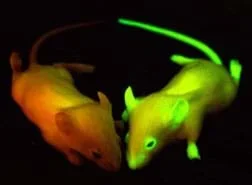 Students learn about genetic mutationCopyright 2012 Carolinruv, Wikimedia Commons http://commons.wikimedia.org/wiki/File%3AGFP_hiir.jpg
Students learn how engineers apply their understanding of DNA to manipulate specific genes to produce desired traits, and how engineers have used this practice to address current problems facing humanity. They learn what genetic engineering means and examples of its applications, as well as moral and ethical problems related to its implementation. Students fill out a flow chart to list the methods to modify genes to create GMOs and example applications of bacteria, plant and animal GMOs.
Genetic engineers have developed genetic recombination techniques to manipulate gene sequences in plants, animals and other organisms to express specific traits. Applications for genetic engineering are increasing as engineers and scientists work together to identify the locations and functions of specific genes in the DNA sequence of various organisms. Once each gene is classified, engineers develop ways to alter them to create organisms that provide benefits such as cows that produce larger volumes of meat, fuel- and plastics-generating bacteria, and pest-resistant crops.
After this lesson, students should be able to:
- List several present day applications of genetic engineering.
- Describe general techniques used by genetic engineers to modify DNA.
- Analyze the benefits and drawbacks of manipulating an organism's DNA.
- Biotechnology has applications in such areas as agriculture, pharmaceuticals, food and beverages, medicine, energy, the environment, and genetic engineering.
Grades 9-12
Do you agree with this alignment? - The sciences of biochemistry and molecular biology have made it possible to manipulate the genetic information found in living creatures.
Grades 9-12
Do you agree with this alignment? - STEL-4P Evaluate ways that technology can impact individuals, society, and the environment.
Grades 9-12
Do you agree with this alignment?
- HS-LS1-1 Construct an explanation based on evidence for how the structure of DNA determines the structure of proteins which carry out the essential functions of life through systems of specialized cells.
Grades 9-12
This resource focuses on the following Three Dimensional Learning aspects of NGSS:
Science & Engineering Practices- Construct an explanation based on valid and reliable evidence obtained from a variety of sources (including students' own investigations, models, theories, simulations, peer review) and the assumption that theories and laws that describe the natural world operate today as they did in the past and will continue to do so in the future.Do you agree with this alignment?
Disciplinary Core Ideas- Systems of specialized cells within organisms help them perform the essential functions of life.Do you agree with this alignment?
- All cells contain genetic information in the form of DNA molecules. Genes are regions in the DNA that contain the instructions that code for the formation of proteins, which carry out most of the work of cells.Do you agree with this alignment?
Crosscutting Concepts- Investigating or designing new systems or structures requires a detailed examination of the properties of different materials, the structures of different components, and connections of components to reveal its function and/or solve a problem.Do you agree with this alignment?
Do you agree with this alignment? - Construct an explanation based on valid and reliable evidence obtained from a variety of sources (including students' own investigations, models, theories, simulations, peer review) and the assumption that theories and laws that describe the natural world operate today as they did in the past and will continue to do so in the future.
- describe how techniques such as DNA fingerprinting, genetic modifications, and chromosomal analysis are used to study the genomes of organisms.
Grades 9-11
Do you agree with this alignment?
A basic understanding of protein synthesis and DNA's role in the cell/body is helpful so students can follow how changes in DNA result in major changes in the characteristics of organisms.
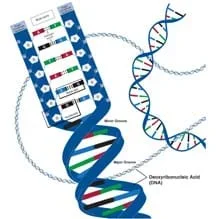 Figure 1. The DNA structure: Nucleotide building blocks are shown in nearly atomic detail.Copyright 2010 Darryl Leja, National Human Genome Research Institute, U.S. National Institutes of Health http://www.genome.gov/dmd/img.cfm?node=Photos/Graphics&id=85149
What is DNA?
Deoxyribonucleic acid (DNA) is a large biomolecule that contains the complete genetic information for an organism. Every cell of living organisms and many viruses, contains DNA. The basic building block of a DNA molecule is called a nucleotide, and a single strand of DNA may contain billions of nucleotides. (Refer to Figure 1 to see the DNA structure with labeled parts.) Although each DNA molecule contains many of these building blocks, only four unique nucleotides are used to create the entire DNA sequence; these are written as A, G, C and T. Analogous to how the 26 letters of the alphabet can be arranged to create words with different meanings, these four nucleotides can be arranged in sequences to "spell" the genetic instructions to create all of the different proteins organisms need to live.
Because DNA contains instructions for an organism to create several different proteins, it is useful to define another sub-unit of DNA called genes (shown in Figure 2). Each gene is a small segment of DNA that contains a set of instructions for an organism to create a single protein; a single organism may have thousands of different genes. Together, the entire set of genes for an organism is called its genome. To use another analogy, think of the genome as an entire cookbook for an organism, and each gene is an individual recipe in that cookbook. When a single recipe is followed, the result is a specific protein.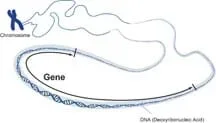 Figure 2. A gene is a section of a DNA molecule that contains the information to build a single protein.Copyright 2010 Darryl Leja, National Human Genome Research Institute, U.S. National Institutes of Health http://www.genome.gov/dmd/img.cfm?node=Photos/Graphics&id=85170
Why are proteins important?
Proteins perform all of the work in organisms. Some functions of proteins include:
- Serving as catalysts for reactions
- Performing cell signaling
- Transporting molecules across membranes
- Creating structures
When a protein is created by its gene, it is said that the gene is "expressed," or used. Most gene expressions do not produce results visible to the unaided eye. However some genes, such as those that code for proteins responsible for pigment, do have visual expression. The expression of a gene in an observable manner is called a phenotypic trait; one example is an organism's hair color. In fact, everything you can see in an organism is a result of proteins or protein actions.
How is DNA used in genetic engineering?
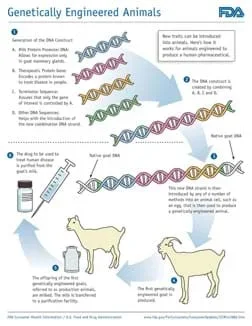 Figure 3. An example of how the genetic engineering process can be used in drug production.Copyright 2009 U.S. Food and Drug Administration http://www.fda.gov/downloads/ForConsumers/ConsumerUpdates/UCM144055.pdf
By definition, genetic engineering is the direct altering of an organism's genome. This is achieved through manipulation of the DNA. Doing this is possible because DNA is like a universal language; all DNA for all organisms is made up of the same nucleotide building blocks. Thus, it is possible for genes from one organism to be read by another organism. In the cookbook analogy, this equates to taking a recipe from one organism's cookbook and putting into another cookbook. Now imagine that all cookbooks are written in the same language; thus, any recipe can be inserted and used in any other cookbook.
In practice, since DNA contains the genes to build certain proteins, by changing the DNA sequence, engineers are able to provide a new gene for a cell/organism to create a different protein. The new instructions may supplement the old instructions such that an extra trait is exhibited, or they may completely replace the old instructions such that a trait is changed.
Genetic Engineering Technique
The process for genetic engineering begins the same for any organism being modified (see Figure 3 for an example of this procedure).
- Identify an organism that contains a desirable gene.
- Extract the entire DNA from the organism.
- Remove this gene from the rest of the DNA. One way to do this is by using a restriction enzyme. These enzymes search for specific nucleotide sequences where they will "cut" the DNA by breaking the bonds at this location.
- Insert the new gene to an existing organism's DNA. This may be achieved through a number of different processes.
When modifying bacteria, the most common method for this final step is to add the isolated gene to a plasmid, a circular piece of DNA used by bacteria. This is done by "cutting" the plasmid with the same restriction enzyme that was used to remove the gene from the original DNA. The new gene can now be inserted into this opening in the plasmid and the DNA can be bonded back together using another enzyme called ligase. This process, shown in Figure 4, creates a recombinant plasmid. In this case, the recombinant plasmid is also referred to as a bacterial artificial chromosome (BAC). Refer to the associated activity Bacteria Transformation to have students create a model to simulate and learn about the process used by genetic engineers to modify bacteria. 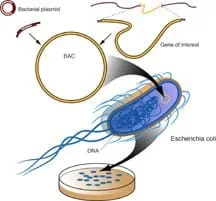 Figure 4. Building a recombinant plasmid to modify bacteria.Copyright 2010 Darryl Leja, National Human Genome Research Institute, U.S. National Institutes of Health http://www.genome.gov/dmd/img.cfm?node=Photos/Graphics&id=85269
Once the recombinant DNA has been built, it can be passed to the organism to be modified. If modifying bacteria, this process is quite simple. The plasmid can be easily inserted into the bacteria where the bacteria treat it as their own DNA. For plant modification, certain bacteria such as Agrobacterium tumefaciens may be used because these bacteria permit their plasmids to be passed to the plant's DNA.
Applications and Economics
The number of applications for genetic engineering are increasing as more and more is learned about the genomes of different organisms. A few interesting or notable application areas are described below.
How many of today's crops are genetically modified? As of 2010, in the U.S., 86% of corn produced was genetically modified. Bt-corn is a common GMO that combines a gene from the Bt bacteria with corn DNA to produce a crop that is insect-resistant. The bacteria gene used contains a recipe for a protein that is toxic when consumed by insects, but safe when consumed by humans.
A number of other genes can be combined with crops to produce desirable properties such as:
- Herbicide-, drought-, freeze- or disease-resistance
- Higher yield
- Faster growth
- Improved nutrition
- Longer shelf life
The creation of genetically modified crops provides many incentives for farmers and businesses. When farmers are able to plant a crop that has a higher yield per acre, they can significantly increase production, and thus sales, with minimal cost. Disease, pest and other resistances reduce crop loss, which also helps to increase profits. Besides farmers, other benefactors from modified crops include seed, agrochemical and agriculture equipment companies as well as distributors and universities that are involved in GMO research. In 2011, the value of genetically modified seed was $13.2 billion in the U.S. alone. The value of the end products produced from these seeds topped $160 billion.
Due to their simple structures, the most commonly modified organisms are bacteria. The first modified bacteria were created in 1973. Bacteria can be modified to produce desirable proteins that can be harvested and used. One example is insulin or spider silk, which is difficult to gather naturally. Other modifications to bacteria include making changes to the cellular respiration process to alter the byproducts; typically CO2 is produced, however engineers have made modifications so that hydrocarbon byproducts such as diesel and polyethylene (a fuel and a plastic) are produced.
Ethics
(The 30-minute lesson time leaves a fair amount of time for discussion, but since class participation will vary, you may want to extend the lesson another 30-minutes to allow for a thorough discussion of the ethical implications of genetic engineering. This makes a good student research and debate topic, too.)
The main reason genetically modified organisms are not more widely used is due to ethical concerns. Nearly 50 countries around the world, including Australia, Japan and all of the countries in the European Union, have enacted significant restrictions or full bans on the production and sale of genetically modified organism food products, and 64 countries have GMO labeling requirements. Some issues to consider when deciding whether to create and/or use GMOs include:
Safety: This generally arises in the case of GMO foods. Are the foods safe for human consumption? Is GMO feed healthy for animals? Many opponents of GMO foods say not enough independent testing is done before the food is approved for sale to consumers. In general, research has shown that GMO foods are safe for humans. Another safety consideration is the health of farmers and their families, animals and communities who are put at risk with exposure to chemicals used in tandem with GMO seeds.
Environmental Impact: Consider that genetic engineers have the ability to create trees that grow faster than their unmodified counterparts. This seems like a great deal for the lumber industry, but might some unintended consequences result? Being outdoors and grown in large quantities, the modified trees may cross-pollinate with unmodified trees to form hybrids outside of designated growing areas. This in return could create trees that could disrupt the ecosystem. For example, they could overpopulate the area or grow so large that they smother other plant life. This same scenario has unintended and undesirable consequences when the pollen from GMO crops drifts into non-GMO fields.
Humans: Should humans be genetically engineered? Doing so could have medical applications that reduce or prevent genetic disorders such as Down's syndrome. However, the bigger question is where should engineering humans stop? Should parents be allowed to decide their children's eye colors, heights or even genders before birth?
(Make copies of the Genetic Engineering Flow Chart (PDF), one per student. Hand out the blank flow charts for students to fill in during the presentation and lecture. Then show the class the 16-slide Genetic Engineering Presentation (PPTX), a PowerPoint® file. Open with two images of the same organism: one that has been genetically engineered and one that has not. Examples: two ears of corn in which the non-modified one is diseased; two cows in which the modified one is larger; or, since students really respond to bioluminescent organisms, show two mice in which one has been modified to glow green. Slide 2 shows two examples of modified versus non-modified mice. Another idea is to show two organisms that look the same even though one has been modified as an example of how most modifications are not visible.)
What is the difference between these two organisms? (Answers will vary, depending on the image shown.) Even though they are the same organism, why are they are different? (Answer: Genetic engineering. Some students may not come to this answer on their own. Expect some to suggest mutations.) The difference is due to genetic engineering. The animal (or plant) that has been changed is called a genetically modified organism, or GMO.
How do engineers change the traits of organisms? (Listen to student ideas.) DNA contains all of the genetic information to determine an organism's traits or characteristics. By modifying the DNA, engineers are able to determine which traits an organism will possess.
(Continue through the presentation: What is genetic engineering? History of GMO Development, What is the GMO process? Then starting with slide 6, go through the provided examples of GMO bacteria, plants and animals. Emphasize the reasons for modifying each organism [slide 10].)
(Show the slide 14 picture of a man and spider.) Can anyone guess what would happen if we combined the DNA from these two creatures? (Expect students to enthusiastically answer "spiderman.") Could engineers create a "spiderman" in the lab today? (Expect some yes responses, while most students answer no.) Not quite. However, in 2000, engineers created the first goat able to produce spider silk proteins (an amazingly strong and elastic fiber with futuristic benefits in construction [bridge suspension cables, airbags that are gentler for passengers], medicine [artificial skin to heal burns, artificial ligaments, thread for stitching wounds] and the military [body armor] if sufficient quantities could be generated), so maybe it is not too far away.
(Show slide 15.) Genetic engineering is so new and astonishing that people are still trying to figure out the pros and cons. We saw some examples of the benefits from genetically modified organisms, what about the disadvantages and harm caused by genetic engineering? (After listening to student ideas, go through the concerns listed on the slide. Alternatively, go through the contents of this slide and background information as a class discussion during the Lesson Closure, extending the lesson time as necessary.)
(Continue on to present students with the content in the Lesson Background section, and then a class review of the completed flow charts.)
What part of an organism contains all of the information needed for it to function? (Answer: DNA) When genes are expressed, what is the final product made? (Answer: Proteins) Does anyone know why bacteria are modified more than other organisms? (Answer: With their very simple structures and ability to use plasmids, bacteria are much easier and less costly to modify.)
What are some ethical and moral concerns that genetic engineers must consider? Does anyone think it is a good idea to genetically modify people? Some researchers say this could be an approach to cure diseases such as Down's syndrome and other genetic defects. Superficial changes could also be made, such as determining a person's height, eye color or gender, by making changes to embryos in the mothers' wombs. But just because something can be done, does that make it a good idea? (Answer: No. This is a good topic for an extended discussion.)
- dna
- Acronym for deoxyribonucleic acid, which is a molecule that contains an organism's complete genetic information.
- gene
- The molecular unit of an organism that contains information for a specific trait (specific DNA sequence).
- genome
- An entire set of genes for an organism.
- gmo
- Acronym for genetically modified organism.
- nucleotide
- The building block of DNA.
- plasmid
- The circular DNA structure used by bacteria.
- protein
- Large biomolecules used by an organism for a number of purposes; in this context, to express a desired trait.
- recombinant dna
- DNA to which a section has been removed and replaced (recombined) with a new sequence.
- restriction enzyme
- An enzyme that "cuts" DNA when specific base pair sequences are present.
- trait
- A distinguishing characteristic.
Pre-Lesson Assessment
Discussion Questions: Initiate a brief discussion to gauge whether students have heard of or know anything about genetics. Ask questions such as:
- Why are your eyes the color that they are?
- Would anyone like to be taller (or shorter)?
- Is there any way to make these changes?
Post-Introduction Assessment
Flow Chart: Have students complete the Genetic Engineering Flow Chart (PDF) during the course of the lesson. After delivering the presentation and lecture, go through the flow chart as a class, so that students can complete anything they missed and check their flow charts for accuracy. Answers are provided on the Genetic Engineering Flow Chart Answer Key (PDF).
Lesson Summary Assessment
Recombinant Creature Design: Have students in pairs (or individually) create their own recombinant organisms. Direct students to pick any organism and decide what gene they would like to add. If desired, provide a list of genes from which they can choose (such as genes that makes an organism smarter, bigger, faster, grow extra limbs, etc.). To encourage critical thinking, require students to write down a potential use for the resulting creatures. Finally, have students sketch what their recombinant creatures would look like.
View some genetic engineering examples (with photographs) at: http://www.mnn.com/green-tech/research-innovations/photos/12-bizarre-examples-of-genetic-engineering/
Show students some applications of spider silk at Popular Mechanics' "6 Spider-Silk Superpowers" slide show at http://www.popularmechanics.com/science/health/med-tech/6-spider-silk-superpowers#slide-1
12 Bizarre Examples of Genetic Engineering. Posted October 27, 2010. MNN Holdings, Mother Nature Network. Accessed December 8, 2013. http://www.mnn.com/green-tech/research-innovations/photos/12-bizarre-examples-of-genetic-engineering
Biello, David. Turning Bacteria into Plastic Factories. Posted September 16, 2008. Scientific American. Accessed December 11, 2013. http://www.scientificamerican.com/article.cfm?id=turning-bacteria-into-plastic-factories-replacing-fossil-fuels
DNA. Updated June 7, 2014. Wikipedia, The Free Encyclopedia. Accessed June 16, 2014. http://en.wikipedia.org/wiki/DNA
Emspak, Jesse. Gut Bacteria Make Diesel Fuel. Posted April 23, 2013. Discovery Communications. Accessed December 11, 2013. http://news.discovery.com/tech/biotechnology/gut-bacteria-make-diesel-fuel-130423.htm
Genetic engineering. Updated December 7, 2013. Wikipedia, The Free Encyclopedia. Accessed December 9, 2013. http://en.wikipedia.org/wiki/Genetic_engineering
Genetically modified crops. Updated June 12, 2014. Wikipedia, The Free Encyclopedia. Accessed June 16, 2014. http://en.wikipedia.org/wiki/Genetically_modified_crops
Straley, Regan. GMO Food Concerns. Posted August 29, 2014. Lancaster Online, Lancaster, PA. Accessed August 31, 2014. http://lancasteronline.com/opinion/gmo-food-concerns/article_3c5092ba-2ed0-11e4-ab00-001a4bcf6878.html
Vierra, Craig, et al. The Future of Biomaterial Manufacturing: Spider Silk Production from Bacteria. Posted July 17, 2012. Journal of Visualized Experiments (JoVE). Accessed December 11, 2013. http://www.jove.com/about/press-releases/39/the-future-biomaterial-manufacturing-spider-silk-production-from
What is genetic engineering and how does it work? Updated 2005. University of Nebraska. Accessed December 10, 2013. http://agbiosafety.unl.edu/basic_genetics.shtml
- Introduction to Genetic Engineering and Its Applications
(optional: Show students the What Is Engineering? video)
Contributors
Matthew Zelisko; Kimberly Anderson
Supporting Program
National Science Foundation GK-12 and Research Experience for Teachers (RET) Programs, University of Houston
Acknowledgements
This digital library content was developed by the University of Houston's College of Engineering under National Science Foundation GK-12 grant number DGE 0840889. However, these contents do not necessarily represent the policies of the NSF and you should not assume endorsement by the federal government.
Copyright
2013 by Regents of the University of Colorado; original © 2013 University of Houston