
The Strongest Pump of All: Electrical Heart Functions
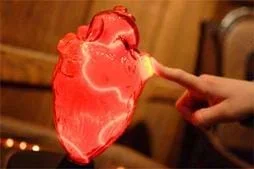 Electrical currents trigger heart contractions.Copyright www.thebakken.org/education/tours
Students learn how the heart functions. They are introduced to the concept of action potential generation, which causes the electrical current that triggers muscle contraction in the heart. Teachers provide two simple class demos and students learn about the basic electrical signals generated by the heart: P, QRS and T waves. Students also learn the basic steps of the engineering design process and think of ways to improve heart function, from a biomedical engineering point-of-view. A PowerPoint® presentation, student design challenge worksheet and pre/post-assessment tests are provided.
Cardiovascular disease is the leading cause of death in the U.S. To address this medical condition, engineers are continually looking for new ways to quickly detect and evaluate heart function and malfunction. Engineers designed the electrocardiogram (EKG) to diagnose heart problems and cardiac pacemakers to keep the heart pumping when it is unable to do so on its own.
After completing this lesson, students should be able to:
- Explain the basics of the engineering design process.
- Describe how the heart functions off an electrical current.
- Identify the P, QRS and T complexes.
- Explain how electrical current is created by the human body.
- Explain how action potentials are generated.
- Explain the importance of heart bioelectricity for the body.
- Describe the functions of the action potential.
- Explain how action potential propagation happens in the heart, causing cardiac muscle contraction and pumping action.
- Students will develop an understanding of the relationships among technologies and the connections between technology and other fields of study.
Grades K-12
Do you agree with this alignment? - Advances and innovations in medical technologies are used to improve healthcare.
Grades 6-8
Do you agree with this alignment?
- Understandings About Science and Technology
Grades K-12
Do you agree with this alignment? - Abilities of Technological Design
Grades K-12
Do you agree with this alignment?
- MS-LS1-3 Use argument supported by evidence for how the body is a system of interacting subsystems composed of groups of cells.
Grades 6-8
This resource focuses on the following Three Dimensional Learning aspects of NGSS:
Science & Engineering Practices- New technologies advance scientific knowledge.Do you agree with this alignment?
Disciplinary Core Ideas- In multicellular organisms, the body is a system of multiple interacting subsystems. These subsystems are groups of cells that work together to form tissues and organs that are specialized for particular body functions.Do you agree with this alignment?
Crosscutting Concepts- Systems may interact with other systems; they may have sub-systems and be a part of larger complex systems.Do you agree with this alignment?
Do you agree with this alignment? - New technologies advance scientific knowledge.
- The student will investigate and understand that all living things are composed of cells. Key concepts include
Grades 7-8
Do you agree with this alignment?
- Bioelectricity and Cardiac Function Presentation (pptx)
- Bioelectricity and Cardiac Function Presentation (pdf)
- Pre-Assessment Questions (docx)
- Pre-Assessment Questions (pdf)
- Pre-Assessment Questions Answer Key (docx)
- Pre-Assessment Questions Answer Key (pdf)
- Engineering Design Process Visual Aid (docx)
- Engineering Design Process Visual Aid (pdf)
- Post-Assessment Questions (docx)
- Post-Assessment Questions (pdf)
- Post-Assessment Questions Answer Key (docx)
- Post-Assessment Questions Answer Key (pdf)
- Artificial Heart Quick Design Challenge (pdf)
- Artificial Heart Quick Design Challenge (docx)
A familiarity with basic human anatomy, including the function of the heart within the circulatory system.
Before teaching this lesson, become familiar with the basics of the heart, including how blood enters the heart and is pumped through the different compartments. Most importantly, gain an understanding of the flow of electrical current and corresponding heart muscle contractions.
Heart bioelectricity is an intriguing topic because of the number of lives that could be saved. The best current technology is the cardiac pacemaker. Cardiac pacemakers are invasive to install and subject to mechanical failure and limited battery life. Learning about the electrical functions of the heart gives students the necessary tools and interest to pursue these challenges further. Currently, heart stress and operational capability is diagnosed with the electrocardiogram (EKG). Refer to the associated activity Electrocardiograph Building for students to gain more insight into how an EKG is designed and built.
Engineering is one of the most important fields in the world. Everyone has something to gain from approaching a problem from an engineering standpoint. The engineering method is solving by design. The best solution is not one that can be found, but one that is designed to meet the specific problem. Below are the basic steps of the engineering design process:
- Ask: Identify the Need & Constraints
- Research the Problem
- Imagine: Develop Possible Solutions
- Plan: Select a Promising Solution
- Create: Build a Prototype
- Test and Evaluate Prototype
- Improve: Redesign as Needed
Action Potentials
Action potentials vary in different portions of the heart. They start in the sinoatrial (SA) node of the heart and progress to the bottom of the heart, in the ventricular muscle. (See Figure 5.)
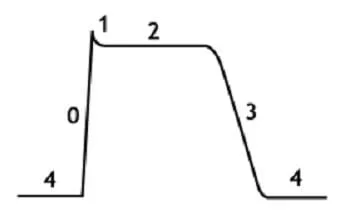 Figure 4. Phases of the action potential.Copyright http://www.answers.com/topic/action-potential-png
The standard model used to understand the cardiac action potential is the action potential of the ventricular myocyte, or muscle cell, in cardiac fiber. The action potential has five phases, numbered 0-4, as shown in Figure 4.
Phase 4:
- Resting membrane potential - when the cell is not being stimulated (thus indicated by a horizontal line)
- The normal resting membrane potential in the ventricular myocardium is about -85 to -95 mV
- Because the membrane is more permeable to K+ ions than any other, it is controlled by the levels of the K+ equilibrium
- Phase 4 is associated with the diastole of the heart, when the chamber in the heart is not contracting
Phase 0:
- Rapid depolarization phase
- Slope represents the maximum rate of depolarization of the cell
- Cell opens fast Na+ channels
- Rapid influx of ionic current from Na+ ions coming into the cell
Phase 1:
- Fast Na channels close
- Movement of K+ and Cl- ions causes downward slope
- Phase 0 and 1 together correspond to the R and S waves of the ECG
Phase 2:
- Plateau—due to balance of Ca++ ions coming in and K+ ions going out
- Na+/K+ pump and Ca++/Na+ exchange also play minor roles in this phase
- Corresponds to ST segment of the ECG
Phase 3:
- Ca++ channels close, K+ channels are still open
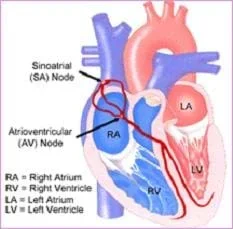 Figure 5. Sources of electrical current in the heart.Copyright 2006 Central Maine Heart and Vascular Institute, Lewiston, ME
Cell is stimulated, from electrical current of cell that is next to it, ion exchange pumps work to produce the AP of the cell, and that in turn spreads the electrical signal to the cells that are next to it. This continues until all the cells of the heart have an electrical stimulation.
Pacemaker cells in the heart generate electricity that spreads from the top of the heart to the bottom, in turn causing a pumping action. This electrical current is produced by the movement of sodium and potassium across a cellular membrane. Special proteins in the membrane pump out sodium ions, and pump in potassium ions. Since sodium and potassium both have net positive charges, there will be a higher positive charge outside creating a difference in charge and a net membrane charge of a negative value. The electric charge is created by changing the potassium and sodium concentrations across the membrane, creating an electrical current.
One key to the functioning of the heart is the unique characteristics of its muscular tissue. Cardiac muscle differs from other body muscles in that its normal function is a rhythmic contraction, which is the basis for the tissue's ability to respond to the electrical impulses that govern the beating of the heart. The natural pacemaker of the heart, the sinoatrial (SA) node, is located in the right atrium. Cardiac muscle cells that naturally contract at a faster rate compared to other cells of the heart surround this cluster of nerve cells. Thus, this area of the heart has the ability to initiate the contraction by sending wave-like electrical signals throughout the organ.
First, the electrical signal causes the two atria to contract, and then sends the blood from those chambers into the two ventricles. Then the signal passes down through a group of nerve cells known as the atrioventricular (AV) node. This nerve cluster is located near the center of the heart. The travel of the electrical signal is slowed so that it reaches the ventricles after the atria have finished their contraction. This entire process takes approximately .04 seconds. There is now a natural delay to allow the atria to contract and the ventricles to fill up with blood. Then the ventricles contract, moving the blood out of the heart, and the cycle starts again. The heart's electrical activity can be measured using electrocardiography.
The next thing one may have interest in understanding how the electrical signal looks while passing through the heart. The figure shows the magnitude of the electrical signal as is traverses through the top from the heart to the bottom of the heart. This cycle is repeated continuously.
Each part of the tracing has a lettered name (see Figure 3):
- P wave: Coincides with the spread of electrical activity over the atria and the beginning of its contraction at the top of the heart pushing blood in the ventricles.
- QRS complex: Coincides with the spread of electrical activity over the ventricles and the beginning of its contraction - the spread of the electrical signal through the lower ventricles causing the pumping action. (This is what causes the heart to pump!)
- T wave: Coincides with the recovery phase of the ventricles - while the heart muscles are relaxing and preparing for their next contractions.
All of these parts work together in a repeated cycle to keep the heart continuously beating and supplying oxygenated blood to the rest of the body.
(Make copies of the Pre-Assessment Questions (PDF), Engineering Design Process Visual Aid (PDF), Post-Assessment Questions (PDF) and Artificial Heart Quick Design Challenge (PDF). First thing, administer the pre-assessment. Then distribute the visual aid. Write on the classroom board: "Engineering—anyone can do it!" Be ready to conduct two class demonstrations described below, and be ready to show students the Bioelectricity and Cardiac Function Presentation (PPTX), a 20-slide PowerPoint® file to accompany the content below.)
The Engineering Design Process
Examples of engineering design are around you everywhere! Look at your desk and chair, or the pencil in your hand, or anything you use in your daily routines. All these objects were engineered at some point. Engineering is something that can be useful to everyone, from a doctor to a politician, to the President of the United States. (Point out some of the uncountable engineering applications in every aspect of our society.) No matter what devices, products, structures or processes engineering teams design, they all follow the basic steps of the engineering design process to come up with the best solution for the challenge.
(List these steps on the classroom board and/or use the handout.)
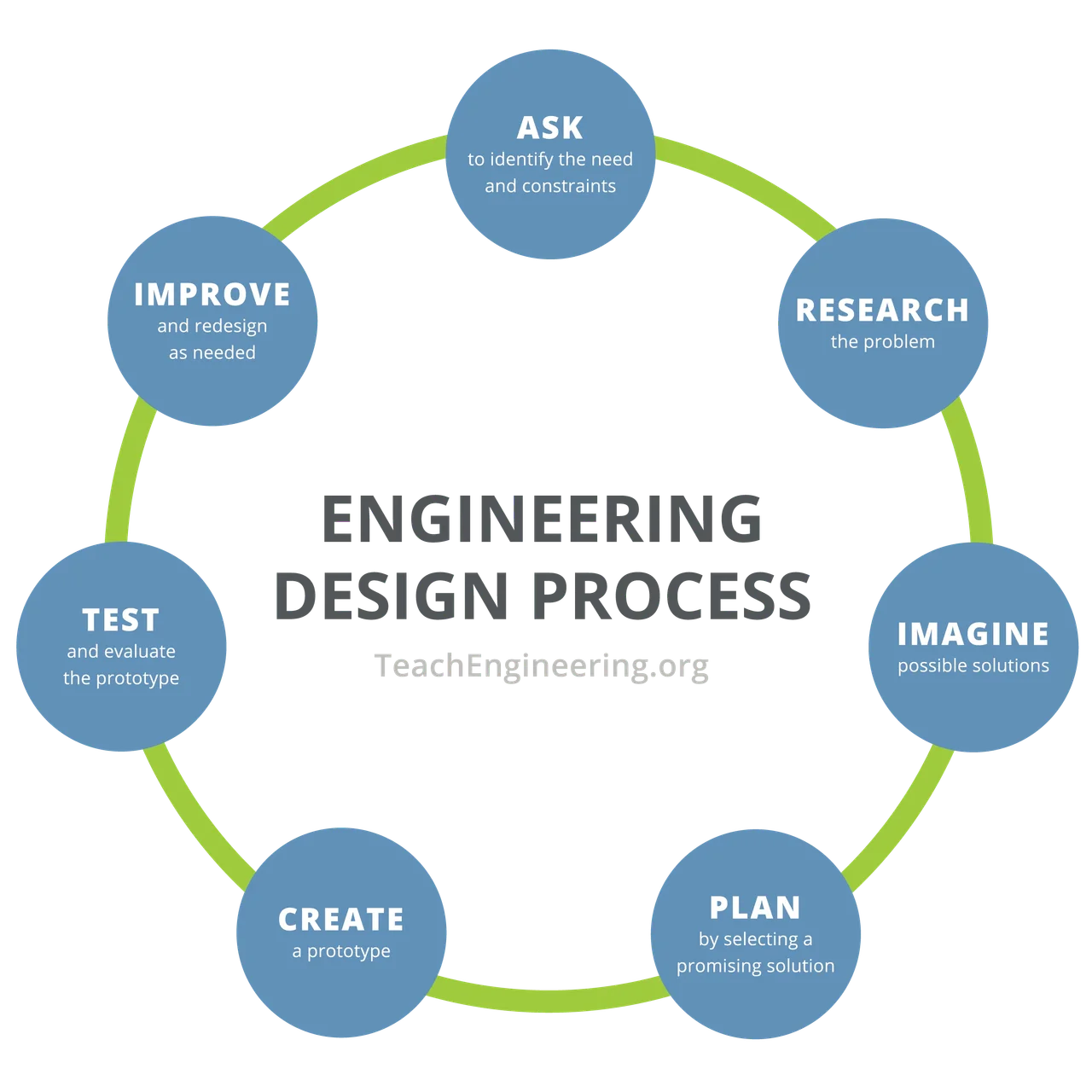
- Ask: Identify the Need & Constraints
- Research the Problem
- Imagine: Develop Possible Solutions
- Plan: Select a Promising Solution
- Create: Build a Prototype
- Test and Evaluate Prototype
- Improve: Redesign as Needed
(Place emphasis on the potential for students to be able to do engineering: "Anyone can do it!" Express confidence that all students can do this.)
Do you know what engineers are? What do they do? Everything that is built was designed by engineers.
With these basic seven steps, no problem is out of your grasp. All that has to be done is to focus on the problem and break it down. Don't jump to any conclusions; design the solution to fit the problem.
Researching an identified problem takes time and patience. You can look at other solutions that people have come up with for your problem and similar problems. Learning this information helps you come up with ideas for solutions to your design challenge.
Once you have done your research, then begin to formulate a solution. Be open to new ideas and think of solutions that fit the identified problem. Even if you are not sure about the correctness, proceed anyway. Even if the solution is incorrect, something can be learned from it. And no solution is always 100% correct; solutions can constantly be modified and improved upon.
Once you have implemented or tested your best solution, then you have data to analyze to see how well your solution solved the problem. Maybe the data gives you information that was previously unknown. If so, go back and revise your design and start the process again to improve the design. Through this iterative process, engineers can find the most appropriate solution to a problem.
The Importance of Heart Bioelectricity
Cardiovascular disease is the leading cause of death in the U.S. today. New and improved technologies would be helpful in detecting and treating this medical condition. In order to prepare us to approach this problem, let's learn more about how the heart functions.
The heart is one of the most important organs in the body. It supplies all parts of the body with blood and keeps it circulating. What causes the heart to pump? Your body is not plugged into an electrical outlet. You do not have batteries. But your heart still pumps! What if I told you that your heart works off an electrical current that your body produces? It is somewhat like a water pump; your heart is able to work because electricity is getting supplied to it. But how does that happen?
Generating Action Potentials
(Before proceeding, make sure that students understand what potassium and sodium ions are and that they are found in the body. Show students a bottle of Gatorade and explain that this beverage is designed to contain lots of sodium and potassium with the idea that it can be helpful for athletes.)
Two of the main ions that are found in your body are sodium and potassium. These are the same ions in Gatorade. Sports drinks like Gatorade are designed specifically to help high-performance athletes replenish these ions in their bodies when they sweat a lot. These ions are important because they give your body the ability to send messages, messages that are called "action potentials."
(Diffusion example demo: Fill up two beakers evenly with water. Dye the water in each beaker a different color. Fill the tubing with water and place into the beakers; try to avoid air in the tubing. Pour excess water into one of the beakers and watch the colored water from the filling beaker move through the tube to the other beaker, mixing colors. The diffusion stops once the beakers are again at equal levels. Refer to Figure 1.) The human body operaties in a manner similar to this; it always wants to be at equilibrium, or what we call homeostasis.
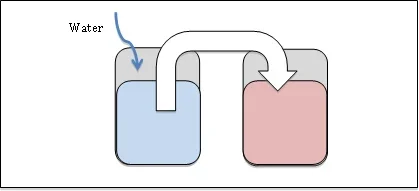 Figure 1. Schematic of the teacher's diffusion demonstration.
Action potentials are electrical messages sent throughout your body to tell muscles to contract or relax. How are action potentials made? Action potentials are made by the varying concentrations of sodium and potassium. Remember from chemistry that sodium (NA+) and potassium (K+) ions have a net charge of positive 1. In some cells, a set concentration of sodium and potassium exists on the inside and outside of the cell. When in balance, no charge is created. When the cell wants to make an action potential, it moves the sodium and potassium to create an imbalance of sodium and potassium that the body wants to fix. It does this by sending off the extra charge from the sodium and potassium in the form of a current, as seen in Figure 2.
 Figure 2. Cell membrane with ion channels.Copyright www.firstsoftware.com/nervous_system.htm
Action Potentials in the Heart
Millions of these cells are located in the human heart and they all do this at once, creating an electrical difference of approximately 100 mV (millivolts). Once this occurs in the SA node of your heart, you've got electricity and are ready to pump. These cells are located at the top of your heart so the electrical current starts at the top and slowly goes to the bottom, in a specific pattern.
(Explain that the heart is composed of four chambers, and the blood flows from the atrium side to the ventricular side.)
(Water balloon demo: Fill a water balloon with water. Use a marker to draw the four chambers, as if the balloon was a heart. Squeeze the bottom of the balloon, putting all the water at the top. Show students that electrical current created at the top of the balloon causes the muscle to contract sending the water to the bottom, then once the current gets to the bottom of the balloon it causes the muscles to contract there, sending the water out of the balloon. Burst the balloon for added effect.)
Imagine that this water balloon is your heart. (Start squeezing at the top so all the water goes to the bottom of the balloon.) This is what happens in your heart. The electrical current causes the heart muscles at the top of the heart to contract, sending the blood to the bottom of the heart. Then the electrical current moves on down the heart and goes to the bottom.
(Now squeeze the balloon at the bottom, and all the water goes back up to the top.)
Let's see it again. The electrical current causes the muscles at the top of the heart to contract and pushes the blood down to the bottom of you heart. The electrical signal propagates down through the heart, reaching the biggest muscle at the bottom of the heart. These muscles at the bottom of the heart then contract, sending the blood throughout the body. Then, the heart muscles relax and the process starts over again. The process of electrical current being created at the top of the heart and propagating to the bottom is repeated, creating a heartbeat.
Electrical Wave Form
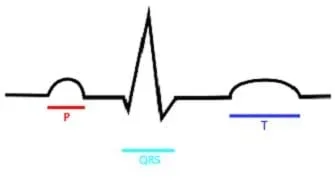 Figure 3. A diagram of the P, QRS, T waves of a heartbeat.Copyright www.utpb.edu/courses/.../qrs_complex.htm
Your heart goes through this process every time it beats. Figure 3 shows the set pattern that your heart undergoes. The P wave portion is when the electrical current is just starting out and the blood is being pumped from the top to the bottom of the heart. The QRS complex is when the blood is being pumped from the bottom of the heart to the body. And, the T part is when the heart is relaxing and getting ready for the process to start over again. The entire process starts over at P. With this process, we are able to live and supply our bodies with blood to supply our cells with oxygen.
Class Discussion Question
Cardiovascular disease is the leading cause of the death in the U.S. today. Did you know that? One obstacle that doctors face is fixing a heart that is not beating correctly. Irregular heartbeats can cause many other health problems including death. Keeping in mind the engineering design process and what we just learned about the heart, let's brainstorm to come with up ideas for how to make an irregular heart beat normally again. Engineers often brainstorm together to get new and creative ideas. So, at this stage, don't exclude any ideas!
(Stress the importance that during brainstorming, no idea is a bad idea. Write down all possible ideas. Give students 10 to 15 minutes to brainstorm and have them present their possible solutions to each other.)
(Once students have discussed their ideas with each other, tell them about current technologies.)
Have you heard of pacemakers? Cardiac pacemakers are a current technology used to fix irregular heartbeats. A pacemaker is a small device that is surgically inserted into the body with wires connected to the heart in the specific places. The device gives the heart the necessary current in order to produce a normal heartbeat. These devices use batteries that need to be replaced every 5-10 years.
Are your ideas better than a pacemaker? Do you think you can make a device that solves the problem more efficiently? Remember, many posible solutions exist and no one solution is 100% right; it can always be improved. (Administer the post-assessment.)
Review with students the following "take home" concepts to make sure they learned them in the lesson.
- "Engineering, anyone can do it!"
- What are the seven basic steps of the engineering design process? (Answer: Ask: Identify the Need & Constraints, Research the Problem, Imagine: Develop Possible Solutions, Plan: Select a Promising Solution, Create: Build a Prototype, Test and Evaluate Prototype, and Improve: Redesign as Needed)
- Cardiovascular disease is the leading cause of death in the U. S. You can help to find solutions to fix this problem.
- Concentration differences in sodium and potassium cause the creation of an electrical current.
- The heart pumps blood by being stimulated by this electrical current.
- The electrical current moves through out the heart creating the T, QRS and P waves.
The current technology used to treat heart problems needs to be improved. The heart is one of the most important organs in our bodies. Today, we have shown you how to approach this problem from an engineering point-of-view. Maybe one day you will invent a new heart disease technology.
- ekg
- Acronym for electrocardiograph. A medical instrument that records electric currents associated with contractions of the heart.
- bioelectricity
- An electric current generated by living tissue, such as nerve and muscle.
- heart rhythm
- The pattern of heartbeats that result from electrical impulses that start in the sinoatrial (or sinus) node.
- heart disease
- Any disorder that affects the heart's ability to function normally.
- action potential
- A momentary change in electrical potential on the surface of a cell that occurs when it is stimulated, resulting in the transmission of an electrical impulse.
- qrs
- The electrocardiographic deflection representing ventricular depolarization; the initial downward deflection is termed a Q wave; the initial upward deflection, an R wave; and the downward deflection called an S wave.
- cardiac
- Of, near, or relating to the heart.
- ventricular myocyte
- A single cell of muscle fiber, comprising the ventricular muscle tissue.
- cardiovascular disease
- A collection of diseases that involve the heart and blood vessels.
Use the following assessments to gauge students' perception and retention of the materials presented in this lesson:
- At the beginning of the lesson, administer the seven-question Pre-Assessment Questions (PDF). Review students' answers to gauge their base knowledge of the subject matter.
- At lesson end, administer the five-question Post-Assessment Questions (PDF). Review students' answers to gauge their change in understanding of the topic and concepts.
- Distribute the Quick Design Challenge Worksheet (PDF)s and give students time to brainstorm the design challenge of creating a functional artificial heart. What materials and power source would you use in your heart design? The worksheet lists possible materials to consider and explore (rubber, silk, foil for muscles; power cord, car battery, watch battery for power supply). Have examples of the materials handy for students to see and feel—at least the muscle materials. After five minutes, discuss the constraints of the problem by having student pairs share for a minute (think, pair, share), exploring pros/cons of the materials and brainstorming other materials, if desired. Then come together as a class to discuss the answers. Expected answers: The ideal material would be similar to human muscle tissue, durable, last a long-time, and cause no harm to the inside of the body. The ideal power supply would be small, durable, last a long time and not cause any adverse effects to the body.
Learn more about engineering by showing students the What Is Engineering? video.
Learn more about the steps of the engineering design process at https://www.teachengineering.org/engrdesignprocess.php.
All About the Heart. Reviewed March 2005. Kids Health. Accessed September 28, 2007. http://www.kidshealth.org/kid/body/heart_noSW.html
The Heart's Function and Structure. Accessed October 1, 2007. http://www.medtronic.com/heartmc/patient/structure.html
Physical Factors Behind the Action Potential. Accessed October 1, 2007. http://psych.hanover.edu/Krantz/neural/actionpotential.html
Pacemaker. Accessed October 1, 2007. http://www.hrspatients.org/patients/treatments/pacemakers.asp
Pacemaker - Texas Heart Institute Heart Information Center. Updated July 2007. Accessed October 1, 2007. http://www.texasheart.org/HIC/Topics/Proced/pacemake.cfm
Pacemakers. Reviewed regularly. Last updated September 24, 2007. Accessed October 1, 2007. http://www.americanheart.org/presenter.jhtml?identifier=24
Cardiology: heart disease symptoms, treatment of heart disease. Updated October 1. Accessed October 1, 2007. http://www.virtualcardiaccentre.com/
Benjamin C. Wedro, MD, FAAEM. Sudden Cardiac Death. Reviewed September 25, 2007. Accessed October 1, 2007. http://www.medicinenet.com/sudden_cardiac_death/article.html
DHDSP - Heart Disease. Reviewed February 9, 2007. Accessed October 1, 2007. http://www.cdc.gov/heartdisease/
Cardiac action potential. Last updated July 19, 2013. In Wikipedia, The Free Encyclopedia. Accessed July 25, 2013. http://en.wikipedia.org/w/index.php?title=Cardiac_action_potential&oldid=564871423
- The Strongest Pump of All: Electrical Heart Functions
Contributors
James Crawford; Katherine Murray; Mark Remaly; Shayn Peirce; Leyf Peirce
Supporting Program
Biomedical Engineering, University of Virginia
Acknowledgements
Created by students in Dr. Shayn Peirce-Cottler's biomedical engineering senior design course.
Copyright
2013 by Regents of the University of Colorado; original © 2007 University of Virginia