
Study Design for Air Quality Research
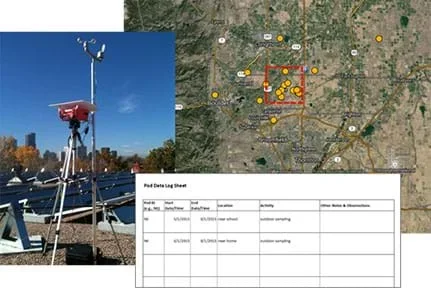 Study design components.
Students take an in-depth look at what goes into planning a research project, which prepares them to take the lead on their own projects. Examining a case study, students first practice planning a research project that compares traditional cook stoves to improved cook stoves for use in other parts of the world. Then they compare their plans to one used in the real-world by professional researchers, gaining perspective and details on the thought and planning that goes into good research work. Then students are provided with example materials, a blank template and support to take them from brainstorming to completing a detailed research plan for their own air quality research projects. Conducting students’ AQ-IQ research studies requires additional time and equipment beyond this planning activity. Then after the data is collected and analyzed, teams interpret the data and present summary research posters by conducting the next associated activity. Numerous student handouts and a PowerPoint® presentation are provided.
Whether trying to answer research questions or evaluate new technologies, engineers must carefully plan studies that will result in data they can use. This process includes careful considerations of what variables they are interested in and how they can isolate these variables. Having useable data is dependent upon study design and is necessary in order for engineers to move forward with developing or improving technologies or making decisions that impact human or environmental health. Additionally, engineers and other researchers must consider other aspects of the issues they are studying, including technological, economic and social aspects. This activity provides students the opportunity to develop these skills.
After this activity, students should be able to:
- Construct a hypothesis (or research question) that includes a prediction with clearly identifiable independent and dependent variables and an explanation for the prediction.
- Design a study that facilitates the evaluation of a new or replacement technology.
- Complete a project plan, including a materials list, procedure, timeline and data analysis plan.
- Develop, communicate, and justify an evidence-based scientific explanation addressing questions regarding the interaction of Earth's surface with water, air, gravity, and biological activity
Grades 9-12
Do you agree with this alignment? - Evaluate positive and negative impacts on the geosphere, atmosphere, hydrosphere, and biosphere in regards to resource use
Grades 9-12
Do you agree with this alignment?
- Students will develop an understanding of the cultural, social, economic, and political effects of technology.
Grades K-12
Do you agree with this alignment? - STEL-4P Evaluate ways that technology can impact individuals, society, and the environment.
Grades 9-12
Do you agree with this alignment?
- SEP.7.9-12.1 Plan and conduct an investigation individually and collaboratively to produce data to serve as the basis for evidence, and in the design: decide on types, how much, and accuracy of data needed to produce reliable measurements and consider limitations on the precision of the data (e.g., number of trials, cost, risk, time), and refine the design accordingly.
Grades 9-12
Do you agree with this alignment?
Each group needs:
- pencil and paper
- Project Overview Sheet (PDF), one per student
- Example Case Study Worksheet 1 (PDF), one per student
- (optional) Example Case Study News Article (PDF), one per group, to accompany Worksheet 1
- Vocabulary List (PDF), one per student
- Example Case Study Worksheet 2 (PDF), one per student
- Brainstorming Guide (PDF), one per group
- Research Plan Blank Template (PDF), one per group
To share with the entire class:
- computer and projector, for the teacher show the class one or more online videos and the Study Design Presentation (PPTX), a PowerPoint® file
- Example Research Plan: Indoor Air Quality (PDF), a few copies to pass around
- Example Research Plan: Investigating Oil and Gas (PDF), a few copies to pass around
- Example Research Plan: Using Existing Data (PDF), a few copies to pass around
To share with the entire class for the students’ research project data collection (post-activity):
- air quality monitors, such as a rented AQ-IQ Kit (containing 2 Pod low-cost air quality monitors) from the University of Colorado Boulder, or another low-cost monitor with multiple gas-phase sensors; see the Other section for details on obtaining Pods or other monitors
- OR alternatively, have students plan and conduct research studies using existing publicly available data so air monitoring equipment is not needed; see the Project Overview Sheet for suggested sources
- Project Overview Sheet (docx)
- Project Overview Sheet (pdf)
- Example Case Study Worksheet 1 (docx)
- Example Case Study Worksheet 1 (pdf)
- Example Case Study Worksheet 1 Answer Key (docx)
- Example Case Study Worksheet 1 Answer Key (pdf)
- Example Case Study News Article (docx)
- Example Case Study News Article (pdf)
- Vocabulary List (docx)
- Vocabulary List (pdf)
- Vocabulary List Answer Key (docx)
- Vocabulary List Answer Key (pdf)
- Example Case Study Worksheet 2 (docx)
- Example Case Study Worksheet 2 (pdf)
- Brainstorming Guide (docx)
- Brainstorming Guide (pdf)
- Research Plan Blank Template (docx)
- Research Plan Blank Template (pdf)
- Study Design Presentation (pptx)
- Study Design Presentation (pdf)
- Example Research Plan: Indoor Air Quality (docx)
- Example Research Plan: Indoor Air Quality (pdf)
- Example Research Plan: Investigating Oil and Gas (docx)
- Example Research Plan: Investigating Oil and Gas (pdf)
- Example Research Plan: Using Existing Data (docx)
- Example Research Plan: Using Existing Data (pdf)
Students should have completed some or all of the associated lesson and its three activities OR have a basic knowledge of air quality (such as major pollutants, where they come from, and reasons why they are studied). Completing the associated lesson and its two activities prepares students to take on their own research projects, beginning with this activity.
(Be ready to show one or two online videos to the class. Begin by handing out the Project Overview Sheet (PDF). Have copies of the Example Case Study Worksheet 1 (PDF) ready to hand out.)
Now that we have gone over air quality background information and you have practiced collecting air quality data and analyzing it using Excel, you are ready to plan and execute your own group research projects. This project is very similar to what many engineers and scientists do in the real-world.
I will not assign you topics; your team will choose a topic (in the form of a research question or hypothesis) and then design a study to help you better understand that topic. Take a moment and think about examples of air quality issues in your everyday lives or maybe a question that has occurred to you before. For this project, you may examine indoor or outdoor air quality. You may collect your own data or use data that has already been collected. One thing that you will notice early on is that scientific investigation and research is much messier than you might expect. For example, you may end up with data that does not answer your original question, but does lead you to a new question. And that is okay! This project is about the research process and learning more about the scientific method.
Today, you will brainstorm topics and ideas with your team and start your research plan. Before we get to your projects though, let’s practice studying design using a real-world example. You may recall from our earlier lesson on air quality that half the world cooks and heats their homes using open fires and by burning solid fuel such as wood, charcoal or animal dung. These practices are having a major impact on human health across the globe. For this reason, researchers have been designing improved cook stoves that lower emissions and reduce the amount of fuel needed for the same task; they achieve these results through complete combustion and higher efficiency.
Before we get started on the activity, let’s watch a video to learn a little more about this issue. (Play one of the following two videos and in the meantime, hand out the Example Case Study Worksheet 1 (PDF).
Video 1: How Clean Cookstoves Improve Lives at https://www.youtube.com/watch?v=Yu5SdH2_0JU
This short video (3:10 minutes) explains the health, economic and environmental issues associated with traditional cook stoves, as well as how improved cook stoves work and how they lower the amount of harmful pollutants emitted.
Video 2: Black Inside: Three Women’s Voices at https://www.youtube.com/watch?v=qm9ODkF4VRo
This short film (12:43 minutes) explains traditional vs. improved cook stoves from the point of view of three women describing their lives and how improved cook stoves have bettered their lives.
Now, on your worksheets plan your own cook stove study.
Background
More than half of the world’s population cooks or heats their homes over open fires using solid fuels such as wood and charcoal [1]. This poses a serious threat to public health and well-being. Especially when these practices are carried out indoors, residents are exposed to elevated levels of carbon monoxide, volatile organic compounds and particulate matter, which can cause respiratory and cardiovascular problems. The World Health Organization estimates that these practices result in approximately 4 million premature deaths per year [1]. Improved cook stoves are designed to achieve more complete combustion and less incomplete combustion. The main objective of these stove designs is to improve health and quality of life by reducing harmful pollutants, as well as the amount of fuel needed to cook and heat homes. One trade-off is the higher cost of improved stoves compared to traditional open fires.
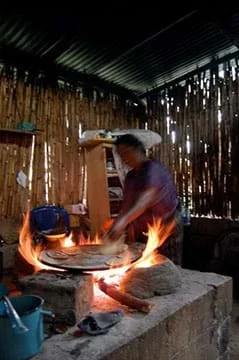 Figure 1. Cooking with a traditional cook stove inside a home.Copyright 2007 Gringologue, Wikimedia Commons https://commons.wikimedia.org/wiki/File:Tortillera_en_Guatemala.jpg
Cook stove intervention studies are used to test out improved cook stoves in the field. To do this, a group of participants are identified and some of them are provided with improved cook stoves, while the rest continue to use traditional cook stoves. Then researchers collect and analyze data to determine the benefits of improved stoves over traditional stoves, as well as any barriers to widespread implementation. Improved cook stoves must lower harmful emissions and be cost effective and easy to use. These studies can be complex because researchers must study the problem from many different angles and take into account health, social and economic factors.
Before the Activity
- Start by reading the Project Overview Sheet (PDF) to get a sense of the overall activity. As necessary, arrange for air quality monitors to support student projects, or else decide to use existing data only.
- Make copies of all of the worksheets. You may want to give students the Research Plan Blank Template (PDF) as a digital file (Word (DOCX)or Google Doc), instead of paper, so they can type their project plans right into it.
- If you want to assign groups, do this before class so students can work with their groups from the very beginning and then throughout the activity.
With the Students
- Present the Introduction/Motivation content, showing the class one of the two online videos about cook stoves.
- Hand out the Example Case Study Worksheet 1 (PDF) and give students 15-20 minutes to individually complete the worksheet’s reading and questions, permitting students to have discussions with other students.
- Once everyone is finished with Worksheet 1, hand out the Example Case Study Worksheet 2 (PDF) and direct students to read through it and answer the questions at the end (on a separate piece of paper). Give students 10-15 minutes to complete the three worksheet questions.
- Facilitate a class discussion around the following questions. If students are timid about answering, use a think-pair-share approach.
- What was the biggest difference between your study design and the REACCTING project? Did you propose to collect as much data as they did? (Possible responses. Expect students to observe that the REACCTING study was much more comprehensive than their study plans, particularly with respect to the different types of air quality data the REACCTING team examined (outdoor, indoor, direct emissions and direct exposure.)
- In addition to reducing pollutants, what do you think might be other benefits associated with improved cook stoves? (Possible responses: More complete combustion means the fuel is burning more efficiently, which means it lasts longer. This is a benefit for families because they are able to spend less time collecting fuel or less money buying fuel. More complete combustion results in less smoke, so in addition to lowering pollutant exposure, the reduced smoke in the home improves quality of life and aesthetics. Some high-tech stoves have other features, such as built-in cell phone chargers, which can further increase the value and usefulness of the technology. Another reason people may want stoves is social; having an improved cook stove may enhance social status.)
- Can you think of any negatives that may be associated with improved cook stoves? (Possible responses: Just as a really high-tech stove may have benefits (like a cell phone charger), it may have negatives such as a high initial cost. Also, if it is manufactured elsewhere (like the U.S.), what happens if a stove part breaks? Another problem that has happened in the past is an ignorance on the part of stove designers regarding what exactly a specific group needs to get out of the stove. For example, past researchers have designed stoves that are not suited for cooking the most common foods in a culture, which made the stove undesirable to use. So stoves not only must be scientifically sound, but also culturally appropriate solutions.)
- Would the data outcomes discussed in your study and the REACCTING study help you to decide whether or not cook stoves should be replaced on a large scale? Are you missing any information? (Possible responses: The data we have discussed has primarily been related to air quality and exposure. While this is important, in order to decide whether the stoves should be replaced on a large scale, you would need more information. For example, if the stoves only result in a slight improvement in air quality, but cost far more than participants are willing to pay, then replacing stoves might not be feasible. Alternatively, if you could demonstrate that the money saved on fuel and health care costs far outweighs the initial investment in having the stove manufactured and distributed, then you would have a good case for the widespread replacement of traditional stoves.)
- Hand out the Brainstorming Guide (PDF) and the Research Plan Blank Template (PDF) (for the latter, a digital file might be most helpful, so students can type right into it). The remainder of the activity focuses on helping students plan and execute their own long-term, team projects.
- Present to the class the 14-slide Study Design Presentation (PPTX) to remind students of what pollutants they can measure using the air quality monitors and encourage discussion of project examples and ideas.
- In addition, to help students get started, make available for their review a few copies of the three example research plans using the same template—one about indoor air quality, one investigating oil and gas, and one using existing air quality data. These are past example projects by student groups that help students see what needs to be included in the plan template. The Project Overview Sheet (PDF) also includes a list of project ideas. Finally, remind students to think back to the Connecting to the Big Picture Worksheets from the first three activities in this series (if completed) and any ideas about air quality in their homes and communities that they captured in their worksheet answers.
- Suggest that students use the remaining time to brainstorm within their groups and begin their project plans, which they are to complete as homework.
- Mentor and guide the groups as they plan and conduct their long-term projects. Then move on to the next and final activity in this series, in which student groups learn about and then prepare and present summary research posters.
- carbon dioxide
- A colorless and odorless gas. A gas-phase pollutant. Composed of 1 carbon atom and 2 oxygen atoms. Generated by the respiration of animals and the combustion (burning) of fuels that contain carbon. Abbreviated as CO2.
- carbon monoxide
- A colorless, odorless and tasteless gas. A compound that is a product of incomplete combustion and is dangerous to human health. Composed of 1 carbon atom and 1 oxygen atom. Abbreviated as CO.
- dependent variable
- The variable in your research study that you observe or measure to see how it changes with respect to your independent variable.
- experimental control
- Factors other than the independent variable can affect the dependent variables of a study, which can lead to incorrect interpretation of the results. You can control for these factors by designing a study that minimizes the impact of other factors (such as through strategic locations or timing) or use a “control group” that is similar in every way to the experimental group with the exception of the independent variable. The purpose of an experimental control is to minimize the effects of variables other than the independent variable.
- hydrocarbon
- A compound that contains only carbon and hydrogen atoms. Another term for VOC. Abbreviated as HC.
- improved cook stove
- An affordable stove designed for cooking and/or heating in other parts of the world, with the objective to curb smoke emissions from open fires inside dwellings (and thus, improve health conditions) and reduce fuel consumption per meal.
- independent variable
- The variable in your research study that you choose and then modify or change to examine the outcome or impact on the dependent variable(s).
- intervention study
- A type of study that examines the impact of replacing a traditional method with a new technology. During an intervention study, data is collected on one group that uses the new technology, while another group continues to use traditional methods.
- nitrogen dioxide
- A gas-phase compound made of 1 nitrogen atom and 2 oxygen atoms. It is formed during high-temperature combustion from the nitrogen that exists in the air. High-temperature combustion also produces nitrogen monoxide (NO). The sum of the amount of NO and NO2 is the amount of NOx present; in other words NOx is a term that includes both NO and NO2.
- ozone
- A pale blue gas with a distinctively pungent smell. It is a secondary pollutant formed by NOx and VOCs in the presence of sunlight. Dangerous to human health at ground level, but high in the stratosphere it protects humans from harmful UV rays. Mnemonic: “good up high, bad nearby.”
- particulate matter
- A microscopic solid or liquid compound that may be natural or human-made. Very small particulate matter may be a conglomerate of gas-phase compounds; larger particulate matter can be dust or pollen.
- volatile organic compound
- An organic chemical that has a high vapor pressure at ordinary room temperature, such that it volatizes (enters the gas phase) at room temperature and pressure. An example is formaldehyde (CH2O, 1 carbon, 2 hydrogens, and 1 oxygen atom). Abbreviated as VOC. VOCs are also gas-phase compounds. VOCs also include products of incomplete combustion (when a carbon-fuel is not completely burned, resulting in only CO2).
Pre-Activity Assessment
Example Case Study 1: After introducing the activity and showing the class one of the online videos about cook stoves, have students work through the Example Case Study Worksheet 1 (PDF) either independently or in small groups. Require students to fill out their own worksheets, but permit them to discuss the topics with their neighbors. Walk around the room and observe students’ answers to see how well they are doing in this first attempt to create a plan for a research study.
Vocab List: Use the Vocabulary List (PDF) to help students review previously learned terms (pollutant types) and introduce them to terms they are about to use (independent and dependent variables, controls, improved cook stove, intervention study).
Activity Embedded Assessment
Comparative Discussion: After students have completed the Example Case Study Worksheet 1 (PDF) and Example Case Study Worksheet 2 (PDF), facilitate a class discussion around the four questions provided in the Procedure section (along with possible student responses). See if student answers recognize improvements that could be made to their original research study plans, which indicates that they are gaining an understanding of the depth and breadth of good research plans.
Post-Activity Assessment
Research Plan Template: After brainstorming project ideas within their teams, in class, have students begin to fill in the Research Plan Blank Template (PDF), assigning them to complete the plans as out-of-class homework—one final plan per team. Then have instructors and/or mentors review the plans and provide feedback to ensure student success as they conduct the projects.
Software to aid in plotting and examining the monitor data is explained in the Pod user manual. All downloads and additional assistance/information are available at http://cuboulderaqiq.wix.com/education. Alternatively, use Microsoft® Excel® to plot and visualize the data.
Clean Cookstove Research. Last updated April 2016. Air Research, U.S. Environmental Protection Agency. Accessed October 2015. [This is reference #1.] https://www.epa.gov/air-research/clean-cookstove-research
Dickinson, Katherine L. et al. “Research on Emissions, Air Quality, Climate, and Cooking Technologies in Northern Ghana (REACCTING): Study Rationale and Protocol.” Published February 12, 2015. BMC Public Health, BioMedCentral, The Open Access Publisher, 15: 126. DOI: 10.1186/s12889-015-1414-1. Accessed October 2015. http://bmcpublichealth.biomedcentral.com/articles/10.1186/s12889-015-1414-1
Stove Intervention. 2016. Accessed spring 2016. REACCTING: Research of Emissions, Air Quality, Climate and Cooking Technologies in Northern Ghana. Accessed spring 2016. http://www.reaccting.com/
Understanding Science (flowchart of the scientific inquiry process). 2008. The University of California Museum of Paleontology, Berkeley, and the Regents of the University of California (funded by NSF). Accessed March 2016. http://undsci.berkeley.edu/ and http://www.berkeley.edu/news/media/releases/2009/01/08_understandingscience.shtml
AQ-IQ Air Quality Monitor Information
This curriculum was designed to support high school students’ use of a low-cost air quality monitor developed by the Hannigan Lab at the University of Colorado Boulder called a “Pod.” Pods can be rented and shipped from the university; see below for details. Alternatively, many of the activities, including the long-term project, can be completed with other air quality monitors—or no monitor. For example, students can design research projects that utilize existing air quality data instead of collecting their own, which is highly feasible since a great amount of data from around the planet is publically available. In addition, other low-cost monitors could be used instead of the Pods, ranging from purchasable to DIY; see the AQ-IQ unit for a list of options.
Is an air quality monitor needed for this activity?
No and Yes. No, the activity itself does not require an air quality monitor, but conducting students’ planned research studies after the activity DOES require either air quality monitor(s) or the use of existing data found elsewhere. See below and the AQ-IQ unit for more information on monitors.
Obtaining an AQ-IQ air quality monitor (Pod) from the University of Colorado Boulder
The air quality monitors—called Pods—are available in AQ-IQ Kits that can be rented from the Natural History Museum at the University of Colorado Boulder.
An AQ-IQ Kit is an easily transportable carry-on suitcase-sized container that holds two portable air quality monitors (= 2 Pods), a small laptop for processing data, a comprehensive user manual, and accessories such as power cords and batteries for portable monitoring. The cost is a $10 per week rental fee that supports museum expenses to store and rent the kits. Generally, if students are completing a long-term project, expect to rent a kit for 3-8 weeks.
To find out about the availability of AQ-IQ Kits and shipping options, or to schedule a rental or to rent the kits, contact the museum’s education office at https://www.colorado.edu/cumuseum/programs/schools-and-groups/outreach-materials (a phone number and email address are provided). After checking out the kits, the museum can connect you to a mechanical engineering lab at the university as a technical support resource for using the air quality monitors, troubleshooting and conducting student air quality research projects (as needed). Sometimes the lab partners with schools and provides university undergraduate students to assist teachers with technical issues and to mentor and assist high school students throughout their projects. See the AQ-IQ Program website to learn more and to contact them: https://www.colorado.edu/aqiq/.
Contributors
Ashley Collier; Katya Hafich; Daniel Knight; Michael Hannigan; Joanna Gordon; Ben Graves; Eric Ambos; Olivia Cecil; Victoria Danner; Erik Hotaling; Eric Lee; Drew Meyers; Hanadi Adel Salamah; Nicholas VanderKolk; Evan Coffey
Supporting Program
AirWaterGas SNR Project Education and Outreach, College of Engineering, University of Colorado Boulder
Acknowledgements
This material is based upon work by the AirWaterGas Sustainability Research Network Education and Outreach Project in the College of Engineering at the University of Colorado Boulder, supported by National Science Foundation grant no. CBET 1240584. However, these contents do not necessarily represent the policies of the National Science Foundation, and you should not assume endorsement by the federal government.
The authors also express their appreciation for the support of the University of Colorado’s Office of Outreach and Engagement, and acknowledge the REACCTING Project, which was used as model of study design in this activity.
Copyright
2013 by Regents of the University of Colorado