
Design a Soundproof Room
Students are presented with the following challenge: their new school is under construction and the architect accidentally put the music room next to the library. Students need to design a room that will absorb the most amount of sound so that the music does not disturb the library. Students use a box as a proxy for the room need to create a design that will decrease the sound that is coming from the outside of the box. To evaluate this challenge, students use a speaker within the box and a decibel meter outside the box to measure the effectiveness of their design.
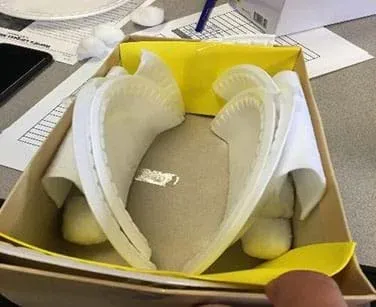 Figure 1. A model soundproof box that uses a variety of materials, including Styrofoam and cotton.Copyright 2017 Emma Cipriani, Natalie Jackson, Geanna Schwaegerle, and La’Nise Gray; Collaborative RET: University of Dayton, Central State University and Wright State University in Ohio.
Students relate science to engineering as they examine properties of sound and apply this knowledge in order to design a soundproof room—a practical application that acoustical engineers may perform in their work. The students employ the engineering design process and are given a range of materials to choose from. As students design their soundproof rooms, they are also limited by several constraints that acoustical engineers may encounter; they must work with a finite number of materials and must stay within a budget.
After this activity, students should be able to:
- Apply their knowledge of sound to a real-life situation.
- Evaluate materials for their design using quantitative data.
- Design a soundproof box using the engineering design process.
- CCSS.Math.Content.5.MD.B Represent and interpret data.
Grade 5
Do you agree with this alignment? - CCSS.Math.Content.5.NBT.B.7 Add, subtract, multiply, and divide decimals to hundredths, using concrete models or drawings and strategies based on place value, properties of operations, and/or the relationship between addition and subtraction; relate the strategy to a written method and explain the reasoning used.
Grade 5
Do you agree with this alignment? - CCSS.Math.Content.6.SP.B.4 Display numerical data in plots on a number line, including dot plots, histograms, and box plots.
Grade 6
Do you agree with this alignment?
- Students will develop an understanding of the attributes of design.
Grades K-12
Do you agree with this alignment? - Students will develop an understanding of engineering design.
Grades K-12
Do you agree with this alignment? - Students will develop an understanding of the role of troubleshooting, research and development, invention and innovation, and experimentation in problem solving.
Grades K-12
Do you agree with this alignment? - Students will develop abilities to apply the design process.
Grades K-12
Do you agree with this alignment? - STEL-7H Illustrate that there are multiple approaches to design.
Grades 3-5
Do you agree with this alignment?
- 3-5-ETS1-1 Define a simple design problem reflecting a need or a want that includes specified criteria for success and constraints on materials, time, or cost.
Grades 3-5
This resource focuses on the following Three Dimensional Learning aspects of NGSS:
Science & Engineering Practices- Define a simple design problem that can be solved through the development of an object, tool, process, or system and includes several criteria for success and constraints on materials, time, or cost.Do you agree with this alignment?
Disciplinary Core Ideas- Possible solutions to a problem are limited by available materials and resources (constraints). The success of a designed solution is determined by considering the desired features of a solution (criteria). Different proposals for solutions can be compared on the basis of how well each one meets the specified criteria for success or how well each takes the constraints into account.Do you agree with this alignment?
Crosscutting Concepts- People's needs and wants change over time, as do their demands for new and improved technologies.Do you agree with this alignment?
Do you agree with this alignment? - Define a simple design problem that can be solved through the development of an object, tool, process, or system and includes several criteria for success and constraints on materials, time, or cost.
- 3-5-ETS1-2 Generate and compare multiple possible solutions to a problem based on how well each is likely to meet the criteria and constraints of the problem.
Grades 3-5
This resource focuses on the following Three Dimensional Learning aspects of NGSS:
Science & Engineering Practices- Generate and compare multiple solutions to a problem based on how well they meet the criteria and constraints of the design problem.Do you agree with this alignment?
Disciplinary Core Ideas- Research on a problem should be carried out before beginning to design a solution. Testing a solution involves investigating how well it performs under a range of likely conditions.Do you agree with this alignment?
- At whatever stage, communicating with peers about proposed solutions is an important part of the design process, and shared ideas can lead to improved designs.Do you agree with this alignment?
Crosscutting Concepts- Engineers improve existing technologies or develop new ones to increase their benefits, to decrease known risks, and to meet societal demands.Do you agree with this alignment?
Do you agree with this alignment? - Generate and compare multiple solutions to a problem based on how well they meet the criteria and constraints of the design problem.
- MS-ETS1-1 Define the criteria and constraints of a design problem with sufficient precision to ensure a successful solution, taking into account relevant scientific principles and potential impacts on people and the natural environment that may limit possible solutions.
Grades 6-8
This resource focuses on the following Three Dimensional Learning aspects of NGSS:
Science & Engineering Practices- Define a design problem that can be solved through the development of an object, tool, process or system and includes multiple criteria and constraints, including scientific knowledge that may limit possible solutions.Do you agree with this alignment?
Disciplinary Core Ideas- The more precisely a design task's criteria and constraints can be defined, the more likely it is that the designed solution will be successful. Specification of constraints includes consideration of scientific principles and other relevant knowledge that is likely to limit possible solutions.Do you agree with this alignment?
Crosscutting Concepts- The uses of technologies and any limitations on their use are driven by individual or societal needs, desires, and values; by the findings of scientific research; and by differences in such factors as climate, natural resources, and economic conditions.Do you agree with this alignment?
- All human activity draws on natural resources and has both short and long-term consequences, positive as well as negative, for the health of people and the natural environment.Do you agree with this alignment?
Do you agree with this alignment? - Define a design problem that can be solved through the development of an object, tool, process or system and includes multiple criteria and constraints, including scientific knowledge that may limit possible solutions.
- MS-ETS1-2 Evaluate competing design solutions using a systematic process to determine how well they meet the criteria and constraints of the problem.
Grades 6-8
This resource focuses on the following Three Dimensional Learning aspects of NGSS:
Science & Engineering Practices- Evaluate competing design solutions based on jointly developed and agreed-upon design criteria.Do you agree with this alignment?
Disciplinary Core Ideas- There are systematic processes for evaluating solutions with respect to how well they meet the criteria and constraints of a problem.Do you agree with this alignment?
Do you agree with this alignment? - Evaluate competing design solutions based on jointly developed and agreed-upon design criteria.
- MS-PS4-2 Develop and use a model to describe that waves are reflected, absorbed, or transmitted through various materials.
Grades 6-8
This resource focuses on the following Three Dimensional Learning aspects of NGSS:
Science & Engineering Practices- Develop and use a model to describe phenomena.Do you agree with this alignment?
Disciplinary Core Ideas- A sound wave needs a medium through which it is transmitted.Do you agree with this alignment?
Crosscutting Concepts- Structures can be designed to serve particular functions by taking into account properties of different materials, and how materials can be shaped and used.Do you agree with this alignment?
Do you agree with this alignment? - Develop and use a model to describe phenomena.
- 5.MD.B Represent and interpret data.
Grade 5
Do you agree with this alignment? - 5.NBT.7 Solve real-world problems by adding, subtracting, multiplying, and dividing decimals using concrete models or drawings and strategies based on place value, properties of operations, and/or the relationship between addition and subtraction, or multiplication and division; relate the strategy to a written method and explain the reasoning used.
Grade 5
Do you agree with this alignment? - 6.SP.4 Display numerical data in plots on a number line, including dot plots (line plots), histograms, and box plots.
Grade 6
Do you agree with this alignment?
Each group needs:
- shoe box or tissue box with the top removed (note: each group’s boxes should be roughly the same size; have the students determine this during the Decibels and Acoustical Engineering lesson)
- scissors
- glue
- roll of tape
To share with the entire class:
- portable speaker and two smart phones (for decibel testing and sound generation)
- two apps from the App store:
- Tone Generator
- Decibel X: dB, dBA Noise Meter
- bubble wrap (cut into 30 cm x 30 cm pieces)
- steel wool
- Play-doh
- parchment paper (cut into 10 cm x 15 cm pieces)
- aluminum foil (cut into 10 cm x 15 cm pieces)
- sponges
- Styrofoam plates
- felt (cut into 10 cm x 15 cm pieces)
- notecards
- painter’s tape
- cotton balls
- newspaper
- computer paper
- straws
- paper plates
- craft pom-pomspipe cleaners
- corkboard
- fleece (cut into 10 cm x 15 cm pieces)
- craft sticks
- foam sheets
Note: see Post-Introduction Assessment (PDF) for more information on how much material students are allowed to use in their design. Depending on the class size, this will determine how much material to purchase.
Students should complete the Decibels and Acoustical Engineering lesson and What Soundproofing Material Works Best? activity prior to this activity.
(Show slides 15 and 16 from the Soundproofing Material PowerPoint Presentation (PPTX).)
Now that we’ve learned about sound and explored the properties of a select number of materials, you are going to take on the role of acoustical engineers faced with a new design challenge. Your new school is under construction and the architect accidentally put the music room next to the library! In your groups, design a room that will absorb the most amount of sound so that students playing music do not disturb those reading in the library.
Your groups will create a design inside a box that will decrease the decibels measured from the outside of the box. Just like real acoustical engineers, you’ll follow the engineering design process and work within a set number of constraints. Each group has a materials budget of only $15, so make sure to choose your materials wisely! Use your prior knowledge of how different materials interact with sound to create a soundproofed music room!
Background
Refer to the Soundproofing Material PowerPoint Presentation (PPTX) to review information on acoustical engineering and the science of sound.
Before the Activity
- Complete the What Soundproofing Material Works Best? activity
- Download both apps from the App store
- Buy all necessary materials
- Set up materials in a central location; a “store,” where students can easily access them while building their soundproof rooms.
With the Students
- Introduce the activity and design challenge the students will need to complete (See Soundproofing Material PowerPoint Presentation (PPTX), slide 15).
- Pass out the Post-Introduction Assessment (PDF).
- Explain to the class that each group will be given a budget of $15 to design their soundproof room.
- Show students the “store” where they will buy their materials to design their soundproof room. The Post-Introduction Assessment (PDF) lists all the materials with a price. The materials list also tells the students how much material they are allowed to buy per group. (A discussion about constraints in the engineering design process would fit well here, if time allows. This constraint is explained in Slide 16 in Soundproofing Material PowerPoint Presentation (PPTX)).
- Provide the class with ideas to jumpstart the brainstorm process (Show Figure 1 and Figure 3 as an example).
- Provide students with extra copies of materials list so they can sketch out different budgets while brainstorming.
- Tell students to brainstorm three different ideas individually about what would be the best way to soundproof their music room. They will write their brainstorm on the Post-Introduction Assessment (PDF).
- Assign students to groups for the challenge and instruct students to bring their best individual design with them to their group.
- Instruct them to collaborate with their groups about which individual brainstorm, or combination of, is the best design for their soundproof room and record this within the Post-Introduction Assessment (PDF).
- Students decide on the best design within their group and fill out their final budget (see Figure 2).
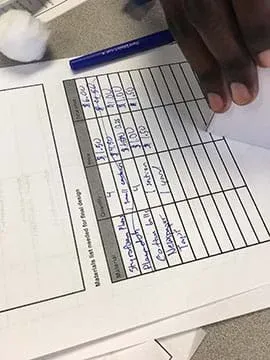 Figure 2. Students fill out their budget sheets.Copyright 2017 Emma Cipriani, Natalie Jackson, Geanna Schwaegerle, and La’Nise Gray, Collaborative RET: University of Dayton, Central State University and Wright State University in Ohio.
- Approve of their design, and move on to the construction process.
- Allow students to visit the materials “store” and “purchase” materials based on their budget ($15 per group).
- Have students ACE (answer, cite, and explain) the following question in the Post-Introduction Assessment (PDF) after they have chosen their design: Explain why you picked specific materials for your soundproof room design based on the previous activity and the collected data.
- Instruct students to test their empty boxes with sound to measure the decibels as a baseline. Make sure that the testing is all performed in the same location.
- App to test: Tone Generator, found at the (App Store for free)
- Decibel meter: Decibel X: dB, dBA Noise Meter (App store for free)
- Note: testing environment must be quiet in order to get an accurate reading.
- Test with the box face down on the table.
- Put one phone inside the box with the Tone Generator on; place the box face-down on the table.
- Use Decibel X outside the box to measure the sound generated from the Tone Generator.
- Note: you can substitute the Tone Generator for music from iTunes or a similar music app. Playing music will give it the feel of a music room. However, if you use music there will be variations in amplitude and this may affect the decibel reading.
- Tell students to record their baseline data on the Post-Activity Assessment (PDF).
- Allow the students to start building their designs. (Refer to Figure 1 or Figure 3 again as example designs.)
- There are no limits on layers of material for this activity. Encourage students to try to build using all the supplies they purchased.
- With the teacher’s assistance, repeat step 12 and measure the decibels from a completed design.
- Have students record their data on the Post-Activity Assessment (PDF).
- Each group will place their information on the board so the class can analyze the information. Place all group names on the board so that each group can fill in their data table. (Using a collaborative Google doc may also help with data collection.)
- Guide students through creating a bar graph with the collected data.
- y-axis = decibel reading (in amps)
- x-axis = group names
- Title: For example, “Decibel readings of soundproof rooms”
- Change in decibel reading; subtract the initial reading taken inside the empty box from the reading taken inside the constructed design.
- Students and teacher will analyze data and answer critical thinking questions about the graph in the Post-Activity Assessment (PDF).
- Lead a discussion as to why a certain group’s design worked and why another group’s design may have needed further iteration. In the discussion, discuss a given material’s ability to absorb, reflect, or transmit sound. Use the Soundproof Rubric (PDF) to help guide the grading process.
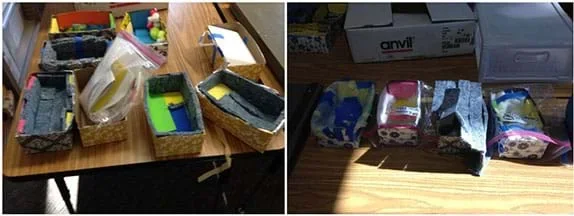 Figure 3. Examples of student groups’ final designs.Copyright 2017 Geanna Schwaegerle, Collaborative RET: University of Dayton, Central State University and Wright State University in Ohio.
- absorption
- The process by which a material, structure, or object takes in sound energy when sound waves are encountered, as opposed to reflecting the energy.
- acoustic
- The branch of physics that deals with the study of all mechanical waves in gases, liquids, and solids including vibration, sound, ultrasound, and infrasound.
- decibel
- A unit of measurement used to express the intensity of a sound, or the power level of an electrical signal by comparing it with a given level on a logarithmic scale.
- medium
- A material substance that can help move energy waves (such as sound) along. Also known as a transmission medium.
- oscillation
- The repetitive variation, typically in time, of some measure about a central value (often a point of equilibrium) or between two or more different states. The term vibration is precisely used to describe mechanical oscillation.
- reflection
- The change in direction of a wave at the fact of a medium so that the wave returns to where it originated.
- sound
- A vibration that manifests itself as a wave of pressure and can be perceived by humans (depending on the frequency) via the ear. Humans can hear soundwaves when the frequency lies between 20Hz and 20 kHz.
Pre-Activity Assessment
Motivational Activity: Complete motivational activity/hook with students.
- Use Slide 13 of the Soundproofing Material PowerPoint Presentation (PPTX) to present students with the activity. You may also have students groups research one of the following readings, “Movie Sound Effects”, “Sounds Trivia”, “Moving Sound: The Doppler Effect” (see Additional Multimedia Support).
- Once students begin reading, begin making noise with some kind of instrument (this will vary).
- Hold discussion about how this noise would affect learning within the classroom.
- Questions (listed on Slide 14 of the PowerPoint):
- How would you feel if you had to listen to these loud noises each time you were trying to read a book or article?
- Would this affect your concentration?
- How would your grades be affected from the constant noise?
Activity 2 Embedded Assessment
Assessments: Students should complete the Post-Introduction Assessment (PDF) and the Post-Activity Assessment (PDF).
Post-Activity Assessment
Rubric: See the Soundproof Rubric (PDF) to grade students on their performance during the activity.
- Remind students about the importance of using scissors properly in the classroom.
- Ask students and teachers to collect boxes prior to the activity.
- Have the materials store set up prior to starting the activity with each material labeled.
- Teacher can be the official “tester” (place the phone flat on the side of the box; choose the exact same orientation for each test to reduce the variables added into testing).
- Use two phones; one to play the Tone Generator (or a music app) inside the box and the other to measure the decibel reading from outside the box.
Lead a class discussion using the following questions. If time allows, let students redesign their boxes or supply them with containers or boxes of different shapes and allow them to iterate on their designs.
- How would different sizes and shapes affect results?
- How would different materials affect results?
- What places will this design be useful?
- What are other factors besides sound that go into architect design?
- If you had an unlimited budget, how would you have done your design?
- For lower grades: Eliminate store and budget by giving the students the materials you want them to work with. Simplify rubric when grading the soundproof room challenge. Complete the data bar graph as a class instead of individually. Go over post-activity assessment questions orally as a class.
- For higher grades: Have students take multiple test readings (5-10 tests recommended) and figure out the mean, median, mode and range of the measurements.
Movie Sound Effects: https://www.education.com/worksheet/article/movie-sound-effects/
Sounds Trivia: https://www.education.com/worksheet/article/movie-trivia-sound-effects/
Moving Sound: The Doppler Effect: https://www.education.com/worksheet/article/the-doppler-effect/
- Decibels and Acoustical Engineering
- What Soundproofing Material Works Best?
- Design a Soundproof Room
Contributors
Emma Cipriani; Natalie Jackson; Geanna Schwaegerle; La’Nise Gray
Supporting Program
Collaborative RET Program, University of Dayton, Central State University and Wright State University in Ohio
Acknowledgements
This material is based upon work supported by the National Science Foundation under grant no. EEC 1405869—a collaborative Research Experience for Teachers Program titled, “Inspiring Next Generation High-Skilled Workforce in Advanced Manufacturing and Materials,” at the University of Dayton, Central State University and Wright State University in Ohio. Any opinions, findings, and conclusions or recommendations expressed in this material are those of the authors and do not necessarily reflect the views of the National Science Foundation.
Copyright
2019 by Regents of the University of Colorado; original © 2016 University of Dayton, Central State University and Wright State University in Ohio