
Creative Engineering Design
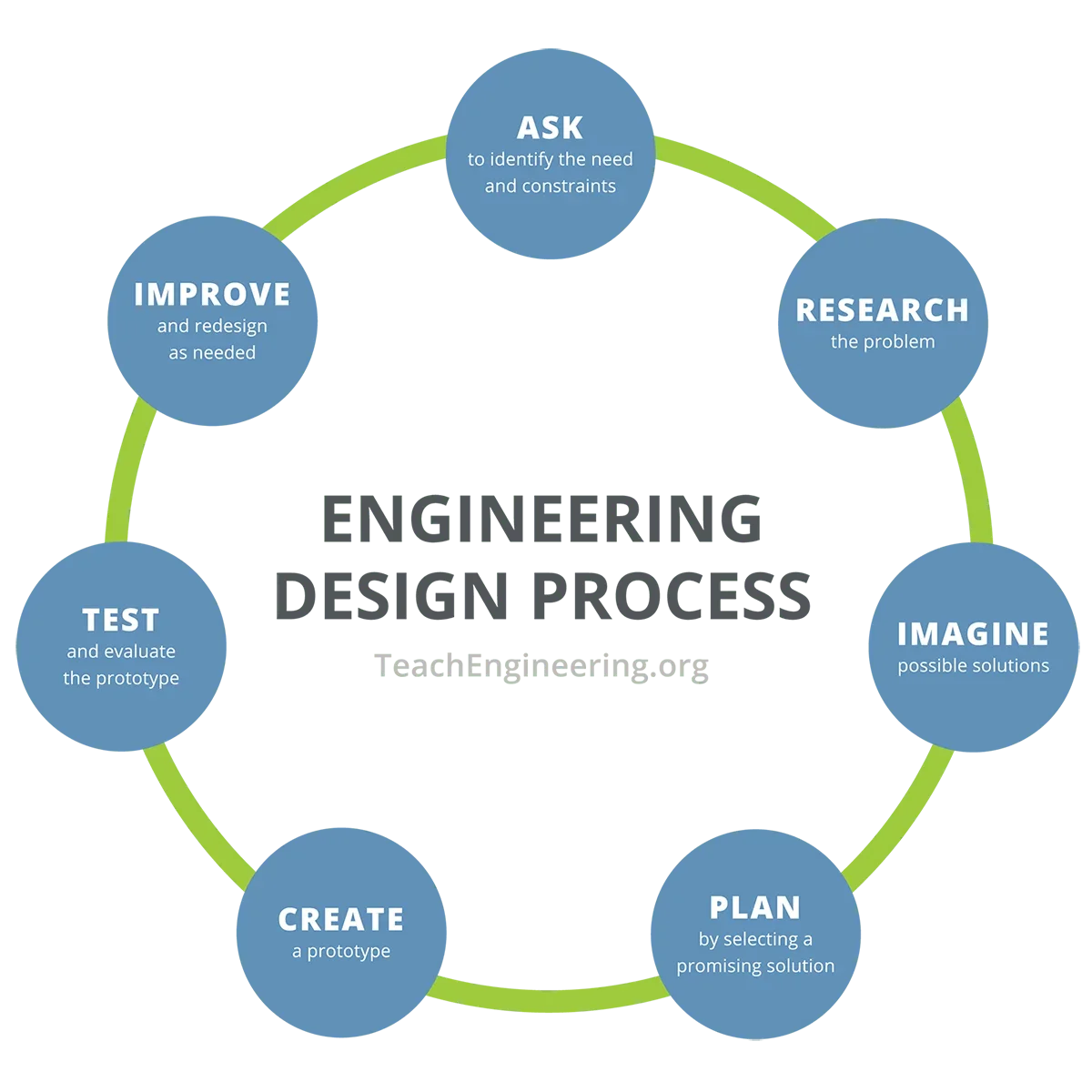 The Engineering Design Process remains an important part of an engineering project
Students learn about the cycle of product design through six activities that follow the seven steps of a simplified engineering design process. The activity topics are: 1) identify the need and define the problem; 2) conduct background research, such as an idea web, internet patent search, standards and codes search, reverse engineering, and user interviews; 3) brainstorm and develop ideas and possible solutions; 4) evaluate alternatives and select the most promising solution using engineering analysis; 5) construct and test prototypes; and 6) improve and redesign as well as manufacture final products.
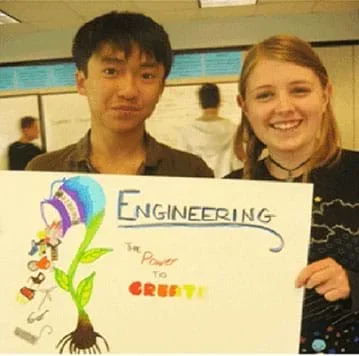 Copyright 2009 Megan Schroeder, ITL Program, College of Engineering, University of Colorado Boulder
The field of engineering is all encompassing in its subject matter and real-world challenges. Yet, engineers of all disciplines have in common certain approaches—teamwork, brainstorming, problem defining with requirements and constraints, the iterative steps of the design process, testing and analysis, prototyping, production and communication. All engineers use some form of the steps of the engineering design process to organize their ideas, and test and refine potential solutions to real-life challenges. Engineers must gain an understanding of all the contextual factors of a particular design challenge—need for the project, relevant social, ethical, environmental and economic conditions of the target population, system integration, and project needs and limitations. Working through all the technical and non-technical issues helps engineers generate useful, appropriate and successful design solutions.
- Students will develop an understanding of the attributes of design.
Grades K-12
Do you agree with this alignment? - Students will develop an understanding of engineering design.
Grades K-12
Do you agree with this alignment? - Students will develop abilities to apply the design process.
Grades K-12
Do you agree with this alignment? - The design process includes defining a problem, brainstorming, researching and generating ideas, identifying criteria and specifying constraints, exploring possibilities, selecting an approach, developing a design proposal, making a model or prototype, testing and evaluating the design using specifications, refining the design, creating or making it, and communicating processes and results.
Grades 9-12
Do you agree with this alignment?
- HS-ETS1-2 Design a solution to a complex real-world problem by breaking it down into smaller, more manageable problems that can be solved through engineering.
Grades 9-12
This resource focuses on the following Three Dimensional Learning aspects of NGSS:
Science & Engineering Practices- Design a solution to a complex real-world problem, based on scientific knowledge, student-generated sources of evidence, prioritized criteria, and tradeoff considerations.Do you agree with this alignment?
Disciplinary Core Ideas- Criteria may need to be broken down into simpler ones that can be approached systematically, and decisions about the priority of certain criteria over others (trade-offs) may be needed.Do you agree with this alignment?
Do you agree with this alignment? - Design a solution to a complex real-world problem, based on scientific knowledge, student-generated sources of evidence, prioritized criteria, and tradeoff considerations.
The structure of this unit has been successfully taught to high school students by various instructors with various design challenge topics. For example, the unit has been scaled as a 13-week high school technical elective, concluding with a Design Expo attended by student families and peers, and as a high school summer camp and a high school/college bridge program, condensed into five days and five weeks, respectively.
Example design project topics taught with this unit structure include:
- house design with elements inspired by nature (biomimicry)
- assistive technology devices
- towers (tested in a university smash lab)
- amusement park rides
- daylighting modifications to existing interior spaces
- interactive table-top educational exhibits
- various solar and water technologies for use by a hypothetical developing community
- Creative Engineering Design
Optional: Show students the What Is Engineering? video.
Contributors
See individual activities
Supporting Program
Integrated Teaching and Learning Program, College of Engineering, University of Colorado Boulder
Acknowledgements
The contents of these digital library curriculum were developed by the Integrated Teaching and Learning Program in the College of Engineering under National Science Foundation GK-12 grant no. 0338326. However, these contents do not necessarily represent the policies of the National Science Foundation and you should not assume endorsement by the federal government.
Copyright
2009 by Regents of the University of Colorado