
Keepers of the Gate
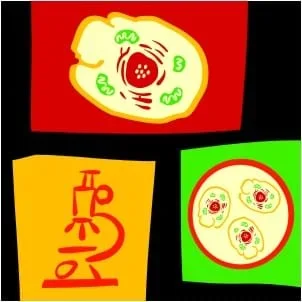 The cell and Its gatekeeper, the cell membrane.Copyright 2004 Microsoft Corporation, One Microsoft Way, Redmond, WA 98052-6399 USA.
This "legacy cycle" unit is structured with a contextually-based Grand Challenge followed by a sequence of instruction in which students first offer initial predictions (Generate Ideas) and then gather information from multiple sources (Multiple Perspectives). This is followed by Research and Revise, as students integrate and extend their knowledge through a variety of learning activities. The cycle concludes with formative (Test Your Mettle) and summative (Go Public) assessments that lead students towards answering the Challenge question. See below for the progression of the legacy cycle through the unit and the suggested order to conduct the lessons and activities. Research and ideas behind this way of learning may be found in How People Learn (Bransford, Brown & Cocking, National Academy Press, 2000; see the entire text at https://www.nap.edu/catalog/9853/how-people-learn-brain-mind-experience-and-school-expanded-edition)
The "legacy cycle" is similar to the "engineering design process" in that they both involve identifying an existing societal need, applying science and math concepts to develop solutions, and using the research conclusions to design a clear, conceived solution to the original challenge. Though the engineering design process and the legacy cycle depend on correct and accurate solutions, each focuses particularly on how the solution is devised and presented. See an overview of the engineering design process at https://www.teachengineering.org/populartopics/designprocess.
In lesson 1, "The Keepers of the Gate Challenge," students are presented with the Grand Challenge question: "You are spending the night with your grandmother when your throat starts to feel sore. Your grandma tells you to gargle with salt water and it will feel much better. Thinking this is an old-wives tale, you scoff, but when you try it later that night it works! Why?" From this, they brainstorm to Generate Ideas. As part of the Multiple Perspectives stage, students watch a TEDx Talk that discusses the value of nanotechnology. Students also review an article pertaining to cancer cells illuminated with quantum dots. During this lesson's associated activity (activity 1), "Grand Challenge Journaling and Brainstorming," students document their thoughts and responses to the questions from the Generate Ideas stage. Questions include "What are your initial ideas about how this question can be answered? What background knowledge is needed? Have you tried this before?" After this, the class brainstorms to reach consensus on the main ideas that need to be explored in the unit.
In lesson 2, as part of the Research and Revise, students learn about the different structures that comprise the cell membrane. They also relate cell membrane structure with function. One of the best ways to learn about a dynamic model is to view animations. A resource document provides many animations for students to choose from for analysis. After students view animations of cell membrane dynamics online, they observe teacher demonstrations of diffusion and osmosis. Students also witness the effect of movement through a semi-permeable membrane using Lugol's solution.
In the lesson's associated activity (activity 2), "Cell Membrane Color Sheet and Build a Cell Membrane," students color in the outline of structures on a cell membrane color sheet. Another optional activity for lesson 2 is the "Build-a-Membrane" activity found at https://learn.genetics.utah.edu/. Both activities begin the Test Your Mettle phase with a formative assessment for the cell membrane. Students check their understanding of the basic cell membrane structure and the function of each part.
Activity 3, "Active and Passive Transport: Red Rover Send Particles Over," introduces students to the transport of particles into and out of the cell. Transport (both active and passive) is the emphasis for Research and Revise phase. The teacher briefly lectures on active and passive transport to help students define transport and compare and contrast different types of particle transport across a cell membrane. Transport happens across a cell membrane to maintain homeostasis. Two main types of transport exist: passive and active. Passive transport is the movement of substances across the membrane without any input of energy from the cell. Active transport refers to movement of materials from an area of lower concentration to an area of higher concentration (against the concentration gradient). Energy is needed, usually from ATP. Then, students play Red Rover-Send Particles Over—a cell membrane game. Through this kinesthetic learning, students explore relationships within the cell involving the cell membrane. Finally, the students also take a quiz to assess their understanding of the material.
Through the Research and Revise and Test Your Mettle phases in activity 4, "Quantum Dots and the Harkness Method of Critical Reading," students learn about quantum dots and how they are used in bionanotechnology and cancer cell research. They explore how cell biotechnology research relates to cell membranes. Students read and discuss a professional journal article, using provided "Harkness framing questions" (article: https://www.scientificamerican.com/article/less-is-more-in-medicine-2007-09/). The "Harkness-method" of discussion helps students become critical readers of scientific literature.
During the final activity (activity 5), "Cell Membrane Experimental Design," which integrates the entire unit through the Go Public phase, students take part in experimental design. They design labs that answer the challenge question. Students must have their plans approved by the instructor before beginning. A formal lab write-up is required as part of the laboratory investigation. Students connect the importance of designing an experiment to the engineering design process; they discuss how experimental design helps further the understanding of a naturally occurring phenomenon, which allows engineers to design better solutions to defined problems.
Engineers use nanoparticles, such as quantum dots, in biomedical engineering, bionanotechnology and cancer cell research. Students emulate intracellular engineers as they analyze authentic data and make predictions on cell lysis techniques based on their analyses. Experimental design is employed as a final project as students design protocols and carry out experiments that prove their answers to the challenge question.
- Research and development is a specific problem-solving approach that is used intensively in business and industry to prepare devices and systems for the marketplace.
Grades 9-12
Do you agree with this alignment? - Technological problems must be researched before they can be solved.
Grades 9-12
Do you agree with this alignment? - Identify the design problem to solve and decide whether or not to address it.
Grades 9-12
Do you agree with this alignment? - Identify criteria and constraints and determine how these will affect the design process.
Grades 9-12
Do you agree with this alignment? - Refine a design by using prototypes and modeling to ensure quality, efficiency, and productivity of the final product.
Grades 9-12
Do you agree with this alignment?
- Science as Inquiry
Grades K-12
Do you agree with this alignment? - Life Science
Grades K-12
Do you agree with this alignment? - Science and Technology
Grades K-12
Do you agree with this alignment? - Science in Personal and Social Perspectives
Grades K-12
Do you agree with this alignment?
Day 1
- Lesson 1 - Keepers of the Gate Challenge
- Activity 1 - Grand Challenge Journaling and Brainstorming
- Lesson 2 - Cell Membrane Structure and Function
- Activity 2 - Cell Membrane Color Sheet and Build a Cell Membrane
Day 2
- Activity 3 - Active and Passive Transport: Red Rover Send Particles Over
- Homework for Day 2 - read the journal article
Day 3
- Activity 4 - Quantum Dots Journal Reading and Harkness Framing Questions
- Homework for Day 3 - reflect on experimental proposals
Day 4
- Activity 5- Cell Membrane Experimental Design
- Homework for Day 4 - write lab report
Day 5
Summary Assessment: Students write their final reflections and answer the challenge question with a one-page paper that includes their conclusions and supporting evidence.
Contributors
Melinda M. Higgins
Supporting Program
VU Bioengineering RET Program, School of Engineering, Vanderbilt University
Acknowledgements
The contents of this digital library curriculum were developed under National Science Foundation RET grants no. 0338092 and 0742871. However, these contents do not necessarily represent the policies of the NSF, and you should not assume endorsement by the federal government.
Copyright
2013 by Regents of the University of Colorado; original © 2010 Vanderbilt University