
Invisible Air Pollution: I Don't Believe My Eyes!
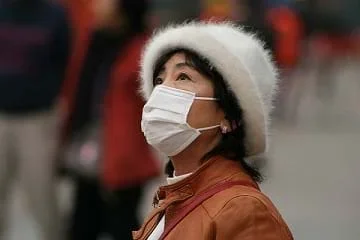 What are the effects of air pollutants?Copyright Nicolò Lazzati www.flickr.com/photos/the-niki/4331676192/in/photolist-7A... Licensed under the Creative Commons Attribution 2.0 Generic | Flickr https://www.flickr.com/photos/121483302@N02/15489395937
Students develop their understanding of the effects of invisible air pollutants with a rubber band air test, a bean plant experiment and by exploring engineering roles related to air pollution. In an associated literacy activity, students develop visual literacy and write photograph captions. They learn how images are manipulated for a powerful effect and how a photograph can make the invisible (such as pollutants) visible. Note: You may want to set up the activities for Air Pollution unit, Lessons 2 and 3, simultaneously as they require extended data collection time and can share collection sites.
Engineers design methods to measure invisible air pollutants and monitor air quality; they use these tools to measure emissions from vehicles and industry. For example, engineers design the equipment that is used when your car gets an emissions test. The equipment analyzes the substance discharged into the air by the internal combustion engine to determine whether the vehicle emissions include too many dangerous pollutants.
After this lesson, students should be able to:
- Identify the major types of invisible air pollutants.
- Describe how some invisible air pollutants affect our health.
- Describe how engineers interact with invisible air pollution.
- Identify evidence suggesting that atoms form into molecules with different properties than their components
Grade 6
Do you agree with this alignment? - Develop, communicate, and justify an evidence-based explanation about how ecosystems interact with and impact the global environment
Grade 6
Do you agree with this alignment?
- CCSS.Math.Content.6.NS.B.3 Fluently add, subtract, multiply, and divide multi-digit decimals using the standard algorithm for each operation.
Grade 6
Do you agree with this alignment? - CCSS.Math.Content.6.RP.A.3c Find a percent of a quantity as a rate per 100 (e.g., 30% of a quantity means 30/100 times the quantity); solve problems involving finding the whole, given a part and the percent.
Grade 6
Do you agree with this alignment?
- The management of waste produced by technological systems is an important societal issue.
Grades 6-8
Do you agree with this alignment? - STEL-4L Analyze how the creation and use of technologies consumes renewable and non-renewable resources and creates waste.
Grades 6-8
Do you agree with this alignment?
- 5-ESS3-1 Obtain and combine information about ways individual communities use science ideas to protect the Earth's resources and environment.
Grade 5
This resource focuses on the following Three Dimensional Learning aspects of NGSS:
Science & Engineering Practices- Obtain and combine information from books and/or other reliable media to explain phenomena or solutions to a design problem.Do you agree with this alignment?
Disciplinary Core Ideas- Human activities in agriculture, industry, and everyday life have had major effects on the land, vegetation, streams, ocean, air, and even outer space. But individuals and communities are doing things to help protect Earth's resources and environments.Do you agree with this alignment?
Crosscutting Concepts- A system can be described in terms of its components and their interactions.Do you agree with this alignment?
- Science findings are limited to questions that can be answered with empirical evidence.Do you agree with this alignment?
Do you agree with this alignment? - Obtain and combine information from books and/or other reliable media to explain phenomena or solutions to a design problem.
The atmosphere is almost completely composed of invisible gaseous substances. Most major air pollutants are also invisible, meaning you cannot see or smell them. However, when large amounts of them are concentrated in areas such as cities, they can be seen as smog. Invisible air pollutants are among the most dangerous to our health. Refer to the associated activity What's Hiding in the Air? to develop students' understanding of the effects of invisible air pollutants with a rubber band air test and a bean plant experiment. Then follow with the second associated activity Visual Literacy: Tears in (Acid) Rain to help students learn how images are manipulated for a powerful effect and how a photograph can make the invisible (pollutants that form acid rain) visible (through the damage they cause).
The EPA set national air quality standards for six principal air pollutants (also referred to as criteria pollutants): carbon monoxide (CO), lead (Pb), nitrogen dioxide (NO2), sulfur dioxide (SO2), ozone (O3) and particulate matter (PM). Four of these pollutants (CO, Pb, NO2 and SO2) result primarily from direct emissions from a variety of everyday sources. Particulate matter results from direct emissions, but is also commonly formed when emissions of nitrogen oxides (NOx), sulfur oxides (SOx), ammonia, organic compounds and other gases react in the atmosphere. Ozone is not directly emitted, but is formed when NOx and volatile organic compounds (VOCs) react in the presence of sunlight.
Ask students to recall a visit to a gas station: Have they ever pumped the gas themselves or helped someone else do it? Have they ever taken a close look at the gas pump handle? Have they ever noticed that when they travel to other states or countries the pump nozzle may appear different? In Colorado (and many other places), the pump handles are equipped with a "rubber collar," designed by an engineer to prevent volatile organic compounds (VOCs, such as benzene) from escaping into the air while gas is pumped. This collar protects you from serious health effects that may result from inhaling fumes and also protects the environment from the smog caused by VOCs.
Create an idea web: Ask students to brainstorm a list of invisible pollutants. What effects do these pollutants have on us and our environment? What are some possible solutions for reducing these types of pollutants? (Refer students to the Common Air Pollutants Reference Sheet (PDF) or see the U.S. Environmental Protection Agency (EPA) Air Trends website at: www.epa.gov/airtrends/.
Ask students if they would like to add anything new to the idea web. Assign the Carbon Monoxide Emissions Worksheet (PDF) as homework.
- carbon monoxide
- A colorless, odorless and poisonous gas made of one carbon atom and one oxygen atom. Abbreviated as CO.
- invisible pollutant
- Air pollution that cannot be smelled or seen with the naked eye.
- ozone
- Ground-level ozone is the principal component of smog, created from chemical reactions of pollutants, VOCs, and NOx. Abbreviated as O3.
- volatile organic compound
- An organic chemical containing carbon that escapes into the air easily. Abbreviated as VOC. VOCs react with sunlight to produce ground-level ozone. VOCs are the most common type of indoor pollutant.
Pre-Lesson Assessment
Discussion Topic: Ask students to recall a visit to a gas station. Have they ever pumped gas themselves or helped someone else do it? Have they ever taken a close look at the gas pump handle? Have they ever noticed that when they travel to other locations the pump nozzle may appear different? Why?
Post-Introduction Assessment
Idea Web: Ask students to brainstorm a list of invisible pollutants. What effects do these pollutants have on us and our environment? What are possible solutions for reducing these types of pollutants?
Lesson Summary Assessment
Idea Web Revisited: Ask students if they would like to add anything new to their idea web.
Informative Flyer: Have students create a flyer to inform other students, the school or their community about the presence of visible and invisible pollutants in the air. Include some of the ideas they generated in the idea web. Display these flyers in the classroom or the school's common area.
Homework
Worksheet: Assign students to complete the Carbon Monoxide Emissions Worksheet (PDF). Discuss findings during the next class period, paying particular attention to questions 3 and 6.
Take a field trip to a vehicle emissions testing site. Or, invite a speaker from a vehicle emissions testing site to speak to your class about how they measure the invisible pollutants from vehicles. What determines whether or not a car passes the inspection?
Air Trends. Updated May 4, 2004. U.S. Environmental Protection Agency. Accessed July 13, 2004. www.epa.gov/airtrends.
The Plain English Guide to the Clean Air Act, The Common Air Pollutants. Updated May 13, 2002. U.S. Environmental Protection Agency, EPA-OAQPS. Accessed July 13, 2004. www.epa.gov.
- Air Pollution & Air Quality
- Got Dirty Air?
- I've Gotta Get Some Air
- Visible Air Pollution: You've Got to See It to Believe It!
- Invisible Air Pollution: I Don't Believe My Eyes!
- The No Zone of Ozone
- On the Move: Pollution Transport & Weather
Contributors
Amy Kolenbrander; Janet Yowell; Natalie Mach; Malinda Schaefer Zarske; Denise W. Carlson
Supporting Program
Integrated Teaching and Learning Program, College of Engineering, University of Colorado Boulder
Acknowledgements
The contents of this digital library curriculum were developed under grants from the Fund for the Improvement of Postsecondary Education (FIPSE), U.S. Department of Education and National Science Foundation (GK-12 grant no. 0338326). However, these contents do not necessarily represent the policies of the Department of Education or National Science Foundation, and you should not assume endorsement by the federal government.
Copyright
2004 by Regents of the University of Colorado