
Engineering in Sports: Energy Transfer in Athletic Gear
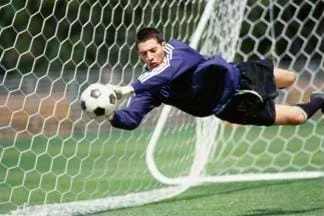 Students examine engineering in sportsCopyright 2006 Microsoft Corporation, One Microsoft Way, Redmond, WA 98052-6399 USA. All rights reserved.
Imagining themselves arriving at the Olympics gold medal soccer game in Rio, Brazil, students begin to think about how engineering is involved in sports. After a discussion of kinetic and potential energy, an associated hands-on activity gives students an opportunity to explore energy-absorbing materials as they try to protect an egg from being crushed.
Companies spend millions of dollars on research and hiring engineers specializing in aerodynamics, materials and other specialties in hopes of gaining a product edge. Engineers play an important role in sports, especially in the design of sporting equipment and high-performance athletics. From tennis racquets to swimsuits, engineers design with the goal of creating lighter, faster and stronger equipment. High-tech, well-designed gear helps athletes perform to their highest abilities while also staying safe. For most engineered sports equipment, energy transfer is the single most important scientific concept. Football pads and helmets must absorb high-energy collisions. The best golf clubs transfer as much energy to the golf ball as possible. Engineers must be able to understand and apply the principles of kinetic and potential energy to design excellent sporting equipment.
After this lesson, students should be able to:
- Give examples of how engineers help athletes stay safe.
- Give examples of how engineers help athletes perform to their highest abilities.
- Define kinetic and potential energy and explain the difference between the two.
- 5.1.2.a Fluently multiply multi-digit whole numbers using standard algorithms.
Grade 5
Do you agree with this alignment? - 5.1.2.c Add, subtract, multiply, and divide decimals to hundredths.
Grade 5
Do you agree with this alignment?
- Energy comes in many forms such as light, heat, sound, magnetic, chemical, and electrical
Grade 4
Do you agree with this alignment? - Identify and describe the variety of energy sources
Grade 4
Do you agree with this alignment?
- CCSS.Math.Content.3.OA.C Multiply and divide within 100.
Grade 3
Do you agree with this alignment? - CCSS.Math.Content.5.NBT.B.5 Fluently multiply multi-digit whole numbers using the standard algorithm.
Grade 5
Do you agree with this alignment?
- Energy comes in different forms.
Grades 3-5
Do you agree with this alignment? - STEL-3D Explain how various relationships can exist between technology and engineering and other content areas.
Grades 3-5
Do you agree with this alignment?
- 4-PS3-1 Use evidence to construct an explanation relating the speed of an object to the energy of that object.
Grade 4
This resource focuses on the following Three Dimensional Learning aspects of NGSS:
Science & Engineering Practices- Use evidence (e.g., measurements, observations, patterns) to construct an explanation.Do you agree with this alignment?
Disciplinary Core Ideas- The faster a given object is moving, the more energy it possesses.Do you agree with this alignment?
Crosscutting Concepts- Energy can be transferred in various ways and between objects.Do you agree with this alignment?
Do you agree with this alignment? - Use evidence (e.g., measurements, observations, patterns) to construct an explanation.
- 4-PS3-2 Make observations to provide evidence that energy can be transferred from place to place by sound, light, heat, and electric currents.
Grade 4
This resource focuses on the following Three Dimensional Learning aspects of NGSS:
Science & Engineering Practices- Use evidence (e.g., observations, patterns) to support an explanation.Do you agree with this alignment?
Disciplinary Core Ideas- Energy can be moved from place to place by moving objects or through sound, light, or electric currents.Do you agree with this alignment?
- Energy is present whenever there are moving objects, sound, light, or heat. When objects collide, energy can be transferred from one object to another, thereby changing their motion. In such collisions, some energy is typically also transferred to the surrounding air; as a result, the air gets heated and sound is produced.Do you agree with this alignment?
Crosscutting Concepts- Energy can be transferred in various ways and between objects.Do you agree with this alignment?
Do you agree with this alignment? - Use evidence (e.g., observations, patterns) to support an explanation.
- Energy Worksheet (pdf)
- Energy Worksheet (doc)
- Energy Worksheet Answers (pdf)
- Energy Worksheet Answers (doc)
- Energy Matching Quiz (pdf)
- Energy Matching Quiz (doc)
- Energy Matching Quiz Answers (pdf)
- Energy Matching Quiz Answers (doc)
- Examples of Engineering for Olympic Athletes (pptx)
- Examples of Engineering for Olympic Athletes (pdf)
Sports Equipment
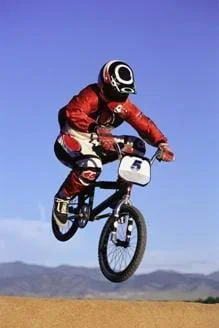 Figure 3. A BMX racer in action.Copyright 2006 Microsoft Corporation, One Microsoft Way, Redmond, WA 98052-6399 USA. All rights reserved.
The best way to describe engineering in sports is lighter, faster and stronger. These are the three goals of engineering sports equipment. Lighter equipment allows the athletes to move with as little extra weight as possible. If BMX bikes were 100 lbs instead of 35 lbs, they would not be able to jump very high off their ramps (see Figure 3). Friction is the enemy of almost any sport. Faster equipment allows the athlete to overcome as much friction as possible. For example, skiers and snowboarders put wax on the bottom of their skis and snowboards to minimize friction between the snow and the skis or boards. Stronger equipment allows athletes to rely on their equipment and be confident that it won't break—even under a lot of force. Golf clubs and baseball bats, for example, must be strong enough to absorb the impact of hitting balls with great force.
All of these principles are found in the designs of the winning Tour de France road bikes. The bikes weigh only an astounding 17 lbs.! The less the bikes weigh, the easier it is for athletes to propel the bike forward, and the faster they can go. These bike is also extremely aerodynamic so that the drag (interference) from the wind is reduced. In addition, the bikes make use of strong materials, such as carbon fiber, so they are very stiff and no power is wasted through "flexing." When a rider sprints to the finish line, he does not want the bike to bend and flex beneath him; he wants all of his energy to go to the pedals and wheels. Having equipment that is lighter, faster and stronger shapes the ultra-competitive bike racing world.
Different types of engineers focus on different aspects of athletics. Materials engineers help to decide which materials are best for golf clubs and baseball bats. Biomedical engineers analyze the body's motion to find ways of reducing injury. Studies model the action a pitcher makes when throwing baseballs, with the goal to reduce shoulder injuries. Other studies examine how to reduce knee injuries by skiers and snowboarders. In these activities, engineers look at the forces placed on the joints and make suggestions for how to reduce the destructive impacts.
Potential and Kinetic Energy
In order to effectively design sporting equipment, engineers must understand energy. The kinds of energy that are most important when sports are concerned are kinetic and potential energy. Kinetic energy can be described as the energy of an object when in motion. When you throw a baseball, it has kinetic energy.
The mathematical equation for kinetic energy (KE) is:
KE = ½ * m * v2
where m is the mass of the object and v is the velocity.
Potential energy can be described as stored energy, or energy due to position. If a ball is at the top of a steep incline, but has not started to roll down yet, the ball has potential energy. The ball also has less potential energy halfway down the hill than it does at the top.
The mathematical equation for potential energy is:
PE = m * g * h
where m is the mass, g is the acceleration due to gravity (g = 9.81m/s2 or 32 ft/s2), and h is the height where the object is located. The height used is the height above where you have set zero to be. If you are using the ground as zero, h is the height above the ground. If you are using a desk as zero, h is the height above the desk.
Sometimes an object has both kinetic and potential energy, such as a person swinging on a swing set. Because the swinger is both above the ground and moving, she has both potential and kinetic energy. Another example is when a water balloon is dropped from a tree. The water balloon has potential (or stored) energy before it is dropped. After it is dropped, the balloon will have kinetic energy because it is moving and potential energy because it is off the ground.
Engineers use these concepts when designing protective gear for sporting activities. They must make sure that the energy of an impact is absorbed by the padding and not by the athlete. Many injuries could be much more serious or even fatal if athletes without protective gear such as helmets and padding.
Administer the Energy Worksheet and Energy Matching Quiz to reinforce the ideas of potential and kinetic energy. The Energy Worksheet helps older or more advanced students practice using the equations for kinetic and potential energy. For younger students, the Energy Matching Quiz helps students review the definitions of, and differences between, kinetic and potential energy.
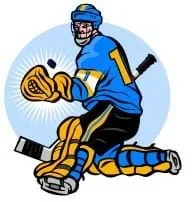 Figure 1. A fully-padded hockey player.Copyright 2006 Microsoft Corporation, One Microsoft Way, Redmond, WA 98052-6399 USA. All rights reserved.
You and your class have just entered the Olympic stadium and are finding your seats before the final soccer game begins. You have been looking forward to this for months and you can feel the excitement in the air! You and your friends start to talk about all of your favorite players and debate who is the best player. Since you still have engineering "on the brain," you start thinking about how engineers are involved in soccer... and all your other favorite sports!
What are your favorite Olympic events to watch? What about sports that are not a part of the Olympics? What are the technologies that are used in these sports? What are examples of technology being used to judge the performances of athletes?
In many, ,many ways, technology is applied to sports. Think of the sports that require protective gear to keep athletes safe: soccer, football, cycling, skateboarding and hockey (see Figure 1). Many sports require hand-held equipment, such as bats, hockey and lacrosse sticks, fencing foils and golf clubs. These all involve engineering to be light and strong, to help the athletes' performances.
Have you ever seen a motorcycle jump or a snowboarding half-pipe competition? The ramps in these events are engineered to create challenges for the athletes. Many sports are timed and even played back in slow motion, and these precise and technical equipment and cameras are also designed by engineers.
Now that we have some ideas about how engineers are involved in sports engineering and helping athletes perform their best and stay safe, let's make a table on the board and see if we can fill it with some examples from our favorite sports. (Set up a grid on the classroom board similar to Table 1 and guide students through filling it in.)
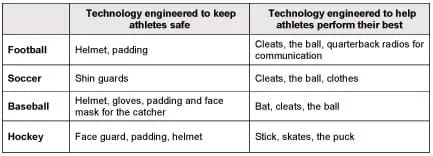 Table 1. Examples of sports and the engineering and technologies involved.
One aspect of engineering that you may not think of right away is biomedical engineering applications to training. Biomedical engineers can help develop cardiovascular and weight training regimens for athletes. Engineers can also help athletes analyze their swings, explain the biomechanics of running, jumping or free throws, and figure out the speed of a puck as it zips past a goalie. All of this knowledge can help athletes modify their techniques so they can perform even better on the court, track, field or ice!
So, what does it take to hit a baseball out of the park? Or for a snowboarder to make an incredible jump? Basically, it takes a lot of energy! Can anyone think of a good way to define energy? Engineers and scientists like to say that energy is the ability to do work. Two main types of energy are: kinetic energy and potential energy. Kinetic energy is the energy of motion. Whenever anything is moving, it has kinetic energy. Potential energy is energy stored due to position. When an item is high up off of the ground, it has potential energy, because it has the potential to be in motion. When an item is sitting on the ground, it has no potential energy. Sometimes an item has both kinetic and potential energy. One example is a cyclist riding down hill. As long as she is on the hill, she has potential energy, and when she is moving, she also has kinetic energy. However, when riding along flat ground, she only has kinetic energy. (Refer to Figure 2 for illustration.)
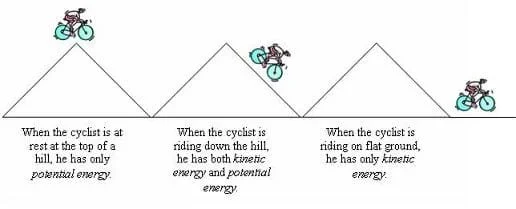 Figure 2. Potential vs. kinetic energy.Copyright 2006 Abby Watrous, College of Engineering, University of Colorado Boulder
What types of engineers do you think are involved in the manufacturing of sports equipment? What about engineers who manufacture protective gear? Many engineers are involved in the designing of protective equipment. Biomedical engineers study body and muscle movements to help reduce impact on joints. By studying the body, they can give advice on equipment and how it will impact the athlete. Materials engineers study which materials would make the best equipment with the goal of making the gear light, but strong. Other engineers help to make both protective gear and equipment comfortable and easy for athletes to use. Engineers often work in teams, and usually a mix of different types of engineers work together. The next time you play your favorite sport, think about how many engineers were involved in designing the equipment you are using! Refer to the Bumps and Bruises in Sports: Protect Your Egg activity to have students act as engineers to design, test and build a protected landing for an "athlete".
The soccer game is almost at half time, and the score is tied at 2-2! It has been very exciting, and you cannot wait to see what happens in the second half. Although you have witnessed a few minior injuries, you realize that the players are very fortunate to have protection on their shins that can take such hard impacts such as kicking by other players. True, soccer players wear less protection than many other athletes, such as football players or hockey players; however, those sports, as well as many others, have more physical contact than others. Who remembers who designs the equipment to keep athletes safe? (Answer: engineers) Can someone remember another way that engineers help athletes? (Answer: In addition to helping keep athletes safe, engineers design equipment that helps athletes perform to their best abilities.)
Let's review kinetic and potential energy one more time. Does a moving car have kinetic or potential energy? Since the car is in motion, it has kinetic energy. What about your muscles, do they have any energy? Our muscles DO have energy. They have potential energy that can be transformed into kinetic energy every time we walk, sit down or kick a soccer ball! Our muscles have the potential to go into motion. Can someone give me another example of potential energy? How about kinetic energy?
Great job learning today everyone. The next time you watch the Olympics, you can share with a friend how engineers help athletes stay safe and perform their best!
- energy
- The capacity of a physical system to do work.
- kinetic energy
- The energy of motion.
- potential energy
- The energy due to the position of the object in question.
Pre-Lesson Assessment
Brainstorming: In small groups, have students engage in open discussion. Remind students that in brainstorming, no idea or suggestion is "silly." All ideas should be respectfully heard. Encourage wild ideas and discourage criticism of ideas. Ask :
- How do engineers help athletes competing in the Olympics stay safe? (Answer: Biomedical engineers study body and muscle movements to help reduce joint impact. By studying the body, they also give advice on equipment and how it will impact athletes. Materials engineers study which materials would make the best equipment with the goal of making the gear light, but strong. Other engineers help to make both protective gear and equipment comfortable and easy for the athlete to use.)
- How do engineers help athletes competing in the Olympics perform their best? (Answer: Biomedical engineers help develop cardiovascular and weight training regimens for athletes. Engineers also help athletes analyze their swings, explain the biomechanics of running, jumping or free throws, and figure out the speed of a puck as it zips past a goalie.)
 Copyright 2004 Microsoft Corporation, One Microsoft Way, Redmond, WA 98052-6399 USA. All rights reserved.
Post-Introduction Assessment
Voting: Ask each student to make one or two index cards. On one side, write an example of "energy" found in the Olympics, and whether it is potential or kinetic (and why) on the back side. Remind students of the definitions of kinetic and potential energy. Examples include actions from different Olympic sports, spectator behaviors, stadium transportation, etc. Collect the cards and then read each example to the class. Have the class vote on whether the energy is potential or kinetic and check the answer on the back of the card. (If the answer on the back is incorrect, clear up any confusion and make sure all the students understand the correct answer.)
Lesson Summary Assessment
Concept Reflections /Journal Writing: Have students write short paragraphs describing an example in which engineering is used in a sport that they play or like to watch. Ask them to explain how engineers help athletes stay safe and how they help athletes perform to their best abilities in that sport.
Assign students to each research a piece of athletic equipment, and describe how it has changed since it was invented and how those changes make it better.
Find out how computers are helping athletes change their training methods. Show examples of modeling being done on bicycling and pitching. Give examples of biomechanical studies that can help reduce injuries.
Research exercise equipment and how it helps athletes to train for their sports. Design your own piece of exercise equipment.
Show the PowerPoint presentation, Examples of Engineering for Olympic Athletes (PDF), to show students a wide-range of real-world equipment, clothing, biomedical devices and sensors.
- Intro to Engineering through Sports and the Olympics
- Olympic Engineering: Design Process to Create Competition Venues
- Transportation and the Environment: Energy, Fuels and Emissions
- Architects and Engineers: Working Together to Design Structures
- Engineering in Sports: Energy Transfer in Athletic Gear
- Chemical Wonders: Materials and States of Matter
- Homeward Bound: Engineers in Action Everywhere
(optional: Show students the What Is Engineering? video)
Contributors
Connor Lowrey; Melissa Straten; Katherine Beggs; Denali Lander; Abigail Watrous; Janet Yowell
Supporting Program
Integrated Teaching and Learning Program, College of Engineering, University of Colorado Boulder
Acknowledgements
The contents of this digital library curriculum were developed under a grant from the Fund for the Improvement of Postsecondary Education (FIPSE), U.S. Department of Education and National Science Foundation GK-12 grant no. 0338326. However, these contents do not necessarily represent the policies of the Department of Education or National Science Foundation, and you should not assume endorsement by the federal government.
Copyright
2006 by Regents of the University of Colorado.