
What Do Bread and Beer Have in Common?
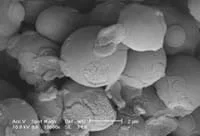 Magnified yeast cells.Copyright http://www.esm.ucsb.edu/facilities/MEIAF/images.html
Students learn that yeasts, a type of fungi, are unicellular organisms that are useful to humans. In fact, their usefulness is derived from the contrast between the way yeast cells and human cells respire. Specifically, while animal cells derive energy from the combination of oxygen and glucose and produce water and carbon dioxide as by-products, yeasts respire without oxygen. Instead, yeasts break glucose down and produce alcohol and carbon dioxide as their by-products. The lesson is also intended to provoke questions from students about the effects of alcohol on the human body, to which the teacher can provide objective answers.
This lesson and the associated activity contain biomedical, chemical and environmental engineering topics covering elements of biotechnology, applications of experimental and analytical techniques in living systems, food processing, in particular, the consumption of alcohol and its effects on the human body.
- Students will be able to compare and contrast cellular respiration in yeast vs. plant and animal cells.
- Students will be able to describe the role of yeasts in the production of bread and alcoholic beverages.
- Students will be able to describe the short-term effects of alcohol on the human nervous and digestive systems.
- Students will be able to describe the long-term effects of alcohol that are the result of alcoholism.
- CCSS.Math.Content.6.SP.B.4 Display numerical data in plots on a number line, including dot plots, histograms, and box plots.
Grade 6
Do you agree with this alignment? - CCSS.Math.Content.HSS-ID.A Summarize, represent, and interpret data on a single count or measurement variable
Grades 9-12
Do you agree with this alignment?
- Chemical technologies are used to modify or alter chemical substances.
Grades 6-8
Do you agree with this alignment? - Biotechnology applies the principles of biology to create commercial products or processes.
Grades 6-8
Do you agree with this alignment?
- MS-LS1-5 Construct a scientific explanation based on evidence for how environmental and genetic factors influence the growth of organisms.
Grades 6-8
This resource focuses on the following Three Dimensional Learning aspects of NGSS:
Science & Engineering Practices- Construct a scientific explanation based on valid and reliable evidence obtained from sources (including the students' own experiments) and the assumption that theories and laws that describe the natural world operate today as they did in the past and will continue to do so in the future.Do you agree with this alignment?
Disciplinary Core Ideas- Genetic factors as well as local conditions affect the growth of the adult plant.Do you agree with this alignment?
Crosscutting Concepts- Phenomena may have more than one cause, and some cause and effect relationships in systems can only be described using probability.Do you agree with this alignment?
Do you agree with this alignment? - Construct a scientific explanation based on valid and reliable evidence obtained from sources (including the students' own experiments) and the assumption that theories and laws that describe the natural world operate today as they did in the past and will continue to do so in the future.
- MS-PS1-3 Gather and make sense of information to describe that synthetic materials come from natural resources and impact society.
Grades 6-8
This resource focuses on the following Three Dimensional Learning aspects of NGSS:
Science & Engineering Practices- Gather, read, and synthesize information from multiple appropriate sources and assess the credibility, accuracy, and possible bias of each publication and methods used, and describe how they are supported or not supported by evidence.Do you agree with this alignment?
Disciplinary Core Ideas- Each pure substance has characteristic physical and chemical properties (for any bulk quantity under given conditions) that can be used to identify it.Do you agree with this alignment?
- Substances react chemically in characteristic ways. In a chemical process, the atoms that make up the original substances are regrouped into different molecules, and these new substances have different properties from those of the reactants.Do you agree with this alignment?
Crosscutting Concepts- Structures can be designed to serve particular functions by taking into account properties of different materials, and how materials can be shaped and used.Do you agree with this alignment?
- Engineering advances have led to important discoveries in virtually every field of science, and scientific discoveries have led to the development of entire industries and engineered systems.Do you agree with this alignment?
- The uses of technologies and any limitations on their use are driven by individual or societal needs, desires, and values; by the findings of scientific research; and by differences in such factors as climate, natural resources, and economic conditions. Thus technology use varies from region to region and over time.Do you agree with this alignment?
Do you agree with this alignment? - Gather, read, and synthesize information from multiple appropriate sources and assess the credibility, accuracy, and possible bias of each publication and methods used, and describe how they are supported or not supported by evidence.
- CCSS.Math.Content.6.SP.B.4 Display numerical data in plots on a number line, including dot plots, histograms, and box plots.
Grade 6
Do you agree with this alignment? - CCSS.Math.Content.HSS-ID.A Summarize, represent, and interpret data on a single count or measurement variable
Grades 9-12
Do you agree with this alignment?
- 7.L.1 Understand the processes, structures and functions of living organisms that enable them to survive, reproduce and carry out the basic functions of life.
Grade 7
Do you agree with this alignment? - 8.L.5 Understand the composition of various substances as it relates to their ability to serve as a source of energy and building materials for growth and repair of organisms.
Grade 8
Do you agree with this alignment? - Bio.4.2 Analyze the relationships between biochemical processes and energy use in the cell.
Grades 9-12
Do you agree with this alignment? - Bio.4.2.1 Analyze photosynthesis and cellular respiration in terms of how energy is stored, released, and transferred within and between these systems.
Grades 9-12
Do you agree with this alignment?
Yeasts
Yeasts are neither plants nor animals, but belong to the fungi kingdom. They are unicellular, and like plants they have a cell wall, although the cell wall in this case is made of the material chitin (similar to the hard material in crab shells) rather than the cellulose of plant cells. Like other fungi, yeasts generally reproduce asexually by budding (similar to mitosis), but they can and do reproduce sexually on occasion. Normally yeasts thrive in warm, moist places. They can, however, survive for long periods of time in a dormant state when kept cool and dry.
What makes yeasts especially interesting and useful is the fact that they respire anaerobically. Both plant and animal cells generate energy for cellular functions, including cell division, by breaking down glucose in the presence of oxygen. In the process, they generate the by-products carbon dioxide and water. Yeasts, on the other hand, do not require oxygen and can simply break down glucose, yielding the by-products carbon dioxide and ethyl alcohol.
It is the by-products of yeast respiration that are of commercial value to humans. A small amount of dry, dormant yeast (easily obtained in packets at a grocery store) added to the other ingredients of bread dough (flour, water, sugar, and salt) will quickly become rehydrated and active. They will begin to consume the sugar, reproduce, and before long generate enough carbon dioxide gas to let the dough rise. When baked, the result is soft bread laced with small holes in the interior, which are the actual pockets of carbon dioxide gas.
Alcohol
Humans also use yeast respiration to produce alcoholic beverages. Under the right conditions, any fruit, all types of which contain an ample supply of glucose, will ferment and produce a small amount of alcohol. Yeast spores in the air, for example, land on unharvested apples lying on the ground. The spores will then mature and respire, giving the apples a decidedly alcoholic taste after a few days in the autumn sun. Likewise, unrefrigerated apple cider in an open container can be fermented to make "hard" cider. Aboriginal cultures around the world have used this process for centuries, using whatever fruits are available and unknowingly taking advantage of whatever yeast cells blow in with the breeze. Consumption of the product is generally not an everyday practice, but instead is reserved for special events or religious ceremonies.
In modern societies alcohol production is mechanized and controlled, and specially cultured yeast varieties are used. Wine is produced by allowing squashed grapes to ferment until the resulting juice reaches an alcohol content of 8-14%. Beer is made from fermented grains (wheat, barley, or rye) and contains 3-6% alcohol. For distilled spirits, the fermentation of grains (or potatoes, in the case of vodka; or sugar cane, in the case of rum) is followed by a process known as distillation, in which the alcohol is concentrated by removing some of the water. Most distilled liquors are about 40% alcohol (80 proof). Many people find their taste somewhat unpalatable, so liquors are frequently mixed with soda, water, or fruit juice before being drunk.
Alcohol's Effects On the Body
Of special interest to students is what happens once an alcoholic beverage is consumed. Students will be surprised to know that alcohol is so simple chemically that it does not have to be digested. Instead, once it is swallowed, some of it is absorbed directly into the blood vessels within the stomach lining, allowing the alcohol to begin entering the bloodstream very quickly. Most of the alcohol is absorbed in the small intestine, though, and this, too, happens rapidly. If food is present, however, absorption is slowed.
Once it is in the bloodstream, the alcohol travels quickly to all parts of the body. In the brain, it acts to dilate the blood vessels slightly, producing a mild tranquilizing effect, which most people perceive as a relaxed feeling. However, it also acts as a depressant, meaning that it slows the rate at which nerves transmit messages. One of the key results is a slowing of some inhibitory functions, so if enough alcohol is consumed, self-control is greatly reduced. Ironically, although alcohol is a depressant, the behavioral result can make it seem more like a stimulant. At a party, a self-conscious person may become an enthusiastic dancer, or start acting silly; a shy person can become outgoing and enjoy the attention gotten by telling off-color jokes. Many people indulge excessively in party foods available, without the inhibitory reasoning process reminding them to limit their junk-food intake. Similarly, with rational thought in decline, risky sexual behavior is not uncommon after excess alcohol consumption.
If consumption continues, more parts of the nervous system become affected. Vision becomes impaired, muscle coordination declines, balance becomes difficult to maintain, it becomes harder to think things through, and judgment is diminished. It is not surprising, then, that attempting to control a motor vehicle would be a bad idea, but with judgment impaired, the drunk person most likely thinks he or she can drive just fine. As we know, the result can be tragic.
Meanwhile, the liver is hard at work. The normal job of the liver is to break down fats into simple sugars that the cells can use for energy. It has another job, though, which is to break down chemicals that it doesn't recognize as belonging in the bloodstream. If alcohol is present in the blood, the liver puts precedence on breaking it down into water and carbon dioxide, as opposed to doing its normal job of breaking down the fats that came in with the last meal. As a result, heavy drinking causes fat deposits to develop in the liver, which can eventually harden and scar the liver badly enough so it can no longer function adequately. This condition is known as cirrhosis of the liver.
In the short term, though, the depressant effect of alcohol also causes the digestive tract to slow down. With food not moving at its usual speed through the stomach, there is a higher concentration of stomach acid present than normal. The intestines are slowed as well, so food is not digested completely. The presence of alcohol also acts to increase both the heart rate and blood pressure. In addition, it acts as a diuretic, meaning it causes the kidneys to remove more water from the bloodstream than usual. And last of all, the dilated blood vessels in the brain expand slightly and press the brain against the skull.
All of these effects combine to produce the symptoms known collectively as a "hangover" the morning following a night of heavy drinking. The queasy stomach, loss of appetite, and diarrhea are the result of alcohol's effects on the digestive tract. The dry mouth and thirst are the result of dehydration due to alcohol's diuretic action. The headache is the result of the expanded brain pressing on the skull, as well as dehydration.
Besides cirrhosis, other long-term effects of excessive alcohol consumption can include damage to the heart, and both changes to and death of nerve cells within the brain. Because alcohol is high in calories, drinkers usually experience some weight gain at first. But with digestion impaired, many eventually lose weight. Serious weight loss and malnutrition can result when an alcoholic (see below) becomes more interested in consuming alcohol than food, or in the case of the poor or unemployed, buys alcohol instead of food.
Alcoholism
Alcoholism is a disease characterized by four symptoms. The first is craving, a strong need to drink that can feel to the alcoholic as strong as the need for food or water. The second is loss of control, meaning that once the alcoholic begins drinking, he or she cannot stop. Physical dependence is the third symptom. When the alcoholic cannot obtain a drink, he or she experiences withdrawal symptoms such as nausea, shakiness, sweating, and anxiety. The fourth symptom, tolerance, means that the alcoholic needs to drink increasingly greater amounts in order to feel the same tranquilized state. All of these are the result of changes in the way nerves within the brain signal one another, changes brought about by repeated exposure to excess amounts of alcohol.
Once a person develops an alcohol dependency (another name for alcoholism), it will last for the person's lifetime. It can be treated, but "recovered" alcoholics must entirely avoid drinking to prevent a relapse. Treatment can include medications to ease withdrawal symptoms, as well as counseling for both the patient and family members. Few alcoholics can stop drinking without some form of help.
Risk factors for alcoholism include easy access to alcohol, which can include access during the workday; cultural attitudes that urge drinking, such as social events and advertising; and a genetic predisposition to alcoholism. A child of an alcoholic is four times more likely to become an alcoholic than a child of a non-alcoholic, but it is not known how much of this is because of genetic factors and how much is due to lifestyle.
Body of Lesson:
Begin by explaining that yeast cells are what cause the bread to rise and create its light texture, due to the method of cellular respiration that is unique to yeasts. Refer to the Lesson Background and Concepts for Teacher section for further information to share with students.
Next point out that because a by-product of yeast respiration is ethyl alcohol, yeasts are also used to make alcoholic beverages. Again, use the Lesson Background and Concepts for Teacher section for information.
Then ask students what they know about how alcohol affects the human body. At first, simply listen to their ideas while giving only minimal responses. This will allow you to hear some of what they already know, and more importantly, hear what misconceptions they may be harboring. After they have had some time to respond, use the information in the Lesson Background section about alcohol's effects on the body, and/or material listed in the References section, to provide accurate information. Be sure to invite students to ask questions; any that you cannot answer can become questions for them to research.
Finally, ask students to describe what they think an alcoholic would look and behave like. Most will probably be surprised to learn that the vast majority of alcoholics appear to be perfectly normal, functioning people who work and have families. It is very likely that many of them are acquainted with someone who is an alcoholic, whether they know that person is an alcoholic or not. Be sure to emphasize that alcoholism is a disease. Also point out that an alcoholic can be a "recovered" alcoholic, that is, an alcoholic who no longer drinks. Again, use the Lesson Background section and any other reliable resources available, to provide accurate information.
Seventh graders are hungry for knowledge of how their bodies work, and at the same time are beginning to seriously consider how they will behave as adults. They are well aware of alcohol consumption as a common adult behavior, and most students are equally aware that excess alcohol consumption is responsible for many accidents and even deaths. As a result of this awareness, students have many questions about alcohol and how it affects the body. They also have many misconceptions about what alcoholism is, and what it really means when a person is an alcoholic. When students this age are allowed to voice their questions and get honest answers, their motivation for learning is greatly enhanced.
You can capitalize on their interest by asking the class what bread and beer have in common. While some may know that both are made with yeast, it is unlikely that they will know why yeast is used in their production. By now students should be interested and ready to learn more about yeasts. Following the lesson conduct th associated activity Yeast Cells Respire, Too (But Not Like Me and You) where students set up a simple way to indirectly observe and quantify the amount of respiration occurring in yeast-molasses cultures.
Remind students that both bread and alcoholic beverages are made possible by the anaerobic respiration of yeast cells. Also remind them that this is a naturally occurring process, and one that the earliest of human civilizations learned to take advantage of. Tell your students that you are going to let them set up and observe this process for themselves -- in a controlled, scientific setting, of course.
Summary Quiz: Ask students about the content covered in the lesson. Example questions:
- In order for respiration to occur in a yeast cell, what material or materials must be present in the cell?
- oxygen and water
- glucose and oxygen
- glucose only
- water and carbon dioxide
- Yeast respiration is an example of:
- anaerobic respiration
- aerobic respiration
- anabolic respiration
- none of the above
- The by-products of yeast respiration are:
- carbon dioxide and ethyl alcohol
- carbon dioxide and water
- oxygen and ethyl alcohol
- carbon dioxide, ethyl alcohol, and water
- Which is a characteristic of alcoholism?
- a craving for alcoholic drinks
- experiencing withdrawal symptoms, such as anxiety and shaking, when alcohol is not available
- the need for increasing amounts of alcohol to reach a relaxed feeling
- all of the above
- True or False:
- Alcohol begins to affect the body quickly because it does not need to be digested.
- Alcohol slows the rate at which messages are sent between nerve cells.
- Alcohol can affect coordination, but it does not affect vision.
- Dehydration can follow the consumption of several cans of beer, even though beer is over 90% water.
- Heavy drinking causes fat deposits to develop in the liver.
- Most alcoholics are able to stop drinking on their own once they realize they have alcoholism.
- Alcoholism is a disease.
- Yeasts are not plants or animals.
Have students read about or research fetal alcohol syndrome. An excellent source is a short and very visual article that appeared in the February 1992 issue of National Geographic, called "Fetal Alcohol Syndrome."
"Alcohol," National Geographic, February 1992. This is a long article full of information about many aspects of alcohol and its consumption, which also contains good diagrams of alcohol's effects on the body.
Alcoholism, Time-Life Medical, 1996. An inexpensive, easy to understand, 30-minute video intended for alcoholic patients and their family members. It has an excellent graphic sequence showing how prolonged alcohol use alters the way nerve cells in the brain operate, resulting in the intense craving and withdrawal symptoms experienced by alcoholics. (Available from Milner-Fenwick, 800-432-8433 or www.milner-fenwick.com/pe/tlmv.htm).
FAQs on Alcohol Abuse and Alcoholism. Accessed May 14, 2002. Concise information about alcoholism presented in a question-and-answer format. http://www.niaaa.nih.gov/faq/faq.htm
- Cellular Respiration and Population Growth
- What Do Bread and Beer Have in Common?
- Population Growth in Yeasts
Contributors
Mary R. Hebrank
Supporting Program
Engineering K-PhD Program, Pratt School of Engineering, Duke University
Acknowledgements
This content was developed by the MUSIC (Math Understanding through Science Integrated with Curriculum) Program in the Pratt School of Engineering at Duke University under National Science Foundation GK-12 grant no. DGE 0338262. However, these contents do not necessarily represent the policies of the NSF, and you should not assume endorsement by the federal government.
Copyright
2013 by Regents of the University of Colorado; original © 2004 Duke University