
Cars from the Future: Presenting Your Eco-Friendly Design Ideas
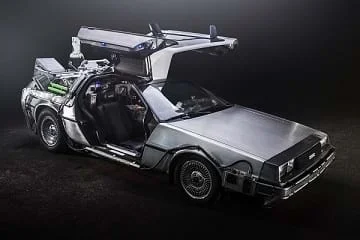 Back to the Future car!Copyright Wikimedia Commons http://upload.wikimedia.org/wikipedia/commons/2/26/BTTF_DeLorean_Time_Machine.jpg
In some cities, especially large cities such as Los Angeles or Mexico City, visible air pollution is a major problem, both for human health and the environment. A variety of sources contribute to air pollution, but personal vehicles account for one of the main sources. Though each car has relatively low emissions when compared to vehicles of the 1970s, there are so many more cars on the road now that their emissions play a large role in overall pollution. In this activity, students think about alternate ways to power a vehicle to reduce emissions. Student teams design an eco-friendly car using the engineering design process, and make a presentation to showcase their product.
As we learn more about our surroundings and the impacts that human-made items have on our own health and the health of the environment, engineers are finding new ways to reduce pollution from everyday activities. Engineers are making breakthroughs in alternate vehicle technology, such as hybrid and electric cars, and alternative fuels, such as biodiesel. To assure a healthy human population and environment, engineers are working to reduce emissions from motor vehicles since on-road vehicles are the leading source of many different types of dangerous pollutants. Engineers must be open to thinking out of the box and taking risks to achieve these goals. Also, it is important for engineers to learn how to present and sell their ideas to companies — and consumers.
After this activity, students should be able to:
- Explain that cars contribute to air pollution by emitting pollutants that impact both human and environmental health.
- Explain that engineers help people by designing new cars that produce fewer emissions.
- Describe why it is important for engineers to be able to present their ideas persuasively.
- Use multiple resources – including print, electronic, and human – to locate information about different sources of renewable and nonrenewable energy
Grade 4
Do you agree with this alignment?
- Students will develop an understanding of the attributes of design.
Grades K-12
Do you agree with this alignment? - The use of technology affects the environment in good and bad ways.
Grades 3-5
Do you agree with this alignment? - Identify and collect information about everyday problems that can be solved by technology, and generate ideas and requirements for solving a problem.
Grades 3-5
Do you agree with this alignment?
- 3-5-ETS1-1 Define a simple design problem reflecting a need or a want that includes specified criteria for success and constraints on materials, time, or cost.
Grades 3-5
This resource focuses on the following Three Dimensional Learning aspects of NGSS:
Science & Engineering Practices- Define a simple design problem that can be solved through the development of an object, tool, process, or system and includes several criteria for success and constraints on materials, time, or cost.Do you agree with this alignment?
Disciplinary Core Ideas- Possible solutions to a problem are limited by available materials and resources (constraints). The success of a designed solution is determined by considering the desired features of a solution (criteria). Different proposals for solutions can be compared on the basis of how well each one meets the specified criteria for success or how well each takes the constraints into account.Do you agree with this alignment?
Crosscutting Concepts- People's needs and wants change over time, as do their demands for new and improved technologies.Do you agree with this alignment?
Do you agree with this alignment? - Define a simple design problem that can be solved through the development of an object, tool, process, or system and includes several criteria for success and constraints on materials, time, or cost.
- 3-5-ETS1-2 Generate and compare multiple possible solutions to a problem based on how well each is likely to meet the criteria and constraints of the problem.
Grades 3-5
This resource focuses on the following Three Dimensional Learning aspects of NGSS:
Science & Engineering Practices- Generate and compare multiple solutions to a problem based on how well they meet the criteria and constraints of the design problem.Do you agree with this alignment?
Disciplinary Core Ideas- Research on a problem should be carried out before beginning to design a solution. Testing a solution involves investigating how well it performs under a range of likely conditions.Do you agree with this alignment?
- At whatever stage, communicating with peers about proposed solutions is an important part of the design process, and shared ideas can lead to improved designs.Do you agree with this alignment?
Crosscutting Concepts- Engineers improve existing technologies or develop new ones to increase their benefits, to decrease known risks, and to meet societal demands.Do you agree with this alignment?
Do you agree with this alignment? - Generate and compare multiple solutions to a problem based on how well they meet the criteria and constraints of the design problem.
Each group needs:
- 2-3 sheets of blank white paper
- 1 12"-ruler
- variety of colored pencils/pens/markers
- Modes of Transportation and the Vehicle Fill-In Worksheets, one per person
- Eco-Car Checklist, one per person
To share with the entire class:
- poster board (if making posters for presentations) OR
- computer access and computer-ready projector for presentations OR
- overhead projector and transparencies for presentations
- Modes of Transportation Worksheet (pdf)
- Modes of Transportation Worksheet (xls)
- Modes of Transportation Worksheet – Suggested Answers (pdf)
- Modes of Transportation Worksheet – Suggested Answers (xls)
- Eco-Car Checklist (pdf)
- Eco-Car Checklist (xls)
- Vehicle Fill-In Worksheet (pdf)
- Vehicle Fill-In Worksheet (doc)
- Vehicle Fill-In Worksheet – Answers (pdf)
- Vehicle Fill-In Worksheet – Answers (doc)
Students should understand that most cars are powered by gasoline.
Has anyone seen the movie Back to the Future? In the movie, the main character can travel through time and bring back knowledge from the future. That would be very cool to be able to do!
Well, today you are going to be engineers from the advanced FutureTech car company. FutureTech has invested much money in sending several teams of engineers into the future to find out what technology will be like in 20 years, so they can get a head-start on the competition. Your class represents the different teams that are about to become time-traveling engineers! You and your team of engineers will be sent forward to the year 2026 and will have to come back with a full report on what kind of technology is being used in the cars of the future. You then have to give the big bosses a presentation about what you found and sell your team's idea as the best one. For your designs, you must keep in mind the following constraints:
i. Must have at least 5 features
ii. Three features to decrease pollution/increase
efficiency
iii. Two features to improve the appearance
Whichever team persuades the CEOs that their car findings are best will win a place in history!
Engineers are working to make fantastic new cars that produce fewer emissions than older cars. This is important, because most cars give off pollutants that harm people, animals and even plants and buildings. Today you will get to experience what it might be like to be one of these engineers! And, since engineers need to effectively communicate their ideas, you will experience that aspect of engineering, also. Engineers must be able to present their ideas so that their bosses, other employees, and the people for whom they are making the new invention, product or design can understand how it works. Engineers also often work in groups, and they need to be able to communicate well with the other people in their group, so that they all can work together to create amazing new technology.
Before the Activity
- Make copies of the Modes of Transportation and the Vehicle Fill-In Worksheets, as well as the Eco-Car Checklist, one per person.
- Make an overhead transparency of the Vehicle Fill-In Worksheet.
- Collect examples of advertising (brochures, flyers, magazine or newspaper ads, etc.) to show students.
- Gather materials.
With the Students
Day 1:
- Divide the class into groups of three students each.
- Give each team paper, pencils and ruler.
- Conduct the Introduction/Motivation section with the class, and hand out the Eco-Car Checklist handout, instructing them on what they must accomplish.
- Hand out the Modes of Transportation Worksheet. Have each group rank the different vehicles in order from "greenest" to "not-as-green." (Note: It is okay if two types of transport have the same ranking – not every number needs to be used in the ranking.) As a class, discuss the answers and discuss the traits of a "green vehicle." Traits for "green vehicles" include smaller size, alternative fuel, lighter in weight, etc.
- Hand out the Vehicle Fill-In Worksheets, and display an overhead transparency of the worksheet. Have each group fill in the answers they think are correct and then review the worksheet together as a class.
- Give the students five minutes to brainstorm ideas of what they think the vehicles of the future will be like. Have them draw up a list of features that they want their vehicle to include.
- Give the students 10 minutes to make a drawing of their design using the provided rulers and colored pencils.
- After the students have had enough time to make a good drawing of their designs, tell them it is time to find a way to sell their idea! Show some examples of advertising and talk about what makes a powerful presentation.
- Have the students prepare a short , three-minute presentation about their findings. This could be done in PowerPoint®, on posters, overhead transparencies, etc. They should include the eco-friendly features of their vehicle and any other cool design features they want to show off. Give the students 30 minutes to come up with ideas for their sales pitch and to work on their presentations or posters.
Day 2:
- Give the students 10-20 minutes to finalize their presentations.
- Have the students give their presentations.
- After all the ideas have been presented, ask each student to vote for their favorite two ideas, excluding their own.
- Tally the votes and announce a winner!
Pre-Activity Assessment
Class Discussion and Worksheet: Ask students if they know about any current technology that is used in alternative vehicles or fuel. As a class, brainstorm different ideas of alternative vehicles that engineers have designed. Ask if anyone has seen or been in a hybrid or electric vehicle. Ask the students why these alternative methods are so important (they produce fewer emissions and require fewer fossil fuels). After the discussion, hand out the Modes of Transportation Worksheet and have the students rank different modes of transportation from "greenest" to "not-as-green." Discuss the answers as a class.
Activity Embedded Assessment
Fill in the blanks: Put up a transparency of the Vehicle Fill-in Worksheet. Have each group fill in the blanks and then share the answers with the class.
Post-Activity Assessment
Closure Discussion: Discuss as a class why engineers must be able to effectively share their ideas with their bosses, clients, employees, other engineers, and the public. Talk about the importance of being able to communicate your ideas well. Ask students if they can think of what might happen if engineers were not able to share their ideas persuasively. (Possible Answers: People may be confused about how engineering inventions work, and may not want to buy or use new inventions. It is also difficult for engineers to work together in teams if they do not do a good job of communicating their ideas to each other).
Have the students build a model car from their drawing.
Have students pick one of the eco-friendly technologies used in their design and ask them to research how and where that technology is used. Each group can pick a different technology and develop a poster with the key features of that technology to share with the class.
For upper grades, have the students draw their designs to scale. Give them dimensions to work with and explain why scale drawings are used. Have students label their drawings with key features as well as measurements for some dimensions.
Students in lower grades may require more time to work on the design and presentation.
- Intro to Engineering through Sports and the Olympics
- Olympic Engineering: Design Process to Create Competition Venues
- Transportation and the Environment: Energy, Fuels and Emissions
- Cars from the Future: Presenting Your Eco-Friendly Design Ideas
- Architects and Engineers: Working Together to Design Structures
- Engineering in Sports: Energy Transfer in Athletic Gear
- Chemical Wonders: Materials and States of Matter
- Homeward Bound: Engineers in Action Everywhere
Contributors
Katherine Beggs; Denali Lander; Abigail Watrous; Janet Yowell
Supporting Program
Integrated Teaching and Learning Program, College of Engineering, University of Colorado Boulder
Acknowledgements
The contents of this digital library curriculum were developed under a grant from the Fund for the Improvement of Postsecondary Education (FIPSE), U.S. Department of Education and National Science Foundation GK-12 grant no. 0338326. However, these contents do not necessarily represent the policies of the Department of Education or National Science Foundation, and you should not assume endorsement by the federal government.
Copyright
2006 by Regents of the University of Colorado.