
Shallow & Deep Foundations
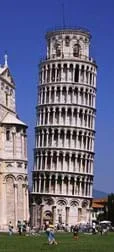 Figure 1. The Tower of Pisa in Italy, a widely-recognized foundation failure.Copyright 2004 Microsoft Corporation, One Microsoft Way, Redmond, WA 98052-6399 USA. All rights reserved.
Students investigate the critical nature of foundations as they learn differences between shallow and deep foundations, including the concepts of bearing pressure and settlement. Using models representing a shallow foundation and a deep pile foundation, they test, see and feel the effects in a cardboard box test bed composed of layers of pebbles, soil and sand. They also make bearing pressure calculations and recommendations for which type of foundations to use in various engineering scenarios.
In a world of human-made structures (homes, schools, stores, skyscrapers, bridges, highways, parking garages and backyard decks), foundations are critical components for ensuring stability. Geological surveys provide important information to civil and structural engineers who design these structures, especially wide bridges and tall buildings. Engineers must know the site-specific characteristics of the soil and substrate, sometimes to great depths, so they can determine the most appropriate construction materials and type of foundation necessary to distribute the load and design a secure structure or bridge.
After this activity, students should be able to:
- Create a model, investigate and explain the properties of shallow and deep foundations.
- Describe engineering terms such as bearing pressure and settlement.
- Use simple equations to analyze the forces affecting a foundation model.
- 1B/H7 New ideas in science are limited by the context in which they are conceived; are often rejected by the scientific establishment; sometimes spring from unexpected findings; and usually grow slowly, through contributions from many investigators.
Grades 9-12
Do you agree with this alignment?
- 7.1.2.c Solve real-world and mathematical problems involving the four operations with rational numbers.
Grade 7
Do you agree with this alignment?
- Predict and evaluate the movement of an object by examining the forces applied to it
Grade 8
Do you agree with this alignment?
- CCSS.Math.Content.6.EE.A.2 Write, read, and evaluate expressions in which letters stand for numbers.
Grade 6
Do you agree with this alignment? - CCSS.Math.Content.6.NS.B.3 Fluently add, subtract, multiply, and divide multi-digit decimals using the standard algorithm for each operation.
Grade 6
Do you agree with this alignment? - CCSS.Math.Content.7.G.B.6 Solve real-world and mathematical problems involving area, volume and surface area of two- and three-dimensional objects composed of triangles, quadrilaterals, polygons, cubes, and right prisms.
Grade 7
Do you agree with this alignment?
- The selection of designs for structures is based on factors such as building laws and codes, style, convenience, cost, climate, and function.
Grades 6-8
Do you agree with this alignment? - Structures rest on a foundation.
Grades 6-8
Do you agree with this alignment?
Each group needs:
- Cardboard box, ~ 12 in x 12 in x 12 in (30 cm x 30 cm x 30 cm)
- Small pebbles or rocks (enough to create a layer 1in [2.5 cm] deep; about 10 cups)
- Potting soil or top soil dirt (enough to create a layer 4 in [10 cm] deep; about 2 gallons)
- Sand (enough to create a layer 2.5 in [6.35 cm] deep; about 1.25 gallons)
- Wood block, ~ 2 in x 2 in x 1 in deep (5 cm x 5 cm x 2.5 cm), cut from a 2 x 4 wood scrap
- ½-in (1.27 cm) wooden dowel, at least 12.5 in (32 cm) long
- Wood glue, to secure the dowel in a hole drilled in the wood block
- Foundations Worksheet (PDF), one per team
- Several books to balance on the foundation, totaling ~ 10 lbs (~4.5 kg)
- (optional) Foundations Math Worksheet (PDF), one per team
For the teacher to use (or the entire class to share):
- Access to woodworking tools: drill, drill bits and a saw
- Scale, to weigh books
Students should have some previous knowledge of bridges, including a familiarity with bridge types and loads, as introduced in the first two lessons of the Bridges unit.
What might happen if you built the foundation of a bridge or structure on a sand dune? On a rock outcropping? On a swamp? Would it work? What if your planned bridge was really on shaky ground — in an earthquake-prone area? How could you make it work? Would you build the foundation of a bridge or structure any differently, depending on the soil composition in that location? Well, engineers are called upon to design bridges and structures for all kinds of locations, and they do not always have the ideal soil profile. So, they figure out what type of foundation must be built to work with the existing soil conditions to create a dependable structure that will not fall over or break.
What do you know about the Tower of Pisa in Italy? This eight-story bell tower is an example of a widely-recognized foundation failure (see Figure 1). Construction began in 1173, and by the time the third story was built, it was starting to lean due to an inadequate foundation and loose soil. It is very heavy structure that took more than 150 years to build. The walls at the base are 8 feet (2.4 m) thick. Its original foundation was situated at a depth of only 3 meters on a bed of dry stones. The tower has seen 800 years of shifting foundation, leaning walls and many efforts to straighten and stabilize it.
While the Tower of Pisa is a dramatic example, it points out how even though we rarely see or notice foundations, they may be the most critical design component to create the long-term stability of the bridges, buildings and structures we depend upon every day. While you can repair or strengthen the above-ground portion of a structure, a poor foundation is harder to fix. Shallow and deep foundations are two separate types of foundations, mostly differing in how far each one extends into the ground. However, there are other differences, too.
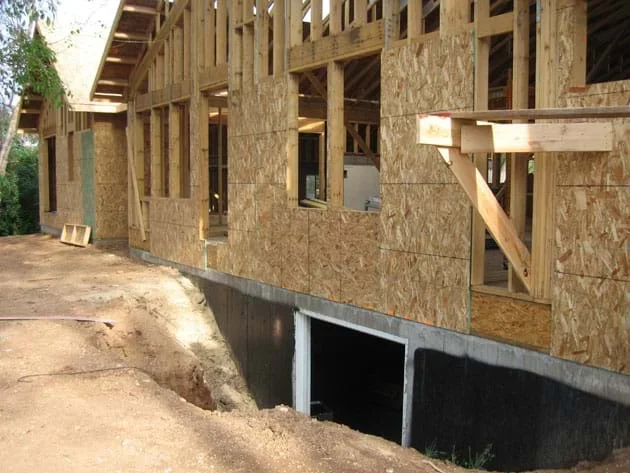 Figure 2. Residential home foundation of poured concrete, treated with a black moisture barrier product.Copyright 2007 Denise Carlson, ITL Program, University of Colorado at Boulder.
As you might guess, shallow foundations do not extend very far into the ground. More importantly they spread structural loads to soils close to the surface. Shallow foundations can include spread footing foundations and mat foundations, which are typically used for residential structures (see Figure 2) or any structure with light loads. Spread footings, are simply enlargements at the bottom of columns or walls that spread the applied structural loads over a sufficiently large soil area. Spread footings are by far the most common type of foundation because of their low cost and ease of construction. A mat foundation is essentially a very large spread footing that usually covers the entire footprint of the structure, such as a basement.
If a shallow foundation is close to the surface, what do you think a deep foundation is? It won't surprise you that deep foundations extend into a depth of soil greater than shallow foundations. But more importantly, they spread their structural loads to soils that are not near the surface. Types of deep foundations include caissons, drilled shafts and piles. Caissons are boxes or cylinders that are sunk into the ground to a desired depth. Drilled shafts are constructed by drilling a slender cylindrical hole into the ground, inserting reinforcing steel, and filling it with concrete. Piles, most commonly used for bridges, are constructed by making slender columns ahead of time, and driving or forcing them into the ground.
When designing any foundation, engineers must also address two more important factors. The foundation design must meet bearing pressure limits for the soil (or the force bearing down on the soil from the bottom of foundation), and it must meet allowable settlement requirements for the structure.
Has anyone ever seen damage caused to bridges, buildings, or even steps and sidewalks, due to settlement? (Listen to students' stories.) What is settlement? Settlement is the vertical downward movement of the foundation, which in turn, causes the structure to also move down. One type of settlement, just called ordinary "settlement," is when the entire foundation or structure moves vertically down the same distance at all points. Another type of settlement, called differential settlement, is when parts of the foundation or structure move vertically down further than other points. The settlement is uneven; so differential settlement creates an incline (a tilting) in a foundation or structure. While real-world settlement calculations that engineers do as part of designing a suitable foundation for a particular site can be complex, the most important thing to know is that settlement can and does occur and is often extremely damaging to a structure. Do you think there was any settlement going on with the Tower of Pisa?
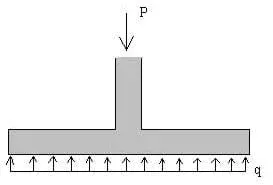 Figure 3. Bearing pressure on a shallow foundation.Copyright ITL Program, University of Colorado at Boulder.
Bearing pressure is the contact force per unit area along the bottom of a foundation (draw Figure 3 on the board for everyone to see). Engineers use a simple equation to calculate the bearing pressure that a foundation exerts on the soil beneath it. (Draw on the board: Bearing pressure = q = Force (P) ÷ Area (A).) For our purposes today (for simplicity), we'll ignore the weight of the footing and the effects of the groundwater table. Bearing pressure is defined as q in this equation. Force (P) is the load acting on the foundation due to the structure that it is supporting. Area is the bottom of the foundation that is in contact with soil. The bearing pressure value must not exceed the allowable bearing capacity of the soil (which is determined by testing) or failure occurs. What are the allowable bearing capacities? Well it depends on the soil, and whether you are making a shallow or deep foundation.
The transfer of loads from deep foundations to the soil is different from that of shallow foundations. Shallow foundations primarily transfer the load to the soil via bearing pressure. Deep foundations also transfer the load via friction along the length (or depth) of the foundation, called skin friction. The force that remains at the bottom of the deep foundation is transferred to the soil by bearing pressure.
Today we're going to break into teams and conduct our own shallow and deep foundation tests so we can feel the forces and see what "failure" looks like with foundations under load. Then we'll do our own calculations to find the bearing pressures that the foundation exerts on the soil.
Before the Activity
- Gather materials and make copies of the Foundations Worksheet (PDF)and Foundations Math Worksheet (optional), one per team.
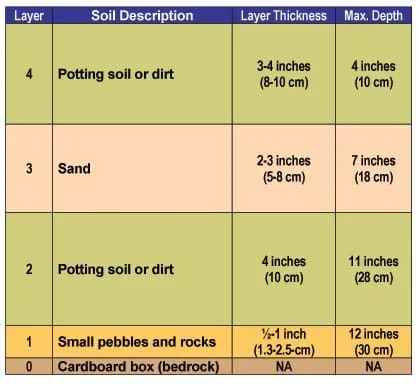 Figure 4. Soil profile for the activity set-up.Copyright 2007 Denise Carlson, ITL Program, University of Colorado at Boulder.
- Prepare for each team a cardboard box with soil layers (see Figure 4): On the bottom inside the box, place a layer of small pebbles or rocks, about ½-1-in (1.3-2.5-cm) deep. Next, place about 4 in (10 cm) of potting soil or dirt on top of the pebbles. Then place a 2-3-in (5-8-cm) layer of sand on top of the soil. Finish with a 3-4-in (8-10-cm) layer of soil on top.
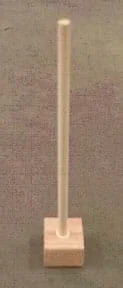 Figure 5. A wooden tool created to represent both a shallow (block end) and deep (long dowel end) foundation, for testing model foundations.Copyright ITL Program, University of Colorado at Boulder.
- Construct a wooden foundation model for each team: Saw a 2 x 4 board scrap into 2 in x 2 in x 1 in deep wood blocks (5 cm x 5 cm x 2.5 cm). Drill a ½-in (1.27-cm) deep hole on one of the sides measuring 2 in (5 cm), with a diameter equal to the dowel diameter. Insert the dowel into the hole; use wood glue to secure it. Trim the dowel to a length of 12 in (30 cm), measured from the wood block (see Figure 5). The block end serves as a model for a shallow foundation and the rod end serves as a deep foundation model.
- Divide the class into teams of four students each.
- Construct a wooden foundation model for each team: Saw a 2 x 4 board scrap into 2 in x 2 in x 1 in deep wood blocks (5 cm x 5 cm x 2.5 cm). Drill a ½-in (1.27-cm) deep hole on one of the sides measuring 2 in (5 cm), with a diameter equal to the dowel diameter. Insert the dowel into the hole; use wood glue to secure it. Trim the dowel to a length of 12 in (30 cm), measured from the wood block (see Figure 5). The block end serves as a model for a shallow foundation and the rod end serves as a deep foundation model.
- Divide the class into teams of four students each
With the Students
- Review with students the basic concepts of shallow and deep foundations. Explain that today they will be modeling shallow and deep foundations.
- Explain the set-up to the entire class. The cardboard box, filled with pebbles, soil and sand, represents a site location (the ground) on which a foundation for a bridge must be built.
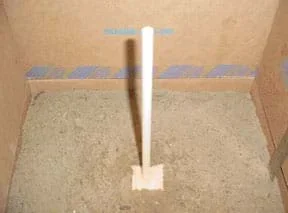 Figure 6. Testing the shallow foundation.Copyright ITL Program, University of Colorado at Boulder.
- Direct the student teams to conduct a shallow foundation test (see Figure 6): Holding on to the dowel end, place the block of wood directly on top of the soil. Then, pile books on it to create bearing pressure on the soil, as if this foundation was holding the load from part of a heavy bridge. (Students may have to lightly balance books with their hands.) What happens? (Students should notice how the soil pushes out to the sides and slightly up around the block of wood. This shows failing of the soil.) Have students record on their worksheets the weight of the books they could balance on their shallow foundation before it became too wobbly.
- Now direct the students to conduct a second shallow foundation test. Using the same block of wood, place it deeper in the soil so that the top of the block is level with the top of the soil. Next, piles books on it to create bearing pressure on the soil. What happens? What did you notice? (The soil again fails due to high bearing pressure. However, the amount of force that must be applied to the wooden block should be higher. Again, notice how the soil pushes out to the sides and slightly up around the block of wood.) Have students record on their worksheets the weight of the books they could balance on this shallow foundation before it was too wobbly.
- Restore the soil (if necessary). Direct the student teams to conduct a deep foundation test (see Figure 7): Holding on to the wooden block end, point the dowel towards the soil and push it down into the soil. What happens? (The wooden dowel penetrates into the soil and becomes harder to push down into the soil as it gets deeper. If the wooden dowel is pushed hard enough, it reaches the rock layer at the bottom of the box. For a bridge or other large structure, piles would be placed to this depth to reach the more compact soils, clay and rock.) Next, pile books on the wooden block end to create bearing pressure on the soil. How many books could the foundation hold this time? Have students record on their worksheets the weight of the books they could balance on their deep foundation before it became too wobbly.
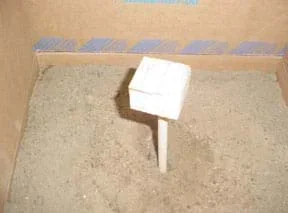 Figure 7. Testing the deep foundation.Copyright ITL Program, University of Colorado at Boulder.
- Then, have students calculate on their worksheets exactly how much force was applied to the foundation at failure. Have them reflect upon their calculations and suggest how the foundation designs might be modified to support more weight (for example, increasing dowel size). Discuss with students how the deep foundation test is able to hold more weight.
- Conclude with a class discussion comparing worksheet results and the post-activity questions provided in the Assessment section. (Optional) Assign students the Foundations Math Worksheet.
- bearing pressure
- Pressure acting on the soil due to the foundation and applied loads from the structure.
- bedrock
- The solid rock that underlies the loose surface deposits of soil, sand, clay and gravel. Considered the bottom layer and lowest stratum.
- caisson
- A prefabricated box or cylinder that is sunk into the ground to a desired depth, as part of a deep foundation.
- deep foundation
- Foundations that extend deep into the ground. Example types: caissons, drilled shafts and piles.
- engineer
- A person who applies her/his understanding of science and mathematics to creating things for the benefit of humanity and our world.
- failure
- The inability of a system or component to perform a required function within specified limits.
- foundation
- A structure that connects a bridge or building to the ground for support.
- model
- (noun) A representation of something, sometimes on a smaller scale. (verb) To make or construct something to help visualize or learn about something else.
- pile
- A cylindrical member hammered vertically into soil to form part of a deep foundation or retaining wall.
- settlement
- Vertical downward movement of the foundation.
- shallow foundation
- Foundations that do not extend deep into the ground. Example types: spread footing foundations (or footers or footing) and mat foundations.
- soil profile
- A vertical succession of layers of natural material found below ground at a specific site, often from the ground surface to the parent rock. A diagram that shows a vertical section of soil, depicting the various types and depths of soil and rock material present.
Pre-Activity Assessment
Brainstorming: In small groups, have students engage in open discussion. Remind them that no idea or suggestion is "silly." All ideas should be respectfully heard. Ask the students: For the following engineering bridge-building scenarios, which type of foundation would you use, shallow or deep?
- A transportation bridge being built over a wide river where the soil is mostly sandy.
- A transportation bridge being built to go over a very deep ravine.
- A short footbridge over a local stream.
- A portable bridge that can be moved from place to place, for a construction site.
Activity Embedded Assessment
Activity Worksheet: Have students complete the Foundations Worksheet (PDF)as a team. Using the worksheet, students record their observations and calculate the bearing pressure that the foundation exerts on the soil. Have team members check each others work. Review the answers to gauge their mastery of the subject.
Post-Activity Assessment
Class Discussion: Revisiting the engineering bridge-building scenarios from the pre-activity assessment brainstorming. After this activity, would the students change any of their answers? For the following engineering scenarios, which type of foundation would you use, shallow or deep?
- A transportation bridge being built over a wide river where the soil is mostly sandy. (Answer: Deep foundation.)
- A transportation bridge being built to go over a very deep ravine. (Answer: Deep foundation.)
- A short footbridge over a local stream. (Answer: Shallow foundation.)
- A portable bridge that can be moved from place to place, for a construction site. (Answer: Shallow foundation.)
Question/Answer: Pose the following questions to the class, or individually as homework:
- For a shallow foundation, what happens to the soil when its bearing pressure capacity is exceeded? (Answer: The soil beneath the shallow foundation footing is pushed to the side and bulges up. The soil to the side of the foundation moves because the soil underneath is pushing into it.)
- Why is it harder to produce a bearing pressure capacity failure when the shallow foundation is embedded in the soil? (Answer: In this case, the soil to the side of the shallow foundation helps prevent a failure. When failure occurs, you notice that the soil to the sides of the foundation is pushed to the side and bulges up. The added presence and weight of the soil on the side helps keep this from occurring.)
- What would happen if the shallow foundation were embedded further into the soil? (Answer: It would be even stronger because more soil to the side of the foundation would have to be displaced to cause failure. In this case, more bearing pressure would be needed to cause failure.)
- Why does the deep foundation become harder to push down into the soil as it gets deeper? (Answer: The surface area of the deep foundation increases as it gets further down into the soil. That is, the deeper it goes more of the foundation is in contact with the soil. Thus, the friction between the deep foundation and the soil increases and the force needed to overcome it becomes greater.)
- If a bridge was to be placed on the deep foundation used in this activity, how deep would the deep foundation need to go? (Answer: The deep foundation would need to be placed to the depth of the hard soil or, in this case, the rock/pebble layer.)
- What are some other factors that engineers might consider when designing a foundation? (Answer: Settling effects of the soil; having more than two bridge foundations to distribute the weight/forces may affect the soil differently; different types of soils may act differently.)
Math Application: Give each team a Foundations Math Worksheet (PDF)and have team members work together to calculate the bearing pressure that the foundation exerts in different soil scenarios and the allowable bearing pressure capacity that the soil can resist. Have team members check each others' work. Review the answers to gauge their mastery of the subject.
If students have trouble visualizing the soil layers, you may want to replace one side of a box with a clear material to help them see the soil layers. Or, draw a simple soil profile on the board (see Figure 3). Or, fill a clear plastic container with representative layers so they can see the order. Or, have the students prepare the cardboard boxes so they see the layers as they are poured in.
When testing the foundations, some students may not apply enough force. Urge them to push relatively hard on the foundations to create a "failure" and, in the case of the deep foundation, reach bedrock.
Add a twist to this activity by placing one of the boxes of soil on top of a hand sander. For each test of the foundation models, turn on the hand sander to simulate an earthquake. Have students record their observations of what happens to each foundation during the earthquake simulations.
Have student teams research the history of the Tower of Pisa on the Internet, reporting back to the class on the many efforts to straighten and stabilize the Tower of Pisa throughout the last 800 years. Have them describe the original foundation and soil conditions for the tower. Have them incorporate what they have learned about foundations, bearing pressure and settlement into their research and report. Start by looking at Wikipedia, NOVA Online (see Additional Multimedia Support section) and Tower of Pisa websites.
- For lower grades, complete the activity worksheet together, as a class.
- For upper grades, have student teams prepare their cardboard box with soil layers, and have students complete the activity worksheet individually.
- For advanced math students, have them complete the math worksheet.
Find great supplementary material about the Tower of Pisa at PBS' companion website for NOVA's "Fall of the Leaning Tower," 1999 broadcast film that explores why the famous tower has not fallen over yet and investigates the many efforts taken to preserve this medieval treasure. See a Pisa panorama, interview with a soils expert and a history of interventions at the NOVA Online website: http://www.pbs.org/wgbh/nova/pisa/
Dictionary.com. Lexico Publishing Group, LLC. Accessed October 9, 2007. (Source of some vocabulary definitions, with some adaptation) http://www.dictionary.com
Gambino, Francesco, and Morabito, Fiorella. Historical Background of the Tower of Pisa. Translation by Gary Feuerstein, 17 March 1998. University of Pisa.
Leaning Tower of Pisa. Last modified May 2, 2007. Wikipedia, the free encyclopedia. Accessed May 2, 2007. http://en.wikipedia.org/wiki/Tower_of_pisa
Contributors
Jonathan S. Goode; Joe Friedrichsen; Natalie Mach; Denali Lander; Denise W. Carlson; Malinda Schaefer Zarske
Supporting Program
Integrated Teaching and Learning Program, College of Engineering, University of Colorado Boulder
Acknowledgements
The contents of this digital library curriculum were developed under a grant from the Fund for the Improvement of Postsecondary Education (FIPSE), U.S. Department of Education and National Science Foundation GK-12 grant no. 0338326. However, these contents do not necessarily represent the policies of the Department of Education or National Science Foundation, and you should not assume endorsement by the federal government.
Copyright
2006 by Regents of the University of Colorado.