
Into Space!
While building and testing model rockets fueled by antacid tablets, students are introduced to the basic physics concepts on how rockets work. Students revise and improve their initial designs. Note: This activity is similar to the elementary-level film canister rockets activity, but adapted for middle school students.
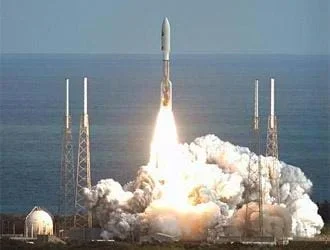 Figure 1. The impressive launch of the Atlas V rocket for travel to Pluto.Copyright National Aeronautics and Space Administration http://www.nasa.gov/images/content/141078main_liftoff3.jpg
To probe the depths of our solar system, engineers design creative solutions for space travel. They apply their knowledge of physics, specifically Newton's third law (for every action there is an equal and opposite reaction), to determine rocket specifications. When designing rockets, engineers must consider many aspects, including, but not limited to, weight, drag and thrust. Teams of engineers investigate how each of the rocket's features impact its performance. Using what they've learned from research and experimental results, engineers build small rocket prototypes (models) to test new designs before they build full-scale spacecraft.
After this activity, students should be able to:
- Use physics concepts to describe how a rocket is propelled upward.
- Identify design features that maximize the height the rocket travels.
- Design an experiment to investigate how various properties of the rocket affect its performance.
- 7.1.2 Formulate, represent, and use algorithms with rational numbers flexibly, accurately, and efficiently.
Grade 7
Do you agree with this alignment? - 7.1.2.c Solve real-world and mathematical problems involving the four operations with rational numbers.
Grade 7
Do you agree with this alignment?
- Predict and evaluate the movement of an object by examining the forces applied to it
Grade 8
Do you agree with this alignment? - Describe methods and equipment used to explore the solar system and beyond
Grade 8
Do you agree with this alignment?
- CCSS.Math.Content.6.SP.B.5 Summarize numerical data sets in relation to their context, such as by:
Grade 6
Do you agree with this alignment? - CCSS.Math.Content.6.SP.B.5a Reporting the number of observations.
Grade 6
Do you agree with this alignment? - CCSS.Math.Content.6.SP.B.5b Describing the nature of the attribute under investigation, including how it was measured and its units of measurement.
Grade 6
Do you agree with this alignment? - CCSS.Math.Content.8.SP.A.1 Construct and interpret scatter plots for bivariate measurement data to investigate patterns of association between two quantities. Describe patterns such as clustering, outliers, positive or negative association, linear association, and nonlinear association.
Grade 8
Do you agree with this alignment? - CCSS.Math.Content.HSS-ID.B.6 Represent data on two quantitative variables on a scatter plot, and describe how the variables are related.
Grades 9-12
Do you agree with this alignment?
- STEL-1J Develop innovative products and systems that solve problems and extend capabilities based on individual or collective needs and wants.
Grades 6-8
Do you agree with this alignment?
Each group needs:
- 1 35-mm film canister with internal snapping lid, such as the clear plastic Fuji™ brand film canister (Note: Canisters are often given away for free at camera shops or film-developing counters in grocery and discount retail stores.)
- 1 antacid tablet, broken in half
- paper, for designing and drawing the rocket
- a pitcher of water
- various building supplies (see items listed below)
- Fly Me to the Moon Worksheet, (PDF) one per person
For the entire class to share:
- a few stopwatches
- 4-5 pairs safety glasses/goggles (groups will use one at a time during their launches)
- various sizes and types of building supplies, for building a lightweight but sturdy rocket: tape (duct and masking), cardboard, foam core board, construction paper, carad stock, scissors, glue, etc.
The thrust or forward force that propels a rocket forward is based on Newton's third law: for every action there is an equal and opposite reaction. For example, when an ice skater pushes down on the ice with his/her skates, the reaction force is the ice pushing back. This reaction force is what makes the skater move forward (or backward). Can you think of examples of other action-reaction pairs? (Have students spend 30 seconds jotting down their thoughts, and then have them share examples with the class. Possible examples: leaning against a wall or pushing on a wall and the wall pushes back; jumping by bending your knees and pushing off the ground, the ground pushes you up into the air. Help students make corrections if their examples are not truly action-reaction pairs).
What do you think is the action-reaction pair involved in propelling a rocket forward? (Answer: The engine pushes the highly -pressurized combustion gas out, and the gas pushes the engine, and hence the whole rocket, forward. Be sure to correct the common misunderstanding that the rocket is propelled by the gas pushing on the ground.)
In this activity, we will mix an antacid tablet in water, which causes many little gas bubbles to appear. The bubbles rise to the top (because they are less dense than water) and break open at the surface. As all of that gas builds up and gets pushed out of the canister, what will the reaction be? (Answer: Following Newton's third law, as the water and gas are pushed out of the canister, the gas propels the canister in the opposite direction.)
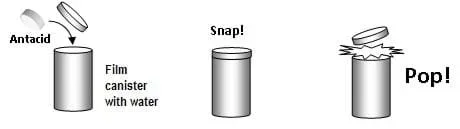 Figure 2. The steps describing the Into Space! activity process to fuel the model rockets.Copyright 2003 Jeff White, University of Colorado at Boulder
Although the knowledge behind rockets (including these antacid model rockets) is based in science, particularly chemistry and physics, engineers are responsible for every major aspect of rocketry. They play a vital role in designing, building and testing rockets. Today we will act as engineers and design our own rocket ships. We will start with a basic rocket design that everyone will build and test. Like engineers, we will do scientific investigations to determine how we can improve upon this initial design. Each team will design its own experiment to see how the rocket performs as you change one of its features. After getting the class together to share results, your team will have a chance to redesign your rocket. We'll end with a competition to see whose rocket goes the highest.
Before the Activity
- Remove antacid tablets from packaging and break them in half. Half a tablet is more than enough to pop the canister; more than half a tablet makes the lid pop off sooner. Adding extra tablets will not necessarily produce a more powerful takeoff; however, students can test this hypothesis during the investigation phase of the design process.
- Make copies of the Fly Me to the Moon Worksheet (PDF) (one per person) and the Rocket Build Instructions (PDF) (one per group).
With the Students
Part I. Basic Design Test
Our goal today is to improve rocket design. Similar to real-world engineering, we will experiment with a small, simple model called a prototype, rather than building a full-scale rocket. Why do you think engineers build prototypes? (Answer: It is more efficient and cost effective to test initial designs using a prototype.) We will start by seeing how well the current technology works. Everyone will initially build the same rocket prototype.
- Divide the class into groups of four students each. (Note: To meet the time allowed, adjust your group sizes to have no more than seven groups.)
- Provide each group with a film canister and sheet of paper.
- Using scissors and tape, have each group should follow the instructions to build a rocket. (If necessary, assist them in building their rockets.) Remind them to build their first rocket according to the model; they may vary their designs when they move into the experiment phase. Instruct students to begin thinking about what parameter(s) they might want to change in the upcoming experiment. Ask questions such as, "What is the role of fins on aircraft?" or "What materials do you think are best for the rocket?" and "Why?" Limit this step to about five minutes to allow plenty of time for the rest of the activity. Note: Make sure students put their canister lids as the bottom of their rockets (so the canister is inverted). Also, make sure the canister lid sticks out from the paper a little so that the paper surrounding the rocket does not interfere with the lid either snapping on (for "fuel" loading) or popping off.
- Once the rockets are completely built (and decorated, if time permits), move the class outside to the designated "launch pad." Choose a launch area with a flat launch pad location and plenty of surrounding open space so that the rockets can return to the ground without hitting anything (roofs, trees, etc.).
- Have one group at a time step up to the launch pad. Note: students should wear safety glasses during their launch; ask students to put the safety glasses/goggles on BEFORE the launch begins. All other students should be a safe distance away, ready to record the results on their worksheets.
- Have the group hold the rocket upside down (which is actually right side up) and fill the canister one-third full of water.
- Note: The next steps must be done very quickly. Drop in the half tablet of antacid, and quickly snap on the lid.
- Place the rocket upright (that is, the canister lid down) on the flat launch site. Step back.
- The rocket should pop within 1-5 seconds.
- Have a designated member of the group start the stopwatch when the rocket takes off and stop it when the rocket starts to fall back down. Have everyone record the time on their worksheets. Remind students to record the data from all launches, not just their own.
- Once students have collected data for at least five good launches, return to the classroom and ask students to find the average time for the rockets' ascents. As a class, discuss the results, including why they are testing time instead of height and what the average time is.
Part II. Improving the Rocket Design
- Have students complete question #1 of Part II of their worksheets, which asks them to brainstorm possible parameters that they could vary. Have each team capture their answers on a chalk/whiteboard, overhead transparency, or large butcher paper so that they can easily share results with the class. After about five minutes, have one student from each group share their ideas.
- Have each group decide on a parameter that they want to test, and design a simple experiment. (For example, if choosing rocket height as a parameter, they could make several model rockets of varying heights. If choosing rocket weight, they could construct rockets of varying materials or by taping pennies inside. Other parameters might be related to the launch itself, such as varying the amount of water or amount of antacid [fuel].)
- After getting the teacher's approval (if their worksheet has a check in the "Yes" box), have students design several rockets for launch. Each team member should make at least one rocket.
- When students are ready, bring everyone back out to the launch area and repeat steps 5-9 of Part I. As each group prepares to launch, have one group member tell the rest of the class what parameter is being tested. Students only need to record the time for their group. While other groups are testing, students can write down qualitative observations about those results.
- Have students analyze their data and draw conclusions by completing Part II of their worksheets.
Part III. Choosing the Best Design
- Have each group describe their test (parameters) and their conclusions. As the teacher, write on the chalk/whiteboard a short summary of what they found (for example, greater radius = lower height).
- After all teams have reported back, have each discuss their final designs and create sketchs of their rockets. Sign off on each sketch, and have them build their final designs.
- Bring the class back together for a short discussion. Explain to them that engineering teams often divide up various tasks, so that different people are testing different things, just like the class did during this activity. Ask students to identify potential advantages and disadvantages of this strategy.
- Have students defend and test their final designs as described in the Assessment section (post-activity assessment).
- thrust
- The forward-directed force on a rocket in reaction to the ejection of pressurized gas.
- gas
- A state of matter that is characterized by low density and viscosity, as well as great expansion and contraction with changes in pressure and temperature.
- chemical reaction
- A process whereby one type of substance is chemically converted to another by way of exchanging energy.
- pressure
- Results from collisions of gas molecules with a surface; defined as force per unit area, which is measured in units of lb/in2 (psi) or N/m2 (Pa).
- rocket
- A vehicle that moves by ejecting fuel.
- newton's third law
- For every action, there is an equal and opposite reaction; if object A pushes on object B, then object B pushes back on A with equal force.
- parameter
- A feature of an object that can be changed; similar to a variable in an experiment.
Pre-Activity Assessment
Poll: Before class, ask students to jot down how high they think they can make a rocket go, using the materials at their desk. Summarize their answers by finding the number of students who predicted heights at various intervals. Tell them that their challenge today is to create the highest flying rocket.
Activity Embedded Assessment
Into Space Worksheet: Have students record their ideas and results on the Fly Me to the Moon Worksheet (PDF). As described in the Procedure section, bring the class back together several times throughout the activity to share and discuss answers. While teams are working independently, circulate around the room and ask questions about what they are doing. Example questions: What do you think will happen as you change X? What seems to be the function of the (nose cone, wing, etc.)? Why did your rocket not go as high as....?
Post-Activity Assessment
Prediction Analysis: When everyone returns to the classroom, take 30 seconds to revisit their initial predictions as to how high the rockets would travel. Were they correct? Who was closest to guessing the maximum height?
Poster: Have students create posters that showcase their final rocket designs, including design diagrams with dimensions. Require them to highlight those rocket features that they think will help to maximize its height. Have students present their posters to the class as they prepare to launch their final rocket designs.
- Use eye protection (goggles or safety glasses) while launching the rockets; do not let students talk you into not using them. Both the force of the canister and the fluid can cause eye injuries.
- Do not hand out the antacid tablets until the groups are ready to launch.
Watch for these common building-phase issues:
- Forgetting to tape the film canister to the rocket body.
- Failing to mount the canister with the lid end down.
- Failing to extend the canister far enough from the paper tube to ensure the lid snaps on and pops off easily.
If time permits, let students test and redesign their rockets several times. Students could also test multiple parameters in a series of experiments. Ask students to brainstorm other design problems that they would need to address for a real rocket (for example: how would the astronauts eat, sleep or go to the bathroom? How would you manufacture such a large object? How will you get the spacecraft back to the ground safely?).
For lower grades, conduct the similar Teach Engineering Pop Rockets activity.
For upper grades, have students try one or more of the following:
- Calculate the approximate height that the rocket reaches using kinematics equations from physics, such as H = 1/2 g t 2.
- Predict and/or calculate the effect of air drag on height. Design rockets that minimize air drag.
- Test various gas-creating mixtures. Use chemistry background to make predictions about gas-creating reactions.
National Aeronautics and Space Administration, accessed October 23, 2008, http://www.nasa.gov/images/content/141078main_liftoff3.jpg
The Society for International Space Cooperation. Space Xpress, International Space Station Curriculum and Activities, "Film Canister Rockets," accessed November 6, 2008. http://www.spacesociety.org/spaceexpress/Curriculum/film_canisters.html
Contributors
Brian Kay; Jessica Todd; Sam Semakula; Jeff White; Jessica Butterfield; Karen King; Janet Yowell
Supporting Program
Integrated Teaching and Learning Program, College of Engineering, University of Colorado Boulder
Acknowledgements
The contents of this digital library curriculum were developed under a grant from the Fund for the Improvement of Postsecondary Education (FIPSE), U.S. Department of Education, and National Science Foundation GK-12 grant no 0338326. However, these contents do not necessarily represent the policies of the Department of Education or National Science Foundation, and you should not assume endorsement by the federal government.
Copyright
2008 by Regents of the University of Colorado.