
How Effective Is Your Sunscreen?
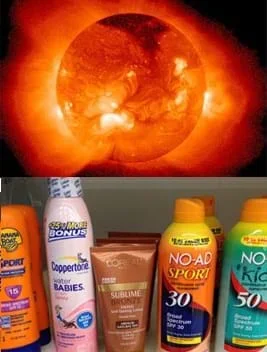 How effective is your sunscreen?
Student teams design and conduct quality-control experiments to test the reliability of several ultraviolet protection factors. Students use UV-detecting beads in their experimental designs to test the effectiveness of various types of sunscreens and sunblock. For example, they might examine zinc oxide nanoparticles versus traditional organic sun protection factors. UV intensity is quantitatively measured by UVA and UVB Vernier sensors, and students record and graph their results. By designing and conducting this experiment, students compare various substances, while learning about quality control.
This activity provides students with a lab experience in engineering design for quality control. Also, by working in groups, students learn to acknowledge and implement ideas from all members, much like engineers do in industry. The activity also includes chemical and environmental engineering connections—examining the chemical reactions that are involved when chlorofluorocarbons react to break down the ozone layer and the implications to overall public health when pollution causes this to occur, as well as laboratory-based experimentation as part of the design of new products and processes.
After this activity, students should be able to:
- Explain how to conduct a quality control experimental design.
- Describe how UVA and UVB sensors can be used to measure UV intensity.
- Design a controlled one-variable experiment.
- Test and evaluate previously determined experimental values.
- CCSS.Math.Content.HSS-ID.B Summarize, represent, and interpret data on two categorical and quantitative variables
Grades 9-12
Do you agree with this alignment? - CCSS.Math.Content.HSS-ID.B.6 Represent data on two quantitative variables on a scatter plot, and describe how the variables are related.
Grades 9-12
Do you agree with this alignment? - CCSS.Math.Practice.MP2 Reason abstractly and quantitatively.
Grades K-12
Do you agree with this alignment?
- Medical technologies include prevention and rehabilitation, vaccines and pharmaceuticals, medical and surgical procedures, genetic engineering, and the systems within which health is protected and maintained.
Grades 9-12
Do you agree with this alignment? - STEL-7AA Illustrate principles, elements, and factors of design.
Grades 9-12
Do you agree with this alignment?
- HS-ETS1-2 Design a solution to a complex real-world problem by breaking it down into smaller, more manageable problems that can be solved through engineering.
Grades 9-12
This resource focuses on the following Three Dimensional Learning aspects of NGSS:
Science & Engineering Practices- Design a solution to a complex real-world problem, based on scientific knowledge, student-generated sources of evidence, prioritized criteria, and tradeoff considerations.Do you agree with this alignment?
- Analyze data using tools, technologies, and/or models (e.g., computational, mathematical) in order to make valid and reliable scientific claims or determine an optimal design solution.Do you agree with this alignment?
- Plan and conduct an investigation individually and collaboratively to produce data to serve as the basis for evidence, and in the design: decide on types, how much, and accuracy of data needed to produce reliable measurements and consider limitations on the precision of the data (e.g., number of trials, cost, risk, time), and refine the design accordingly.Do you agree with this alignment?
- Communicate scientific information (e.g., about phenomena and/or the process of development and the design and performance of a proposed process or system) in multiple formats (including orally, graphically, textually, and mathematically).Do you agree with this alignment?
Disciplinary Core Ideas- Criteria may need to be broken down into simpler ones that can be approached systematically, and decisions about the priority of certain criteria over others (trade-offs) may be needed.Do you agree with this alignment?
Crosscutting Concepts- Investigating or designing new systems or structures requires a detailed examination of the properties of different materials, the structures of different components, and connections of components to reveal its function and/or solve a problem.Do you agree with this alignment?
Do you agree with this alignment? - Design a solution to a complex real-world problem, based on scientific knowledge, student-generated sources of evidence, prioritized criteria, and tradeoff considerations.
- CCSS.Math.Content.HSS-ID.B Summarize, represent, and interpret data on two categorical and quantitative variables
Grades 9-12
Do you agree with this alignment? - CCSS.Math.Content.HSS-ID.B.6 Represent data on two quantitative variables on a scatter plot, and describe how the variables are related.
Grades 9-12
Do you agree with this alignment? - CCSS.Math.Practice.MP2 Reason abstractly and quantitatively.
Grades K-12
Do you agree with this alignment?
- CLE 3221.Inq.2 Design and conduct scientific investigations to explore new phenomena, verify previous results, test how well a theory predicts, and compare opposing theories.
Grades 9-12
Do you agree with this alignment? - CLE 3221.Inq.3 Use appropriate tools and technology to collect precise and accurate data.
Grades 9-12
Do you agree with this alignment? - CLE 3221.Inq.4 Apply qualitative and quantitative measures to analyze data and draw conclusions that are free of bias.
Grades 9-12
Do you agree with this alignment? - CLE 3222.Inq.5 Compare experimental evidence and conclusions with those drawn by others about the same testable question.
Grades 9-12
Do you agree with this alignment? - CLE 3222.Inq.6 Communicate and defend scientific findings.
Grades 9-12
Do you agree with this alignment? - CLE 3222.T/E.3 Explain the relationship between the properties of a material and the use of the material in the application of a technology.
Grades 9-12
Do you agree with this alignment?
Each student needs:
- UV Radiation Designed Experiment Lab Handout (PDF)
 Copyright 2014 Denise W. Carlson, ITL Program, College of Engineering, University of Colorado Boulder
To share with the entire class:
- sunscreen SPF 15
- sunscreen SPF 45
- sunblock
- sunscreen containing zinc oxide nanoparticles
- sunglasses, either ask groups that want to use sunglasses in their designed experiments to bring in sunglasses from home, or else purchase some inexpensive ones, such as https://www.qualitylogoproducts.com/tradeshow-promotions/sunglases.htm?variant=BLANK&imageID=262438&gclid=CNWLrKGq68ACFQiIaQodikAAoA
- UV sensitive beads, such as a package of 240 ultraviolet-detecting beads from Flinn Scientific at https://www.flinnsci.com/ultraviolet-detecting-beads/fb1147/
- UV intensity meter and lens tester card, at https://www.flinnsci.com/uv-intensity-meter-and-lens-tester/ap6412/
- plastic bags
- plastic wrap
- UV lamp, such as https://www.flinnsci.com/ultraviolet-lamp-hand-held/ap1901/
- Vernier UVA sensor, such as https://www.vernier.com/products/sensors/uv-sensors/uva-bta/
- Vernier UVB sensors, such as https://www.vernier.com/products/sensors/uv-sensors/uvb-bta/
- access to the outdoors
In this activity, we will look at different forms of skin protection from ultraviolet light. Your challenge is to design a quality control experiment to test the protective substances. You will build on what you have learned in the previous lesson by taking a closer look at ultraviolet radiation and how the overexposure of UV radiation can have detrimental effects to humans' overall health.
We have been looking at how UV radiation can cause several types of skin cancer. Today we are going to quality control test some products with various sun protection factors (SPFs) including one that uses zinc oxide nanoparticles as a protection factor.
The skin is the body's first defense against all outside intrusion. Designing ways to protect against and detect skin cancer is one of the current focuses of biomedical engineers. Understanding, measuring and mitigating the pollution-caused deterioration of the ozone layer is another concern for engineers, because of the impact of increased UV radiation on the incidence of skin cancer. Biomedical and chemical engineers work with physicians to design and test medicines, new products and medical technologies.
Background
Refer to the UV Radiation Designed Experiment Lab Handout (PDF)for additional guidance and support for this activity. Have students complete the lab handout as they design and conduct their labs. Refer to the Lab Handout Answers and Rubric (PDF) for suggested grading components.
Expect students' experimental designs and results to vary since the objective is for teams to design their own experiments. Make available a selection of items as suggested in the Materials List, so that groups have a variety of options. For example, students can use any of the provided sunscreens or sunblock, plastic bags or plastic wrap, sunglasses—as items that can filter/block/protect against UV radiation—and select a UV detector—the intensity meter and lens tester card, the UV sensitive beads or the UVA/UVB sensors. For an ultraviolet light source, they can use sunlight (if available) or the UV lamp. The intent is to mirror the controlled tests that are performed during engineering research and experimentation—to test one variable in a design at a time.
UV-sensitive beads change to random colors when exposed to UV light of either UVA or UVB wavelengths. Sunscreen will not adhere directly to the bead surface, so students must come up with ways to contain the beads in something transparent that will have minimal UV absorption, and then apply the sunscreen to that material.
For quantitative results, a UVA and UVB sensor is recommended. These can be purchased from Vernier or another scientific supply company. If probes are used, or whenever quantitative data is obtained, require students to include a graph in the data and analysis section of the lab report.
Before the Activity
- Gather materials and make copies of the UV Radiation Designed Experiment Lab Handout (PDF), one per student.
- Set out the supplies so groups may examine and choose experiment materials.
With the Students
- Divide the class into groups of three students each. Present the engineering challenge: To design a controlled experiment to quality test the effectiveness of one aspect of current UV safety products.
- Direct students to choose from the given materials to design their experiments. If a group brainstorms additional materials that would aid in its design, have the group make a request to the instructor to obtain approval.
- Make sure students understand that this must be a one-variable (chosen by the group) controlled experiment.
- Have each student group explain its designed experiment to the teacher for approval. If the teacher identifies any problems with the experiment, have students revise the experiment and meet with the teacher again for approval.
- Once approved, have student groups conduct their experiments and gather data. If a design uses the UVA and UVB sensors, have students collect quantitative data; otherwise, students' data may be recording whether UV sensor beads change color or not, or whether the UV intensity meter and lens tester card indicates "low," "medium" or "high" UV. Whenever possible, expect students to produce graphs of their collected data to include in lab reports and presentations.
- Require each student to complete his or her own lab report with results typed and presented the following day. Require the following report sections: title, purpose, materials, procedure (designed by the students), data and analysis, and conclusion (which must tie back to the purpose). A grading rubric is provided on the lab handout.
- On the following day, have student groups discuss their lab reports, including the graphs that they created and conclusions that were drawn. Let each group decide specifically what information to prepare to present to the class.
- Have each group present a summary explanation of its designed experiment to the class, covering all the required sections of the lab report.
Pre-Activity Assessment
Pre-Lab Questions: Have students complete the pre-lab questions on the UV Radiation Designed Experiment Lab Handout (PDF), which provides a review of information taught in the associated lesson. If available, permit students to conduct research online. Gauge students' base level of knowledge as you review the answers together as a class and let students correct any incorrect answers.
Activity Embedded Assessment
Experimental Lab Design: In small groups, have students brainstorm and design experiments to test one variable. As part of each team's unique experiment design, have students select appropriate materials, write a full procedure, and once approved, conduct the experiment and gather data. Refer to the lab report grading rubric in the Lab Handout Answers and Rubric. (PDF)
Post-Activity Assessment
Lab Reports & Presentations: Require students to individually turn in typed lab reports that summarize their group-designed experiments. Require the following sections: title, purpose, materials, procedure (designed by the students), data and analysis, and conclusion (which ties back to the purpose). The following day, have teams present their experiments and results to the class, recapping the report sections.
Contributors
Michelle Bell; Amber Spolarich
Supporting Program
VU Bioengineering RET Program, School of Engineering, Vanderbilt University
Acknowledgements
The contents of this digital library curriculum were developed under National Science Foundation RET grant nos. 0338092 and 0742871. However, these contents do not necessarily represent the policies of the NSF, and you should not assume endorsement by the federal government.
Copyright
2013 by Regents of the University of Colorado; original © 2010 Vanderbilt University