
Powering the U.S.
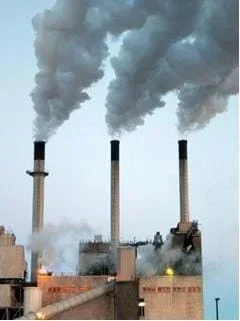 Figure 1. A pollution-producing coal electric power plant.Copyright U.S. Department of the Interior, U.S. Geological Survey, http://pubs.usgs.gov/fs/fs-016-03/
This lesson provides students with an overview of the electric power industry in the United States. Students also become familiar with the environmental impacts associated with a variety of energy sources.
Every time we flip a switch, turn on the television or walk into an air-conditioned store, we are benefiting from electricity. Many different types of engineers — civil engineers (dam construction), mechanical engineers (water and gas turbines), electrical engineers (electrical power conditioning) and chemical engineers (power plant design) — are all necessary to provide the electricity to our communities. Environmental engineers more and more play of a role in this process, as they determine the power plant's impact on the environment and potential health risks associated with it. Environmental engineers have a huge impact in contributing to the health, happiness and safety of our planet.
After this lesson, students should be able to:
- List several different types of electric power plants in the U.S.
- List two environmental problems caused by burning coal to make electricity.
- Describe how engineers are involved in getting electricity to our homes.
- Identify and describe the variety of energy sources
Grade 4
Do you agree with this alignment? - Use multiple resources – including print, electronic, and human – to locate information about different sources of renewable and nonrenewable energy
Grade 4
Do you agree with this alignment?
- The use of technology affects the environment in good and bad ways.
Grades 3-5
Do you agree with this alignment? - Energy comes in different forms.
Grades 3-5
Do you agree with this alignment?
- 4-ESS3-1 Obtain and combine information to describe that energy and fuels are derived from natural resources and their uses affect the environment.
Grade 4
This resource focuses on the following Three Dimensional Learning aspects of NGSS:
Science & Engineering Practices- Obtain and combine information from books and other reliable media to explain phenomena.Do you agree with this alignment?
Disciplinary Core Ideas- Energy and fuels that humans use are derived from natural sources, and their use affects the environment in multiple ways. Some resources are renewable over time, and others are not.Do you agree with this alignment?
Crosscutting Concepts- Cause and effect relationships are routinely identified and used to explain change.Do you agree with this alignment?
- Knowledge of relevant scientific concepts and research findings is important in engineering.Do you agree with this alignment?
- Over time, people's needs and wants change, as do their demands for new and improved technologies.Do you agree with this alignment?
Do you agree with this alignment? - Obtain and combine information from books and other reliable media to explain phenomena.
- MS-ESS3-3 Apply scientific principles to design a method for monitoring and minimizing a human impact on the environment.
Grades 6-8
This resource focuses on the following Three Dimensional Learning aspects of NGSS:
Science & Engineering Practices- Apply scientific principles to design an object, tool, process or system.Do you agree with this alignment?
Disciplinary Core Ideas- Human activities have significantly altered the biosphere, sometimes damaging or destroying natural habitats and causing the extinction of other species. But changes to Earth's environments can have different impacts (negative and positive) for different living things.Do you agree with this alignment?
Crosscutting Concepts- The uses of technologies and any limitations on their use are driven by individual or societal needs, desires, and values; by the findings of scientific research; and by differences in such factors as climate, natural resources, and economic conditions. Thus technology use varies from region to region and over time.Do you agree with this alignment?
- Relationships can be classified as causal or correlational, and correlation does not necessarily imply causation.Do you agree with this alignment?
Do you agree with this alignment? - Apply scientific principles to design an object, tool, process or system.
Hydroelectric Power
Hydroelectric Power is — essentially — water power that is created by dams. It is a clean, renewable source of energy that does not cause pollution. A dam is a fascinating compilation of machinery, with water being the main feature, as shown in Figure 2. How a dam works is that water stores up behind the dam, is released and then travels through high-powered turbines (engines) located in the base of the dam, which subsequently causes the turbines to spin. These spinning turbines create electricity. This type of energy creation is called hydroelectric power. Because water from rain and snow runoff continually flows into the reservoir behind the dam, dams are considered a source of renewable energy. Though there are no combustion emissions (pollutants emitted into the atmosphere as a by-product of making electricity) from hydroelectric power plants, the dam can change the surrounding landscape drastically. In fact, sometimes people living upstream from the dam have to move away due to rising water levels, which also affects the fish habitat, as they can no longer swim upstream to spawn.
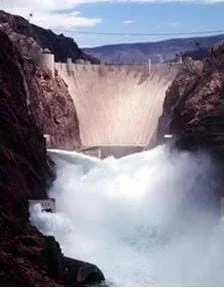 A photograph of Hoover Dam, in Boulder City, Nevada. Shown near the dam's base is a giant plume of pressurized water as it is pushed out through water turbines, eventually making electricity.Copyright U.S Department of the Interior, Bureau of Reclamation, Lower Colorado Region, http://www.usbr.gov/lc/hooverdam/
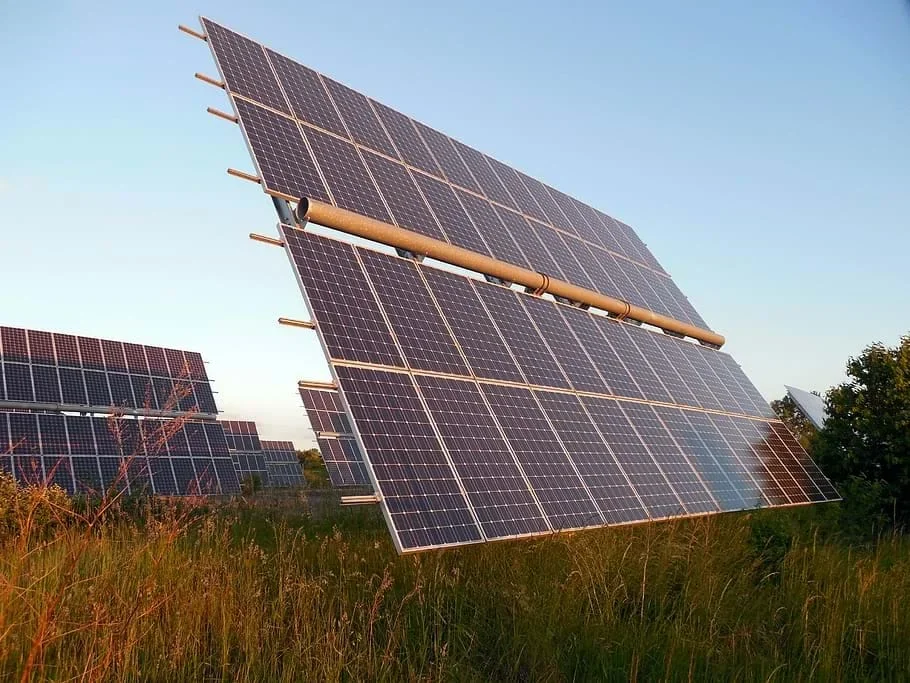 Figure 3. Photovoltaic (PV) panels.Copyright https://www.pxfuel.com/en/free-photo-eekvw
Free for commercial use, DMCA
Figure 3. Photovoltaic (PV) panels.Copyright https://www.pxfuel.com/en/free-photo-eekvw
Free for commercial use, DMCA
Solar Power
Photovoltaic (PV) panels (see Figure 3) are also a source of renewable energy. Semiconductor devices convert light photons (photo) into a voltage (voltaic) that causes electric current to flow, creating electricity. One difficulty associated with PV panels is that power is still needed when the sun is not shining (i.e., having your lights or other electrical devices on at night); therefore, the electricity needs to be stored during the day for use at night, an often expensive process. On the positive side, however, there are very few environmental concerns associated with the use of PV panels, as they do not produce any emissions. Other types of power plants, coal for example, emit hazardous chemicals into the air as the fuel is burned.
Wind Power
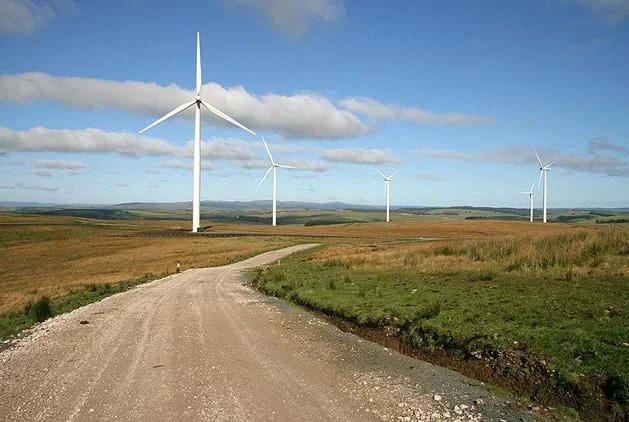 Figure 4. Wind turbines, also known as a wind farm.Copyright Walter Baxter / An access road at Minsca Wind Farm / CC BY-SA 2.0
https://commons.wikimedia.org/wiki/File:An_access_road_at_Minsca_Wind_Farm_-_geograph.org.uk_-_994215.jpg
Figure 4. Wind turbines, also known as a wind farm.Copyright Walter Baxter / An access road at Minsca Wind Farm / CC BY-SA 2.0
https://commons.wikimedia.org/wiki/File:An_access_road_at_Minsca_Wind_Farm_-_geograph.org.uk_-_994215.jpg
Wind is yet another source of renewable energy. Wind turbines are used to harness winds and create electricity. How these huge turbines (engines) work is that blowing wind pushes against enormous blades, turning the blades, which subsequently causes the turbine to rotate. This rotation turns an electric motor which subsequently produces electricity. There is a disadvantage with wind turbines that is similar to photovoltaic energy: the electricity needs to be stored as it is created because there is no guarantee that the wind will blow when the power is needed, so there needs to be reserves. And, just as with water and PV energy, there are no emissions from wind turbines. However, some people do not like the look of the (very) large wind turbines (see Figure 4), and some environmental studies show that birds are often killed by the turbine blades.
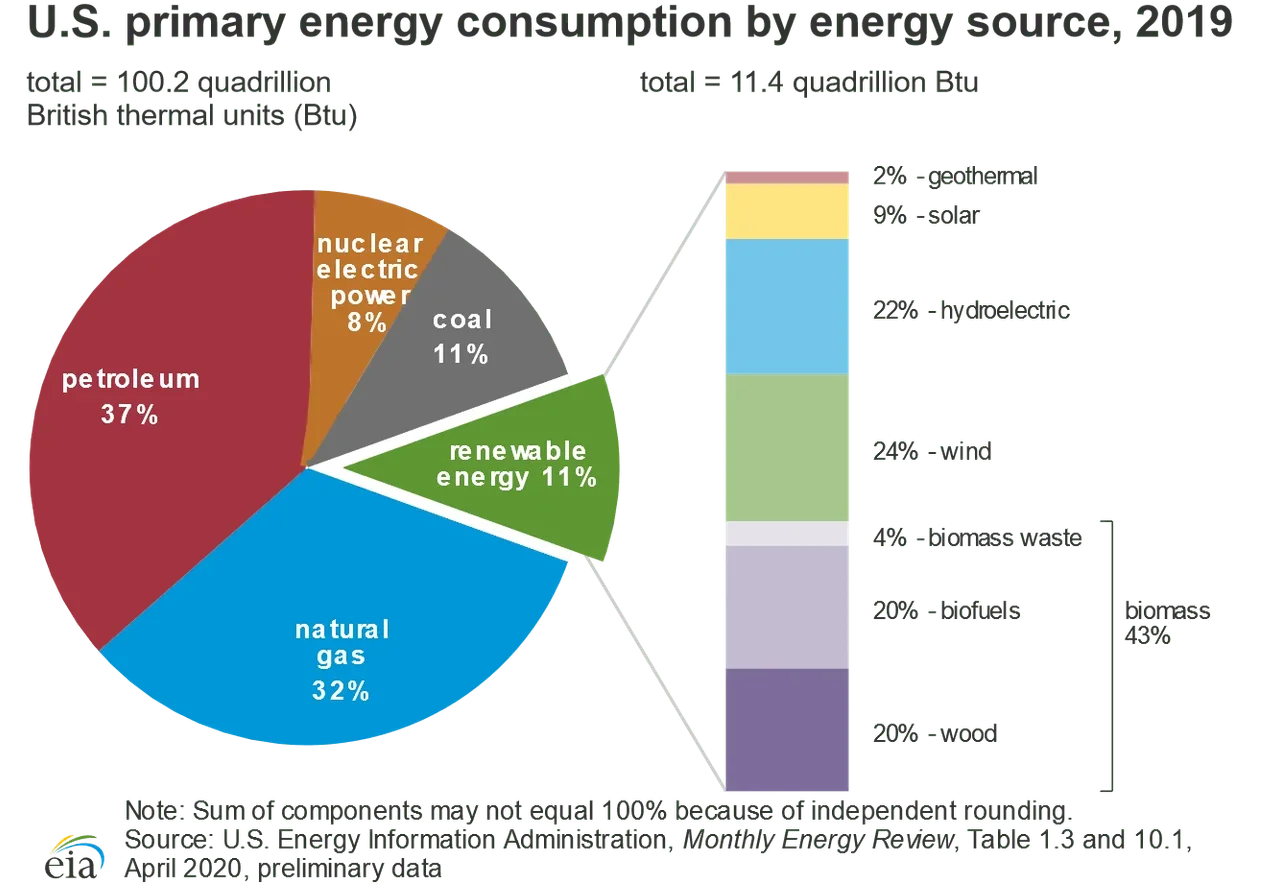 Figure 5. The distribution of power in the U.S.Copyright https://www.eia.gov/energyexplained/us-energy-facts/
Though a lot of attention has been focused on renewable power lately, Figure 5 shows the source of electricity in the U.S. in 2019. Hydroelectric energy accounted for just 2% of U.S. electricity produced, and wind turbines and solar for less than 4%. Non-renewable forms of energy – nuclear and coal – accounted for most of the electricity generated in the U.S.
Nuclear Power Plants
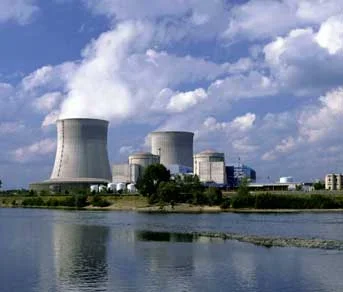 Figure 6. A nuclear power plant.Copyright U.S. Department of Energy, Yucca Mountain Youth Zone, http://www.ocrwm.doe.gov/
Enriched uranium is the fuel source in a nuclear power plant. Enriched uranium is incredibly energy dense — one pound of enriched uranium (smaller than a baseball) has the same amount of energy as a million gallons of gasoline. Nuclear power plants use the power stored in the nuclei (the center) of uranium atoms to make electricity. In the process of fission, a uranium atom is split. When the split occurs, it releases a lot of energy (heat) as well as other small particles (neutrons) which then go out and split other uranium atoms — creating a chain reaction.
There are not many emissions from a nuclear power plant, and specifically, carbon dioxide emissions are not a major problem. The plumes seen leaving the stacks in Figure 6 is the result of water evaporating (to help cool the plant); there is no radiation in the steam plumes. In fact, coal plants emit more radiation than nuclear power plants because of small amounts of radioactive material found in coal.
There are, however, some significant environmental and security issues associated with nuclear power:
- Mining uranium is a dirty process and affects the landscape.
- Transporting uranium from the mine to the plant is a security and health risk if the transport is attacked or has an accident.
- There are huge environmental and societal health risks associated with the meltdown (or destruction) of a nuclear power plant.
- Used uranium fuel is hazardous for centuries, and it needs to be safely stored somewhere until this time is up. Unfortunately, poorly-constructed storage containers have already leaked hazardous waste into the environment — the Hanford Nuclear Complex in Washington state is an example of such a leak.
Coal Power Plants
As shown in Figure 5, coal power plants account for nearly 50% of the electricity we use in the U.S. Through the process of a coal power plant, coal is mined, either underground or on the surface, and then is transported to a boiler in a coal power plant where it is burned. The heat released boils water to make steam, which then passes through a turbine to make electricity. Cooling water is drawn in from either a river or reservoir (see Figure 7).
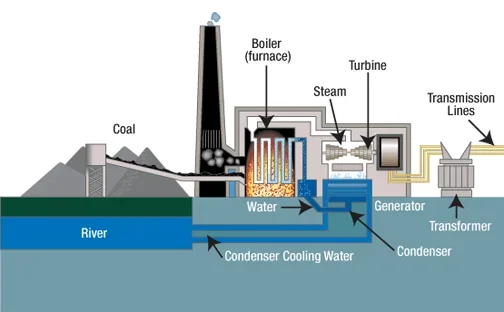 Figure 7. The processes of a typical coal power plant.Copyright Tennessee Valley Authority, http://www.tva.gov/
Coal has several advantages as a non-renewable power source:
- Estimates place our coal reserve between 100 and 300 years depending on our consumption level. Because of this large reserve, coal is considered a domestic energy source that enhances our energy security.
- We have a lot of technical expertise in making coal plants – the first ones were built in the 1880s. And, coal plants have a proven track record.
- Coal is an inexpensive fuel.
Unfortunately, coal has disadvantages as well. For a typical power plant (about 500 MW in size), a coal plant will emit over the course of a year:
- 10,000 tons of sulfur dioxide – causes acid rain and harms plants and damages buildings).
- 10,000 tons of nitrogen oxides – also creates acid rain (nitric acid) and contributes to smog.
- 3,700,000 tons of carbon dioxide – a greenhouse warming gas that contributes to global warming. Global warming is responsible for a wide range of climate-changing effects; the melting of the polar ice caps is one example. Increase in hurricane intensity and frequency is another. Many countries, not including the U.S., have joined the Kyoto Protocol and are attempting to control their carbon dioxide emissions.
- 290 pounds of mercury - suspected of contaminating lakes and rivers. In Wisconsin, more than 200 lakes and rivers are contaminated with mercury. Health officials warn against eating fish caught in these waters, because mercury can cause birth defects, brain damage and other ailments.
Much research and development is focusing on "clean coal" technology. According to the Department of Energy website, there is new coal technology that filters out 99% of the particles and removes more than 95% of the acid rain pollutants. Other than carbon emissions, the electric power industry (half of which is coal) has been making progress in reducing emissions.
Tampa's Electric Polk Power Station in Florida is an IGCC (Integrated Gasification Combined Cycle) plant that gasifies coal before burning it. In the process of gasification, much of the sulfur and mercury of the coal can be cleaned out.
Different mining methods are used to extract the coal buried underground, depending on how deep it lies below the surface. Surface mining is used when the coal is close to the surface. Through this process, machines remove the land above the coal (the overburden), to expose the coal, and then refill the pits after the coal has been removed.
Coal is oftentimes transported by train, though it can be transported by barge, truck and pipeline as well. Since transportation costs can be significant, coal power plants are often built close to the coal mines. Overall, coal is inexpensive and, thus far, abundant, source of energy for the U.S.
Do you know why lights turn on when you flip a light switch? Well, electricity actually allows lights to become activated, or turned on with the flip of a switch. Where do we get electricity? (Answer: Depending on where students live, there could be a number of right answers to this question, as there are many different ways to make electricity: coal, the wind, the sun, water, etc.) Many of us get our electricity from an electric power plant — a collection of buildings and structures used to make electricity from a source such as water, wind, sun and coal. Today, we will discuss some of the different types of electric power plants in the United States. (Write the following terms on the board: hydroelectric [water], solar, wind, nuclear and coal.)
First of all, hydroelectric power, or water power, is created using dams and, obviously, water. It is a clean, renewable source of energy that does not cause pollution. Have you ever seen a dam? Water that is stored up behind the dam causes high-powered turbines (engines) to spin which in turn creates electricity. Because rain and snow runoff continually fill the reservoir behind the dam with water, dams are considered a source of renewable energy.
Next, solar power is also a source of renewable energy. Solar power uses photovoltaic (PV) panels to change sunlight into electric current to create electricity. One difficulty associated with PV panels is that power is still needed when the sun is not shining (i.e., having your lights or other electrical devices on at night); therefore, the electricity needs to be stored during the day for use at night, which is often expensive.
Wind is yet another source of renewable energy. Blowing wind turns enormous blades, which turns an electric motor and makes electricity. There is a disadvantage with wind turbines that is similar to solar energy. You need to store the electricity that is created because it is not guaranteed that the wind will blow (to turn the blades) precisely when the power is needed. With each of these three types of renewable energy sources, there is little pollution to worry about cleaning up afterwards.
Nuclear energy comes from enriched uranium and provides more energy than the same amount of gasoline. Nuclear power plants use the power stored in the nuclei (the center) of uranium atoms to heat up and boil water, and subsequently, to create steam. A steam turbine then generates electricity. There is not much pollution associated with nuclear power plants; however, the use of nuclear power is quite controversial, as there are risks to the environment and humans through the mining and transportation of uranium, as well as the storage of used uranium.
Most of the United States energy comes from coal. Coal is considered a non-renewable source of energy because it takes millions of years to create, and there is currently a fixed amount of coal in the Earth. In a coal power plant, coal is mined and then transported to a boiler where it is burned. The heat released from coal boils water to make steam, which then passes through a turbine (engine) to make electricity. Much research has been done to determine the effectiveness of using coal for energy. Coal is inexpensive to use. However, for a typical coal power plant, large amounts of toxic (bad for our health) things like sulfur dioxide, carbon dioxide and mercury are released into the air, causing acid rain, greenhouse gases and other side effects that are harmful to people and the environment. Another concern is what we will use for energy when we run out of coal — there is estimated to be between 100 and 300 years worth of coal supply remaining in the Earth.
Engineers are involved with many parts of getting electricity to our homes. They help design the technologies to change wind, water, sun, uranium and coal into electricity. And, they also design the appliances that use electricity, like lights, microwaves, dryers and hot water heaters, among many, many others. Engineers help decide where to build power plants for a community and then environmental engineers look at the impacts on surrounding community's health and the environment.
It will be interesting to see how the U.S. will meet its energy needs in the near and far future. Renewable sources are generally non-polluting, but very expensive. Nuclear power is possible, but has huge environmental waste issues. Coal is mostly used because of how much there still is and how inexpensive it is to use it. However, it continues to be a challenge to repair the environmental effects of burning coal. The creativity of engineering will definitely help solve these challenges! Following the lesson, students can employ their own creativity by using the activity Powering Smallsburg to act as engineers by specifying power production for a community given a budget and required power output.
There are several different methods for making electricity in the U.S.: hydroelectric (water) power, wind turbines, solar, nuclear and coal power. Engineers are involved in almost all aspects of getting this power to our homes. Can you think of an example where an engineer is a part of this process? (Answer: Engineers help design the technologies to change wind, water, sun, uranium and coal into electricity. They also design the appliances that use electricity, such as lights and hot water. Engineers help decide where to build power plants for a community and then environmental engineers look at the impacts on people's health and the environment for that power plant.) There are advantages and disadvantages associated with each of the technologies we learned about, including cost, location and effect on the environment. Which type of power does the United States use most? (Answer: Coal presently provides 50% of the electricity we use in the U.S.) Research is on-going to make coal "cleaner" (causing less pollution). Engineers are important in creating the technologies that improve our environment and, ultimately, our planet.
- coal
- A fossil fuel prevalent in the U.S. that, when burned, accounts for nearly 50% of our electricity.
- power plant
- A place where electricity is made.
- renewable energy
- Energy supplied by sources that are naturally and continually replenished, such as wind, solar power, geothermal and hydropower.
Pre-Lesson Assessment
Brainstorming: As a class, have the students engage in open discussion. Remind students that in brainstorming, no idea or suggestion is "silly." All ideas should be respectfully heard. Take an uncritical position, encourage wild ideas and discourage criticism of ideas. Have them raise their hands to respond. Write their ideas on the board.
- Ask students to help you create a list on the board for all the things that they do, either daily or occasionally, that require electricity. Ask them where they think this electricity comes from (in terms of source).
Post-Introduction Assessment
Organizing the Information: Draw the following table on the board. Ask students to help you fill it in.
Type of Power Plant | Requirements (e.g., fuel, sunshine, etc.) | Cost (high or low?) | Environmental Concerns | Other Comments |
Hydroelectric |
|
|
|
|
Photovoltaic |
|
|
|
|
Wind Turbine |
|
|
|
|
Nuclear |
|
|
|
|
Coal |
|
|
|
|
Lesson Summary Assessment
Class Discussion: Discuss the following with the class: A lot of research and development is focusing on "clean coal" technology. Engineers have been working on technologies that would help remove most of the tiny harmful particles that can cause acid rain and harm the environment. Still, with these technologies, there is a limited amount of coal to use. Do you think that if pollutants from coal are reduced that this is a good enough solution for the growing demand for energy in the United States? What questions would you ask an engineer to learn more about the best way to make sure we have enough energy in 100 years?
Visit the EIA Energy Kid's Page. There are numerous energy related lesson plans, games and activities on this website for K-12 students: http://www.eia.doe.gov/kids/
Have students explore other types of energy (wind, solar, hydro, etc.) A great resource for this extension is the following website: https://www.eia.gov/kids/energy-sources/renewable/.
Brigham, Mark E., Krabbenhoft, David P., and Hamilton, Pixie A. U.S. Department of the Interior, U.S. Geological Survey, "Mercury in Stream Ecosystems—New Studies Initiated by the U.S. Geological Survey," U.S. Geological Survey Fact Sheet 016-03, March 2003. Accessed October 30, 2020. http://pubs.usgs.gov/fs/fs-016-03/
Canine, Craig. Natural Resources Defense Council, onearth, Fall 2005, "How to Clean Coal," accessed January 8, 2007. Formerly found at http://www.nrdc.org/onearth/05fal/coal1.asp. Text can be found here: http://www.precaution.org/lib/nrdc_how_to_clean_coal.051101.htm. Accessed on October 30, 2020.
Government of Western Australia, Sustained Energy Development Office, Renewable Remote Power Generation Program. Accessed January 9, 2007. Formerly found at http://wa.gov.au/.
U.S. Department of Energy, Fossil Energy, Clean Coal & Natural Gas Power Systems, "Clean Coal Technology & the President's Clean Coal Power Initiative," October 25, 2006. Formerly found at http://www.fossil.energy.gov/programs/powersystems/cleancoal/.
U.S. Department of Energy, Fossil Energy, Clean Coal & Natural Gas Power Systems, "FutureGen - Tomorrow's Pollution-Free Power Plant," Accessed on October 30, 2020. https://www.eurekalert.org/features/doe/2006-09/detl-f-t_1092206.php.
U.S. Department of Energy, Energy Information Administration, Energy Kids' Page. Accessed October 30, 2020. http://www.eia.doe.gov/kids/
U.S. Department of the Interior, Bureau of Reclamation, Lower Colorado Region, Hoover Dam, December 6, 2006, accessed January 8, 2007. Formerly found at http://www.usbr.gov/lc/hooverdam/
Wikimedia Foundation, Inc. Wikipedia – The Free Encyclopedia, "Coal." Accessed October 30, 2020. http://en.wikipedia.org/wiki/Coal
Contributors
Frank Burkholder; Malinda Schaefer Zarske; Janet Yowell
Supporting Program
Integrated Teaching and Learning Program, College of Engineering, University of Colorado Boulder
Acknowledgements
The contents of this digital library curriculum were developed under a grant from the Fund for the Improvement of Postsecondary Education (FIPSE), U.S. Department of Education and National Science Foundation GK-12 grant no. 0338326. However, these contents do not necessarily represent the policies of the Department of Education or National Science Foundation, and you should not assume endorsement by the federal government.
Copyright
2006 by Regents of the University of Colorado.