
The Earth is a Changin'
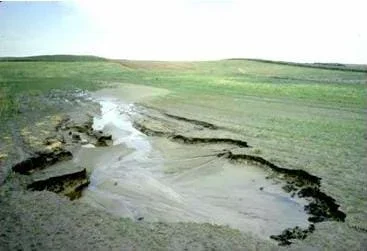 Figure 1. An example of water erosion.Copyright U.S. Department of Agriculture, Natural Resource Conservation Service http://www.mo.nrcs.usda.gov/news/MOphotogallery/erosion.html
Students are introduced to the primary types of erosion—chemical, water, wind, glacier and temperature. Students investigate examples of each erosion type and discuss how erosion changes the surface of the Earth. Students also learn why engineers need to be aware of the different types of erosion in order to protect structures and landmarks from the damaging effects erosion can cause.
Civil engineers must carefully study the surrounding environment and soil composition to safely design and build any sort of structure on a piece of property. Buildings, roads and bridges require solid foundations and preferably land that is not prone to erosion (such as flood plains). Engineers also employ materials that resist erosion, such as water-proof materials or materials impervious to acid rain. Environmental engineers design surrounding landscaping to include trees and other vegetation in order to help prevent wind and water erosion since roots make soil more stable and less exposed to weathering forces. Engineers also design roads and sidewalks so that they may expand and contract with temperature changes without endangering the integrity of the structure, such as sidewalk "control joints" to control cracking.
After this lesson, students should be able to:
- List several different types of erosion.
- Describe several land formations that have been created by erosion.
- Explain how engineers learn about erosion to design or protect structures.
- DCI.ESS2.A.3-5.2 Rainfall helps to shape the land and affects the types of living things found in a region. Water, ice, wind, living organisms, and gravity break rocks, soils, and sediments into smaller particles and move them around.
Grade 4
Do you agree with this alignment?
Erosion is the wearing away of the surface of the Earth by natural processes (weathering, dissolution, abrasion, corrosion, etc.). Chemical, water, wind, glacier and temperature are continually changing the landscape of the Earth.
Chemical Erosion
Chemical erosion involves a chemical reaction (one or more substances changes into others). Most chemical erosion is the result of acid rain. Acid rain occurs when rain mixes with elements and gasses in the air, specifically pollutants like sulfur oxides and nitrogen oxides. These pollutants come from vehicles, factories and power-generation plants that burn fossil fuels. See Figure 2 for an illustration of the acid rain cycle. This causes the water to have an acidic pH of approximately 5. Note: On the pH scale, 7 is neutral, that is, "pure" water, with any number towards 1 being more acidic, and any number higher than 7 being more basic. Wind carries this contaminated water hundreds of miles away from its original pollution site, which then harms streams, lakes, forests and any water life that resides there (such as frogs and fish, among others). In addition to impacting nature and other creatures, acid rain also destroys human-made structures, such as historical buildings and monuments. Other examples of chemical erosion include Mammoth Cave in Kentucky and Carlsbad Cavern in New Mexico, both carved out by chemical erosion (see Figure 3).
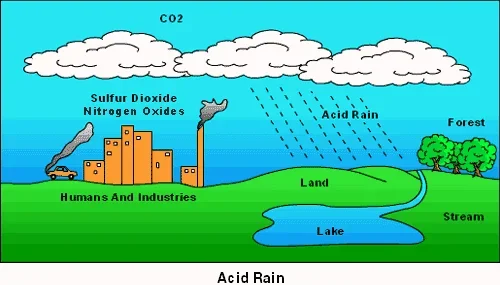 Figure 2. The acid rain cycle.Copyright The Government of the Hong Kong Special Administrative Region of the People's Republic of China, Education and Manpower Bureau, Science Education Section http://resources.edb.gov.hk/~s1sci/R_S1Science/sp/en/syllabus/unit5/article-ar.htm
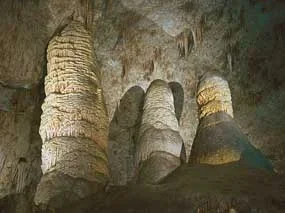 Figure 3. Stalactites and stalagmites found in Carlsbad Caverns in New Mexico.Copyright U.S. Department of the Interior, National Park Service, Carlsbad Caverns http://www.nps.gov/cave
Environmental engineers attempt to neutralize acid rain by planting trees because they can have a buffering effect on acid rain. Forests reduce the acidity through the leaching process on leaves and the ion exchange in the soil. Engineers are also working on decreasing pollution by designing cleaner burning fuels and vehicles that release less pollution into the air. Engineers also try to protect structures from chemical erosion by choosing building materials that are resistant to acid rain
Water Erosion
Water erosion is perhaps the most familiar type of erosion. Water erosion can take many different forms. Sheet erosion is when a fairly uniform layer of topsoil is removed by raindrop splash and run-off during storms. This can cause soil to lose nutrients, which affects the land's ability to produce crops. Rill erosion is caused by runoff water gathering in flow lines (usually on recently cultivated land). It leaves small channels along the soil and often deposits this soil in streams or reservoirs, which can damage the surrounding ecosystem. If rill erosion is not addressed, water continues to deepen these channels into gullies (gully erosion). Gully erosion results in the loss of significant amounts of land. Tunnel erosion occurs when water removes soil below the Earth's surface. This causes cavities to form underground, which weakens the surface. If these tunnels collapse, they become deep gullies. Tunnel erosion is dangerous because these cavities could collapse at anytime and cannot be detected from above. Stream-bank erosion is caused by moving streams or river water wearing away the surrounding banks. This can drastically change the course of a river and ultimately the surrounding landscape. Shore erosion deposits sediment into the body of water and changes coastline (storms, such as hurricanes, can accelerate this process). Water erosion has also shaped canyons (such as the Grand Canyon in Arizona) and rock formations (such as the Rainbow Bridge in Utah).
Engineers try to minimize erosion by directing the flow of water using dams and levees. Planting grass and trees to form strong root systems or laying out netting can also decrease water erosion. Scouring is the erosion of streambed material that supports bridges and has been the cause of disasters and near-disasters throughout the nation. Engineers have developed several systems to measure scouring, including remote sensors and active sonar that monitors stream scouring as it happens. Figure 4 illustrates different types of water erosion.
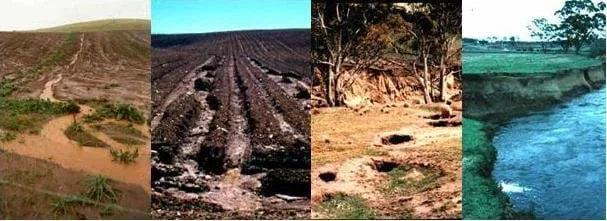 Figure 4. Examples of erosion: (left to right) sheet erosion, rill erosion, tunnel erosion and stream-bank erosion.Copyright 2003 Resource Planning and Development Commission, Inter Agency Policy and Projects Unit, Department of Premier and Cabinet, The State of the Environment – Tasmania http://www.rpdc.tas.gov.au/soer/lan/2/issue/33/index.php
Wind Erosion
Wind erosion creates and moves entire sand dunes, shapes rocks and other structures, and causes dust storms. Sand dunes are always being reshaped and shifting due to the wind. Dunes start out as mere ripples in the sand and gradually increase in size. Sand is moved up to the top of the dune until the pile becomes so steep that it collapses and slumps down the other side (the slip face; see Figure 5). Sand dunes are particularly vulnerable to wind erosion because they are completely composed of loose sand without anything anchoring them in place.
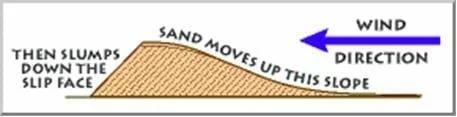 Figure 5. Sand dune formation.Copyright U.S. Department of the Interior, U.S. Geological Survey http://wrgis.wr.usgs.gov/
Wind erosion also shapes rocks and deteriorates structures, such as the ancient pyramids in Egypt. The wind picks up grainy particles—such as sand—and acts like airborne sandpaper that wears away (sands down) surrounding surfaces. The Devil's Tower rock formation in Wyoming (see Figure 6) was created by wind erosion. It used to be a volcano, but now all that remains is the solidified, lava core. The wind was powerful enough to wear away an entire volcano!
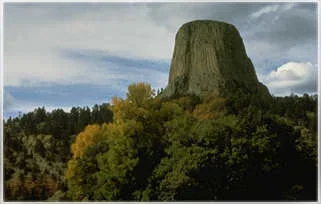 Figure 6. Devil's Tower National Monument in Wyoming.Copyright U.S. Department of the Interior, National Parks Service, "Devil's Tower" http://www.nps.gov/index.htm
One of the biggest problems associated with wind erosion is dust storms. The wind picks up dust, leaving crops exposed and blocking out the sun with a big black cloud. Farmers protect their crops (particularly potatoes) by planting larger crops (like rye) surrounding them or covering them with straw and foliage. Figure 7 shows unprotected and protected crops.
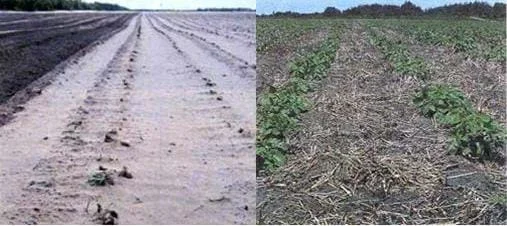 Figure 7. Unprotected (left image) and protected (right image) potato fields.Copyright Manitoba Agriculture, Food and Rural Initiatives http://www.gov.mb.ca/agriculture/crops/potatoes/bda01s30.html
Glacier Erosion
A glacier is created by fallen snow that has accumulated and been compressed into massive ice formations on land. Glaciers make up about 10% of the world's total land area. These masses are slowly pulled downhill by gravity, eroding the surface of the Earth as they move. Glacier erosion occurs by abrasion, crushing and fracturing material in the path of a glacier. This moving glacier picks up rock and sand along the way causing their surfaces to become extremely rough, which wears away even more material. Glacier erosion shaped Yosemite Falls in California, created the u-shaped valleys in Rocky Mountain National Park in Colorado (see Figure 8), and formed the Grand Tetons in Wyoming. The Matterhorn, a mountain in the European Alps, was also shaped by glacier erosion. It is unique in that it has four faces (slopes) that face the four compass directions.
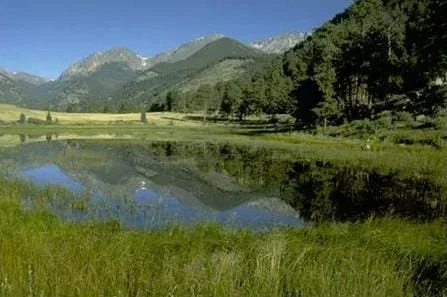 Figure 8. An example of glacier erosion; Sheep Lakes, Rocky Mountain National Park in Colorado.Copyright U.S. Department of the Interior, National Park Service, Rocky Mountain National Park http://www.nps.gov/index.htm
Temperature Erosion
Temperature erosion causes materials to crack and break apart. When material such as concrete or steel heats up (from the sun, for example), it expands; when it gets cold it shrinks in size. This fluctuation in size due to temperature can cause the material to crack. Colorado is an excellent example of a climate where temperature can be a challenge for materials, since one day it can be 70° and the next day it can snow, and be only 40°.)
Engineers account for these conditions by putting grooves in sidewalks (called control joints, see Figure 9) and expansion joints in bridges. This minimizes the damage caused by thermal erosion, which is important since broken concrete on the roads and walkways can be dangerous.
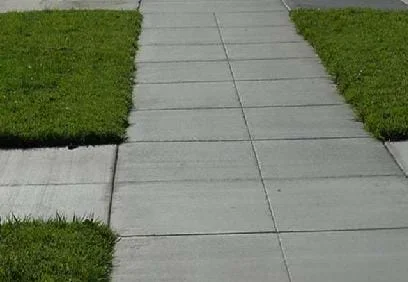 Figure 9. Those sidewalk grooves are "control joints" that allow concrete to expand and contract as temperatures fluctuate.Copyright City of Long Beach, CA, Public Works Department, Sidewalk Repair Program http://longbeach.gov/pw/street_maintenance/sidewalk.asp
Have you ever wondered why the surface of the Earth looks the way it does today? Does it look the same as it did 100 years ago? The Earth's landscape is continually being shaped and modified by the forces of nature. Wind, ice, water and temperature have all had a hand in making the Earth look the way it does today. These processes are called erosion, which is the wearing away of the Earth by natural processes. Several different types of erosion exist: chemical, water, wind, glacier and temperature. (List them on the board.) We are going to learn more about them today.
Chemical erosion is a reaction that usually involves acid rain. Acid rain is rain that has been polluted by chemicals in the air. These chemicals change the pH of the rainwater and can be harmful to streams, lakes, forests and the animals living in them. Acid rain can also be harmful to buildings and decorative statues by breaking down the materials from which the structures are made. If you have ever visited Mammoth Cave in Kentucky or Carlsbad Cavern in New Mexico, then you have seen the effects of chemical erosion. Both of these caves were carved out of solid land by chemical reactions! Engineers are working on acid rain and chemical erosion by creating cleaner burning fuels and machines (such as cars) that release less pollution into the air. Students can conduct their own engineering investigation of chemical erosion with The Effects of Acid Rain activity.
Water erosion is perhaps the most familiar type of erosion. Have you ever watched the moving water in a river or stream pull bits of the bank along with it? When water from rivers, streams or rain storms breaks away at bits (or larger chunks) of land while moving over it, that is considered water erosion. Water can wash away valuable nutrients from farmland, but is also responsible for shaping the Grand Canyon in Arizona and Rainbow Bridge in Utah. Engineers attempt to reduce water erosion by directing the flow of water with dams and levees. They also design technologies to measure scouring, which is the water erosion of a stream bed around the supports for a bridge, which has caused many bridges to collapse in the past.
Wind erosion happens when wind blows away the top layer of soil or sand. Some of the tiny particles of sand that are carried away by the wind act like sandpaper, wearing down larger objects as they pass. Wind erosion can create and move entire sand dunes, shape rocks and other structures, and cause dust storms. The Dust Bowl of the 1930s is a good example of the damage wind erosion can cause. Engineers develop technologies that help to reduce the effects of wind erosion for farmers.
Glacier erosion is not as common as other types of erosion. A glacier is created by fallen snow that has been pressed into large areas of hard ice on land. These glaciers are slowly pulled downhill by gravity, and wear away at the Earth's surface as they move. Have you ever ridden on the Matterhorn at Disneyland? The original Matterhorn is a mountain in Europe that was formed by glacier (ice) erosion. Glacier erosion has caused many large rock formations on Earth, such as Yosemite Falls in California and the Grand Tetons in Wyoming.
Have you ever noticed that sidewalks are not continuous sheets of concrete? They have grooves or cuts in them that we often call "cracks" in the sidewalk. Why are they there? These grooves are called "control joints" and they are intentionally designed to help prevent the sidewalk from cracking too much by giving it room to grow and shrink as the weather fluctuates between hot and cold. This is called temperature erosion. Temperature erosion can cause metals or concrete to break, such as roads and bridges.
Engineers must learn about and understand erosion in order to safely design and build structures for people to use and visit. Engineers also learn about erosion to help protect existing land formations and monuments that document our world's history. Civil engineers use their knowledge of erosion to design buildings, roads and bridges in areas that might not have a lot of natural erosion or by using sturdy materials that resist erosion. Environmental engineers plant trees and other vegetation in order to help prevent wind and water erosion from damaging land. Plant and tree roots limit erosion by helping to hold the soil in place. Engineers also design highways, overpasses and sidewalks in a way that allows the materials to expand and contract with temperature changes so that they will not crack too much, and thus remain strong and safe for their users. Refer to the Glaciers, Water and Wind, Oh My! activity to have students further investigate different types of erosion.
Can you remember the different types of erosion? (Listen to student responses.) That's right: chemical, wind, water, glacier (ice) and temperature erosion. Wow, that's a lot of ways that nature can change the surface of the Earth. In fact, some of the coolest natural land formations were created by a type of erosion. Can you name some of them? (Listen to student responses.) For example, the Grand Canyon was formed by water erosion, sand dunes are formed by wind erosion, and the Matterhorn, a mountain in the European Alps, was caused by glacier erosion. Erosion is a natural process, but humans have an effect on the amount of erosion that occurs in some areas as well. Can you think of how? Well, by the emissions from our factories and vehicles we pollute the air, which can cause acid rain and chemical erosion. Also, we construct buildings and dams that may alter the natural path of water and wind erosion. Those are just a few ways that humans affect erosion. Engineers must learn about how erosion works in order to help prevent too much of any one type of erosion from occurring. Engineers design and build the schools, skyscrapers and structures where people live and work. They are also involved in protecting existing land formations and monuments that people visit and tht we wish to keep standing and in unaltered shape.
- acid rain
- Rain containing acids that form in the atmosphere when industrial gas emissions (especially sulfur dioxide and nitrogen oxides) combine with water.
- deposition
- The act or process by which an agent of erosion such as wind or water lays down matter (sediment).
- erosion
- The wearing away of the surface of the Earth by natural processes (weathering, dissolution, abrasion, corrosion, etc.); types of erosion include: chemical, water, wind, glacier and temperature.
- geology
- The scientific study of the origin, history and structure of the Earth.
- glacier
- A huge mass of ice slowly flowing over a land mass, formed from compacted snow in an area where snow accumulation exceeds melting.
- limestone
- A type of sedimentary rock consisting of the mineral calcium carbonate.
- scouring
- The water erosion of a stream bed around the supports for a bridge; can be the cause of a bridge to collapse.
- sediment
- Material that settles to the bottom of a liquid.
- slip face
- The side of a sand dune on which sand collapses once the dune slope becomes too steep to support any more build up of sand.
- weathering
- Gradual physical and chemical wearing away of rocks.
Pre-Lesson Assessment
Discussion Questions: Ask a couple of discussion questions to get students thinking about the upcoming lesson. After soliciting answers, explain that these questions will be answered during the lesson.
- What causes the surface of the Earth to look the way it does?
- Has the surface of the Earth always looked the same since the beginning of time?
Post-Introduction Assessment
Voting: Ask a true/false question and have students vote by holding thumbs up for true and thumbs down for false. Tally the votes and write the totals on the board. Give the right answer.
- True or False: Erosion can wear away the surface of the Earth by chemicals, wind, water, glaciers and temperature (Answer: True)
- True or False: Chemical erosion is a reaction that usually involves water that has been polluted by chemicals, such as acid rain. (Answer: True)
- True or False: Wind erosion is rivers, streams or even rain, breaking away at bits of land while moving over it. (Answer: False, this description is of water erosion, not wind erosion.)
- True or False: Wind erosion can create and move entire sand dunes, shape rocks and other structures and cause dust storms. (Answer: True)
- True or False: Engineers do not need to know about erosion. (Answer: False, engineers use their understanding of erosion for many different applications, including the safe design and building of structures, highways, airport landing strips, ski hills, tunnels, bike paths, sidewalks as well as the protection of natural and human-made monuments.)
- True or False: Engineers also learn about erosion to help protect existing land formations and monuments that people want to keep around. (Answer: True)
- True or False: Water erosion causes sand, acting as airborne sandpaper, to wear away surfaces as it moves over something. (Answer: False, this description is of wind erosion, not water erosion.)
Lesson Summary Assessment
Can You Picture It? Show students pictures of different items that have been affected by erosion and see if they can guess which type of erosion caused it. For example, the Grand Canyon, Carlsbad Caverns, Ayers Rock, the Grand Tetons, Devils' Tower, an eroded statue, pavement cracks, etc.
Idea Web: Ask students to develop a list of the different types of erosion. What effects does erosion have on us and our environment? What are possible solutions for reducing these effects? What can engineers do to help?
Engineering Poster: Using what they learned in the lesson on erosion types, have student teams create posters of their unique designs for protective structures for statues or natural landforms that could withstand one of the erosion types (water, wind, temperature, glacier or chemical). Have them title their posters with a hypothetical engineering firm name (for example, Erosion Engineering & Associates).
Find some images of your community and region from 100 years ago to modern day. Have students compare and contrast the images. What has changed? How much of this change is due to natural erosion? How much is due to human intervention (buildings and highways, etc.)? If the area had been left alone except for natural processes such as water, wind and temperature, what parts of the landscape would have changed over 100 years due to erosion?
Have students investigate the human effect on erosion. For example, What are examples of human contributions to acid rain or waterways rerouting that have affected the surrounding landscapes? Have students develop plans to help reduce the human effect on the natural erosion that occurs over time. Have them describe activities that they could participate in that would help with land conservation and preservation of monuments or landscapes.
Cavers, Curtis. "Soil Management on Potato Land." Food and Rural Initiatives, Crops, Manitoba Agriculture, Canada. Accessed March 2006. Originally found at http://www.gov.mb.ca/agriculture/crops/potatoes/bda01s30.html
Sidewalk Repair Program, Public Works Department. City of Long Beach, CA. Accessed September 22, 2020. http://longbeach.gov/pw/services/sidewalk-maintenance/
"Investigating Earth's Surfaces." Earth Science Lesson Plans Library: 6-12, Discovery Education. Accessed 2006. Originally found at DiscoverySchool.com
Acid Rain article. Unit 5: The Wonderful Solvent: Water. The Government of the Hong Kong Special Administrative Region of the People's Republic of China, Education and Manpower Bureau, Science Education Section, Science (S1-3). Accessed July 25, 2006. Originally found at http://resources.edb.gov.hk/~s1sci/R_S1Science/sp/en/syllabus/unit5/article-ar.htm
"Erosional Landforms." May 3, 2005. Natural Hazards, National Geophysical Data Center, NOAA Satellite and Information Service. Accessed August 1, 2006. Originally found at http://www.ngdc.noaa.gov/ngdc.html
View All Parks A-Z, Parks and Recreation. National Park Service, U.S. Department of the Interior. Accessed September 22, 2020. http://www.nps.gov/parks.html
"Dunes - Getting Started." January 19, 2004. Coasts: Sand and Dunes, U.S. Geological Survey, U.S. Department of the Interior. Accessed 2006.
"Effects of Acid Rain" May 4, 2020. U.S. Environmental Protection Agency. Accessed September 22, 2020. https://www.epa.gov/acidrain/effects-acid-rain
Erosion. Natural Resource Conservation Service, U.S. Department of Agriculture. Accessed September 22, 2020. https://www.nrcs.usda.gov/wps/portal/nrcs/main/national/landuse/crops/erosion/
Contributors
Teresa Ellis; Malinda Schaefer Zarske; Janet Yowell
Supporting Program
Integrated Teaching and Learning Program, College of Engineering, University of Colorado Boulder
Acknowledgements
The contents of this digital library curriculum were developed under a grant from the Fund for the Improvement of Postsecondary Education (FIPSE), U.S. Department of Education and National Science Foundation GK-12 grant no. 0338326. However, these contents do not necessarily represent the policies of the Department of Education or National Science Foundation, and you should not assume endorsement by the federal government.
Copyright
2006 by Regents of the University of Colorado.