
Backyard Weather Station
Students use their senses to describe what the weather is doing and predict what it might do next. After gaining a basic understanding of weather patterns, students act as state park engineers and design/build backyard weather stations to gather data and make weather forecasts.
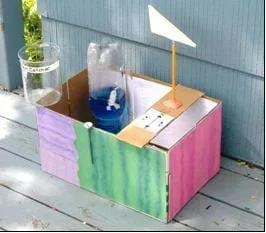 Figure 1. A backyard weather station made by students.
Who cares about the weather? A lot of people do, including engineers! Engineers have designed modern weather forecasting equipment, including weather balloons, satellites, Doppler radar, and computer simulation programs to help meteorologists make accurate weather forecasts. Engineers have also designed the automatic weather station (AWS), which collects weather data automatically in remote areas such as the mountains or Antarctica. Engineers design and build the high-tech equipment that is used for weather forecasting. They test the equipment to make sure that it is safe to use and can withstand severe atmospheric conditions. Other engineers contribute to weather forecasting equipment by designing the electronics, circuitry and software so the equipment can sense, measure and relay weather data accurately.
After this activity, students should be able to:
- Observe and make predictions about the weather using their senses and the clouds.
- Describe the relation between weather patterns and wind speed, air pressure, temperature and precipitation.
- Make a weather forecast based on sensory observations, cloud characteristics and collected weather data.
- Develop a model that describes how unequal heating of the Earth causes patterns of atmospheric and oceanic circulation that determine regional climates.
- 6.3.1.d.i Display numerical data in plots on a number line, including dot plots, histograms, and box plots.
Grade 6
Do you agree with this alignment?
- Differentiate between basic and severe weather conditions, and develop an appropriate action plan for personal safety and the safety of others
Grade 8
Do you agree with this alignment? - Use models to develop and communicate a weather prediction
Grade 8
Do you agree with this alignment?
- CCSS.Math.Content.6.SP.B.4 Display numerical data in plots on a number line, including dot plots, histograms, and box plots.
Grade 6
Do you agree with this alignment? - CCSS.Math.Content.8.SP.A.4 Understand that patterns of association can also be seen in bivariate categorical data by displaying frequencies and relative frequencies in a two-way table. Construct and interpret a two-way table summarizing data on two categorical variables collected from the same subjects. Use relative frequencies calculated for rows or columns to describe possible association between the two variables.
Grade 8
Do you agree with this alignment?
- STEL-1J Develop innovative products and systems that solve problems and extend capabilities based on individual or collective needs and wants.
Grades 6-8
Do you agree with this alignment? - STEL-5F Analyze how an invention or innovation was influenced by its historical context.
Grades 6-8
Do you agree with this alignment?
- MS-ESS2-6 Develop and use a model to describe how unequal heating and rotation of the Earth cause patterns of atmospheric and oceanic circulation that determine regional climates.
Grades 6-8
This resource focuses on the following Three Dimensional Learning aspects of NGSS:
Science & Engineering Practices- Develop and use a model to describe phenomena.Do you agree with this alignment?
Disciplinary Core Ideas- Variations in density due to variations in temperature and salinity drive a global pattern of interconnected ocean currents.Do you agree with this alignment?
- Weather and climate are influenced by interactions involving sunlight, the ocean, the atmosphere, ice, landforms, and living things. These interactions vary with latitude, altitude, and local and regional geography, all of which can affect oceanic and atmospheric flow patterns.Do you agree with this alignment?
- The ocean exerts a major influence on weather and climate by absorbing energy from the sun, releasing it over time, and globally redistributing it through ocean currents.Do you agree with this alignment?
Crosscutting Concepts- Models can be used to represent systems and their interactions—such as inputs, processes and outputs— and energy, matter, and information flows within systems.Do you agree with this alignment?
Do you agree with this alignment? - Develop and use a model to describe phenomena.
Each group needs:
- Weather Forecasting Worksheet (PDF), one per student
- Weather Station Worksheet (PDF), one per team
- Forecasting with Clouds Reference Sheet (PDF), one per team
- 1 large box or crate to put the different weather forecasting tools together as a weather station
- The following materials for each weather forecasting tool:
Weather Tool #1: Wind Vane
- cardstock
- pencil with eraser
- pencils and markers
- straight pen
- scissors
- small piece of modeling clay
- hot glue
- plastic straw
- compass
- piece of cardboard
Weather Tool #2: Barometer
- 2-liter plastic bottle
- food coloring
- clear plastic cup
- water
- marker
Weather Tool #3: Thermometer
- maximum/minimum thermometer
- tape
- climatology data for your area
Weather Tool #4: Rain Gauge
- wide glass
- masking tape
- straight, thin jar (a graduated cylinder works best)
- water
- ruler
- Weather Forecasting Worksheet (for Parts 1 and 2) (doc)
- Weather Forecasting Worksheet (for Parts 1 and 2) (pdf)
- Weather Station Worksheet (for Part 4) (doc)
- Weather Station Worksheet (for Part 4) (pdf)
- Tool #1: Wind Vane Worksheet (doc)
- Tool #1: Wind Vane Worksheet (pdf)
- Tool #2: Barometer Worksheet (docx)
- Tool #2: Barometer Worksheet (pdf)
- Tool #3: Thermometer Worksheet (doc)
- Tool #3: Thermometer Worksheet (pdf)
- Tool #4: Rain Gauge Worksheet (doc)
- Tool #4: Rain Gauge Worksheet (pdf)
- Forecasting with Clouds Reference Sheet (doc)
- Forecasting with Clouds Reference Sheet (pdf)
People have been forecasting the weather for thousands of years. Even you forecast the weather when you look out the window or step outside in the morning before deciding what to wear. In this case, you are using your senses to forecast the weather. You might be looking at the shape and color of the clouds in the sky, feeling how warm or cool the air is, or watching the trees to see if they are swaying in the breeze.
Modern weather forecasting is more complicated than using our senses to predict the weather—it really depends on the work of engineers and scientists. What are some of the engineering devices that are used today to forecast the weather? (Possible answers: Weather balloons, satellites, Doppler radars, computer programs, etc.) So, if engineers design this equipment, who uses it? Meteorologists and climatologists use these engineering devices to make weather forecasts. Everybody who plans a picnic, a camping trip, or flies an airplane depends on these weather forecasts. For example, pilots need accurate weather forecasts to make air travel safe and comfortable for passengers. Certain types of weather conditions, such as extremely high winds and severe thunderstorms can make air travel unsafe. You might also need to know the weather if you are planning a camping trip—the wilderness is beautiful, but it can be dangerous to be far from shelter during a storm.
Now let's try to imagine how people predicted the weather before engineers and scientists developed modern forecasting equipment (as shown in Figure 2). How do you predict the weather? For example, when you see a clear blue sky on a warm day, what do you expect to happen? Probably not much—your experience of this weather pattern has taught you that clear blue skies on warm days mean fair weather. What if you looked up at the sky and saw a gray cloud, hanging low in the sky? You know from experience that dark gray clouds usually bring rain or snow. In both cases, you are relying on the observation of known patterns to predict the weather. Observing weather patterns over time to predict the future state of the weather is how people forecasted the weather for thousands of years before engineers and scientists developed modern weather forecasting equipment.
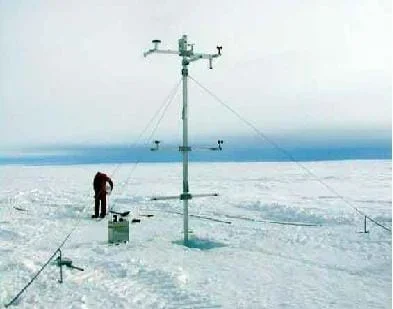 Figure 2. An automatic weather station in Antarctica.Copyright Australian Government. Antarctic Division http://www.aad.gov.au/default.asp?casid=2196
Today, you will act as if you are an engineer! You will use your senses to observe weather patterns and then design forecasting equipment to make a weather forecast. Let's say that each one of you is working as an engineer for your state's parks division. It is a holiday weekend, and a lot of people are planning to camp in the park. As a state park engineer, it is your job to build a backyard weather station and make a weather forecast to determine whether the weekend will be safe and pleasant for camping. Let's get started!
Background
Air Masses and Weather Fronts
We use the term "air mass" to describe a large body of air in which all the air within that body has the same temperature, pressure and humidity. So, when the sun shines (or does not shine) on different air masses and causes them to warm up or (cool down), the densities of the air masses change. More specifically, warm air rises (due to low density) and generally creates low pressure zones, while cold air sinks (due to high density). Wind is really the movement of air from high to low pressure. So, when the sun heats up parts of our atmosphere unevenly, it causes them to actually move around the atmosphere! This movement of air masses creates what is known as a weather front. A weather front is a transition zone between two air masses. Figure 3 illustrates the flow of warm and cold air associated with both types of fronts.
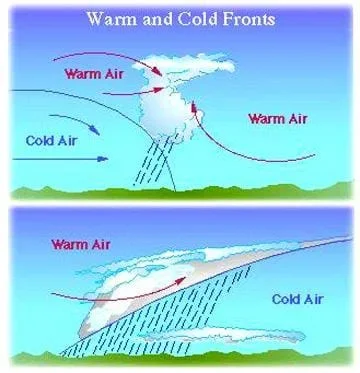 Figure 3. The boundary between two contrasting air masses is called a "front." This diagram shows two air masses in proximity with their fronts designated "cold" (top) where the cold air mass is steep and "warm" where the front is more gentle (bottom). Note that the cold, heavier air mass, associated with a high, is typically below the lighter warm air.Copyright Remote Sensing Tutorial, NASA http://rst.gsfc.nasa.gov/Sect14/Sect14_1c.html
Cold Fronts
A cold front is a warm-cold air boundary where the cold air replaces the warm air. As a cold front moves into an area, the heavier cold air pushes under the warm air that it is replacing. The warm air (with more moisture) becomes cooler as it rises. If the rising air is humid enough, the water vapor it contains condenses into clouds, and precipitation may fall.
Cold fronts usually bring cumulus (and altocumulus) clouds, showers and/or thunderstorms, as shown in Figure 4. As the cold front passes, the wind changes direction. Skies begin to clear, and the temperature and pressure usually drop. To confirm the presence of a cold front, we can use our knowledge of the clouds, a wind vane and a thermometer.
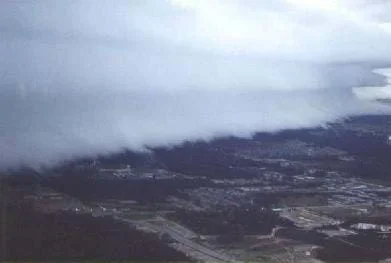 Figure 4. An aerial view of clouds associated with a cold front.Copyright NASA http://www.srh.noaa.gov
A cold front appears as blue triangles on colored weather maps (see Figure 5).
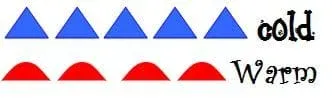 Figure 5. Weather map symbols.Copyright 2007 Lauren Cooper, ITL Program, University of Colorado at Boulder
Warm Fronts
A warm front is the boundary between warm and cold air, where the warm air replaces the cold air. Warm air at the surface of a front pushes above the cool air mass, creating clouds and storms. When a warm front first approaches, cirrus clouds may appear. They may be followed by stratus clouds and some precipitation, either rain or snow. When the front passes, the sky clears, and the air pressure rises. The temperature also rises as warm air replaces cold air.
We can use our knowledge about the clouds, a barometer and thermometer to confirm the presence of a warm front. A warm front usually appears as red half circles on a weather map (see Figure 5).
In fact, the ocean responds to uneven distribution of heating as well. Recall that wind is the movement of air from high to low pressure. Winds drive ocean circulation by moving warm sea surface waters around to various places. This creates areas of warmer and cooler waters. This uneven heating of the ocean causes changes in the temperature of air just above it and affects regional weather as well. The ocean and the atmosphere are linked in a system in which they directly affect and are affected by each other. No wonder it can be difficult to forecast the weather sometimes! [Teacher note: This is a good time to discuss El Niño Southern Oscillation (ENSO), which is the tendency of the Pacific Ocean to switch between El Niño (abnormal warming) and La Niña (abnormal cooling) years. The important point about the abnormal sea surface patterns of the Pacific is that they are teleconnected to the rest of the world; in other words, patterns of abnormal temperatures in the Pacific have been shown to affect global atmospheric circulation so directly that we can predict how regional weather will change just based on the state of ENSO. ENSO changes the annual weather we see in the US each year. To further extend this topic, find and show students a good explanatory video on it.]
Background Information on Tools for the Backyard Weather Station
Tool #1: Wind Vane
Knowing the wind direction can help us understand weather patterns. What causes the wind to blow? Wind is created when air moves from an area of high pressure to one of low pressure. The greater the difference between the areas, the stronger the wind currents. Because the equator is constantly hot and the poles are cold, a general pattern to the Earth's air circulation exists. In many areas, the wind usually blows from the same direction.
To forecast using a wind vane—or a weather vane—a device that shows from which direction the wind is blowing, is very simple, but it only works if the wind is strong enough (that is, a light breeze will not help much). The first step to using the wind in order to forecast is to determine the direction from which the wind is blowing. Generally, in the northern hemisphere, if the wind is from the south, it means that warmer weather is on its way soon. If the wind is blowing from the north, it means cooler and drier weather is coming. East- or west-moving winds can mean a variety of weather conditions, which makes it difficult to forecast using them. Also, basic wind forecasting rules do not apply if a large body of water is nearby. Wind that travels across a body of water feels cooler in the summer and warmer in the winter.
Tool #2: Barometer
We use a barometer to measure air pressure. Air pressure is the force exerted by molecules zooming around the Earth's atmosphere, constantly bouncing off each other and bumping into everything else. The faster these air molecules are zooming around and bumping into things, the greater the air pressure. We just learned that when molecules in the air speed up, the temperature increases. It follows, then, that when the air temperature increases, so does the air pressure.
If our barometer indicates that the air pressure is high, we can expect fair weather. High air pressure acts as a barrier to approaching weather systems, diverting their course. On the other hand, if our barometer indicates low air pressure, we can expect stormy weather. Low atmospheric pressure represents the "path of least resistance" for encroaching weather systems.
As a rule of thumb, if our barometer is falling, then stormy weather or some form of precipitation will occur, and if our barometer is rising, we expect nice weather or no precipitation (see Figures 6 and 7).
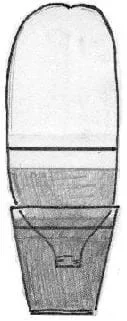 Figure 6. This barometer shows a falling pressure, indicating the arrival of stormy weather.Copyright 2007 Lauren Cooper, ITL Program, College of Engineering and Applied Science. University of Colorado Boulder
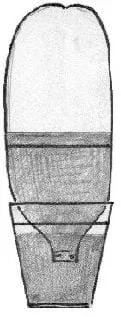 Figure 7. This barometer shows a rising pressure, indicating the arrival of fair weather.Copyright 2007 Lauren Cooper, ITL Program, College of Engineering and Applied Science, ,University of Colorado at Boulder
Tool #3: Thermometer
A thermometer is an instrument that is used to measure temperature. We think of temperature as how hot or cold something is. But what is it really? The temperature of the air is determined by how fast the molecules in the air are moving around. When air molecules speed up, the temperature increases. So, how does observing the temperature help us forecast the weather?
First, we must look at climatology data to determine the average daily temperature in our area. Data is often collected over a period of about 30 years (see References section for links to climatology data across the US). So, once we have determined the average temperature in our area, we can make predictions about the weather using our thermometer. High temperature causes air pressure to rise, which indicates fair weather. Cooler temperatures cause the air pressure to drop, which can bring stormy weather.
Tool #4: Rain Gauge
A rain gauge is a device that enables us to gather and measure the amount of liquid precipitation over a set period of time. Most rain gauges measure precipitation in millimeters; however, the level of rainfall is usually reported as inches or centimeters. Many different types of rain gauges exist, including graduated cylinders, weighing gauges, tipping bucket gauges and gauges that are simply buried in the ground.
By measuring the amount of precipitation, rain gauges help us understand weather patterns in localized areas. These instruments also help us determine the presence or onset of a weather front.
Before the Activity
- Gather materials and make copies of the worksheets.
- Have the groups working with thermometers gather climatology data for their areas. Go to https://www.noaa.gov/ to access weather information.
- To begin the activity, divide the class into groups of eight students each.
With the Students
- Conduct one of the pre-activity assessment activities (see the Assessment section).
- Review the activity tasks and learning objectives.
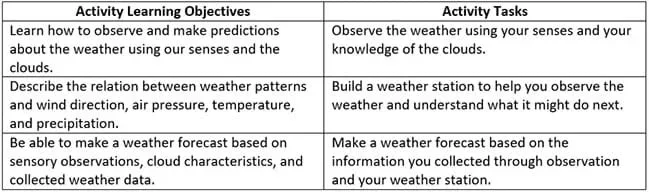 Learning objectives and activity tasks.
- Give each student a Weather Forecasting Worksheet.
Part 1: Weather Observation Using our Senses
Note: This is a good time to take students outside. As a class, create a list of weather observations. Pay special attention to the color and shape of the clouds. Take this list back inside to help students draw pictures of the current weather state on their worksheets. Refering to their drawings, ask them to predict what they think the weather will do next.
Background Information
The most basic way to observe and make predictions about the weather is by using our senses. Sight is the easiest sense to use to forecast the weather. You can see when it is raining or snowing. You can see the different types of clouds in the sky. Touch is also an easy sense to use. When the sun is shining, you can feel it on your face. You can feel it become colder when a cloud blocks the sun. You can also use touch to sense how strong the wind is and from which directions it is blowing. Hearing helps us detect weather phenomena. When you hear thunder, you know a storm is nearby. You can hear wind blowing harder or softer through trees or as it whips around your ears. Smell can also help us predict the weather! Have you ever smelled the air before a rainstorm? It has a distinct smell. Snowstorms have a certain smell, too.
Part 2: Weather Forecasting Using Clouds
Explain that we can observe the shape, color and location of the clouds in the sky to make predictions about the weather. Have students draw pictures of each type of cloud on their worksheets and write short descriptions in the spaces provided. See the attached Forecasting with Clouds Reference Sheet (PDF) for descriptions and pictures of these types.
Background Information
When clouds are in the sky, you can observe their shape, color and placement to predict what the weather will do. Different clouds help meteorologists tell what kind of weather is around them. We will consider cirrus, cumulus, altocumulus, nimbostratus and cumulonimbus types of clouds to help us predict the weather.
Note: If you are completing this activity over several class periods, this is a good place to stop and do the activity-embedded assessment (see the Assessment section).
Part 3: Building a Weather Station
Background Information
Devices such as wind vanes, barometers, thermometers and rain gauges can help us observe the weather. Coupled with our sensory observations and knowledge of the clouds, we can make more accurate weather forecasts. Engineers have designed weather forecasting stations that can be built and operated almost anywhere on Earth. For example, engineers designed the automatic weather station (AWS), which is used to collect weather data automatically, saving human labor and enabling measurements from remote areas, such as Antarctica. These stations typically have a thermometer to measure temperature, an anemometer to measure wind, a hygrometer to measure humidity, a barometer to measure pressure. Some stations have a ceilometer, a device that uses a laser or other light source to determine the height of a cloud base.
We can engineer a weather station similar to an AWS to help us collect weather data. Our backyard weather station will include a wind vane to observe the wind direction, a barometer to observe air pressure, a thermometer to record the air temperature and a rain gauge to measure any rainfall.
- Divide the class into their backyard weather station groups (eight students per group) and have them agree upon a team name.
- Briefly describe each of the tools that will be used to build a backyard weather station (wind vane, barometer, thermometer and rain gauge). Explain what each tool does and how it will help the students understand what the weather is doing.
- Within their groups of eight, have students forms pairs and decide which tool they would like to use.
- Give each pair the corresponding Weather Tool instructions worksheet.
- Have each pair review the list of the materials they need. Groups need sturdy containers for their backyard weather stations. Wooden crates or plastic tubs work well. Students can often find or borrow suitable containers at/from home.
- Help students gather materials and begin working on their weather tools.
- Give each pair time to test their weather tool, take data, and complete their Weather Tool worksheets.
- Have the pairs come together in their larger groups to design, test and finalize the configuration of their backyard weather stations. (Note: It is suggested that the group with the thermometers also start to design the box or crate for the final weather station.)
- Have each group take data over a period of time. (Note: It is suggested that students take data for at least a few days.)
Part 4: Putting it all Together
Background Information
Now that we have engineered our weather stations and collected data, we can make a weather forecast. When we combine the information about wind direction, pressure, temperature and precipitation, we can predict the onset of large weather systems, such as weather fronts, which are caused by the movement of air masses.
- After sufficient weather data has been collected, have students complete the Weather Station Worksheet. Each group will make a detailed weather forecast using the weather data obtained from their backyard weather stations.
- Have each team present their weather forecasts to the rest of the class.
- air mass
- A large body of air where all the air within that body has the same temperature, pressure and humidity.
- automatic weather station
- A device used in remote areas to collect weather data automatically. Abbreviated as AWS.
- barometer
- An instrument used to measure atmospheric pressure (air pressure).
- climatology
- The study of climate, defined as weather conditions averaged over a period of time.
- cold front
- A warm-cold air boundary where the cold air replaces the warm air. Cold fronts usually bring cumulus (and altocumulus) clouds, showers or thunderstorms.
- meteorologist
- A person who uses scientific principles to explain, understand, observe or forecast the earth's atmospheric phenomena and/or how the atmosphere effects the earth and life on the planet.
- precipitation
- Any product of the condensation of water vapor that is deposited on the earth's surface. It can occur in different forms – rain, freezing rain, snow, sleet, and hail.
- rain gauge
- An instrument used to gather and measure the amount of liquid precipitation (usually rain) over a set period of time.
- thermometer
- An instrument used to measure temperature.
- warm front
- A warm front is the boundary between warm and cold air, where the warm air replaces the cold air. When a warm front first approaches, cirrus clouds may appear. They may be followed by stratus clouds and some precipitation, either rain or snow. When the front passes, the sky clears, and the air pressure rises.
- wind vane
- An instrument used to measure the direction of the wind.
Pre-Activity Assessment
Discussion: Have students discuss what kind of information they expect to find in a weather forecast. What kind of information would they want to gather to make a weather forecast? (Answer: A typical forecast contains information about the current weather conditions. Usually, it describes the temperature, the overall conditions [that is., rainy, sunny, cloudy, windy, stormy, etc.]. The wind speed is typically given in miles per hour [mph], and the visibility is given in miles. The barometric pressure [air pressure[ is reported, along with information about whether the barometric pressure is rising or falling. Finally, most weather forecasts provide a week-long forecast outlining the daily temperatures and chance of rain or sun. See the Investigating Questions sections for other leading questions.)
Review for Prior Knowledge: Give small groups of students a printout of the day's weather forecast. Ask the students to interpret the information, and have each group explain one portion of the forecast to the rest of the class.
Activity-Embedded Assessment
Basic Weather Forecast: Have students make weather forecasts using their sensory observations and knowledge of the clouds. For these basic weather forecasts, have them predict if the weather is going to change or stay the same. Do they predict that it is going to become colder or warmer? Is it going to rain or snow? Is it going to become windy? This could be done in class or as a homework assignment. Share and compare the students' basic weather forecasts as a class. Reiterate how sensory weather observation and prediction is easy to do, but it is not always dependable. As state park engineers, we want to make a more accurate forecast using weather forecasting tools.
Post-Activity Assessment
Detailed Weather Forecast: Using the weather data collected over a period of time from each backyard weather station, have each group put together a detailed weather forecast. This forecast could include the observed patterns in cloud shape, air temperature, wind direction, air pressure and precipitation. Also, did they observe any weather fronts? As state park engineers, what is their final recommendation to the visitors coming to the park this weekend? Will it be pleasant or stormy? Will it be dangerous for the visitors? What precautions should visitors take?
Weather Presentations: Give students the opportunity to choose how to present their forecast to the class. Some ideas – a newspaper report, a poster showing the relevant weather features (wind direction, precipitation, cloud shape, presence of a weather front, etc.), a typical weather forecast on a "blue board" using props for sun, rain, clouds, warm fronts and cold fronts.
The activity is most effective if weather data can be collected at the same time each day for at least a few days.
For consistent weather data, locate the backyard weather station in roughly the same place.
For more interesting results and discussion, lead this activity during periods when stormier weather is expected.
- Have students enhance their weather stations with anemometers to measure wind speed and hygrometers to measure humidity.
- Have students follow the weather forecasts from the newspaper or internet while they are using their backyard weather stations to predict the weather. Have them compare how similar their forecasts are to the published professional weather forecasts.
- Have student draw a flow model that incorporates the information they have learned about how atmospheric and oceanic circulation drives regional climate. [For example, the diagram might include the Sun heating a portion of atmosphere or ocean, changing pressure, and arrows indicating the movement of either ocean or water. Students could include either atmosphere or ocean or both.]
- For younger students, put together a sample backyard weather station to use as a class.
- Lead younger students through Parts 1 and 2 of this activity to explain what the weather is doing based on their senses and knowledge of the clouds. As a class, make a weather forecast using a completed backyard weather station.
- For older students, have them collect weather data over a longer period of time to generate a more detailed weather forecast report.
Australian Government Antarctic Division, Experience Antarctica, This Week In Antarctica, TWIA archives, TWIA archive 2003, Early TWIAs, "Casey Autumn Traverse," October 23, 2007, accessed November 26, 2007. http://www.antarctica.gov.au/about-antarctica
Detroit Public TV, Get Up! Get Out!, "Activity Ideas – Backyard Weather Station," accessed November 26, 2007. http://www.dptv.org/kids/index.shtml
Short, Nicholas M. National Aeronautics and Space Administration, Remote Sensing Tutorial, "Atmospheric Circulation; Weather Systems," June 18, 2007, accessed November 26, 2007. http://landsat.gsfc.nasa.gov/education/tutorials.html
Contributors
Lauren Cooper; Malinda Schaefer Zarske; Janet Yowell
Supporting Program
Integrated Teaching and Learning Program, College of Engineering, University of Colorado Boulder
Acknowledgements
The contents of these digital library curricula were developed by the Integrated Teaching and Learning Program under National Science Foundation GK-12 grant no. 0338326. However, these contents do not necessarily represent the policies of the National Science Foundation, and you should not assume endorsement by the federal government.
Copyright
2007 by Regents of the University of Colorado