
Weather and Atmosphere
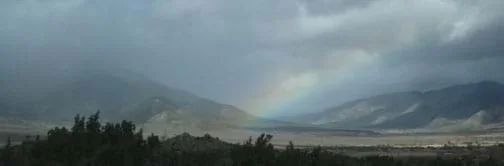 Engineers are involved in many aspects of weather forecasting and weather-appropriate design.Copyright 2010 Denise W. Carlson. Used with permission.
In this unit, students learn the basics about weather and the atmosphere. They investigate materials engineering as it applies to weather and the choices available to us for clothing to counteract the effects of weather. Students have the opportunity to design and analyze combinations of materials for use in specific weather conditions.
Engineers are involved in many aspects of weather forecasting and weather-appropriate design. They analyze information about weather when designing instruments such as barometers, thermometers and anemometers—technologies that are essential for accurate weather predictions so that we can make informed decisions about how we interact with our world. Also, computer science engineers develop software to integrate these complex weather information technologies for meteorologists to use to make such predictions and inform the public. Engineers develop websites (and software) to present predicted and historical weather information in the most informative and pleasing way for people to understand. Civil engineers utilize weather data when designing bridges, houses and other structures, to ensure that those designs are appropriate for the climate of their locations. Environmental engineers analyze weather measurements to determine the placement and effectiveness of renewable energy technologies, such as wind farms and solar arrays. Engineers also serve an important role in designing products that enable people to more comfortably adjust to the weather (for example, waterproof jackets, heated driveways and sunscreen, and many other weather-resistant goods).
- CCSS.Math.Content.6.NS.B.3 Fluently add, subtract, multiply, and divide multi-digit decimals using the standard algorithm for each operation.
Grade 6
Do you agree with this alignment?
- MS-ESS2-6 Develop and use a model to describe how unequal heating and rotation of the Earth cause patterns of atmospheric and oceanic circulation that determine regional climates.
Grades 6-8
This resource focuses on the following Three Dimensional Learning aspects of NGSS:
Science & Engineering Practices- Develop and use a model to describe phenomena.Do you agree with this alignment?
Disciplinary Core Ideas- Variations in density due to variations in temperature and salinity drive a global pattern of interconnected ocean currents.Do you agree with this alignment?
- Weather and climate are influenced by interactions involving sunlight, the ocean, the atmosphere, ice, landforms, and living things. These interactions vary with latitude, altitude, and local and regional geography, all of which can affect oceanic and atmospheric flow patterns.Do you agree with this alignment?
- The ocean exerts a major influence on weather and climate by absorbing energy from the sun, releasing it over time, and globally redistributing it through ocean currents.Do you agree with this alignment?
Crosscutting Concepts- Models can be used to represent systems and their interactions—such as inputs, processes and outputs— and energy, matter, and information flows within systems.Do you agree with this alignment?
Do you agree with this alignment? - Develop and use a model to describe phenomena.
- MS-ETS1-4 Develop a model to generate data for iterative testing and modification of a proposed object, tool, or process such that an optimal design can be achieved.
Grades 6-8
This resource focuses on the following Three Dimensional Learning aspects of NGSS:
Science & Engineering Practices- Develop a model to generate data to test ideas about designed systems, including those representing inputs and outputs.Do you agree with this alignment?
Disciplinary Core Ideas- Models of all kinds are important for testing solutions.Do you agree with this alignment?
- The iterative process of testing the most promising solutions and modifying what is proposed on the basis of the test results leads to greater refinement and ultimately to an optimal solution.Do you agree with this alignment?
Do you agree with this alignment? - Develop a model to generate data to test ideas about designed systems, including those representing inputs and outputs.
- Day 1: Weather Basics lesson and Dress for Success activity
- Day 2: Dress for Success activity
- Day 3: Air Under Pressure lesson and Building a Barometer activity
- Day 4: Building a Barometer activity
- Day 5: Stormy Skies lesson and Weather Alert activity
- Day 6: Weather Alert activity
- Day 7: Weather Forecasting lesson and Backyard Weather Station activity
- Day 8-9: Backyard Weather Station activity
- Day 10: Hurricanes lesson
- Day 11-12: Protecting Our City with Levees activity
- Day 13: Global Climate Change lesson and Trash to Treasure! activity
- Day 14: Trash to Treasure! activity
Supporting Program
Integrated Teaching and Learning Program, College of Engineering, University of Colorado Boulder
Acknowledgements
The contents of this digital library curriculum were developed under grants from the Fund for the Improvement of Postsecondary Education (FIPSE), U.S. Department of Education, and the National Science Foundation (GK-12 grant no. 0338326). However, these contents do not necessarily represent the policies of the Department of Education or National Science Foundation, and you should not assume endorsement by the federal government.
Copyright
2009 by Regents of the University of Colorado