
Red Light, Green Light: Forces of Friction, Roads & Tires
Building upon their understanding of forces and Newton's laws of motion, students learn about the force of friction, specifically with respect to cars. They explore the friction between tires and the road to learn how it affects the movement of cars while driving. In an associated literacy activity, students explore the theme of conflict in literature, and the difference between internal and external conflict, and various types of conflicts. Stories are used to discuss methods of managing and resolving conflict and interpersonal friction.
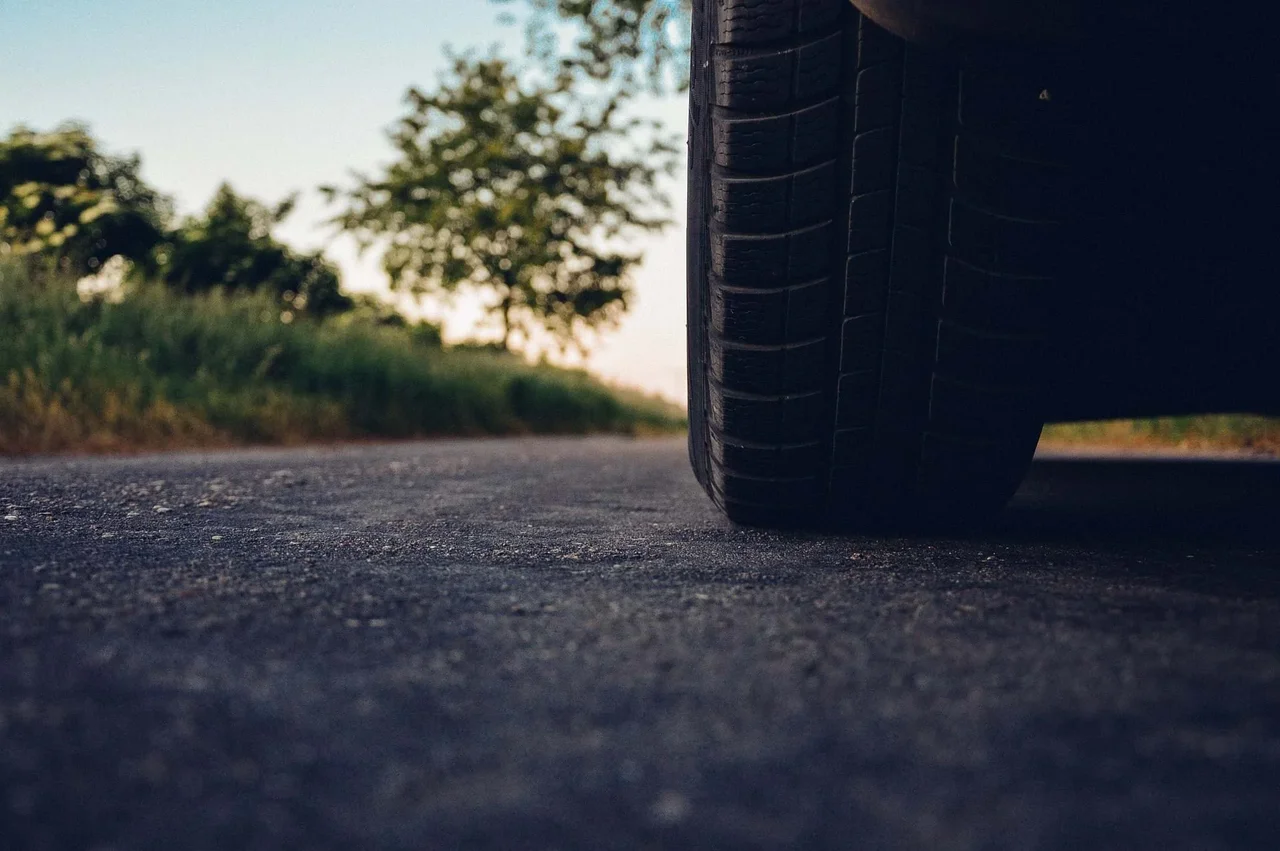 Cars on the road exhibit frictionCopyright Image by tookapic from Pixabay
https://pixabay.com/photos/car-road-tire-asphalt-vehicle-932455/
Accessed: July 29, 2020
Cars on the road exhibit frictionCopyright Image by tookapic from Pixabay
https://pixabay.com/photos/car-road-tire-asphalt-vehicle-932455/
Accessed: July 29, 2020
Engineers use their understanding of the force of friction to design safe roads, tires, cars and brakes. Transportation and automotive engineers make sure that roads and tires provide the right amount of friction because friction provides traction and control for a safe driving experience, especially in icy or wet conditions. Even designing how paper is moved through a copy machine involves an understanding of friction. Engineers also reduce the force of friction between moving mechanical parts (in engines, tools, artificial limbs, etc.) so the parts run smoother and last longer.
After this lesson, students should be able to:
- Explain how friction relates to the movement of cars (moving forward, stopping, turning corners).
- Define friction as a force that resists the motion of an object moving relative to another object
- Predict ways to improve the movement of cars in snow and ice, and explain why
- Relate engineering with frictional forces, especially when designing automobiles
- Predict and evaluate the movement of an object by examining the forces applied to it
Grade 8
Do you agree with this alignment?
- STEL-3G Explain how knowledge gained from other content areas affects the development of technological products and systems.
Grades 6-8
Do you agree with this alignment?
- MS-PS2-2 Plan an investigation to provide evidence that the change in an object's motion depends on the sum of the forces on the object and the mass of the object.
Grades 6-8
This resource focuses on the following Three Dimensional Learning aspects of NGSS:
Science & Engineering Practices- Plan an investigation individually and collaboratively, and in the design: identify independent and dependent variables and controls, what tools are needed to do the gathering, how measurements will be recorded, and how many data are needed to support a claim.Do you agree with this alignment?
- Science knowledge is based upon logical and conceptual connections between evidence and explanations.Do you agree with this alignment?
Disciplinary Core Ideas- The motion of an object is determined by the sum of the forces acting on it; if the total force on the object is not zero, its motion will change. The greater the mass of the object, the greater the force needed to achieve the same change in motion. For any given object, a larger force causes a larger change in motion.Do you agree with this alignment?
- All positions of objects and the directions of forces and motions must be described in an arbitrarily chosen reference frame and arbitrarily chosen units of size. In order to share information with other people, these choices must also be shared.Do you agree with this alignment?
Crosscutting Concepts- Explanations of stability and change in natural or designed systems can be constructed by examining the changes over time and forces at different scales.Do you agree with this alignment?
Do you agree with this alignment? - Plan an investigation individually and collaboratively, and in the design: identify independent and dependent variables and controls, what tools are needed to do the gathering, how measurements will be recorded, and how many data are needed to support a claim.
Forces, Newton's laws of motion
Friction is a force that arises when things rub together. The frictional force between the road and tire is what allows the tire to "push" off the road, thus moving the car forward (Newton's third law — the action is the pushing frictional force, the reaction is the forward movement of the car). Imagine a car being lowered on a jack. When the tires don't touch the ground at all (and so there is no friction between the tires and the ground), the tires can spin, but the car does not move. At the very moment that the tires first touch the ground, they "grab" the ground. That "grab" is the frictional force between the tire and the ground. When the tires "grab" the ground, the car moves forward. Sometimes, such as when a car is on ice, mud or sand, there is not enough frictional force for a car's tires to grab the ground, and so the car has a hard time moving forward (it spins out or slides). So, even though friction is often thought of as the force that opposes the motion of an object, the motion of a car would not be possible without friction! Friction may slow the car down as it moves along the road, but it also is the force that enables the car to move forward at all. It is the friction force that keeps the tires from sliding on the road. By the same token, it is friction that makes the car come to a stop when the brakes are applied. So, it is the force of friction that makes a car accelerate forward and also decelerate to a stop.
Friction is also very important when a car goes around a turn. If the friction between the road and tires is not sufficient, the car will slide sideways off the road instead of turning the corner. Dirt roads have less friction than paved roads, which is why cars sometimes slide around corners on dirt roads on TV or in movies. If cars are going very fast, the back tires can slide, making the car "fishtail" as it goes around the corner.
Think about the last time you rode in a bus or a car. Why do the wheels on some cars spin out at a green light, while other cars go forward without spinning wheels? Why do cars come screeching to a stop when the driver slams on the brakes? What makes a car going 60 miles per hour stay on the highway traveling safely forward? The answer to all these questions is the force of FRICTION (and Newton's laws of motion, of course)! Engineers need to understand the force of friction so that they can design safe roads, tires, cars and brakes. Engineers also try to reduce the force of friction between moving mechanical parts so that they will last longer.
When a car's tires start to turn, the friction between the road and the tires make the car begin to move forward. Similarly, when a car is going around a corner, the friction between the road and the tires keeps the car from sliding off the side of the road (remember Newton's first law? Without the force of friction, the car would tend to go in a straight line — straight off the road!) When a car slows down, the friction between the road and the tires helps to bring the car to a stop as the wheels slow down. It is the friction between the wheels and the brake pads that causes the wheels to slow down. Obviously, friction is a very important force when you are riding in a car!
Imagine that there was a lot less friction between roads and tires. Pretend that there was the same amount of friction as there is between your shoe and ice if you walked across an ice-covered lake. What would happen? Cars would be slipping all over the road because the friction between the road and tire would not be sufficient enough to keep the tire "stuck" to the road. It would be hard for cars to start going because their wheels would spin. It would also be hard for the cars to stop. Imagine trying to stop a car by pushing on the brakes if there were no friction between the tires and the road — what would happen? Even if the wheels stopped turning, the car would keep sliding over the low-friction roads! The car would slide and spin out of control, going across the yellow line or into a ditch!
Sometimes, when it rains or snows, the friction between tires and the road can be greatly reduced, and there is the danger of the car sliding. Because of this hazard, engineers developed extra safe brakes — computer-controlled antilock braking systems (ABS). Because these ABS brakes are computer-controlled, they can sense what each wheel is doing at all times. Since the computer knows what all four wheels are doing, if one wheel is about to start skidding while trying to brake, the ABS system can adjust the other three wheels so that the car does not slide. Refer to the fun and hands-on associated activity Hovercraft Racers! for students to investigate the friction between two surfaces. Follow-up with the associated activity How Far? Measuring Friction Using Different Materials for students to explore how different textures provide varying amounts of friction to objects moving across them.
Our imaginary low-friction road isn't all bad news, though. If a car could get going with very little friction between the tires and the road, the car would be much more fuel-efficient because the engine wouldn't have to work very hard to keep the car moving. Transportation and automotive engineers make sure that roads and tires have the right amount of friction — too much, and the car engines would have to do more work to keep going; too little, and the cars would not stick to the road!
Engineers take advantage of this link between friction and tire/road dynamics to make roads with material that encourages friction for safety, but not too much friction, so that cars do not have to work too hard to move forward. In areas where there is a lot of snow, some people use special tires with metal studs because the metal studs poke into the snow and ice, creating more friction than rubber alone. Sometimes, roads are so icy that people even have to put chains on their tires to create enough friction between the car tires and the road so that they do not slip and slide all over the roads.
Following the lesson refer to the associated activity It Takes Two to Tangle to expand the idea of friction in personal relationships through stories.
Have the students explain what they think friction is. Why does it slow down movement, but at the same time make movement possible? Why is friction so important for engineers who build cars to understand? What are some additional applications of friction in day-to-day life and for engineers? What would life be like without friction?
- force
- Something that acts from the outside to push or pull an object. For example, an adult pulling a child in a wagon exerts a force upon the wagon.
- friction
- A force that arises when things rub together.
- newton's third law of motion
- For every action there is an equal and opposite reaction.
Pre-Lesson Assessment
Discussion Question: Solicit, integrate and summarize student responses.
- What forces make a car going 60 miles per hour stay on the highway traveling safely forward? Why does the car not slow down, swerve right and left, or slide off the road? (Answer: FRICTION and Newton's third law of motion. The friction between the road and the car's tires make it travel in the forward direction.).
Post-Introduction Assessment
Question/Answer: Ask the students and discuss as a class:
- Imagine trying to stop a car by pushing on the brakes if there were no friction between the wheels and the road. What would happen? (Answer: If there were no friction, the wheels would stop, but the car would keep sliding, and would not slow down at all. The car would only stop when it hit something.)
- Can you think of a situation in which an engineer might want less friction? When might an engineer want more friction? (Possible answers: Engineers try to reduce friction between moving parts so that they do not wear down as quickly. Increasing friction is a useful way to slow things down — that is how the brakes work in a car, a bike or a scooter! There are many other possible answers to this question.)
Lesson Summary Assessment
Roundtable: Have the class form into teams of 3–5 students each. Have the students on each team make a list of ways that friction affects cars by each person taking turns writing down ideas. Students pass the list around the group until all ideas are exhausted. Have teams read aloud the answers and write them on the board. (Suggestion: Friction does not only occur between wheels and the road — it also occurs between all moving parts in the engine, the brakes, etc.)
Friction Boggle!: Repeat the same activity as above, except when the teams read aloud their answers and write them on the board, ask if any other teams came up with the same idea. If any other teams have the same answer on their sheet, all teams have to cross that answer out on their list. The team that ends up with the most "unique" ideas, wins!
Ask the students go home and ride their bike, and return to school with some observations about the movement of the bike and friction that they've made while riding their bike. How are road bikes different than mountain bikes? Why are the tires different?
Ask the students to research hovercrafts. How do they work? How fast can they go? What kind of surfaces can they go over? What role does friction play in the movement of hovercrafts?
Gittewitt, Paul. Conceptual Physics. Menlo Park, CA: Addison-Wesley, 1992.
Hauser, Jill Frankel. Gizmos and Gadgets: Creating Science Contraptions that Work (and Knowing Why). Charlotte, VT: Williamson Publishing, 1999.
Kagan, Spencer. Cooperative Learning. Capistrano, CA: Kagan Cooperative Learning, 1994. (Source for Roundtable assessment.)
VanCleave, Janice. Physics for Every Kid: 101 Easy Experiments in Motion, Heat, Light, Machines and Sound. NewYork, NY: John Wiley and Sons Inc., 1991.
Wolfson, Richard and Jay M. Pasachoff. Physics: For Scientists and Engineers. Reading, MA: Addison-Wesley Longman Inc., 1999.
- Forces: Friction
- What a Drag
- Red Light, Green Light: Forces of Friction, Roads & Tires
Contributors
Sabre Duren; Ben Heavner; Malinda Schaefer Zarske; Denise Carlson
Supporting Program
Integrated Teaching and Learning Program, College of Engineering, University of Colorado Boulder
Acknowledgements
The contents of this digital library curriculum were developed under a grant from the Fund for the Improvement of Postsecondary Education (FIPSE), U.S. Department of Education and National Science Foundation GK-12 grant no. 0338326. However, these contents do not necessarily represent the policies of the Department of Education or National Science Foundation, and you should not assume endorsement by the federal government.
Copyright
2004 by Regents of the University of Colorado.